20 Emotional Walls and Character Tropes to Break Your Fictional Characters
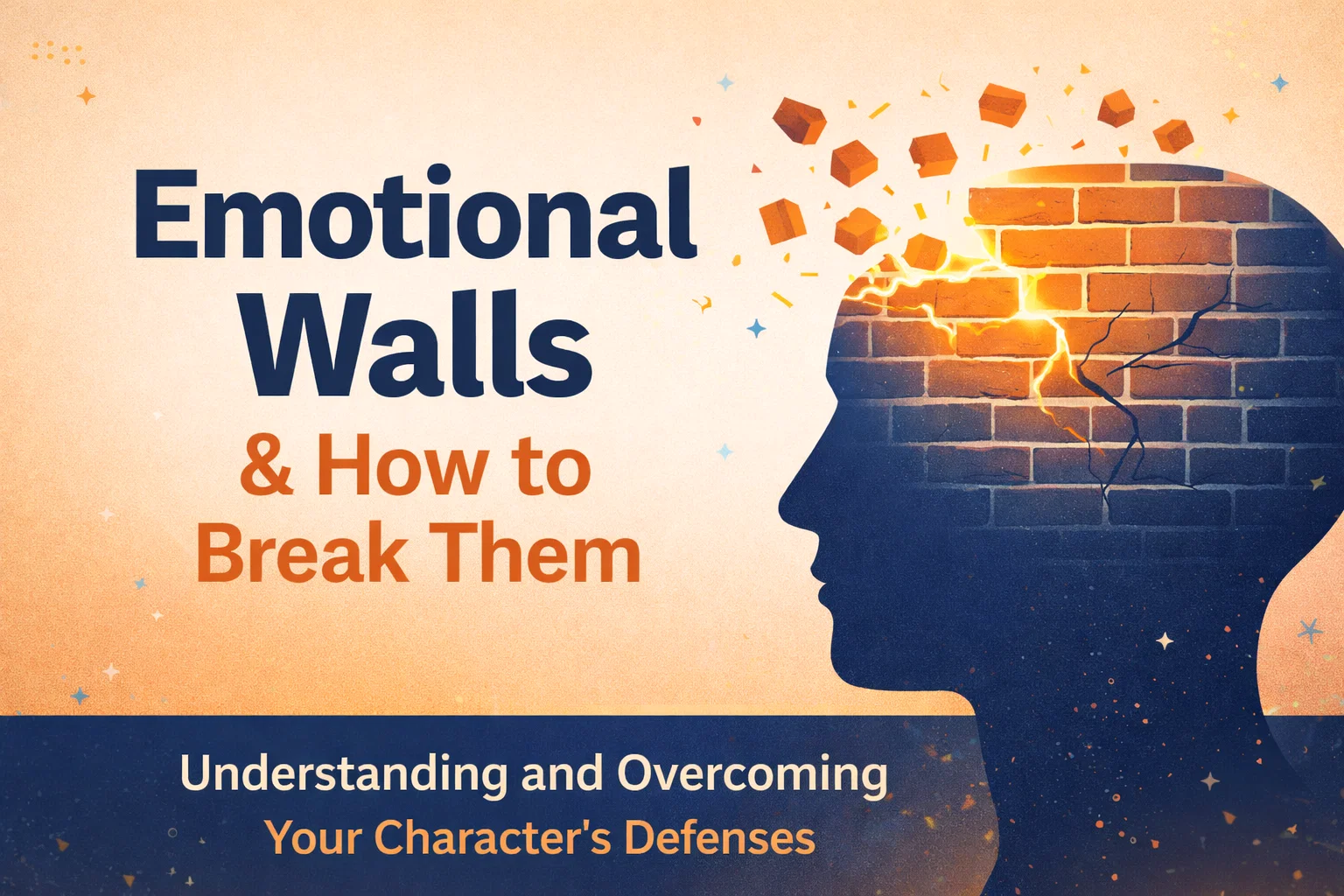
Every writer knows the struggle of a stagnant character. You have a protagonist with a clear goal and a solid backstory, yet they feel flat on the page. Usually, this happens because their defenses are too strong. In the real world, we build emotional walls to survive. In fiction, those same walls are the key to unlocking profound, tear-jerking character arcs. If you want to move your readers, you have to know exactly how to break your characters heart, and the image we are looking at today provides a masterful roadmap for doing just that.
Character development is not just about what a person does; it is about what they refuse to do. It is about the armor they wear to keep the world at bay. When you identify the specific brand of “armor” your character uses, you find the exact hammer needed to shatter it. Let us dive deep into these emotional barriers and explore how you can use them to create unforgettable storytelling moments.
The Shield of Wit: Sarcasm and Humor
We all know the character who has a quip for every tragedy. Sarcasm is one of the most common emotional walls because it is socially acceptable and highly effective. It deflects tension and keeps others at a distance by ensuring nothing is ever taken seriously. However, as the guide suggests, protection becomes a prison very quickly. When a character uses sarcasm as armor, they are essentially saying, “I am terrified of being seen, so I will make you look at my jokes instead.”
How to Break the Sarcastic Character
To break this wall, you do not use more sarcasm. You use gentle, sincere laughter. When someone laughs with them rather than at them, or when someone refuses to be pushed away by the bite of their words, the armor thins. Another powerful way to shatter this defense is by introducing a character who simply does not laugh. When the jokes fall flat, the sarcastic character is left standing naked with their true feelings, forced to communicate without the safety of a punchline.
The Fortress of Solitude: Hyper-Independence and Overworking
Some characters do not hide behind jokes; they hide behind tasks. Hyper-independence is a trauma response that looks like a superpower. These are the characters who refuse help, who insist they can do it all alone, and who view needing anyone else as a fundamental weakness. Closely tied to this is the wall of overworking. If a character is always busy, they never have to sit with the “terrifying sound of their own thoughts.”
Cracking the Independent Facade
The key to breaking a hyper-independent character is persistence. You need a secondary character who shows up even when they are explicitly told not to. This creates a friction point: the protagonist wants to push them away to maintain control, but the secondary character’s presence proves that the world does not end when they let someone in. For the workaholic, the breaking point is forced stillness. Trap them in an elevator, put them on bed rest, or strand them in a quiet cabin. When the “noise” of productivity stops, the emotional dam finally breaks.
Emotional Camouflage: Intellectualization and Meaningless Oversharing
Some of the most complex emotional walls are those built with words. Intellectualizing every feeling is a way of “logic-ing” away pain. If a character can categorize their grief or explain their trauma through a psychological lens, they do not actually have to feel it. They treat their own heart like a science experiment.
Then there is the oversharer. This character seems open because they are always talking, but they are actually oversharing meaningless things to hide real depth. They will tell you about their childhood pet or their favorite cereal for hours to ensure you never ask about why they haven’t spoken to their parents in a decade.
Piercing the Verbal Veil
To break the intellectualizer, you need raw, messy emotion. You need a situation that logic cannot solve, such as a sudden loss or a grand romantic gesture that defies rational thought. For the oversharer, the solution is the “second question.” When they finish a long, rambling story intended to distract, have another character look them in the eye and ask the one thing they were trying to avoid. That silence following the second question is where the real story begins.
The “I’m Fine” Fallacy: Stoicism and Being the Helper
Stoicism is often praised in fiction, but as a character trait, it is a ticking time bomb. A stoic character provides a “safe space” for everyone else but has nowhere to fall apart themselves. Similarly, the character who is “everyone’s helper” avoids their own healing by focusing entirely on the healing of others. This is a deflection tactic: “If I am busy fixing you, I don’t have to acknowledge that I am broken.”
The Moment of Burnout
These characters do not break through gentle persuasion; they break through exhaustion. The helper breaks when they hit emotional burnout and realize they have nothing left to give, yet they are still empty inside. The stoic breaks when they are finally offered a space where it is safe to be weak. Sometimes, the most’s devastating line a helper can hear is someone asking, “What do you need?” and then actually waiting for the answer instead of accepting a deflection.
Physical and Social Withdrawal: Ghosting and Avoiding Touch
Physical walls are just as telling as internal ones. A character who avoids touch is often protecting a “soft core” that feels far too vulnerable to contact. This is not just about romance; it is about the basic human need for connection that they have deemed “unsafe.” Ghosting everyone is the social equivalent. It is a preemptive strike: “I will leave you before you can leave me.”
The Power of Gentle Proximity
Breaking the “no-touch” rule requires patience and “accidental” gentleness. It is the hand on a shoulder during a hard moment or a brief brush of fingers that feels like home. For the ghoster, the wall breaks when they meet someone who won’t take silence as an answer. Not a stalker, but a friend who stays in the driveway or keeps sending letters, proving that their presence is unconditional.
The Danger of Hiding Behind Success
Many “villains” or “anti-heroes” are actually just people hiding behind success. They believe that if they reach the top of the mountain, the emptiness at their core will vanish. They equate their value with their achievements. This is a common trope in corporate thrillers or high-stakes dramas.
The Hollow Victory
The most effective way to break a character who hides behind success is to let them win. Give them the trophy, the promotion, or the power they wanted. When they standing at the peak and realize they still feel empty, the wall crumbles. The realization that “success” was a false god is a powerful catalyst for a character to finally look inward and address their actual emotional needs.
Practical Writing Tips: Implementing the Break
Now that you understand these walls, how do you write the “break” effectively? It should never feel easy. If a character has spent thirty years being stoic, they aren’t going to start sobbing because someone bought them a coffee. The breaking of an emotional wall should be a process of erosion followed by a sudden collapse.
- The Erosion: Show the wall being tested. Let the reader see the character struggle to maintain their sarcasm or their “I’m fine” mask. Give them small cracks.
- The Catalyst: This is the specific event that targets their specific wall. If they avoid mirrors (self-reflection), give them a quiet compliment that hits too hard to ignore.
- The Collapse: This is the climax of the character arc. It is messy, uncomfortable, and usually involves a lot of vulnerability.
- The Aftermath: A character is changed once the wall is gone. They might be raw and fragile, or they might finally be free. Show the reader what they look like without the armor.
Conclusion: Why We Break the Things We Love
As writers, we often feel protective of our characters. We want them to be strong, capable, and safe. But a safe character is a boring character. The most resonant stories are those where we see a character’s defenses stripped away, revealing the “soft core” underneath. Whether it is a sarcastic detective finally letting someone in or a hyper-independent hero asking for help, these moments of shattered glass are where the real human connection happens.
Next time you are stuck in your narrative, look at your character’s emotional walls. Are they overworking? Are they turning every conversation into a joke? Are they pretending not to care? Find the wall, find the specific tool to break it, and watch your story come to life in ways you never expected. After all, the light can only get in through the cracks.
Would you like me to help you brainstorm a specific “breaking point” scene for one of your own characters based on these personality archetypes?