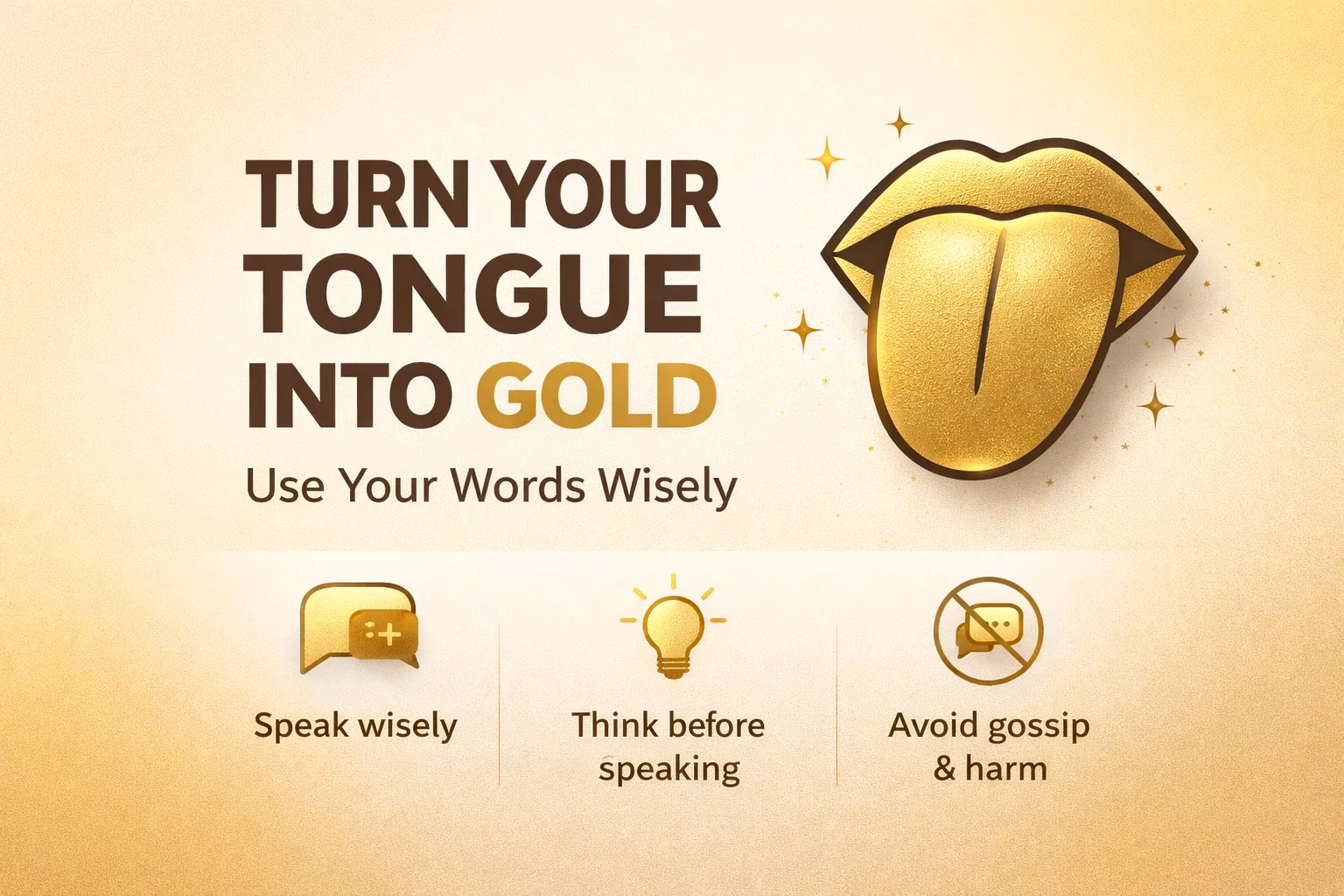
6 Bible Principles to Master Your Words How to Turn Your Tongue Into Gold
Have you ever stopped to consider the weight of the words you speak every single day? We often treat our speech like a background noise, a constant stream of consciousness that exits our mouths without much filter. However, ancient wisdom and modern psychology both agree on one profound truth: your tongue has the power to build empires or tear down lives. The concept of turning your tongue into gold is not about literal alchemy; it is about the symbolic transformation of your communication into something precious, durable, and life-giving. When we learn to master our speech, we unlock a level of influence and peace that most people spend a lifetime searching for.
The Power of Words: Why Your Tongue Matters
The metaphor of a golden tongue suggests something of immense value. Gold is rare, it is sought after, and it does not corrode. When your words reflect these qualities, you become a person of high character and significant impact. Every time you speak, you are planting seeds. These seeds can grow into a garden of encouragement and opportunity, or they can grow into a thicket of bitterness and misunderstanding. Understanding that your words are a creative force is the first step toward intentional living.
In a world where digital communication is often impulsive and reactive, the art of measured, valuable speech is becoming increasingly rare. By choosing to refine your language, you are not just improving your relationships; you are actively shaping your own reality. The energy you put out through your voice eventually circles back to you, defining how others perceive you and, more importantly, how you perceive yourself.
1. Speak Life, Not Destruction
The first principle of a golden tongue is the commitment to speak life. This means prioritizing words that uplift, encourage, and heal. Think of your words as a medicinal balm. When someone is hurting, a well-timed word of comfort can be the turning point in their day. Conversely, a harsh or critical remark can leave a scar that lasts for years. To speak life is to look for the potential in people and situations rather than focusing solely on the flaws.
The Art of Timely Encouragement
There is a specific beauty in what many call a word in season. This is the right word spoken at exactly the right moment. It doesn’t have to be a grand speech; sometimes a simple I believe in you or I see how hard you are working is enough to change someone’s trajectory. When you make it your mission to be a source of encouragement, you naturally draw people toward you. You become a person of value because you provide the emotional oxygen that others need to thrive.
2. Think Before You Speak
One of the most common pitfalls in communication is impulsivity. We live in a fast-paced culture that rewards the quickest retort, but a golden tongue is defined by control. Thinking before you speak is the ultimate discipline of the mind. It requires you to pause and evaluate the potential impact of your words before they leave your lips. Is what you are about to say true? Is it necessary? Is it kind?
Escaping the Trap of Trouble
Many of the conflicts we face in our personal and professional lives could be avoided if we simply practiced a five-second delay. When we speak out of anger or frustration, we often say things we later regret. By keeping a guard over our mouth, we keep ourselves out of unnecessary trouble. Silence is often more powerful than a poorly chosen word. A person who can control their tongue demonstrates a level of self-mastery that commands respect without them having to demand it.
3. Speak With Wisdom and Clarity
Wisdom is the application of knowledge with a deep understanding of context. Speaking with wisdom means you aren’t just talking to hear your own voice; you are speaking to add value. When you speak with understanding, people naturally lean in. Your words become like apples of gold in settings of silver—beautiful, balanced, and perfectly presented. This level of communication requires active listening, as you cannot speak wisely to a situation you do not fully comprehend.
The Value of Precision
Vague or confusing speech leads to misunderstandings and lost time. A golden tongue is precise. It seeks to bring clarity to a situation rather than adding to the noise. When you communicate with clarity, you respect the listener’s time and intelligence. You move away from fluff and toward substance, ensuring that every sentence serves a purpose. This builds your reputation as a person of substance and insight.
4. Avoid Gossip, Lies, and Hurtful Words
Nothing devalues a tongue faster than dishonesty or malice. A tongue that cannot be trusted loses its value instantly. Gossip might feel like social currency in the moment, but it is actually a debt that you will eventually have to pay in the form of lost trust. When you speak ill of others behind their backs, you are signaling to your current listener that you will likely do the same to them. This creates an environment of suspicion rather than connection.
The Integrity of Truth
Lies are like cracks in a foundation; eventually, the whole structure will come down. Keeping your words truthful, even when it is uncomfortable, is the hallmark of a person with a golden tongue. Truth builds a bridge of reliability between you and the world. When people know that your word is your bond, your influence grows exponentially. Avoiding hurtful words is not about being weak; it is about having the strength to use your power for good rather than for tearing others down.
5. Use Your Tongue to Pray and Bless
There is a spiritual and psychological dimension to our speech that involves blessing and prayer. Whether you are religious or simply practice positive affirmations, the act of speaking blessings over your life and the lives of others is transformative. Positive declarations strengthen your internal resolve and shift your focus toward gratitude and possibility. Instead of complaining about what is wrong, use your tongue to declare what can go right.
Strengthening Your Inner Life
The way you talk to yourself is just as important as how you talk to others. If your internal monologue is filled with criticism, it will eventually leak into your external speech. By choosing to use your words to bless your own journey, you build emotional resilience. You begin to see yourself as a person of purpose, and that confidence radiates outward, affecting every interaction you have. Your words become a tool for building a better future.
6. Let Your Words Match Your Character
The most important principle of all is consistency. Your speech is ultimately a reflection of what is stored in your heart. You can try to use fancy words or mimic “golden” speech patterns, but eventually, the true nature of your character will come through. This is why the journey to a golden tongue is actually a journey of the heart. To change what comes out of the mouth, you must first change what goes into the mind and heart.
The Abundance of the Heart
If you fill your life with negativity, comparison, and bitterness, your words will inevitably reflect that. However, if you fill your heart with gratitude, knowledge, and empathy, your speech will naturally become life-giving. Integrity means that your words and your actions are in total alignment. When your character matches your claims, you possess an unshakable credibility. This is the ultimate goal of the golden tongue: to be a person whose words are a true and beautiful reflection of their soul.
Conclusion: Refining Your Speech Daily
Transforming your speech is not an overnight event; it is a daily practice of refinement. Like a goldsmith working with raw ore, you must burn away the dross of sarcasm, dishonesty, and impulsivity to find the shine beneath. Every conversation is an opportunity to practice these six principles. As you begin to speak life, exercise restraint, and offer wisdom, you will notice a shift in your environment. People will trust you more, opportunities will find you faster, and you will experience a profound sense of internal alignment.
Remember that your words are your legacy. Long after you leave a room, the way you made people feel with your words will remain. Choose to be the person who leaves behind “apples of gold.” Start today by pausing before you respond, looking for someone to encourage, and ensuring that your heart is in the right place before you open your mouth. Your tongue is a powerful tool—make sure it is crafting a masterpiece.