Sarcastic Dialogue Writing Prompt Funny Sarcastic Quotes for Characters
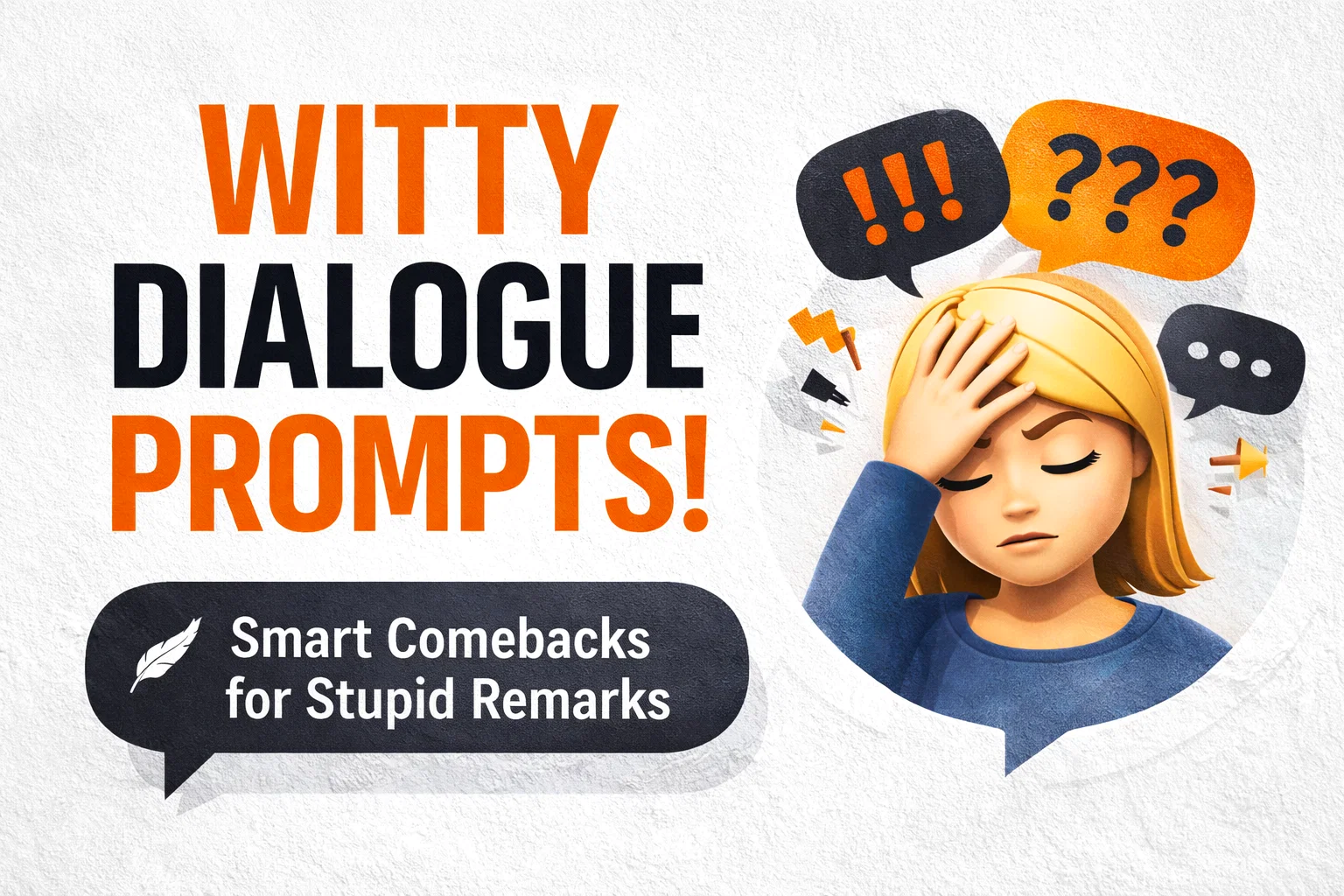
Finding the perfect words to capture a character’s wit or frustration can be one of the most challenging parts of the creative writing process. Dialogue is the heartbeat of any story, acting as the primary vehicle for character development and plot progression. When a character delivers a line that perfectly encapsulates their personality, it resonates with readers long after they turn the final page. The prompt featured in this week’s inspiration focuses on that specific brand of sharp, sarcastic humor that defines so many fan favorite protagonists. It is a moment of total mental overload caused by the sheer absurdity of another character’s actions or words.
The Power of Sharp Dialogue in Storytelling
Why does a well placed sarcastic remark work so well? In fiction, dialogue serves multiple purposes. It should never just be filler or a way to pass information from one person to another. Instead, great dialogue reveals the subtext of a relationship. When a character says, “Sorry, my brain just malfunctioned trying to process the amount of stupid that it just heard,” they are doing more than just being rude. They are establishing a hierarchy, expressing exhaustion, or perhaps masking their own vulnerability with a shield of humor.
Sarcasm is a sophisticated tool. It requires the reader to understand the gap between what is said and what is meant. For a writer, mastering this means understanding your character’s voice deeply enough to know exactly when they would snap. This specific prompt is a gift for those writing “enemies to lovers” tropes, workplace comedies, or even gritty noir where the hero has simply had enough of the villain’s nonsense.
Breaking Down the Malfunction Prompt
The phrase “my brain just malfunctioned” is a modern, slightly hyperbolic way of expressing disbelief. It leans into the idea that the character perceives themselves as a logical, functioning being who has been short-circuited by the illogical nature of their surroundings. This type of dialogue works best when contrasted with a “straight man” character, someone who is being genuinely serious while saying something objectively ridiculous.
To use this prompt effectively, consider the following scenarios:
- The High Stakes Argument: In a moment of intense pressure, a character tries to suggest a plan that is clearly suicidal. The protagonist uses this line to break the tension and highlight the flaws in the logic.
- The First Meeting: Use this as a “meet cute” that is actually quite “meet prickly.” It immediately establishes a dynamic where one character is the observer and the other is the chaos agent.
- The Internal Monologue: Even if the character does not say it out loud, thinking this line provides a great deal of insight into their internal judgment of the world around them.
How to Write Authentic Sarcastic Characters
Writing a sarcastic character is a balancing act. If they are constanty biting and mean, the audience might find them unlikable. To make sarcasm work, it needs to be grounded in a relatable emotion. Perhaps the character uses wit as a defense mechanism because they have been hurt in the past. Or maybe they are the only person in the room who sees the truth of a situation, making their sarcasm a form of weary honesty.
Show, Don’t Just Tell Through Speech
When you use a sharp line like the one in our prompt, the surrounding prose should support the delivery. Think about the character’s body language. Are they rubbing their temples? Are they staring blankly at the other person for five seconds before speaking? The silence before a “brain malfunction” comment is often just as funny as the words themselves. Use beats of action to pace the dialogue so the punchline hits with maximum impact.
Varying the Intensity of the Wit
Not all sarcasm is created equal. Depending on your character’s background, they might use different “flavors” of wit:
- The Dry Wit: Minimalist, deadpan delivery. They barely move a muscle while delivering the line.
- The Flamboyant Wit: Accompanied by grand gestures and an exaggerated tone of mock concern.
- The Bitter Wit: Heavy with resentment, usually used when the character feels backed into a corner.
Using Writing Prompts to Overcome Blocks
Writer’s block often stems from a fear of making the “wrong” choice for a scene. Dialogue prompts like Dialogue Prompt #20 act as a low pressure entry point. You do not have to worry about the entire 80,000 word novel right now. You only have to worry about the two minutes of conversation surrounding this one specific line. This technique, often called “writing from the middle,” allows you to build a scene outward from a single moment of high energy.
Exercises for This Prompt
Try these three quick exercises to get your creative juices flowing:
1. Write a 200 word scene where a character says this line to a boss or someone in a position of authority. How do they handle the consequences?
2. Write a scene where two characters are both equally sarcastic, and they keep trying to outdo each other until one of them finally “malfunctions.”
3. Take a very serious, classic scene from history or literature and rewrite a key moment using this dialogue. Notice how it completely shifts the genre of the story.
The Importance of Character Voice Consistency
While this prompt is fantastic, it must fit the person saying it. If you have a character who is usually very soft spoken and formal, using the word “stupid” might feel out of place. You might need to adjust the prompt to fit their specific dialect. For a formal character, it might become, “I find myself momentarily unable to categorize the logic you have just presented.” The core idea remains the same, but the “costume” of the words changes to fit the actor.
Building a Vocabulary of Disbelief
To keep your writing fresh, you should build a library of ways your characters express disbelief. Some might use silence. Others might use technical jargon. Some might use physical comedy. By collecting prompts like this one, you are building a toolkit that ensures your dialogue never feels repetitive or stale. Readers appreciate a writer who can find new and inventive ways to describe the universal human experience of being completely baffled by someone else’s choices.
Integrating Humor into Different Genres
You might think that a funny line about a brain malfunctioning only belongs in a contemporary comedy, but that is far from the truth. In a fantasy setting, a wizard might say this to a bumbling apprentice. In a sci-fi setting, an AI might literally mean that its processors are struggling with human illogic. Humorous dialogue is a universal bridge that makes even the most alien or fantastical worlds feel grounded and human.
The Role of Conflict in Dialogue
Every piece of dialogue should contain some form of conflict, however small. The “brain malfunction” prompt is an excellent example of “micro-conflict.” It shows a disagreement in perception. Character A thinks they said something reasonable. Character B thinks it was the height of foolishness. This friction is what keeps the reader engaged and moving toward the next paragraph. Without this push and pull, dialogue becomes a boring exchange of pleasantries.
Developing Your Own Weekly Writing Ritual
Consistency is the secret sauce of successful authors. Setting aside time each week to engage with a new dialogue prompt can significantly improve your prose over time. It trains your brain to look for the “spark” in everyday conversations and helps you develop a more rhythmic approach to your writing. Whether you use a physical notebook or a digital document, keeping a record of these exercises provides a wealth of material you can mine later when you are working on a larger project.
Sharing Your Work and Getting Feedback
Writing is often a solitary act, but it does not have to stay that way. Once you have crafted a scene around this prompt, consider sharing it with a writing group or on social media. Seeing how different people interpret the same seven words is fascinating. One writer might see a comedy, while another sees a tragic breakdown of a marriage. This diversity of thought is what makes the writing community so vibrant and essential for growth.
Conclusion: Let Your Characters Speak Louder
Ultimately, a prompt is just a doorway. It is up to you to walk through it and build the room on the other side. This week’s focus on sarcastic disbelief reminds us that characters are at their most relatable when they are reacting to the chaos of life with a bit of humor. By embracing these moments of “malfunction,” you give your characters a pulse and a personality that readers will root for.
So, the next time you find yourself staring at a blinking cursor, remember this prompt. Take a deep breath, imagine your character’s most annoying companion saying something truly ridiculous, and let the sarcasm fly. You might just find that a single “malfunctioning brain” is exactly what you need to jumpstart your entire story. Happy writing, and may your dialogue always be as sharp as your imagination.