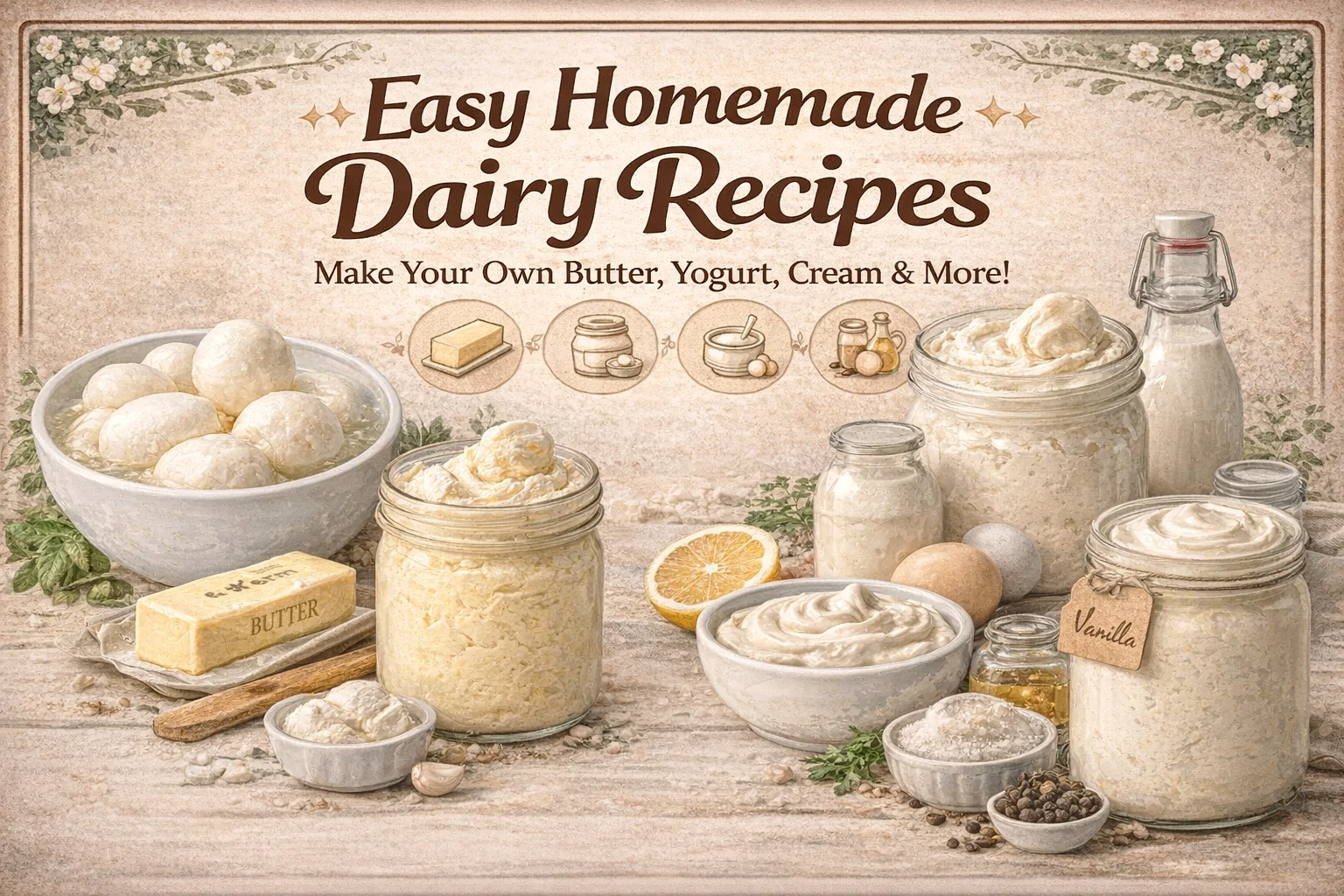
7 Easy Homemade Dairy Recipes How to Make Mozzarella, Butter Yogurt from Scratch
Walking through the dairy aisle at the grocery store can sometimes feel like a whirlwind of plastic packaging, long ingredient lists, and rising prices. There is a certain magic in realizing that you do not have to rely on a factory to enjoy the creamiest butter, the softest mozzarella, or the most probiotic-rich yogurt. In fact, many of these kitchen staples require only a few simple ingredients and a bit of patience. Returning to the basics of homemade dairy is not just about saving money; it is about reclaiming the flavor and nutritional integrity of the food you put on your table. When you make these items yourself, you know exactly what goes into them, and the difference in taste is truly undeniable.
The Renaissance of Homemade Kitchen Basics
In recent years, there has been a massive shift toward homesteading skills and scratch cooking. People are moving away from highly processed foods and looking for ways to simplify their pantries. The art of making dairy products at home is a cornerstone of this movement. Whether you are motivated by a desire for a more sustainable lifestyle or you simply want to impress your friends at your next dinner party, mastering these seven dairy essentials will transform the way you view your refrigerator. From the stretch of fresh cheese to the rich aroma of vanilla coffee creamer, these recipes are designed to be approachable for any home cook.
Why Make Your Own Dairy?
The primary benefit of DIY dairy is control. Store-bought versions often contain stabilizers like guar gum or carrageenan to extend shelf life. By making these at home, you eliminate the need for additives. Furthermore, the flavor profile of fresh dairy is much more vibrant. Freshly churned butter has a sweetness that a refrigerated stick simply cannot match, and homemade yogurt offers a customized level of tanginess and thickness that fits your specific preference. It is also an incredibly rewarding process that connects you more deeply to the food you consume.
1. Fresh Homemade Mozzarella in Minutes
Mozzarella is often the gateway cheese for many home cheesemakers because it provides instant gratification. Unlike aged cheeses that require months of ripening, mozzarella can be ready to eat in less than an hour. The process involves heating whole milk with citric acid to encourage curdling and then adding rennet to set the curd. The real fun begins during the stretching phase.
To get that perfect, elastic texture, you must heat the curds until they are pliable. Wearing gloves is usually a good idea as the water needs to be quite hot. As you pull and fold the cheese, it transforms from a grainy mass into a smooth, shiny ball. This fresh mozzarella is perfect for Caprese salads, homemade pizzas, or simply sliced with a drizzle of olive oil and a sprinkle of sea salt. Using high-quality, non-homogenized milk will yield the best results, giving you a creamy center that melts beautifully.
2. The Creamiest Homemade Cream Cheese
If you have ever looked at the back of a cream cheese container, you might have seen a long list of thickeners. Making it at home requires just milk, heavy cream, and an acid like lemon juice or vinegar. By gently heating the dairy and allowing it to curdle, you can strain the solids through a cheesecloth to create a spread that is incredibly rich and velvety. This homemade version is far superior for baking cheesecakes or spreading thick layers over toasted bagels. You can also customize the flavor by folding in fresh herbs, cracked black pepper, or honey once the cheese has reached your desired consistency.
3. Golden Homemade Butter and Fresh Buttermilk
There is something deeply satisfying about watching heavy cream transform into golden butter. All it takes is mechanical agitation. If you have a stand mixer, you can simply whip the cream past the whipped cream stage until the fats separate from the liquid. What remains is a solid mass of butter and a pool of fresh, liquid buttermilk. This process is a double win for your kitchen.
Washing Your Butter
One critical step often overlooked is washing the butter. Once the butter has formed, you must knead it in ice-cold water to remove any remaining buttermilk. If you leave the buttermilk in, the butter will go rancid much faster. Once cleaned, you can add a pinch of sea salt or even fold in roasted garlic to create a gourmet compound butter. The leftover buttermilk is liquid gold for baking fluffy biscuits or marinating fried chicken, ensuring that nothing in your kitchen goes to waste.
4. Foolproof Homemade Yogurt for Gut Health
Yogurt is a staple for many, but the sugar content in commercial varieties can be staggering. Making it at home allows you to control the fermentation time and the quality of the cultures. You start by heating milk to kill off any competing bacteria and then cooling it down to a temperature where the “good” bacteria can thrive. By whisking in a small amount of plain yogurt with live cultures, you inoculate the milk.
The key to success is keeping the mixture at a warm, consistent temperature for several hours. You can use an Instant Pot, a yogurt maker, or even a warm spot near your oven. The longer it sits, the tangier it becomes. For a thick, Greek-style yogurt, simply strain the finished product through a coffee filter or fine mesh cloth to remove the excess whey. This homemade probiotic powerhouse is perfect for morning bowls with fresh fruit or as a base for savory dips.
5. Tangy Homemade Sour Cream
Homemade sour cream is a revelation. Most people are surprised to learn that it only requires two ingredients: heavy cream and a starter, such as buttermilk or a bit of yogurt. By mixing them together and letting them sit at room temperature for about twenty-four hours, the cream naturally thickens and develops that signature tang. It is much thicker and more flavorful than anything found in a plastic tub. Use it to top spicy tacos, stir into creamy stroganoff, or dollop onto a baked potato for the ultimate comfort food experience.
6. Amazing Five-Minute Mayonnaise
While not strictly a dairy product in the traditional sense, mayonnaise is a kitchen essential that fits perfectly into this homemade collection. It is an emulsion of egg, oil, and acid. The trick to a foolproof mayo is using an immersion blender or whisking very slowly to ensure the oil incorporates into the egg without breaking. A neutral oil like avocado or grapeseed oil works best so that the flavor remains light. Adding a touch of vanilla or sugar, as seen in some traditional recipes, can provide a unique depth that pairs beautifully with sandwiches or as a base for creamy dressings. It is fresh, bright, and free of the seed oils often found in commercial brands.
7. Custom Coffee Creamers for Your Morning Brew
Many commercial coffee creamers are filled with vegetable oils and artificial flavorings. Creating your own is as simple as mixing milk and heavy cream with a sweetener of your choice. Condensed milk is a fantastic option for creating a silky, sweet base that mimics your favorite cafe flavors. From there, the possibilities are endless.
Flavor Variations to Try
- Vanilla Bean: Use real vanilla extract or a scraped vanilla bean for a classic, sophisticated taste.
- Pumpkin Spice: Add a pinch of cinnamon, nutmeg, and ginger for a cozy seasonal treat.
- Chocolate Hazelnut: Stir in a small amount of cocoa powder and hazelnut extract for a decadent mocha experience.
Store your homemade creamer in a glass jar in the refrigerator. It will stay fresh for about a week, making your morning coffee routine feel like a daily luxury.
Essential Tools for Your DIY Dairy Journey
You do not need a professional laboratory to make these recipes, but a few key tools will make the process much easier. A digital thermometer is perhaps the most important investment, as temperature precision is vital for cheese and yogurt making. You will also want a supply of high-quality cheesecloth for straining and a few glass mason jars for storage. Beyond that, a heavy-bottomed pot and a sturdy whisk or stand mixer are all you need to get started. Having these basics on hand will allow you to whip up a batch of butter or cheese whenever the craving strikes.
Sourcing the Best Ingredients
Since these recipes have so few ingredients, the quality of your milk and cream is paramount. If possible, look for local dairy farms that offer vat-pasteurized or non-homogenized milk. This type of milk is less processed and retains more of the natural enzymes and proteins that help cheese and yogurt set properly. Avoid ultra-pasteurized (UHT) milk for cheesemaking, as the high heat used in that process changes the protein structure, making it difficult for the milk to form solid curds. Using the best ingredients you can find will ensure your homemade dairy is the highest quality possible.
Final Thoughts: Embracing the Slow Food Movement
Making your own dairy products is more than just a culinary project; it is an act of mindfulness. In a world that moves at a frantic pace, taking the time to stretch mozzarella or culture yogurt encourages us to slow down and appreciate the science of food. It teaches us patience and provides a sense of accomplishment that cannot be bought at a store. Once you taste the difference of butter you churned yourself or cream cheese you strained in your own kitchen, you may find it very difficult to go back to the pre-packaged versions. Start with one recipe, master it, and then move on to the next. Your kitchen, your wallet, and your taste buds will certainly thank you. Happy cooking!