ADHD Sensory Audit Toolkit Overcoming Sensory Overload Drainage
Have you ever felt completely exhausted by the end of the day, even if you haven’t crossed a single item off your to-do list? For many individuals living with ADHD, the struggle isn’t always about a lack of willpower or a deficit of attention. Often, it is about a sensory system that is working overtime to process a world that feels too loud, too bright, or too chaotic. The concept that ADHD motivation works differently is deeply tied to how our brains interact with our physical environment. When your surroundings are constantly draining your battery through sensory overload, finding the drive to tackle tasks becomes an uphill battle. By performing a sensory audit and building a personalized toolkit, you can stop the energy leaks and create a space where your neurodivergent brain can actually thrive.
The Hidden Connection Between Sensory Input and ADHD Motivation
Most productivity advice focuses on time management and discipline. However, for the ADHD brain, the environment is the foundation upon which all focus is built. If the foundation is shaky because of a buzzing light or a scratchy shirt tag, the mental energy required to ignore those distractions leaves very little left for actual work. This is why motivation feels so fickle. It is not that you don’t want to do the work; it is that your brain is currently busy surviving a sensory assault.
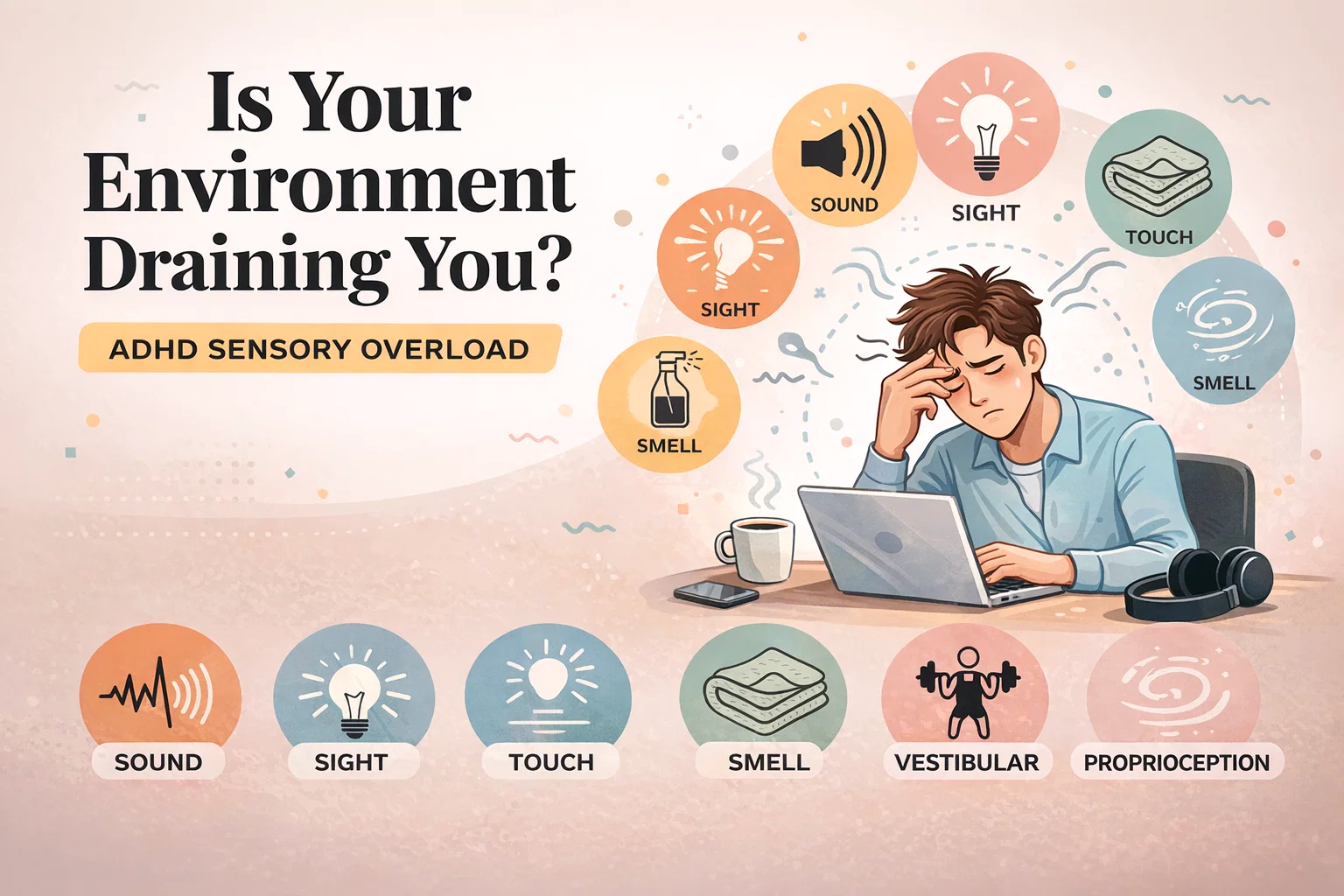
Understanding the eight sensory systems—including the well-known five plus vestibular and proprioception—is the key to unlocking a more functional life. When we talk about sensory “triggers,” we are talking about inputs that signal a low-level threat to the nervous system. When we talk about “treats,” we are referring to inputs that soothe the nervous system, allowing the prefrontal cortex to come back online so you can focus and feel motivated again.
Sound: Finding Your Frequency for Focus
Sound is often the most immediate distractor for those with ADHD. While some people can work in a bustling coffee shop, others find the sound of a colleague chewing or the hum of a refrigerator to be physically painful. This sensitivity is often referred to as misophonia or general auditory overstimulation.
Common Auditory Triggers
- Buzzing Lights: Fluorescent tubes often emit a high-pitched hum that neurotypical people can filter out, but ADHD brains often cannot.
- Loud Chewing: Repetitive biological sounds can trigger an immediate “fight or flight” response.
- Open Office Noise: The unpredictable nature of overlapping conversations makes it impossible for the brain to decide which sound to prioritize.
Auditory Treats to Regulate Your Mood
To combat these, you need to curate your soundscape. Noise-canceling headphones are a game-changer, but what you play through them matters too. Brown noise, which is deeper and rumbly compared to the static of white noise, is often more soothing for ADHD minds. Curating “Calm Playlists” or using earplugs like Loop can help you navigate loud environments without feeling completely drained by midday.
Sight: Designing a Low-Friction Visual Environment
Visual chaos equals mental chaos. If your desk is covered in clutter, your brain is constantly “pinging” every item it sees, which uses up precious cognitive resources. Similarly, the quality of light in your room can either keep you alert or send you into a state of sensory fatigue.
Identifying Visual Drains
Fluorescent lighting is a major culprit in office and school settings. It flickers at a rate that is often invisible to the eye but detectable by the brain, leading to headaches and irritability. Visual chaos, such as stacks of paper or mismatched decor, acts as a constant “to-do” list that pulls your eyes away from your current task.
Visual Strategies for Success
Switching to warm lamps or using 10 percent brightness settings on monitors can significantly reduce eye strain. Minimalist decor isn’t just an aesthetic choice for ADHD; it is a functional necessity. Using blue light glasses or screen filters can also help protect your brain from the overstimulating effects of digital devices, making it easier to transition into a focused state.
Touch: The Importance of Physical Comfort
If you are physically uncomfortable, you are not going to be productive. The ADHD tactile experience is often heightened, meaning a small annoyance like a tight waistband can consume 50 percent of your mental energy. This is why many people with ADHD prefer soft, oversized clothing or have very specific preferences for textures.
Tactile Triggers to Remove
Clothing tags are a classic example of a small trigger with a large impact. Dry skin or rough fabrics can also create a constant “itch” in the back of your mind. Tight clothing might feel restrictive and heighten anxiety levels throughout the day.
Soothing Tactile Treats
Weighted blankets are one of the most popular tools for sensory regulation because they provide deep pressure touch, which releases serotonin. Choosing silk textures or soft knits for your work wardrobe can keep you comfortable. Additionally, having fidget toys at your desk gives your hands something to do, which actually helps the rest of your brain stay engaged with the task at hand.
Smell: The Power of Olfactory Regulation
The sense of smell is directly linked to the emotional center of the brain. This means a bad smell can instantly ruin your mood, while a pleasant one can boost your productivity. Many people with ADHD are sensitive to chemical odors, which can cause brain fog or even physical nausea.
Olfactory Drains in the Home
Cleaning chemicals and strong perfumes are the most common offenders. Stale air in a room that hasn’t been ventilated can also lead to a feeling of lethargy. Even lingering cooking odors from breakfast can be a lingering distraction during your afternoon work session.
Using Scent to Enhance Motivation
Fresh air is the simplest treat—opening a window can reset the energy of a room. Essential oils like lavender for relaxation or citrus for energy can be used strategically throughout the day. Using an air purifier ensures that the air stays neutral, preventing any unexpected scents from breaking your flow state.
Vestibular and Proprioception: The “Hidden” Senses
Beyond the basic five senses, we have the vestibular system (balance and spatial orientation) and proprioception (the sense of where your body is in space). Many people with ADHD struggle with being “clumsy” or feeling restless. These sensations are often signs that your body is seeking input to feel grounded.
Signs of Vestibular and Proprioceptive Issues
If you find yourself constantly bumping into doorframes or feeling car sick easily, your vestibular system might be under-responsive or over-sensitive. A lack of body awareness can lead to a feeling of being “untethered,” which makes it very hard to sit still and focus on a computer screen.
Treats for Body Grounding
- Heavy Work: Pushing against a wall, lifting weights, or carrying heavy groceries provides the deep pressure your joints crave.
- Slow Movement: Rocking chairs, hammocks, or gentle bouncing on a yoga ball can provide the vestibular input needed to calm a restless mind.
- Resistance Bands: Keeping a resistance band at your desk allows you to get proprioceptive input through your legs or arms while you work.
Building Your Personalized ADHD Sensory Toolkit
Now that you understand the different ways your environment can drain you, it is time to build your toolkit. This isn’t about changing everything at once. It is about identifying your biggest “leaks” and finding a “treat” to plug them. Start by spending one day observing your reactions. When do you feel a spike in irritation? When do you feel the urge to run away from your desk?
Create a physical box or a mental list of items that help you reset. This might include a pair of noise-canceling headphones, a favorite fidget, a tin of peppermint oil, and a weighted lap pad. When you feel your motivation slipping, go to your toolkit before you reach for more caffeine or start scrolling on your phone. Often, the “lack of motivation” is actually just sensory burnout in disguise.
How a Sensory Audit Changes the Motivation Game
The beauty of a sensory audit is that it removes the shame associated with ADHD. Instead of telling yourself that you are “lazy,” you can look at the data. If you realize you haven’t been able to work because the neighbor is mowing the lawn and the sun is glaring off your monitor, you can fix those things. Once the sensory barriers are removed, you will often find that the motivation was there all along, just buried under a mountain of environmental stress.
By treating your sensory needs as non-negotiable requirements for your health rather than “preferences” or “luxuries,” you set yourself up for long-term success. You deserve an environment that supports your unique brain. Whether that means wearing sunglasses indoors, using a standing desk with a balance board, or working in total silence, lean into what works for you.
Conclusion: Empowering Your Neurodivergent Self
Living with ADHD in a neurotypical world is a constant exercise in adaptation. However, you don’t have to be a victim of your environment. Understanding that your motivation is tied to your sensory processing is a superpower. It gives you a roadmap for how to manage your energy and protect your peace.
Remember that what works for someone else might not work for you, and that is perfectly okay. The goal of a sensory audit is to find your specific triggers and your specific treats. As you begin to optimize your space, you will likely find that your focus improves, your stress levels drop, and your motivation becomes more consistent. Start small, be kind to yourself, and save your energy for the things that truly matter to you.