10 Ways to Break Negative Patterns and Build Better Habits Life-Changing Mindset Shifts
Breaking the cycle of repetitive, unhelpful habits is one of the most challenging yet rewarding journeys you can undertake. We often feel stuck in a loop, wondering why we keep making the same choices even when we know they do not serve our long-term goals. The truth is that your brain is simply following a well-worn path. To change your life, you must first change the architecture of your daily patterns. This guide explores the transformative Pattern Awareness Framework and provides actionable steps to help you reclaim your agency and build a life aligned with your highest potential.
Understanding the Pattern Awareness Framework
The first step toward any significant life change is awareness. You cannot fix what you do not acknowledge. The Pattern Awareness Framework, or PAF, is a systematic approach designed to help you zoom out and look at your life objectively. When you feel overwhelmed or confused by your own behavior, this framework acts as a diagnostic tool to pinpoint exactly where things are going off the rails.
Step 1: Identify the Pattern
Start by observing your defaults. Ask yourself what you always do in specific high-pressure situations. Do you shut down when a deadline approaches? Do you reach for a snack when you feel lonely? Identifying the pattern requires you to look for the recurring theme in your reactions. It is not about judging yourself but about gathering data on how you currently operate in the world.
Step 2: Pinpoint the Trigger
Every habit has a starting gun. Triggers are the environmental or emotional cues that set a pattern in motion. Common triggers include fear of failure, the uncertainty of a new project, social pressure, or the habit of comparing your progress to others. When you know what sets you off, you can prepare a counter-strategy before the urge to repeat an old habit becomes too strong to resist.
Step 3: Acknowledge the Real Cost
Patterns stick because they offer a short-term reward, like comfort or a momentary escape. However, they carry a heavy long-term cost. To break the cycle, you must be honest about what these habits are costing you in terms of your career growth, your physical health, and the quality of your relationships. Writing these costs down makes them real and creates the necessary friction to stop the automated response.
The Power of the 3 Replacement Rule
Willpower alone is rarely enough to break a habit. Instead of simply trying to stop a behavior, you must replace it with an opposite action. The 3 Replacement Rule suggests that for every unhelpful pattern, there is a constructive alternative that can take its place. This shifts your focus from deprivation to growth.
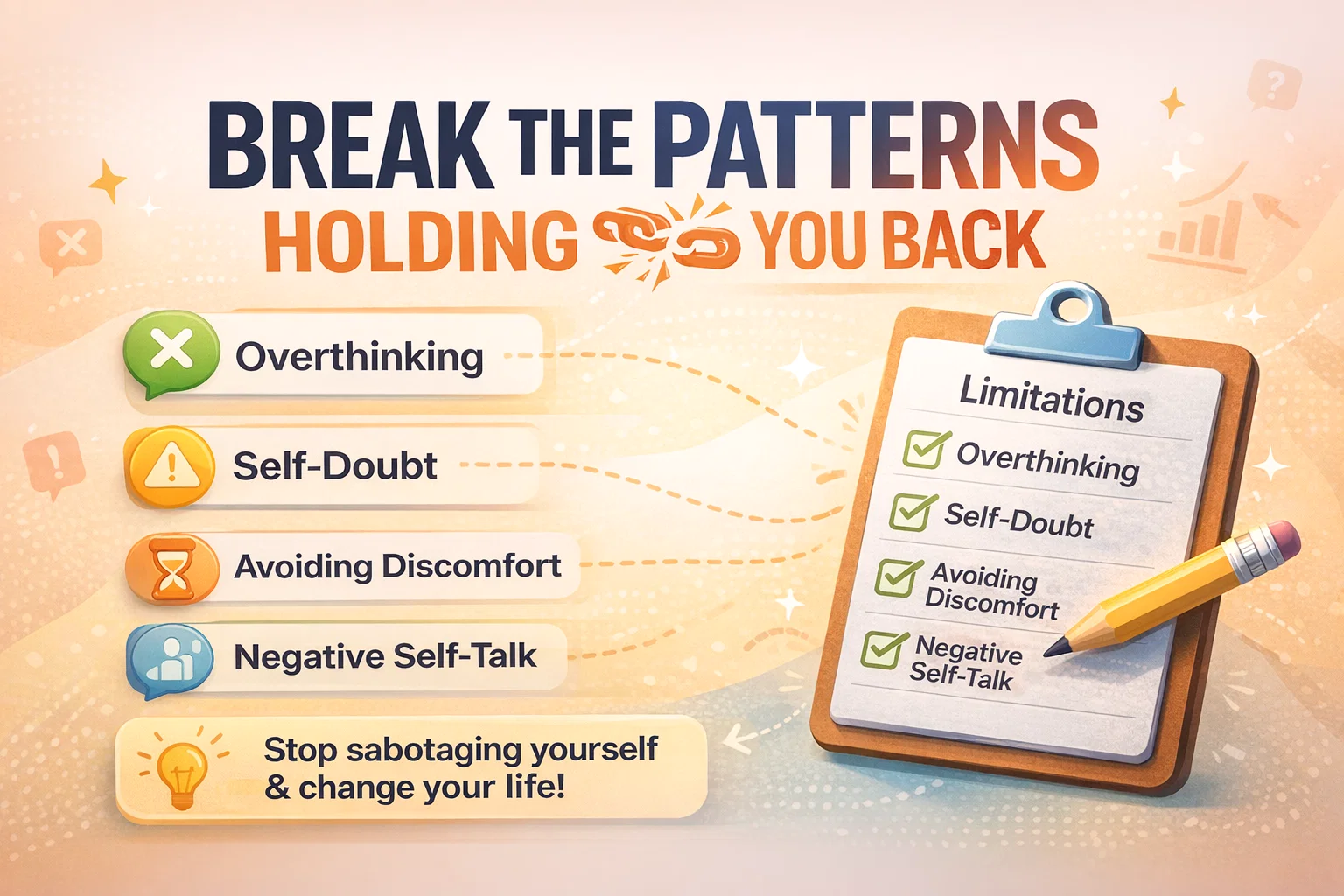
- Instead of Overthinking: Use the 1-minute decision rule to build momentum.
- Instead of Avoiding Discomfort: Commit to doing the smallest uncomfortable action possible.
- Instead of Waiting to be Ready: Start with half the skill but full commitment.
- Instead of Shrinking: Assume you belong in every room you enter.
- Instead of Fear-Based Choices: Ask yourself what you would choose if you trusted yourself completely.
Embracing the Pattern Breaker Mindset Shift
Changing your behavior requires a fundamental shift in how you view yourself and your capabilities. This is where radical self-honesty comes into play. You have to stop saying you are stuck and start admitting that you are repeating a pattern. This distinction is vital because it moves you from being a victim of circumstances to being the architect of your habits.
Radical self-responsibility means accepting that while you might not be responsible for the things that happened to you in the past, you are entirely responsible for how you respond to them today. Alongside this, practice radical self-support. This means you do not need to be perfect to see progress. Consistency is the engine of change, not perfection. If you fall back into an old pattern, acknowledge it and return to your new rule immediately.
The 1 Percent Pattern Upgrade Method
Most people fail at personal development because they try to overhaul their entire lives overnight. This creates a massive amount of stress that eventually leads back to old, comfortable habits. The 1 Percent Upgrade Method focuses on micro-wins. By picking just one area, such as communication or boundaries, and choosing one single behavior to upgrade, you make the process manageable.
Choose one small habit or one new rule and repeat it daily. These tiny upgrades might seem insignificant in the moment, but they compound over weeks and months. This approach respects the way the brain builds new neural pathways, allowing you to create lasting change without the burnout associated with radical transformations.
Using the Future-Self Anchor
When you are in the middle of a difficult moment, your past self often wants to take the lead. This is the version of you that is used to playing it safe. To break free, you need to anchor your decisions in your future self. Patterns break much faster when your future self speaks louder than your past self.
Reflective Questions for Your Future Self
Whenever you are faced with a choice, stop and ask: Who do I want to become? How would that person respond to this situation right now? What pattern would they choose instead of this one? By acting like that future person today, you are essentially pulling that reality into the present. You are no longer waiting to become that person; you are practicing being them.
The Weekly Pattern Audit
To stay sharp and ensure you are not drifting back into old ways, implement a weekly check-in. This five-minute reflection keeps you aligned with your growth goals. Ask yourself which patterns served you well over the past seven days and which ones sabotaged your efforts. Identify the specific action that will anchor your progress next week and decide on one behavior you will no longer tolerate from yourself.
The Identity Shift Shortcut
Patterns follow identity. If you believe you are a procrastinator, you will find ways to procrastinate. To change the branch, you must change the root. This is the identity shift shortcut. Start using identity-based language to describe your new habits. Tell yourself that you are the kind of person who finishes what they start or that you are someone who chooses growth over comfort. When your actions align with who you believe you are, they become much easier to maintain over the long haul.
High-Impact Reframes to Carry With You
Sometimes you need a quick mental reframe to snap out of a negative loop. Keeping these phrases in your mental toolkit can provide the perspective needed to stay on track. Remember that you are not stuck; you are simply repeating patterns. Your patterns shape your decisions, and your decisions ultimately shape your entire life. You do not necessarily need more motivation; you often just need better patterns to carry you through the days when motivation is low.
Practical Actions You Can Take Today
You do not need to wait for a Monday or a New Year to start this process. You can break one tiny pattern right now. Choose one new rule for your afternoon, make one small decision faster than usual, or say no to a request that crosses your boundaries. Follow through on just one promise to yourself today. Doing one thing while you are scared is the ultimate pattern interrupter. Change one pattern, and you begin the process of changing everything.
Conclusion: Building Your New Foundation
Breaking old patterns is not a one-time event but a continuous practice of awareness and intentional choice. By using tools like the PAF framework, the 3 Replacement Rule, and the Identity Shift Shortcut, you turn the daunting task of self-improvement into a series of logical, manageable steps. Your future is not written in stone; it is being created by the patterns you choose to participate in today. Start small, stay consistent, and trust that the compounding effect of your new habits will eventually lead you to the life you have always envisioned for yourself. The journey begins with a single conscious choice to do things differently.