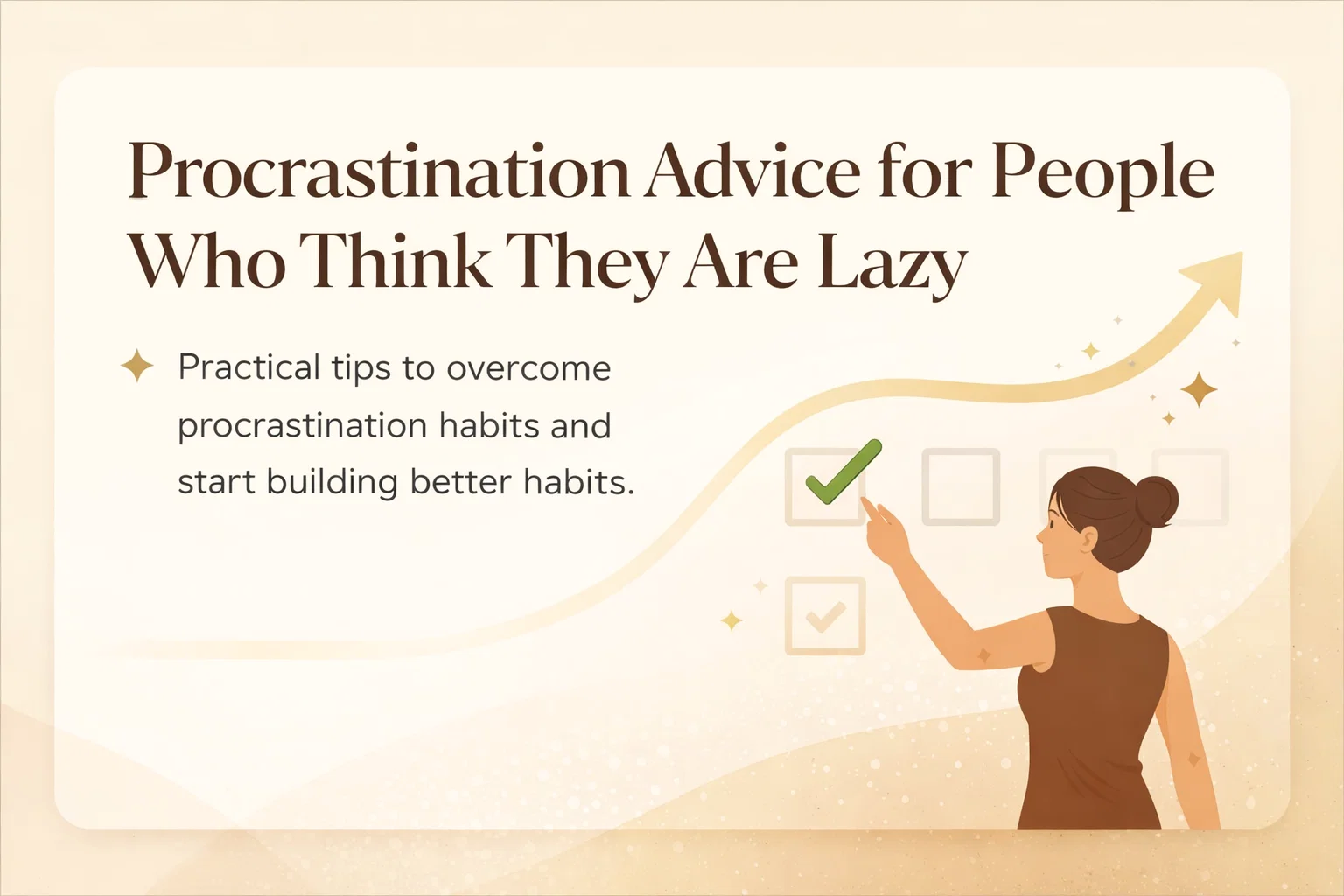
How to Stop Procrastination 20 Small Habits for Building Productive Daily Routines
We have all been there. You have a mounting to-do list, a deadline breathing down your neck, and a heavy sense of guilt because you simply cannot bring yourself to start. In these moments, it is incredibly easy to internalize a narrative that you are just lazy. We tell ourselves that we lack discipline, that we are unmotivated, or that we simply do not have what it takes to be productive. However, the reality is often far more complex. Procrastination is not a character flaw; it is an emotional regulation strategy and a learned habit that your brain uses to protect itself from stress or discomfort. By shifting your perspective from self-judgment to self-compassion, you can unlock a version of productivity that feels sustainable rather than exhausting.
Understanding Why We Feel Lazy When We Procrastinate
The first step to overcoming the cycle of avoidance is to stop calling yourself lazy immediately. Laziness implies a lack of desire to do anything, whereas procrastination is usually the result of being overwhelmed by the weight of a task. When you label yourself as lazy, you create a fixed mindset. You begin to believe that your inability to start is part of your identity, which makes it much harder to change. Instead, recognize that procrastination is simply a habit you have developed over time to deal with uncomfortable feelings like fear of failure, perfectionism, or even boredom.
When you view your behavior as a learned habit rather than a personality trait, you regain your power. Habits can be unlearned, and new, healthier patterns can be built in their place. This mental shift is the foundation of all the advice found in the image above. It moves you away from harsh criticism and toward a focus on progress. Once you stop the internal name-calling, you clear the mental space needed to take the very first step toward your goals.
The Power of Tiny Productive Actions
One of the most effective ways to break the paralysis of procrastination is to start with one extremely small productive action. Often, we look at a project as a giant mountain that we have to climb all at once. This triggers our brain’s fight-or-flight response, leading us to seek comfort in passive behaviors like scrolling through social media. To counter this, you must shrink the mountain into a single pebble.
Breaking Big Goals Into Tiny Daily Tasks
Instead of saying you need to write a whole report, tell yourself you only need to open a blank document and type the header. If you need to clean your entire house, commit to just putting away three items in the living room. These tiny steps are crucial because they lower the barrier to entry. Action builds confidence slowly, and once you have started, the resistance begins to fade. It is much easier to keep moving once you are already in motion than it is to start from a complete standstill.
Focusing on Movement Over Judgment
If you find yourself stuck on the couch, do not spend twenty minutes berating yourself for sitting there. Instead, stand up and begin something simple. The physical act of standing up changes your state of mind. It shifts your focus from internal judgment to external movement. By prioritizing movement, you bypass the part of your brain that wants to create excuses. You are showing yourself that you are capable of taking action, no matter how small that action might be.
Building Momentum Through Repeated Daily Effort
Consistency is the secret sauce of productivity. You do not need to have a high-energy, ten-hour workday to be successful. In fact, building momentum through repeated daily effort is far more effective for long-term growth. When you show up every day and do even a little bit of work, you are reinforcing the habit of being productive. You are teaching your brain that you are someone who follows through on their intentions.
Accepting slow growth as real progress is a vital part of this journey. We live in a world that demands instant results, but true change takes time. If you take tiny steps that create visible improvement each day, those improvements will eventually compound into massive results. Think of it like building a brick wall. You do not try to build the whole wall in an hour; you focus on laying one brick as perfectly as you can, and then you do it again tomorrow.
Tools to Rebuild Your Motivation
While mindset is the most important factor, there are practical tools you can use to help rebuild your motivation and stay on track. These strategies are designed to support your brain as you transition into a more productive lifestyle.
Set Simple Timers for Work Sessions
The idea of working for four hours straight can be terrifying. However, almost anyone can commit to working for fifteen or twenty minutes. Setting a simple timer creates a container for your work. It tells your brain that there is an end in sight, which makes the discomfort of the task more manageable. Often, once the timer goes off, you will find that you have found your flow and want to keep going. If not, you still have the win of completing that session.
Track Small Wins to Rebuild Confidence
Procrastination often leaves us feeling like we never get anything done. To counter this, start tracking your small wins. Every time you complete a task, no matter how minor, acknowledge it. You can keep a simple list or use a habit-tracking app. Seeing a visual representation of your progress helps to rebuild the confidence that procrastination has chipped away. It reminds you that you are indeed capable and that you are making headway.
Replacing Negative Self-Talk with Support
The way you speak to yourself matters immensely. If your internal monologue is filled with harsh criticism and demands for perfection, you are creating an environment of stress. Treat yourself like someone learning new skills. If a friend were struggling to start a project, you would likely offer them encouragement rather than calling them lazy. Why should you treat yourself any differently?
Replace negative self-talk with supportive thoughts. Instead of saying I should have finished this yesterday, try saying I am starting now, and that is what matters. Instead of saying I always mess this up, try saying I am learning how to handle this better every day. This shift in dialogue reduces the emotional friction associated with work, making it much easier to choose action even when it feels uncomfortable.
Creating an Environment for Success
Your environment plays a massive role in your ability to focus. If you are surrounded by distractions that encourage passive behavior, you are making an already difficult job even harder. Removing distractions is not about having perfect willpower; it is about setting up your surroundings so that you do not have to rely on willpower at all.
Identify the things that pull you away from your work. Is it your phone? A specific website? A noisy room? Take proactive steps to remove these hurdles. Put your phone in another room, use website blockers, or find a quiet corner to work in. By simplifying your environment, you make the path to productivity the path of least resistance. You want to make it as easy as possible for your brain to choose the productive action over the distraction.
Choosing Action Over Excuses
Your brain is an expert at creating excuses. It will tell you that you need more coffee, that you need to check your email one more time, or that you will feel more like doing the work tomorrow. You must learn to start before your brain creates these excuses. There is a very small window between the thought of doing something and the brain’s attempt to talk you out of it. You have to move quickly in that window.
Recognize that you do not need to feel like doing something in order to do it. Action is a choice, not a feeling. When you choose action even when it feels uncomfortable, you are exercising your productivity muscles. Over time, this becomes easier, and the excuses become quieter. You are building stronger habits every time you prioritize your goals over your immediate comfort.
Conclusion: You Are Capable of Change
The journey from a self-proclaimed lazy procrastinator to a focused, productive individual is not about a sudden transformation. It is about a series of small, intentional shifts in how you think and act. By stopping the cycle of self-judgment and embracing the power of tiny steps, you can rebuild your confidence and your life. Remember to celebrate completing small productive moments and to be patient with yourself as you grow.
Accept that there will be days when things feel difficult, but do not let those days define your worth. You are capable of building stronger habits. You have the tools to replace harsh criticism with progress. Every moment is a fresh opportunity to stand up, move forward, and prove to yourself that you are not lazy, you are simply a work in progress. Start today, start small, and watch how far you can go.