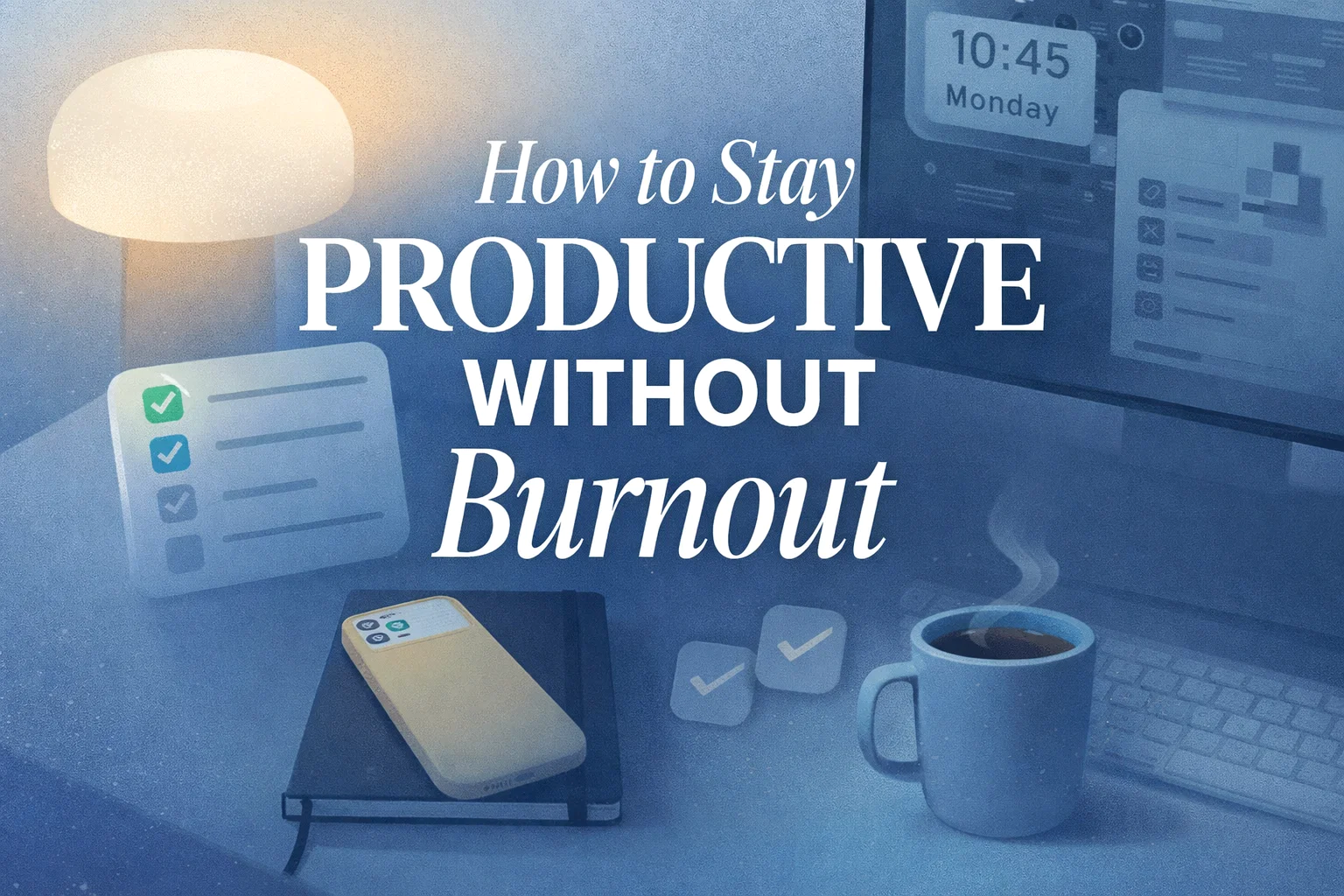
How to Stay Productive Without Burning Out 5 Tips for a Balanced Aesthetic Workspace
Finding the perfect balance between high performance and personal well-being is the ultimate challenge in our modern, always-on world. We often see images of perfectly curated desks, soft ambient lighting, and high-tech setups that promise a life of effortless efficiency. But beneath the aesthetic surface of a clean workspace lies the real question: how do we actually maintain that level of output without hitting a wall? Productivity is not about doing more things; it is about doing the right things while preserving your mental energy. When you look at a calm, organized environment, you are seeing a physical representation of a focused mind. This guide explores how to transform your daily routine into a sustainable flow that respects your boundaries while helping you reach your biggest financial and professional goals.
The Psychology of an Aesthetic and Functional Workspace
There is a profound connection between our physical surroundings and our cognitive load. A cluttered desk often leads to a cluttered mind, making it difficult to focus on a single task. By intentionally designing a workspace that feels calm and inviting, you are sending a signal to your brain that it is safe to concentrate. Soft lighting, like a mushroom lamp or a warm desk light, reduces eye strain and creates a cozy atmosphere that makes sitting down to work feel less like a chore and more like a ritual. When your environment is visually pleasing, you are more likely to stay in your seat and see a project through to completion.
The Role of Minimalist Design in Focus
Minimalism in a workspace isn’t just about the look; it is a tool for elimination. When you have only the essentials in front of you—a notebook, your phone, and your computer—you remove the visual “noise” that competes for your attention. Every object in your field of vision requires a tiny bit of processing power from your brain. By clearing away the extra pens, old coffee mugs, and piles of mail, you free up that mental energy for deep work. This allows you to enter a flow state faster and stay there longer, which is the key to producing high-quality results in less time.
Building a Sustainable Productivity Routine
Most people approach productivity as a sprint. They wake up, drink three cups of coffee, and try to work for eight hours straight. This is a recipe for burnout. True productivity is a marathon, and that means you need to pace yourself. Sustainable routines are built on the foundation of energy management rather than time management. Instead of looking at your clock, start looking at your energy levels. Are you a morning person who thrives on complex tasks before noon? Or do you find your creative spark in the quiet hours of the evening? Aligning your hardest work with your peak energy levels is the first step toward a burnout-free life.
The Power of Mono-Tasking
We have been told that multitasking is a skill, but science suggests otherwise. Switching between tabs, checking notifications, and trying to write a report at the same time causes “task switching cost,” which can lower your productivity by up to forty percent. To stay productive without burning out, you must embrace mono-tasking. Give your full attention to one goal at a time. Put your phone face down, close unnecessary browser windows, and commit to one task for a set block of time. You will find that you finish faster and feel less exhausted at the end of the day.
Practical Tips for Preventing Burnout
Burnout happens when the demands placed on you exceed the resources you have to meet them. To prevent this, you must actively replenish your resources throughout the day. This involves both physical rest and mental disengagement from work. If you find yourself staring at the screen without making progress, that is a clear sign that your brain needs a break. Pushing through in those moments only leads to diminished returns and increased frustration.
- The 90-Minute Rule: Work in ninety-minute blocks followed by a fifteen-minute break. This aligns with your body’s natural ultradian rhythms.
- Digital Sunset: Set a time each evening when all work-related screens go dark. This allows your nervous system to wind down before sleep.
- Hydration and Movement: Never underestimate the power of a glass of water and a five-minute stretch. Physical stagnation leads to mental stagnation.
- Journaling for Clarity: Use a physical notebook to jot down distracting thoughts or to-do lists so they don’t take up space in your head.
The Connection Between Wellness and Wealth
It is no coincidence that many successful people prioritize their health as much as their business. When you are well-rested and mentally sharp, you make better decisions. Better decisions lead to better financial outcomes. Whether you are tracking a ten-thousand-dollar balance or just starting your journey, the habits that keep you healthy are the same habits that will make you wealthy. A burned-out entrepreneur cannot innovate, and a stressed-out employee cannot lead. Investing in your self-care is, quite literally, investing in your future earnings.
Mindset Shifts for Long-Term Success
We often feel guilty for resting, as if every moment not spent working is a moment wasted. We need to shift this perspective. Rest is not the opposite of work; it is a requirement for work. Think of your brain like a high-performance engine. If you redline it constantly, it will eventually break. If you maintain it, change the oil, and let it cool down, it will run for hundreds of thousands of miles. Success is about longevity. The goal is to be just as productive and inspired five years from now as you are today.
Curating Your Tools for Efficiency
The tools you use should support your workflow, not complicate it. Digital tools like Notion or simple calendar apps are great for organization, but sometimes the best tool is a simple pen and paper. There is something tactile and grounding about writing down your goals for the day. It makes them feel more real and attainable. Similarly, ensure your hardware is up to the task. A reliable keyboard, a clear monitor, and a comfortable chair are investments in your physical health that pay dividends in your daily output.
Using Visual Reminders and Vision Boards
Keeping your “why” in front of you can be a powerful motivator. Whether it is a digital vision board on your desktop or a physical one on your wall, seeing images of the life you want to build can pull you through the difficult days. When you see a reminder that says “If you can dream it, you can build it,” it reinforces the idea that your current effort has a purpose. This emotional connection to your work acts as a buffer against the feelings of exhaustion that lead to burnout.
Finding Your Creative Flow
Creativity cannot be forced, but it can be invited. By creating a ritual around your work—perhaps lighting a specific candle, putting on a certain playlist, or clearing your desk—you tell your brain it is time to be creative. Over time, these triggers become so strong that you can enter a flow state almost instantly. This is where the most meaningful work happens. In flow, time seems to disappear, and the work feels effortless. This is the peak of productivity, and it is only possible when you are not stressed or overextended.
Conclusion: The Path to Balanced High-Performance
Staying productive without burning out is an art form that requires constant adjustment. It is about listening to your body, respecting your mental limits, and creating an environment that fosters focus rather than anxiety. By implementing these strategies—from optimizing your workspace to embracing the power of rest—you are building a foundation for a successful and fulfilling life. Remember that your value is not defined solely by your output, but by the quality of the life you lead. Take care of your mind, curate your space, and the productivity will follow naturally. You have the power to build the life you have always dreamed of, one intentional step at a time.