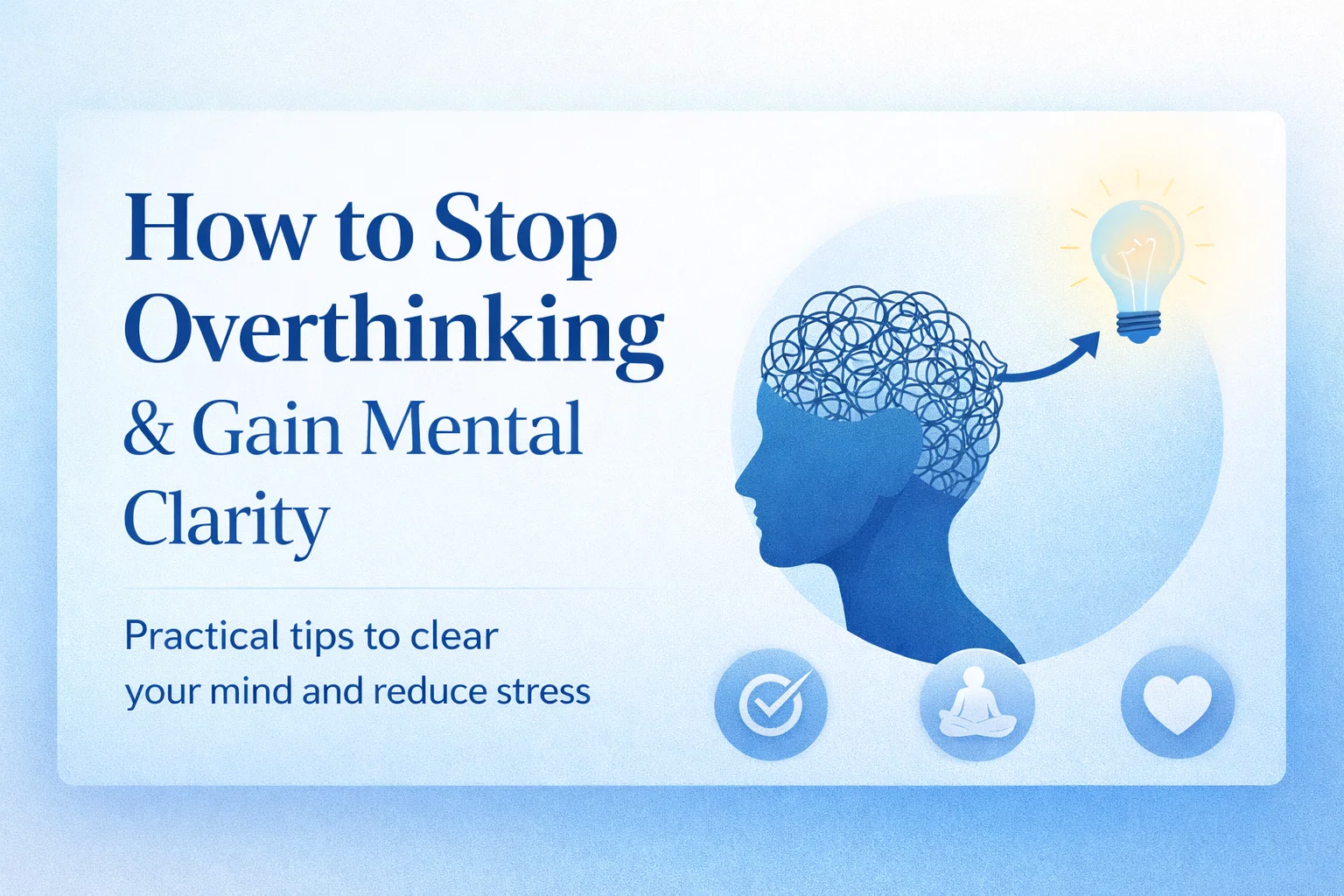
Stop Overthinking Find Mental Clarity 20 Tips for Anxiety Relief
We have all been there. You are lying in bed at two in the morning, and your brain decides it is the perfect time to replay a conversation from three years ago or simulate every possible catastrophic outcome of a meeting scheduled for next week. This mental loop is not just annoying; it is exhausting. Overthinking acts like a heavy fog that settles over your productivity, your happiness, and your peace of mind. But what if you could reach through that fog and flip a switch for clarity?
The image we are looking at today serves as a powerful roadmap for anyone trapped in the cycle of rumination. It highlights the fundamental truth that mental clarity is not something you find; it is something you create through intentional habits. By slowing down, grounding yourself in reality, and releasing the need for total control, you can break free from the analysis paralysis that holds you back. Let us dive deep into the strategies that will help you reclaim your mental space and move from a state of constant worry to one of decisive action.
The Anatomy of Overthinking: Why Our Brains Get Stuck
Before we can fix the problem, we have to understand what is happening under the hood. Overthinking is often a misguided survival mechanism. Your brain thinks it is protecting you by scanning for every possible threat, but in the modern world, those threats are rarely physical. Instead, they are social, professional, or internal. When you overthink, you are essentially stuck in a loop of “simulated problem solving” without ever actually reaching a solution.
This process triggers the body’s stress response, keeping your cortisol levels high and making it nearly impossible to think creatively or rationally. The goal of regaining mental clarity is to move from the reactive, emotional part of your brain back into the logical, proactive part. It is about training yourself to recognize when a thought is a useful tool and when it is just noise.
Grounding Techniques: Bringing Your Mind Back to Earth
One of the most effective points mentioned in our guide is the importance of focusing on what is real right now. When you overthink, you are almost always living in the past or the future. Grounding is the practice of pulling your awareness back into the physical present.
The Power of Deep Breathing
Deep breathing is not just a cliché of the wellness world; it is biological intervention. When you take slow, deep breaths, you send a signal to your nervous system that you are safe. This shuts down the “fight or flight” response that fuels overthinking. Try the 4-7-8 technique: breathe in for four seconds, hold for seven, and exhale slowly for eight. This physical shift creates an immediate clearing in the mental fog.
Separating Fact from Imagined Fear
Our minds are incredible storytellers, but they are often unreliable narrators. To regain clarity, you must become a detective of your own thoughts. Ask yourself: Is there evidence for this fear, or am I just predicting a negative outcome? By writing your worries down once, clearly, you take them out of the abstract realm of “feeling” and put them into the concrete realm of “data.” Once it is on paper, the problem often looks much smaller than it felt in your head.
Breaking the Cycle of Endless Analysis
Analysis paralysis is the enemy of progress. We often tell ourselves that we are just being “thorough,” but there is a point where more thinking leads to diminishing returns. If you have been weighing the same three options for a week, you aren’t analyzing anymore; you are stalling.
Choosing Action Over Analysis
The antidote to overthinking is movement. When you feel yourself spiraling, pick a simple, unrelated task. Clean a drawer, go for a walk, or answer one short email. This redirects your attention to something tangible. Action creates a sense of agency, reminding your brain that you have power over your environment. This momentum often clears the path for the bigger decisions you were struggling with earlier.
Accepting Uncertainty Without Panic
A major driver of overthinking is the desire for 100 percent certainty. We think that if we just contemplate a problem long enough, we can guarantee a perfect outcome. Real mental clarity comes from the realization that perfection is an illusion. Accepting that you cannot control everything is not a sign of weakness; it is a profound act of mental liberation. When you release the need for perfect certainty, the panic begins to subside.
Practical Habits for Long-Term Mental Clarity
Regaining clarity is not a one-time event; it is a lifestyle. Just as you wouldn’t expect to be physically fit after one trip to the gym, you cannot expect a quiet mind without consistent practice. The tips from our visual guide provide a fantastic foundation for these daily habits.
- Limit Outside Noise: We live in an age of information overload. Constant notifications and social media scrolling add layers of unnecessary “mental debris.” Set boundaries for your digital consumption to give your brain room to breathe.
- Allow Silence: Many of us are afraid of a quiet mind, so we fill every gap with podcasts, music, or television. Practice sitting in silence for five minutes a day. It helps you become comfortable with your own thoughts rather than being afraid of them.
- Trust Your Adaptability: Instead of worrying about how you will handle a future crisis, remind yourself of the challenges you have already overcome. You have a 100 percent track record of surviving your hardest days. Trust that you will adapt when the time comes.
The Importance of Mental Rest
We often forget that the brain is a physical organ that requires recovery. A tired mind is a fertile ground for overthinking. When you are exhausted, your ability to regulate emotions and think logically plummets. This is why things always seem so much worse at 3 AM than they do after a cup of coffee and a good night’s sleep.
Resting when your mind feels tired is not “lazy.” It is a strategic move for high performance. If you find yourself stuck in a mental loop, it might be a sign that your brain simply needs to go offline for a while. Give yourself permission to step away, take a nap, or engage in a hobby that requires zero intellectual effort.
Changing Your Relationship with Reassurance
One common trap overthinkers fall into is the “reassurance loop.” You ask five different friends for their opinion on the same situation, hoping that their validation will finally make the anxiety go away. However, reassurance is like a drug; the relief it provides is temporary, and you soon need a larger dose to feel better.
To break this habit, try to limit how often you seek outside validation. Practice making small decisions entirely on your own and sitting with the discomfort of not knowing if it was the “right” choice. Over time, you will build self-trust, which is the ultimate foundation for mental clarity.
Conclusion: Your Journey Toward a Calmer Mind
Overcoming overthinking is not about silencing your brain entirely. Your mind is a powerful tool, and its ability to plan and analyze is a gift. The goal is to become the master of that tool, rather than its servant. By implementing the strategies we have discussed—grounding yourself in the present, choosing action over rumination, and accepting the beauty of uncertainty—you are taking back the steering wheel of your life.
Remember to be patient with your mental growth. There will be days when the thoughts feel loud and the fog feels thick. That is okay. Mental clarity is a practice, not a destination. Each time you catch yourself spiraling and gently return your focus to the present, you are getting stronger. You deserve a mind that feels like a sanctuary, not a prison. Start today by taking one small step, breathing one deep breath, and trusting that you have everything you need to navigate whatever comes next.
Would you like me to create a 7-day “Mental Clarity Challenge” based on these steps to help you put them into practice?