20 Mental Health Reminders for Anxiety Overthinking Mindfulness Tips
We have all been there. It is late at night, the house is quiet, but your mind is running a marathon. You find yourself replaying a conversation from three years ago or worrying about a meeting that is three weeks away. This cycle of chronic overthinking and anxiety can feel like a heavy weight, making it difficult to find peace in the present moment. However, it is important to remember that you are not your thoughts. Mental health is a journey of practice, and sometimes the simplest reminders are the most powerful tools for reclaiming your calm.
Understanding the Cycle of Chronic Overthinking
Overthinking is more than just thinking a lot. It is a repetitive, unproductive loop where the mind dwells on past mistakes or future fears. When this becomes chronic, it often pairs with anxiety, creating a physical and emotional response that can feel overwhelming. The brain essentially gets stuck in a “fight or flight” mode over scenarios that are not actually happening. Recognizing this cycle is the first step toward breaking it. When you notice your mind spiraling, you can pause and remind yourself that your brain is simply trying to protect you, even if its methods are currently unhelpful.
The Difference Between Reflection and Rumination
It is helpful to distinguish between healthy reflection and anxious rumination. Reflection is solution-oriented and leads to growth. Rumination, on the other hand, is like walking in circles in a dark room. It does not lead to an exit; it only makes you more tired. If you find yourself asking “Why did I do that?” without looking for a lesson, you are likely ruminating. Shifting that question to “What can I do differently next time?” can help move you out of the loop and back into a state of agency.
Powerful Reminders to Quiet a Busy Mind
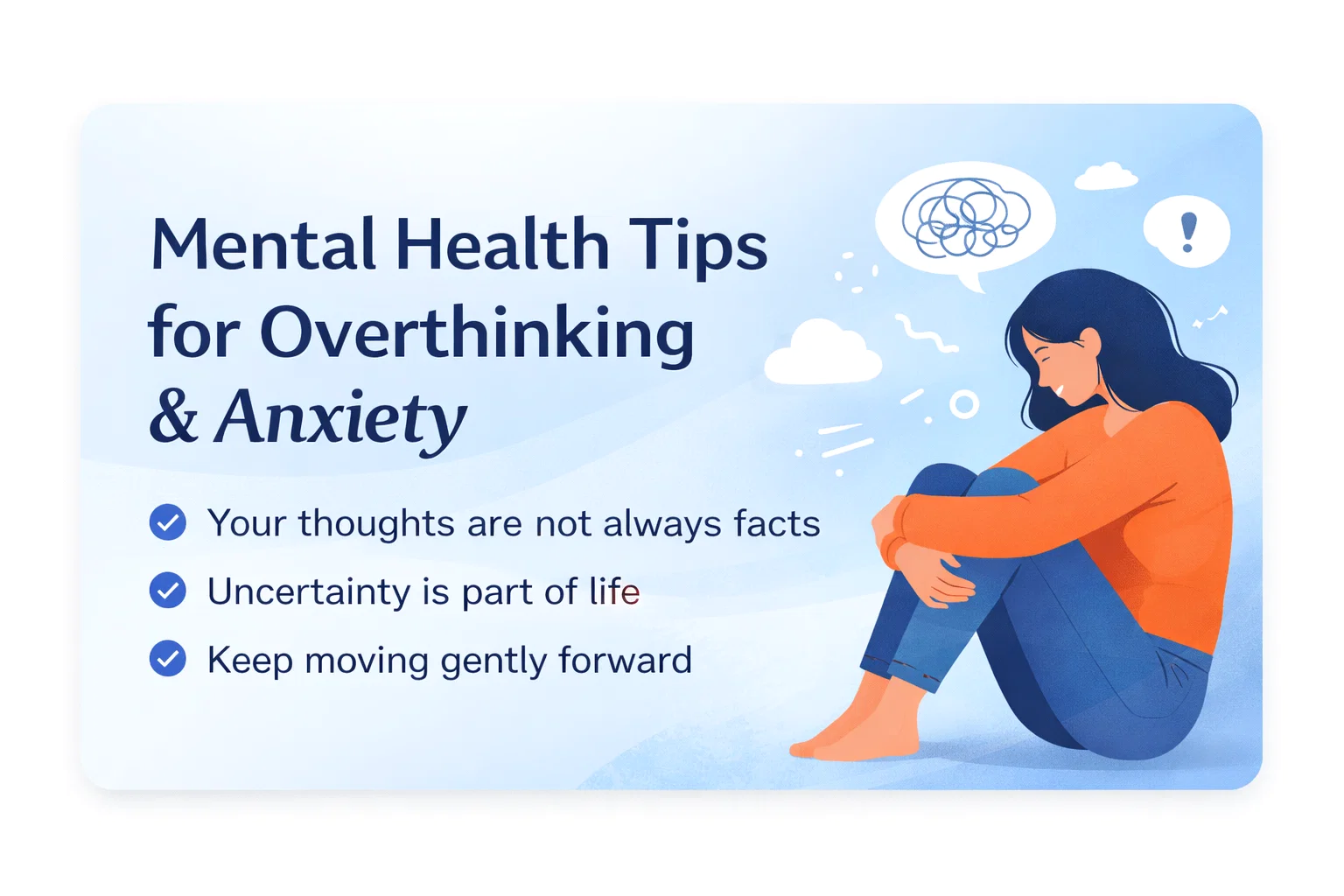
The image shared today highlights several foundational truths that we often forget when we are stressed. These are not just nice quotes; they are cognitive reframes that can change how your nervous system reacts to stress. Let us dive into why these specific reminders matter so much for your mental wellness.
Your Thoughts Are Not Always Accurate
Our minds are excellent storytellers, but they are not always honest reporters. Just because you have a thought that says “Everyone is mad at me” does not mean it is true. Anxiety has a way of filtering out the positive and magnifying the negative. By treating your thoughts as suggestions rather than absolute facts, you create a space between the thought and your reaction. This space is where your peace lives.
Growth Requires Patience and Practice
We live in a world that demands instant results, but the human mind does not work that way. Unlearning years of anxious patterns takes time. If you have a bad day where overthinking wins, that does not mean you have failed. It means you are human. Growth is found in the moments when you catch the spiral and gently pull yourself back, over and over again. Every time you choose a deep breath over a worried thought, you are strengthening your mental resilience.
Peace is Possible for You
When you are in the thick of anxiety, peace can feel like a distant land you are not allowed to visit. But peace is not the absence of thoughts; it is the ability to be at ease despite them. It is a skill that can be developed through mindfulness, boundaries, and self-compassion. You deserve to feel calm, and it is something you can cultivate right where you are, one small step at a time.
Practical Strategies for Managing Daily Anxiety
While reminders are great for shifting your mindset, pairing them with physical and environmental actions can create a holistic approach to wellness. Here are a few ways to integrate these mental health reminders into your daily routine.
- The Five-Second Rule: When you feel a spiral starting, count backward from five to one. This simple act interrupts the emotional brain and engages the prefrontal cortex, helping you regain control.
- Scheduled Worry Time: Give yourself fifteen minutes a day to worry as much as you want. When the time is up, tell yourself that you will save the rest of the worrying for tomorrow. This helps prevent anxiety from bleeding into your entire day.
- Movement as Medicine: Anxiety is often trapped energy in the body. A short walk, some light stretching, or even dancing to a favorite song can help process those stress hormones and clear your head.
The Importance of Setting Boundaries with Yourself
We often talk about boundaries with other people, but boundaries with ourselves are just as vital. This might look like turning off your phone an hour before bed to prevent late-night scrolling that triggers overthinking. It might mean saying no to an extra project when your mental plate is already full. Giving yourself permission to rest is a boundary that protects your long-term health. Rest is not a reward for productivity; it is a requirement for it.
Cultivating a Lifestyle of Self-Compassion
The most important reminder from the visual is that you deserve self-compassion daily. We are often our own harshest critics, saying things to ourselves that we would never say to a friend. If a friend told you they were struggling with anxiety, you would offer them kindness and a listening ear. Why not offer the same to yourself? Self-compassion lowers cortisol levels and makes it easier to recover from stressful episodes.
Changing the Internal Narrative
Start paying attention to your internal monologue. If you catch yourself saying “I should be further along” or “I am failing at this,” try to flip the script. Replace those harsh judgments with “I am doing the best I can with the tools I have right now.” This simple shift reduces the shame that often fuels overthinking. You are not behind in life; you are exactly where you need to be to learn the lessons you are currently facing.
Creating a Calm Environment at Home
Your physical space can significantly impact your mental state. If your environment is cluttered and chaotic, your mind might follow suit. You do not need a complete home makeover to find peace. Small changes can make a big difference.
Natural Elements and Wellness
Bringing nature indoors is a proven way to reduce stress. Whether it is a few potted plants, an herbal tea ritual, or using essential oils like lavender and peppermint, these sensory experiences tell your brain it is safe to relax. Focus on creating a small “sanctuary” in your home where you can go to breathe and disconnect from the digital world. This physical boundary helps reinforce the mental boundary of leaving work or worries behind.
Final Thoughts on Finding Your Center
Managing chronic overthinking and anxiety is not about reaching a destination where you never worry again. It is about building a toolkit that allows you to handle those worries when they arrive. By keeping these reminders close to your heart, you are giving yourself the gift of perspective. Remember that clarity comes with time and that you can handle discomfort calmly when you take it one moment at a time.
Keep moving gently forward. You have the strength to navigate the tough days and the wisdom to enjoy the beautiful ones. Your journey is unique, your pace is valid, and your mental health is always worth the effort. Let these reminders be the anchor that holds you steady when the waves of overthinking get high. You are doing much better than you think, and peace is truly possible for you.