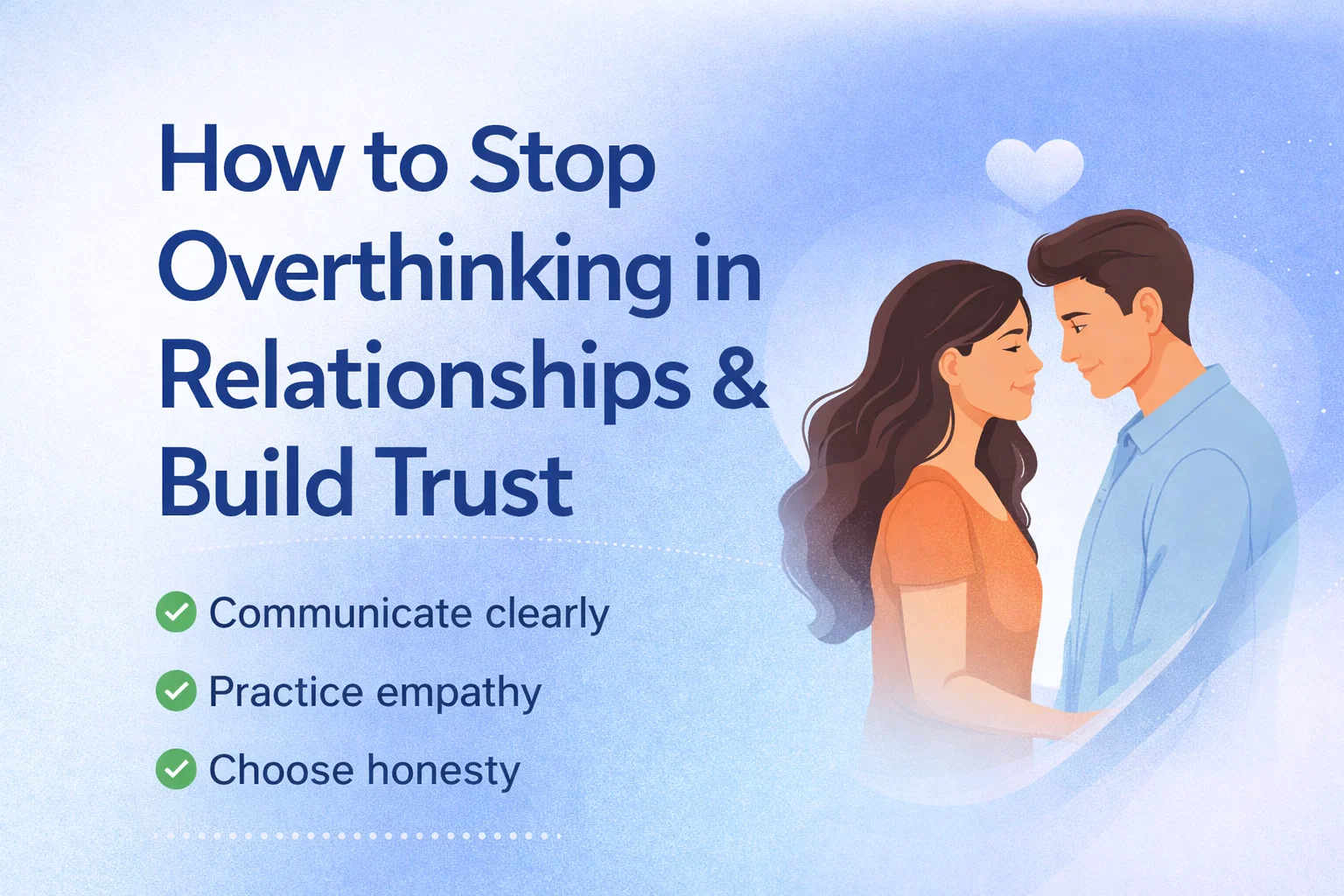
Stop Overthinking in Relationships How to Build Emotional Trust and Stop Anxiety
Welcome, relationship seekers and self-improvement enthusiasts! If you’ve landed here, chances are you’ve experienced the exhausting, circular maze of relationship overthinking. You know the feeling: dissecting every text message, analyzing micro-expressions, and silently constructing elaborate, often worst-case scenarios about your partner’s intentions. It’s a heavy, anxiety-driven burden that steals joy and prevents true intimacy. But here’s the good news: you don’t have to live there. Your overthinking isn’t a permanent personality trait; it’s a mental habit, and like any habit, it can be broken.
The beautiful list from @HannahLoveco we’re exploring today is more than just points on a page; it’s a strategic roadmap. It cleverly combines the essential mindset shifts you need to cultivate internally with the concrete, actionable behaviors required to manifest trust in your daily interactions. We’re not just aiming to survive our thoughts; we’re aiming to thrive in a secure, connected partnership. Let’s deep dive into these powerful steps and learn how to build that unbreakable foundation of emotional trust.
Deconstruct Your Anxious Thinking Patterns
Shift Your Mindset: Stop Assuming and Start Fact-Checking
The single biggest fuel for relationship overthinking is the assumption of negative intent. Our anxious brains are wired for survival, and sometimes they misinterpret potential issues as imminent dangers. Instead of defaulting to “They’re trying to hurt me,” or “They don’t care,” make a radical shift: stop assuming negative intentions and actively practice assuming positive or neutral intent. Maybe they were just busy, or tired, or in a rush. Give your partner the benefit of the doubt that you would want in return.
Coupled with this, your most powerful tool is reality testing. Commit to focusing on actions, not imagined stories. A story might say, “They didn’t call because they’re pulling away.” The action is simply: They didn’t call. The story is entirely your creation. Stick to the observable facts before you. When you catch yourself spinning a negative narrative, ask: “What evidence do I actually have for this thought, other than my own fear?” This crucial distinction between perception and reality is where you regain your power.
Release the Past and Embrace the Present
Overthinking often gains its momentum from unresolved past experiences. We might be overlaying old heartbreaks, betrayals, or anxieties onto our current relationship. To stop this, you must consciously release fear-driven narratives and separate past fears from present reality. Acknowledging that “just because that happened then doesn’t mean it’s happening now” is profoundly liberating. You are not trapped in a cycle of repeated pain. Let go of the “what ifs” rooted in old wounds and anchor yourself firmly in the new possibilities of this relationship. This also includes the very important skill of learning to avoid replaying old arguments in your head. Reliving past conflicts keeps the pain alive and makes it impossible to fully connect in the now.
Furthermore, we need to make peace with imperfection. A critical step is to accept that misunderstandings happen. No relationship is perfect, and communication isn’t flawless. We will misinterpret things, we will fail to say the right word, and our partners will too. Approaching these moments with the perspective of “We had a misunderstanding” rather than “You meant to hurt me” changes the entire tone. This shift alone can de-escalate potential conflicts before they even begin.
Practice Grounded and Intentional Behavior
Stay Grounded: Navigate Emotions Safely
When our emotions flare up, our logic often shuts down, leading straight to impulsive reactions and regret. Learning to stay grounded during emotional talks is non-negotiable for building trust. When discussions become heated or emotionally vulnerable, your body’s stress response will kick in. Your job is to stay physically present and mentally clear. This is where you utilize one of the simplest yet most effective tips: breathe before reacting emotionally. This single, intentional breath creates a small, crucial space between the triggering event and your response, allowing you to choose a response that is calm and respectful rather than defensive or accusatory.
In fact, this practice of self-regulation is the key to managing conflict effectively. It lets you approach disagreements with the goal of connection and understanding, not just being “right” or winning. By staying grounded, you can communicate your true feelings in a way that your partner can actually hear and receive, fostering a safe environment for both of you.
Build Real Connection, not Fear-Based Safety
Building deep trust is a deliberate act. The list wisely advises us to build connection slowly and intentionally. We cannot rush intimacy; it must be built block by block through shared experiences, vulnerability, and reliable behavior. Don’t feel pressured to force a connection or rush into big commitments. Let it unfold naturally as you both consistently show up for each other in small, meaningful ways. Real connection is about quality and substance, not just speed and intensity.
We must also address two major behavioral pitfalls of overthinking. First, let go of constant reassurance seeking. While occasional reassurance is normal, relying on it constantly creates a toxic dynamic where your security is entirely dependent on your partner’s words. It places an unfair burden on them and keeps you in a vulnerable position. Real security must come from within and from observing reliable behavior over time. Second, learn to allow space without panic. Independence and time apart are vital for healthy individuals and healthy relationships. Your partner needing space is not a sign they are leaving you; it’s a sign they are a functional adult. Breathe through the discomfort of space until you realize that its presence does not mean the end of connection.
Implement Strategic Communication and Practice Patience
Communicate Clearly: Choose Honesty Over Silence
We often keep our fears, needs, and desires hidden, either out of fear of conflict, a desire to be easygoing, or a mistaken belief that “If they loved me, they’d know.” This is a guaranteed recipe for resentment and confusion. The list gives us a powerful antidote: choose honesty over silent guessing. When you’re feeling unsure, anxious, or have a question, just ask. When you have a need, state it plainly. And perhaps the most essential communication point: communicate your needs clearly. Saying “I feel like you don’t care” is vague and accusatory. Saying “It would really help me feel connected if we had 10 minutes of uninterrupted chat time in the evening” is clear, actionable, and solution-focused.
Crucially, this open communication also involves avoiding testing your partner mentally. Don’t set traps, expect them to read your mind, or create secret scenarios to “see what they’ll do.” It’s an adversarial, unsupportive approach that breeds mistrust. Genuine, honest communication is the single best way to clarify intentions and build mutual understanding.
Patience, Practice, and Mutual Respect
Overcoming overthinking and building emotional trust is a process, not a sprint. We are essentially repatterning our brains. Therefore, you must make a conscious commitment to practice empathy and patience, both with your partner and, critically, with yourself. There will be moments where you slip back into old habits, where you assume negative intent, or where you feel panic in the face of space. That’s okay. The key is to acknowledge it, forgive yourself, and recommit to these new practices. Be patient with your partner as they learn your needs, and ask for that same patience from them. This is a journey you are on together.
Underpinning everything is the crucial necessity to focus on mutual respect. Every interaction, every discussion, and especially every disagreement must be handled with a fundamental respect for the other person’s humanity, feelings, and individuality. Avoid name-calling, contempt, or personal attacks. Remember that you are a team, and the foundation of any great team is mutual respect. Finally, let this all culminate in your ability to continue openly and calmly. The goal isn’t the absence of conflict or difficult emotions; it’s the development of the tools and the deep-seated trust that allow you to navigate them, hand-in-hand, toward a stronger, more resilient connection.
Let Go of Control and Embrace Vulnerability
Trust the Patterns and Embrace Independence
At its core, overthinking is a control mechanism, an attempt to predict and prepare for pain. But in a relationship, you simply cannot control another person, their thoughts, or the future. Real trust requires a beautiful, courageous act of surrendering that control. This is where you learn to trust consistent behavior patterns. Is your partner reliable? Do they honor their commitments? Do their actions generally align with their words? If the pattern is positive, trust the pattern. Don’t let a single exception or a fleeting anxious thought derail your confidence in months or years of consistency. Focus on the big picture of your shared reality.
This surrender of control is directly linked to your capacity to allow space. True intimacy is not enmeshment; it’s two whole, healthy individuals choosing to be together. Embracing your own independence and supporting your partner’s is a massive indicator of emotional trust. It shows you believe the connection is strong enough to withstand separation, and you trust in your own value enough to not need constant confirmation.
Let Small Issues Stay Small and Choose Your Battles
Overthinkers have a knack for turning a small oversight into a monumental catastrophe. A forgotten chore becomes a sign that “they don’t respect your time or your shared life.” It’s vital to learn to let small issues stay small. Ask yourself: Is this really about respect, or is it just a brain fart? Will this matter in a week? Often, we’re projecting our deeper anxieties onto minor inconveniences. Learning to let go of the trivial is an act of trust. It shows you trust the overall health of your bond is strong enough that it won’t be broken by a dirty dish or a slightly late text.
This is about choosing to be happy over being right. It’s not about ignoring genuine problems; it’s about having a sense of proportion. By saving your energy for important issues and approaching minor ones with gentleness and humor, you create a less stressful, more supportive environment. You build a safe harbor where both of you can relax, knowing you won’t be intensely judged or criticized for minor mistakes.
Conclusion: The Reward of Peace and True Connection
Leaving behind the world of overthinking is not just about avoiding pain; it’s about gaining access to an entire world of joy, peace, and truly authentic connection that was previously hidden by anxiety. Imagine a relationship where you can just be. Where you can have emotional talks without the fear of them spiraling. Where misunderstandings are opportunities for growth, not disasters. Where you can enjoy your partner’s company without constructing a future script or a hidden motive. This is the profound reward that awaits you.
Every single point on this list is a step toward that rewarding reality. You are building not just a better relationship but a stronger, more confident, and more grounded you. This path is incredibly brave. It requires you to confront your oldest fears, to be vulnerable, and to step into the uncertainty of trust. But as you implement these tools, you will feel the shift. You will notice the peace settling in. You will feel that unbreakable foundation of emotional trust being laid down, block by loving block. Your journey from overthinking to connection is one of the most powerful and beautiful journeys you will ever take. Believe that it’s possible, be patient with the process, and embrace the peace you so deeply deserve.