Healing Anxiety Chronic Overthinking 20 Mental Health Reminders for Inner Peace Growth
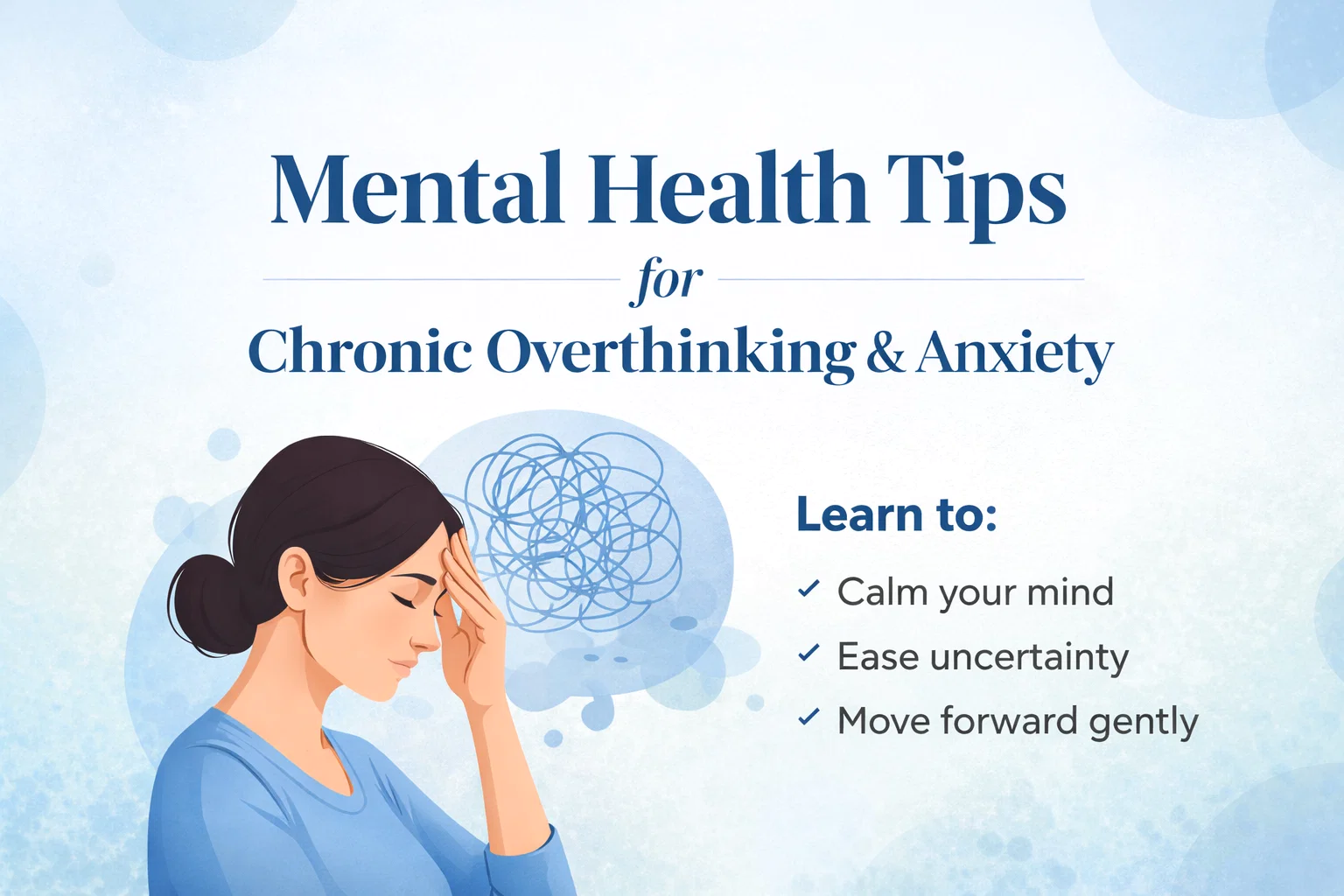
Living with a mind that constantly replays past conversations or worries about future scenarios can feel like running a marathon without a finish line. If you find yourself trapped in the cycle of chronic overthinking and anxiety, you are certainly not alone. The image shared above offers a beautiful roadmap of gentle reminders, and in this post, we are going to dive deep into why these affirmations are so vital for your mental well-being and how you can practically apply them to your daily life.
Understanding the Grip of Chronic Overthinking
Overthinking is more than just thinking a lot. It is a persistent loop of intrusive thoughts that often centers on mistakes, fears, or uncertainties. When this becomes chronic, it transitions from simple reflection into a state of paralysis. You might find yourself unable to make a decision because you are terrified of the potential for a mistake. However, as the reminders suggest, mistakes are an essential part of learning. Without them, growth remains stagnant.
Anxiety often walks hand in hand with overthinking. While overthinking deals with the logic and the “what-ifs,” anxiety is the physical and emotional response to those thoughts. It is the racing heart, the tight chest, and the feeling of impending dread. Recognizing that these two forces are interconnected is the first step toward reclaiming your peace. You are not your thoughts, and your thoughts are not always an accurate reflection of reality.
Why Your Thoughts Are Not Always Accurate
One of the most powerful reminders is the realization that your thoughts are not always facts. When we are anxious, our brains enter a state of hyper-vigilance. We begin to interpret neutral situations as threats. For example, if a friend takes a few hours to text back, an overthinker might immediately conclude that the friend is angry with them. This is a cognitive distortion.
Learning to question your thoughts is a superpower. When a negative thought arises, ask yourself what evidence you actually have to support it. Most of the time, you will find that the evidence is flimsy or non-existent. By distancing yourself from the immediate “truth” of your thoughts, you create a space where calm can gradually be learned.
The Power of Embracing Uncertainty
The need for certainty is the fuel that keeps the fire of anxiety burning. We want to know exactly what the future holds so we can prepare for it. But the reality is that uncertainty is an inherent part of life. Trying to eliminate it is an impossible task that only leads to more stress.
Accepting that it is okay to feel uncertain allows you to stop fighting the unknown. Instead of asking “What if something goes wrong?”, try asking “What if things work out?”. Shifting your perspective toward the possibility of a positive outcome, or even a neutral one, can significantly lower your cortisol levels. You do not need every answer today to be okay tomorrow.
Building Resilience Through Small Steps
When you are overwhelmed, the mountain in front of you looks too steep to climb. This is why the reminder that small steps still matter is so crucial. You do not have to fix your entire life or solve your anxiety in one afternoon. Healing is a process of accumulation.
- Focus on the next five minutes: Instead of worrying about the whole week, just focus on completing the task right in front of you.
- Celebrate minor wins: Did you choose to rest today? That is a win. Did you challenge a negative thought? That is a win.
- Be patient with yourself: Growth requires patience and practice. You are essentially rewiring your brain, and that takes time.
Giving Yourself Permission to Rest
In a world that prizes productivity above all else, resting can feel like a failure. For the overthinker, rest is often plagued by guilt. You might think that if you aren’t actively solving a problem, you are falling behind. But you are not behind in life. Everyone is on a unique timeline, and your worth is not tied to how much you achieve in a state of burnout.
Rest is not just about sleeping. It is about mental stillness. It is about allowing yourself to pause without quitting. When you pause, you give your nervous system a chance to reset. This clarity often comes with time, not through forced effort. Sometimes, the most productive thing you can do is absolutely nothing.
Practicing Self-Compassion Daily
How do you talk to yourself? If you spoke to your friends the way you speak to yourself during an anxiety attack, would they still be your friends? Most of us are our own harshest critics. We tell ourselves we should be “better” or “stronger” or “calmer.”
Self-compassion means treating yourself with the same kindness and understanding you would offer a loved one. It involves acknowledging that you are doing better than you think. You are navigating a complex internal landscape, and that requires immense strength. You deserve self-compassion daily, not just when you feel you have “earned” it by being perfect.
Breaking the Perfectionism Loop
Progress does not need perfection. Perfectionism is often a defense mechanism used to avoid criticism or failure. If we do everything perfectly, we think we can control how others perceive us or how we feel about ourselves. But perfectionism is an illusion that only breeds more anxiety. Fear of failure does not equal failure itself. In fact, fearing failure is often a sign that you care deeply about your path. Redirect that energy into effort rather than an unattainable ideal.
How to Handle Discomfort Calmly
Anxiety feels uncomfortable. There is no way around that. However, the suffering often comes from our resistance to that discomfort. We feel anxious, and then we get anxious about being anxious. This creates a secondary layer of stress that is much harder to manage.
Learning to handle discomfort calmly involves a technique called “floating.” Instead of tensing up and trying to push the feeling away, you acknowledge it. You say to yourself, “I am feeling a lot of discomfort right now, and that is okay. It will pass.” By not fighting the sensation, you take away its power. Peace is possible for you, even in the midst of a storm, if you stop trying to control the wind.
Practical Tools for the Overthinking Mind
While affirmations and reminders are foundational, having a few physical tools can help ground you when the mental chatter gets too loud. These methods help transition you from your head back into your body.
- The 5-4-3-2-1 Grounding Technique: Identify 5 things you see, 4 things you can touch, 3 things you hear, 2 things you can smell, and 1 thing you can taste.
- Box Breathing: Inhale for 4 seconds, hold for 4, exhale for 4, and hold for 4. This signals to your brain that you are safe.
- Journaling: Get the thoughts out of your head and onto paper. Seeing them in writing often makes them appear less threatening.
Moving Gently Forward
The final reminder on the list is perhaps the most important: Keep moving gently forward. Notice the word “gently.” This isn’t about a forceful push or a desperate scramble. It is about a steady, kind progression. Some days, moving forward looks like a five-mile run. Other days, it looks like taking a shower and making a cup of tea. Both are valid.
Clarity does not usually arrive in a lightning bolt of realization. It comes in the quiet moments when you have finally stopped searching for it. By trusting the process and leaning into these reminders, you create a life where anxiety no longer sits in the driver’s seat.
Conclusion: Finding Your Path to Peace
Navigating chronic overthinking and anxiety is a journey with many ups and downs. It is not about reaching a destination where you never worry again; it is about developing a new relationship with your thoughts. By remembering that your thoughts aren’t always accurate, that you are allowed to rest, and that small steps lead to big changes, you are building a foundation for lasting mental wellness.
Take these reminders and keep them close. Put them on your phone wallpaper, write them in your planner, or stick them on your bathroom mirror. You are doing a great job, and you are far more capable of handling life’s uncertainties than your anxiety wants you to believe. Be gentle with yourself, stay patient, and keep moving forward. Peace is not a luxury reserved for others; it is a state of being that you can cultivate, one thought at a time.