How to Stop Overthinking in Relationships Build Emotional Stability
Overthinking is like a rocking chair. It gives you something to do, but it does not get you anywhere. In the context of a romantic relationship, it can feel more like a treadmill at max speed, exhausting your mental energy while you remain stuck in the same cycle of doubt and anxiety. We have all been there, staring at a text message for twenty minutes, analyzing the lack of an emoji, or replayng a conversation from three days ago to find a hidden sting in a partner’s words. While these thoughts often stem from a place of wanting to protect the relationship, they usually end up doing the exact opposite by creating unnecessary friction and distance.
Building emotional stability is not about becoming a robot or ignoring your feelings. Instead, it is about developing a toolkit that allows you to distinguish between an intuitive gut feeling and a fear based narrative. By shifting your focus from the stories you tell yourself to the reality of your partner’s actions, you can cultivate a sense of security that stands the test of time. This guide explores how to dismantle the habits of overthinking and replace them with the pillars of emotional resilience and trust.
Understanding the Root of Relationship Overthinking
Before we can fix the habit, we have to understand why it happens. Overthinking is often a defense mechanism. If you have experienced past heartbreak or grew up in an environment where emotional safety was inconsistent, your brain becomes hyper vigilant. It looks for threats even when things are going well because it wants to prevent you from being blindsided by pain. This hyper vigilance manifests as over analyzing tone, rereading messages, and seeking constant reassurance.
The Trap of Imagined Stories
One of the most common ways overthinking manifests is through narrative building. Your partner is late coming home from work, and instead of assuming they are stuck in traffic, your brain creates a complex story involving a lack of respect or a fading spark. These stories feel real because they trigger real physiological responses, like a racing heart or a tight chest. Learning to pause and ask, Is this a fact or a story?, is the first step toward reclaiming your peace of mind.
Separating Past Trauma from Present Reality
Our past relationships often leave behind ghosts. If a previous partner was dishonest, you might find yourself looking for dishonesty in your current partner, even if they have given you no reason to doubt them. Emotional stability requires us to view our current partner through a clean lens. It involves recognizing when a trigger belongs to a version of you that is no longer in danger. By separating then from now, you allow your relationship to breathe without the weight of old baggage.
Practical Strategies for Building Emotional Stability
Emotional stability is a muscle that grows stronger with consistent practice. It is not a destination you reach, but a way of navigating the world. Here are several actionable strategies to help you move from a state of panic to a state of poise.
Communicate Openly About Your Concerns
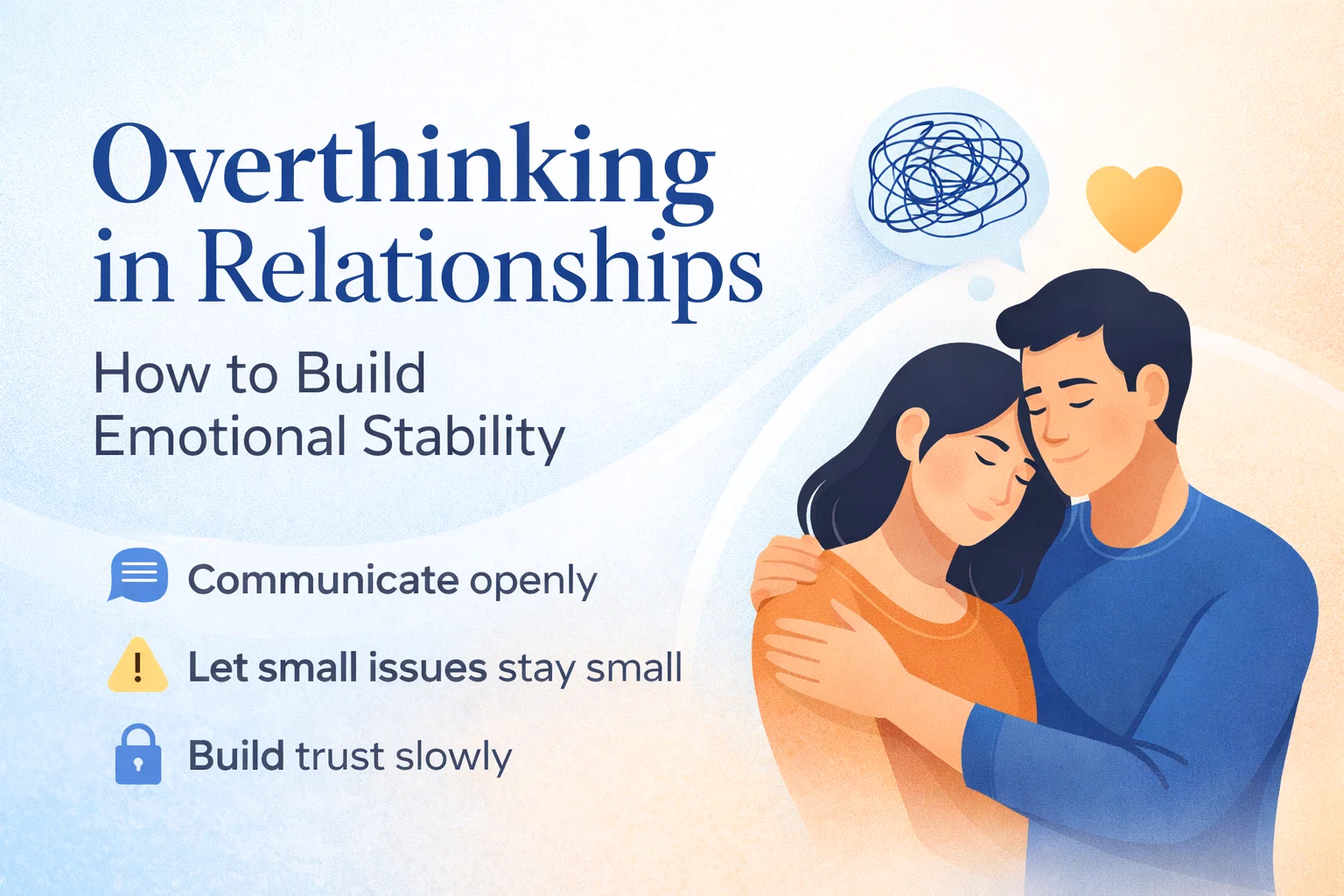
Silence is the fuel that overthinking needs to thrive. When you keep your worries to yourself, they grow larger and more distorted. Open communication acts as a pressure release valve. However, the key is how you communicate. Instead of accusing your partner with statements like, You always make me feel insecure, try using I statements. Say something like, I have been feeling a bit anxious lately and I realized I have been overthinking things. Can we talk about it? This invites your partner to be a teammate rather than a defendant.
Stop Assuming Negative Hidden Meanings
Overthinkers are often amateur detectives, looking for clues in the mundane. If your partner says they are tired, an overthinker might interpret that as, They are bored of me. To build stability, you must learn to take things at face value. If they say they are tired, they are tired. Give your partner the benefit of the doubt and stop looking for subtext where none exists. This reduces your mental load and prevents unnecessary arguments.
Focus on Actions over Words and Stories
While words are important, consistent behavior is the true indicator of a relationship’s health. If your partner shows up for you, supports your goals, and treats you with respect daily, let those actions be your anchor. When a stray thought tells you that they do not care, look at the evidence of their actions. Do they make you coffee in the morning? Do they listen when you have a bad day? Use these tangible facts to debunk the intangible fears in your head.
Daily Habits to Stay Grounded
Stability is built in the quiet moments, not just during a crisis. Incorporating small habits into your daily routine can help keep your anxiety at bay and your connection strong.
- Breathe before reacting: When you feel a surge of overthinking, take five deep breaths. This physiological shift moves you out of fight or flight mode and back into your logical brain.
- Give space without creating panic: Understand that your partner needing time alone is not a rejection of you. It is a healthy part of individuality.
- Avoid testing your partner: Tests are traps that set your partner up to fail. Instead of testing them to see if they care, express your needs clearly and let them meet those needs.
- Limit message rereading: If you find yourself scrolling through old texts to find a shift in tone, put the phone down. Focus on the person in front of you, not the pixels on a screen.
The Power of Expressing Needs Calmly
Many people overthink because they are afraid that their needs are too much or that they will be judged for having them. This leads to silent guessing, where you hope your partner will intuitively know what you want. When they don’t, you overthink their lack of intuition as a lack of love. To break this cycle, you must practice radical honesty. Express your needs for affection, reassurance, or quality time calmly and clearly. When your needs are met because you asked for them, it builds a foundation of mutual respect and understanding.
Choosing Honesty over Silent Guessing
Guessing is a recipe for disappointment. Choosing honesty means being vulnerable enough to say, I need a little extra reassurance today. This might feel uncomfortable at first, but it is far more productive than spending eight hours wondering if they still find you attractive. Stability comes from the confidence that you can speak your truth and be heard.
Building Trust Slowly and Steadily
Trust is not a light switch that you flip on. It is a brick by brick process. Every time you choose to believe your partner, every time you stay grounded during a disagreement, and every time you release a fear driven thought, you are adding a brick to the wall of your emotional security. Do not rush the process. Let the trust build naturally through consistent, positive interactions over time.
Navigating Disagreements with Poise
Even the most stable relationships have conflicts. The difference lies in how those conflicts are handled. Overthinking turns a small disagreement into a sign of an impending breakup. Emotional stability allows you to see a disagreement for what it is: a temporary difference of opinion that can be resolved through respect and listening.
Stay Grounded During Heated Moments
When emotions run high, it is easy to lose your footing. Practice staying grounded by focusing on the present moment. Do not bring up mistakes from three years ago to win an argument today. Keep the issue small and focused on a solution. By staying in the present, you prevent the disagreement from spiraling into a catastrophic event in your mind.
Accepting That Misunderstandings Are Normal
No two people will ever see the world exactly the same way. Misunderstandings are an inevitable part of being human. Instead of viewing a misunderstanding as a red flag, view it as an opportunity to learn more about your partner’s perspective. When you accept that you won’t always be on the same page immediately, you take the pressure off the relationship to be perfect.
Moving Forward with Emotional Security
Overthinking is a habit, and like any habit, it can be broken with intentionality. It starts with a choice to value your peace more than your patterns of anxiety. By focusing on mutual respect, practicing clear communication, and grounding yourself in the reality of your partner’s consistent behavior, you can transform a relationship of doubt into one of deep, abiding security.
Remember that you deserve a relationship that feels like a safe harbor, not a stormy sea. By doing the inner work to build emotional stability, you are not just improving your relationship, you are improving your entire quality of life. You are teaching yourself that you are worthy of peace and that your thoughts do not have to control your happiness.
Conclusion
Building emotional stability and stopping the cycle of overthinking is a journey that requires patience, self compassion, and a commitment to growth. It is about learning to trust the steady patterns of your life rather than the erratic whispers of your fears. As you implement these strategies, you will find that the noise in your head begins to quiet down, leaving room for more joy, more connection, and more love.
Start today by letting one small issue stay small. Breathe, look at the facts, and choose to believe in the strength of your connection. Over time, these small choices will lead to a foundation so solid that overthinking will no longer have a place to take root. You have the power to create the secure, loving relationship you have always wanted.