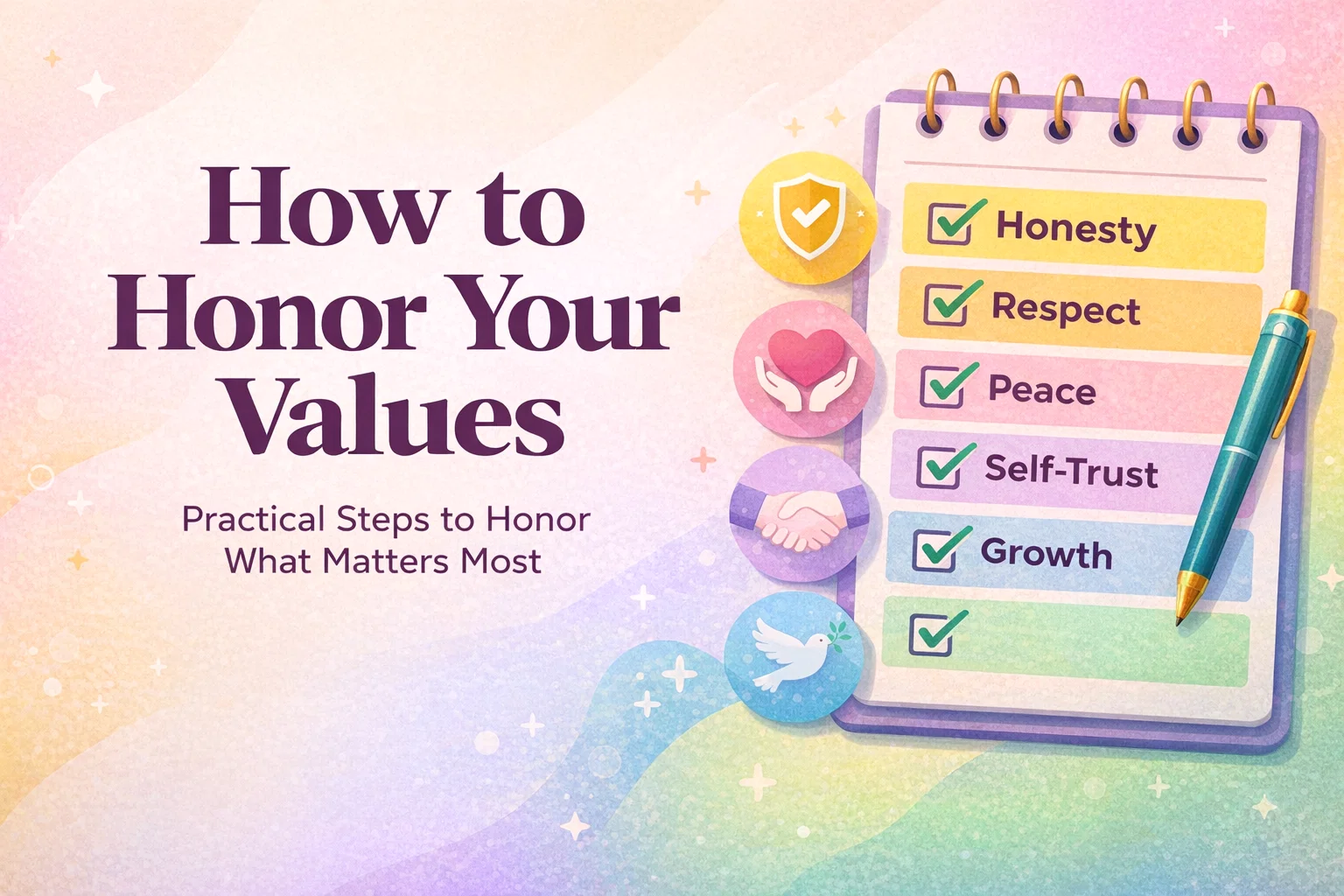
How to Honor Your Values 10 Core Values and Boundaries for Better Mental Health
Understanding your core values is like having a reliable compass in a storm. It does not just tell you where you are; it tells you exactly which direction to take when the path becomes blurred by social pressure or old habits. Many of us walk through life feeling a vague sense of resentment or exhaustion without realizing that our daily actions are in direct conflict with what we hold dear. When you learn to honor your values, you stop reacting to the world and start responding from a place of deep internal strength. This shift transforms your relationships, your career, and most importantly, your relationship with yourself.
The Power of Alignment: Why Values Matter
Values are the fundamental beliefs that guide your behavior and decision making process. When you live in alignment with them, you experience a sense of flow and peace. However, when you ignore them to please others or avoid conflict, you experience what psychologists call cognitive dissonance. This internal friction leads to burnout, anxiety, and a loss of self trust. By identifying specific values like honesty, stability, and respect, you create a blueprint for a life that feels authentic rather than performed.
Honesty Beyond Just Telling the Truth
Most people define honesty as not telling lies. But honoring the value of honesty goes much deeper. It involves telling the truth about what hurts and being transparent about your needs. It means speaking up sooner rather than letting a grievance fester for months. When you commit to honesty, you are choosing the discomfort of a difficult conversation over the long term resentment of a hidden truth. This clarity allows your relationships to be built on solid ground rather than assumptions.
Creating Stability by Choosing Consistency
Stability is often misunderstood as being boring or stagnant. In reality, stability is the foundation upon which growth is built. Many people find themselves trapped in a cycle of romanticizing chaos, mistaken intensity for intimacy or drama for passion. To honor stability, you must consciously choose consistency. This means showing up for yourself daily, setting routines that nourish your soul, and distancing yourself from environments that thrive on unpredictability. Consistency is the quiet work that builds a life you do not need to escape from.
The Role of Respect in Personal Boundaries
Respect is a two way street, but it starts with the way you treat yourself. Honoring the value of respect requires you to stop tolerating subtle disrespect from others. It might be a backhanded compliment, a friend who is always late, or a colleague who talks over you. When you value respect, you realize that leaving a situation sooner is better than staying and losing your dignity. You teach people how to treat you by what you are willing to walk away from.
Cultivating Emotional Safety and Mutual Effort
Emotional safety is the requirement for any healthy connection. Many of us have a tendency to over expose ourselves too quickly, sharing our deepest vulnerabilities with people who haven’t yet earned that level of access. Honoring emotional safety means sharing slowly and observing how the other person handles your heart. It is a protective measure that ensures you are seen and heard by the right people at the right time.
Stopping the Cycle of Over Functioning
Do you find yourself doing eighty percent of the work in your relationships? This is known as over functioning, and it is a common response to an underlying fear of abandonment or lack of control. To honor the value of mutual effort, you must step back and let people meet you halfway. If you are always the one reaching out, planning, and fixing, you never give the other person the space to show up. Stepping back is not a game of chicken; it is an assessment of whether the relationship is a partnership or a solo performance.
Finding Peace in the Midst of Conflict
Peace is not the absence of conflict, but the ability to handle it without losing your center. A major drain on personal peace is the urge to argue until you are understood. We often stay in circular conflicts because we believe that if we just explain our perspective one more time, the other person will finally get it. Honoring peace means recognizing when a conversation has become a loop. It involves stepping back from circular conflict and realizing that your peace is more important than being right or being understood by someone committed to misunderstanding you.
The Importance of Being Seen and Heard
To be seen is a primal human need. However, we often sabotage this need by minimizing our own feelings to keep the peace. You might say things like “it is not a big deal” or “I am just being sensitive.” When you do this, you are effectively making yourself invisible. Honoring the value of being seen requires you to name your feelings clearly and without apology. By stating “I feel hurt when this happens,” you give others the opportunity to see the real you, flaws and all.
Reciprocity: The Art of Balanced Giving
Generosity is a beautiful trait, but giving to earn love is a form of manipulation that leaves you feeling empty. Reciprocity is about the natural flow of energy between two people. If you find yourself constantly pouring into others while your own cup remains dry, it is time to reassess. Honoring reciprocity means giving where it flows back. This does not mean keeping a scorecard, but it does mean ensuring that the energy you put out is being matched and respected. It is about investing in people who invest in you.
Building Self Trust Through Intuition
How many times have you ignored a gut feeling only to regret it later? Self trust is built when you stop outsourcing your instincts to others. We often ask ten different friends for advice because we are afraid to trust our own judgment. To honor self trust, you must start listening to your gut. It is that quiet, persistent voice that tells you when something is right or wrong before your logical mind can even process it. Every time you follow your intuition, your self trust grows stronger.
Choosing Growth Over Familiar Pain
Human beings are wired for comfort, which is why we often cling to familiar pain rather than venturing into the unknown. We stay in toxic jobs or unfulfilling relationships because the pain we know feels safer than the uncertainty of change. Honoring the value of growth requires a radical shift in perspective. You must start choosing what is healthier for you, even if it feels unfamiliar or scary. Growth happens at the edge of your comfort zone, and it requires the courage to let go of the versions of yourself that no longer serve your future.
Practical Steps to Implement These Values Daily
Knowing your values is the first step, but living them is where the transformation happens. Start by picking one value from this list and focusing on it for an entire week. If you choose peace, practice noticing when you are tempted to enter a circular argument and consciously choose to step away. If you choose honesty, practice being truthful about a small need you usually hide. Small, consistent actions create the neural pathways that eventually make honoring your values your default setting.
Conclusion: The Journey Toward An Authentic Life
Honoring your values is not a one time event but a lifelong practice of self alignment. It requires constant self reflection and the willingness to make difficult choices. However, the reward is a life characterized by integrity, deep connections, and a profound sense of self respect. You no longer have to wonder if you are doing the right thing, because your values provide the answer. By choosing what is healthy, consistent, and true, you are not just surviving; you are finally beginning to thrive. Take a moment today to look at your life through the lens of your values and ask yourself: where can I start honoring myself more?