Aesthetic Prompts for Describing Red Brown Eyes Creative Writing Tips and Ideas
Writing is an art form that relies heavily on the ability to transport a reader into a specific moment, feeling, or visual space. One of the most common challenges writers face is describing human features in a way that feels fresh and evocative rather than repetitive or clinical. Among these features, the eyes are often called the windows to the soul, yet they are frequently reduced to simple color labels like blue, green, or brown. When you encounter a gaze that carries the warmth of a dying fire or the depth of burnished copper, standard adjectives simply won’t do. Exploring the nuances of red-brown eyes allows a writer to tap into themes of heat, earth, and intensity, creating a character that lingers in the reader’s mind long after the page is turned.
The Magic of the Red-Brown Spectrum
In the world of character description, brown eyes are often unfairly labeled as plain. However, the red-brown spectrum is anything but ordinary. This specific hue sits at the intersection of earthy stability and fiery passion. It is the color of mahogany, of spiced cider, and of the soil just before a summer storm. By focusing on the red undertones, you shift the narrative from a static color to a dynamic force of nature.
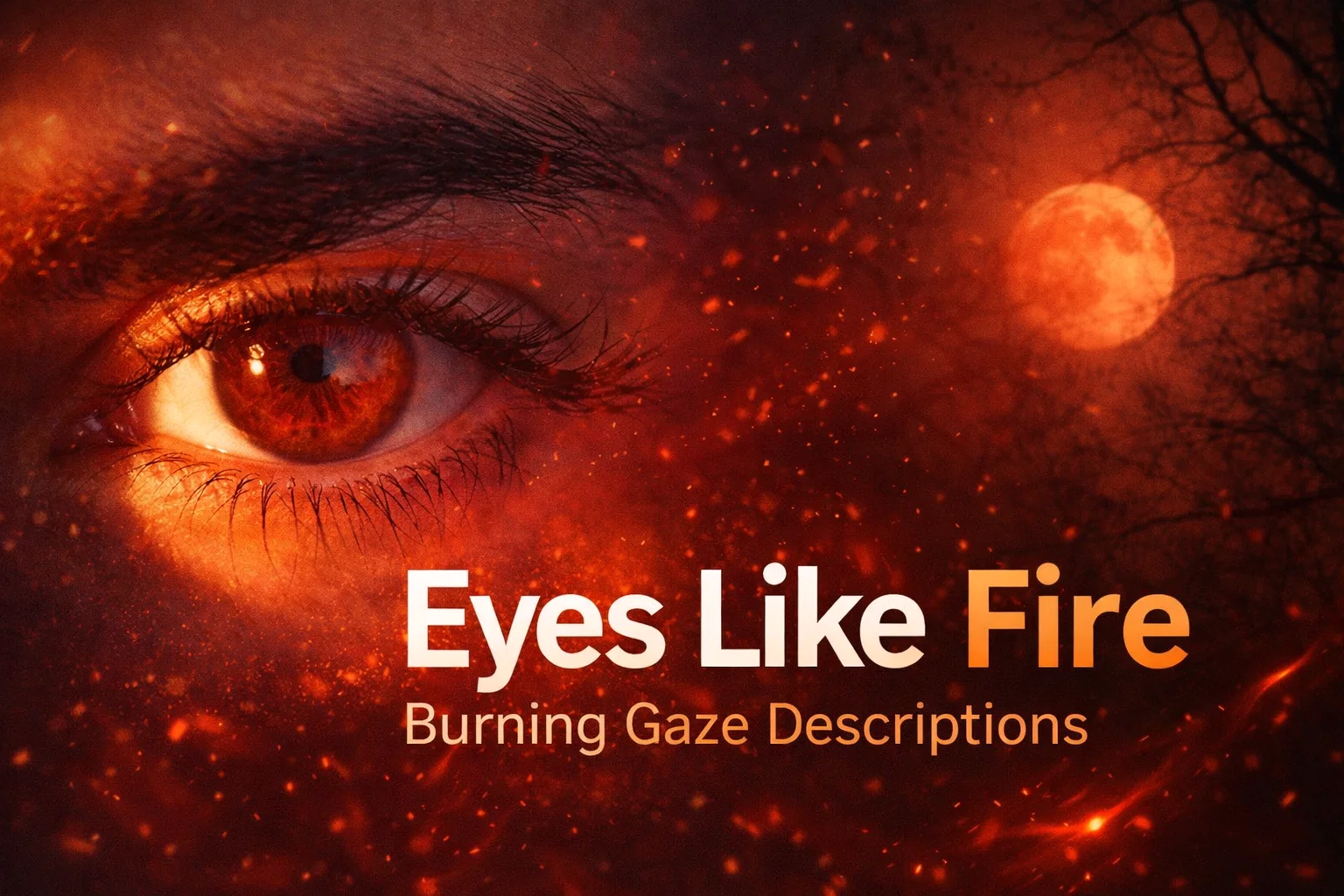
Think about the way light interacts with this shade. Unlike lighter eye colors that might reflect light like glass, red-brown eyes seem to absorb and store it. They glow from within, much like a coal that has been pulled from a fire. This internal radiance provides a sense of history and depth, suggesting a character with a rich inner life or a hidden intensity that only reveals itself under the right circumstances.
Using Nature as a Descriptive Anchor
Nature provides an endless palette for describing complex colors. When writing about eyes that carry a reddish tint, looking toward the changing seasons is a natural starting point. Autumn is the most obvious and effective parallel. The transition of leaves from vibrant green to deep, rusted red and brittle brown mirrors the complexity found in a dark amber gaze.
The Language of the Harvest
Consider using metaphors related to the harvest and the earth. Descriptive phrases like cider-pressed warmth or the shade of a ripening pomegranate bring a sensory quality to the text. You aren’t just telling the reader the color; you are giving them a taste and a smell to associate with the character. This multi-sensory approach is what elevates a standard description into something truly memorable.
Earth and Mineral Comparisons
Beyond flora, the mineral world offers rugged and sturdy imagery. Iron, copper, and clay are excellent touchstones for a character who is grounded or perhaps a bit hardened by life. A gaze that looks like oxidized copper suggests a beauty that has been weathered by time, while eyes the color of red clay evoke a sense of home and raw, unrefined strength.
Describing Light and Motion
Static descriptions can sometimes feel flat. To make a character’s eyes feel alive, you must describe how they change. Eyes are rarely just one color; they are a shifting landscape of light and shadow. For red-brown eyes, the “red” often appears as a flash or a glint when the person is caught in the sun or moved by a strong emotion.
Try describing the movement of light within the iris. You might write about sparks of cinnamon dancing in a sea of chocolate, or the way a stare turns from a dull brick to a bright flame when the character is angered. This technique, often called active description, helps the reader visualize the character in motion rather than as a still photograph. It also serves as a tool for “showing” emotion rather than “telling” it. If a character’s eyes “burn with a copper heat,” the reader immediately understands their intensity without the author having to explicitly state they are passionate.
Metaphors of Fire and Heat
Heat is the defining characteristic of the red-brown gaze. While blue eyes are often associated with the cold, ice, or the vastness of the sky, red-brown eyes are tethered to the hearth. This makes them perfect for characters who are protective, nurturing, or fiercely loyal. Using fire-based metaphors creates an immediate psychological profile for the character.
The Smoldering Gaze
A smoldering gaze suggests a heat that is contained but powerful. It is the feeling of leaning too close to a stove or standing near a bonfire after the flames have died down. This type of description works beautifully for romantic leads or mysterious figures who hold their cards close to their chest. The heat is there, but it is muted, waiting for the right moment to flare up.
The Searing Stare
On the other end of the spectrum, you have the searing stare. This is the gaze that “brands” or “burns.” It is active and perhaps a bit overwhelming. Using words like scorch, singe, or molten conveys a character who is assertive and perhaps even a bit dangerous. Their eyes don’t just see; they impact the person they are looking at.
The Psychology of the Gaze
How a character uses their eyes is just as important as what color they are. A character with deep, red-tinted brown eyes might have a “heavy” gaze that feels like a weight on the skin. This can be used to show authority or deep empathy. Conversely, a “flickering” gaze might suggest someone who is quick-witted, impulsive, or perhaps a bit unstable.
When you combine color with behavior, you create a holistic view of the character. For example, a character who rarely blinks and has eyes the color of dried blood and iron will feel very different from a character with honey-red eyes that crinkle at the corners when they laugh. The first feels like a warrior or a survivor, while the second feels like a healer or an old friend.
Creative Writing Tips for Better Descriptions
- Avoid the Cliché: Try to stay away from “dark and mysterious” or “chocolatey.” These have been used so often they have lost their impact. Look for more specific nouns like whiskey, chestnut, or terracotta.
- Check the Lighting: Always mention the light source. Eyes look different in a candlelit room than they do under the harsh midday sun. Use the environment to pull the red tones out of the brown.
- Focus on the Pupil: The contrast between a pitch-black pupil and a fiery red-brown iris can be striking. Describe the pupil as an abyss or a dark center that anchors the heat around it.
- Keep it Concise: You don’t need a paragraph for every look. Sometimes a single, well-placed adjective like russet or umber is more powerful than a long metaphor.
The Impact of Word Choice
The difference between “brown eyes” and “eyes the color of roasted coffee beans with a hint of red” is the difference between a sketch and a painting. Word choice dictates the mood of the entire scene. If you want a scene to feel cozy and safe, use descriptions like warm cedar or toasted pecans. If you want the scene to feel tense or high-stakes, switch to flint and spark or glowing embers.
Writers should also be mindful of the “red” element in these descriptions. Red is a color of warning and passion. Using it too much can make a character seem aggressive, while using it sparingly can make it feel like a rare and beautiful treasure that the reader has been allowed to see.
Conclusion: Crafting Unforgettable Characters
Mastering the art of description is about more than just finding fancy words in a thesaurus. It is about observation and the ability to find beauty in the specific. The next time you sit down to write, challenge yourself to look deeper into the eyes of your characters. If they have brown eyes, don’t stop there. Look for the red, the gold, and the shadows that make them unique. By using evocative imagery and sensory-rich language, you can turn a simple physical trait into a profound insight into a character’s soul.
Great writing is built on these small, vivid details. Whether you are describing a hero, a villain, or a fleeting background character, giving them a gaze that “sears” or “glows” ensures that your audience stays engaged and invested in your story. Keep practicing your descriptions and never settle for the first word that comes to mind. There is always a more colorful, more heated, and more human way to describe the world around you.