DBT Journaling Prompts for Mental Health Emotional Regulation Self-Care Therapy Cheat Sheet
Navigating the complexities of emotional health can often feel like trying to steer a ship through a storm without a compass. When feelings become overwhelming, it is common to feel stuck in a cycle of reactivity or avoidance. Dialectical Behavior Therapy, commonly known as DBT, offers a powerful set of tools designed specifically to help you find your footing. Originally developed to treat borderline personality disorder, these strategies have become a gold standard for anyone looking to improve their emotional regulation, build resilience, and create more meaningful connections with others. By using structured prompts, you can begin to bridge the gap between feeling out of control and finding a sense of calm intentionality.
Understanding the Foundation of DBT
At its core, DBT is built on the concept of dialectics, which is the idea that two seemingly opposite things can be true at the same time. In the context of mental wellness, this usually means balancing acceptance and change. You can accept yourself exactly as you are in this moment while simultaneously acknowledging that you need to change your behavior to reach your goals. This balance is what makes DBT prompts so effective for journaling and self reflection. They do not ask you to suppress your feelings; instead, they invite you to observe them with curiosity and then decide on the most effective path forward.
The Four Pillars of Emotional Health
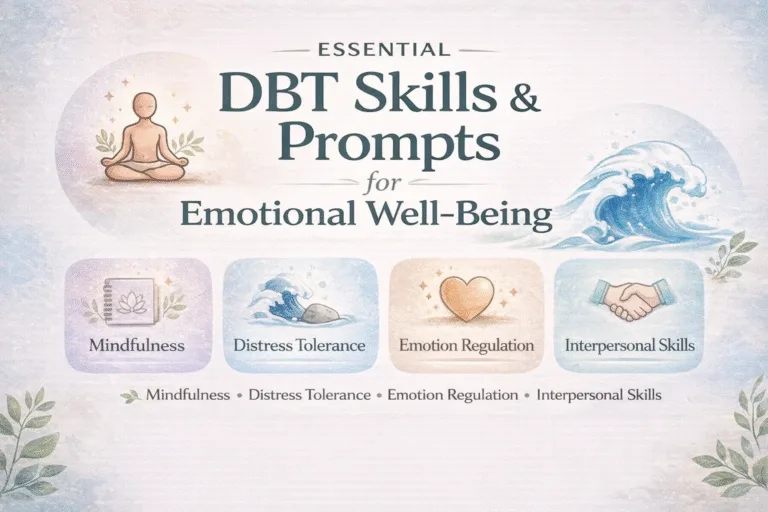
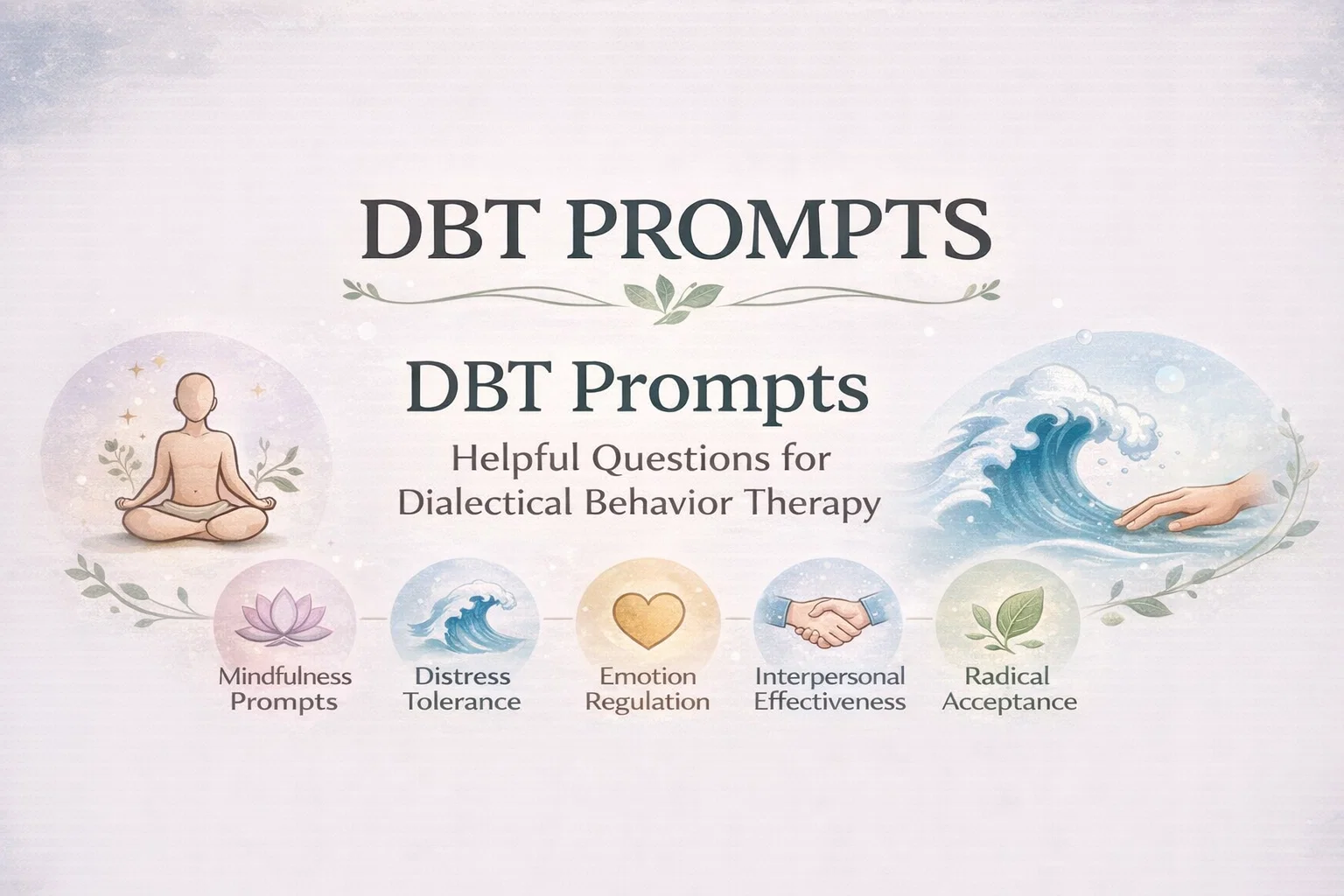
Traditional DBT is broken down into four main modules: Mindfulness, Distress Tolerance, Emotion Regulation, and Interpersonal Effectiveness. Each of these pillars serves a unique purpose in your mental health toolkit. Mindfulness helps you stay in the present moment. Distress Tolerance gives you the strength to survive a crisis without making it worse. Emotion Regulation teaches you how to turn down the volume on intense feelings. Finally, Interpersonal Effectiveness provides the skills needed to navigate relationships with clarity and respect. Using prompts tailored to these categories allows you to target specific areas of your life that need more attention.
Deepening Your Mindfulness Practice
Mindfulness is the bedrock of all other DBT skills. It is the practice of being fully aware of the present moment without judgment. In a world that constantly pulls our attention toward the past or the future, mindfulness is a radical act of grounding. When you use mindfulness prompts, you are training your brain to notice the subtle shifts in your body and mind before they escalate into a full blown emotional crisis.
Connecting with the Body
A simple yet profound question to ask is: What am I noticing in my body right now? Often, our bodies know we are stressed before our minds do. You might notice a tightness in your chest, a clenching in your jaw, or a heaviness in your shoulders. By identifying these physical sensations, you can address them through deep breathing or stretching, which sends a signal to your nervous system that you are safe. This physical awareness is the first step in breaking the cycle of automatic stress responses.
Observing Without Judgment
Another essential aspect of mindfulness is the ability to name an emotion without judging it. Instead of saying, I am wrong for feeling angry, try saying, I notice that anger is present. This subtle shift in language removes the shame often associated with difficult emotions. When you stop fighting the reality of your feelings, you free up the energy needed to manage them effectively. Remember, feelings are just data; they are not facts, and they do not have to define your character.
Building Distress Tolerance for Difficult Moments
There are times when life feels genuinely unbearable. In these moments, the goal is not necessarily to feel better immediately, but to survive the minute, the hour, or the day without engaging in harmful behaviors. Distress tolerance is about building a high threshold for discomfort. It is the art of sitting with a fire without letting it burn you.
Surviving the Next Ten Minutes
When you are in the middle of a crisis, looking at the big picture can be paralyzing. Instead, ask yourself: What would help me get through the next ten minutes? This narrows your focus to a manageable timeframe. Maybe it is holding an ice cube, taking a cold shower, or simply counting your breaths. By breaking time down into small increments, you prove to yourself that you are capable of enduring discomfort. This builds a history of success that you can lean on the next time things get tough.
The Power of Urge Surfing
Urges to react impulsively often feel like waves. They start small, build to a peak of intense pressure, and then eventually subside. Urge surfing is the practice of riding that wave without acting on the impulse. Prompts like, Where do I feel this urge in my body? or What is this urge trying to protect me from? can help you distance yourself from the impulse. When you realize that an urge is a temporary sensation rather than a command, you regain your power of choice.
Mastering Emotion Regulation
Emotion regulation is not about getting rid of emotions; it is about managing their intensity and duration. If your emotions feel like a rollercoaster, these skills act as the brakes and the safety harness. By understanding the function of your emotions, you can learn to respond to them in ways that align with your long term values.
Identifying Triggers and Needs
Every emotion has a trigger and a need. When you feel a sudden shift in your mood, ask: What emotion am I feeling, and what triggered it? Identifying the specific event that caused the shift helps you understand the context of your reaction. Furthermore, asking What does this emotion need from me right now? allows you to provide self-validation. If you are sad, you might need comfort. If you are angry, you might need to set a boundary. Meeting the underlying need is much more effective than simply trying to make the feeling go away.
Connecting with the Past
Sometimes, our reactions are disproportionate to the current situation because they are connected to past experiences. Asking yourself if an emotion is linked to something from your history can provide valuable insight. This is not about dwelling on the past, but about recognizing when an old wound has been bumped. This awareness allows you to separate the current reality from past trauma, helping you to respond to the present moment more accurately.
Enhancing Interpersonal Effectiveness
Our relationships are often the source of our greatest joy and our deepest stress. Interpersonal effectiveness is about getting what you want and need from others while maintaining self respect and keeping the relationship healthy. It is a delicate balancing act that requires clear communication and firm boundaries.
Communicating with Clarity
Many relationship conflicts stem from vague communication. Before engaging in a difficult conversation, ask: What do I need to express clearly right now? Being specific about your needs reduces the chance of misunderstandings. It is also helpful to consider what boundaries are important for protecting your well being. A boundary is not a wall to keep people out; it is a gate that determines what behavior you will allow into your space.
Respecting Self and Others
A key challenge in any relationship is honoring yourself while still respecting the other person. You can be firm about your needs without being aggressive. Prompts that encourage you to look at both sides of a situation help you navigate conflicts with empathy and integrity. When you approach interactions with a clear sense of your own values, you are less likely to compromise your self respect for the sake of temporary peace.
The Path of Radical Acceptance
Radical acceptance is perhaps the most challenging and yet the most liberating DBT skill. It involves accepting reality exactly as it is, without trying to fight it, hide from it, or change it. This does not mean you approve of the situation; it simply means you stop wasting energy on the wish that things were different.
Letting Go of the Fight
Ask yourself: What part of this situation is outside my control? Usually, it is a lot more than we want to admit. We cannot control the past, the weather, or other people’s choices. When you stop fighting reality, you stop the suffering that comes from resistance. This allows you to move into a space of problem solving. You cannot change a situation until you first accept that the situation exists. Radical acceptance is the bridge between suffering and peace.
Defining Self Respect in Hard Times
In difficult circumstances, it is helpful to ask: What would self respect look like in this situation? This shifts the focus from the problem to your response. Even if you cannot change the outcome, you can always control how you carry yourself. Choosing to act with dignity and kindness toward yourself, even when things are falling apart, is a powerful way to maintain your sense of identity and worth.
Creating a Daily Journaling Ritual
The best way to integrate these DBT prompts into your life is through a consistent journaling practice. You do not need to answer every question every day. Instead, pick one category that resonates with your current state of mind. Use a dedicated notebook or a digital app to record your reflections. Over time, you will begin to see patterns in your emotional landscape and notice how your ability to handle stress has improved.
Tips for Success
- Be Honest: Your journal is a private space. Be as raw and honest as possible about your feelings and urges.
- Keep it Short: You do not need to write pages. Even a few bullet points in response to a prompt can provide significant relief.
- Practice Daily: Consistency is more important than intensity. Try to spend just five minutes each morning or evening with a prompt.
- Review Your Progress: Every few weeks, look back at your entries to see how far you have come in your emotional journey.
Wrapping Up Your Emotional Toolkit
Incorporating DBT prompts into your self care routine is a transformative way to build a more resilient mind. By practicing mindfulness, building distress tolerance, regulating your emotions, and improving your relationships, you are creating a solid foundation for long term mental wellness. Remember that healing is not a linear process. There will be days when you feel like a master of your emotions and days when you feel like a beginner all over again. The beauty of these tools is that they are always available to you, ready to help you navigate whatever waves life sends your way. Start small, stay curious, and be patient with yourself as you learn to ride the waves of your emotional life with grace and strength.