15 Essential Figures of Speech with Examples English Grammar Literacy Cheat Sheet
Effective communication is an art form that goes far beyond simply stringing words together. To truly capture an audience’s attention, a writer or speaker must master the subtle nuances of language known as figures of speech. These literary devices serve as the seasoning in a gourmet meal, adding flavor, texture, and depth to otherwise plain statements. Whether you are an aspiring novelist, a student aiming for academic excellence, or a professional looking to sharpen your persuasive skills, understanding how to deploy these tools is essential for making your message resonate. By moving past literal meanings and embracing figurative language, you transform basic information into an immersive experience for your reader.
The Power of Comparison: Similes and Metaphors
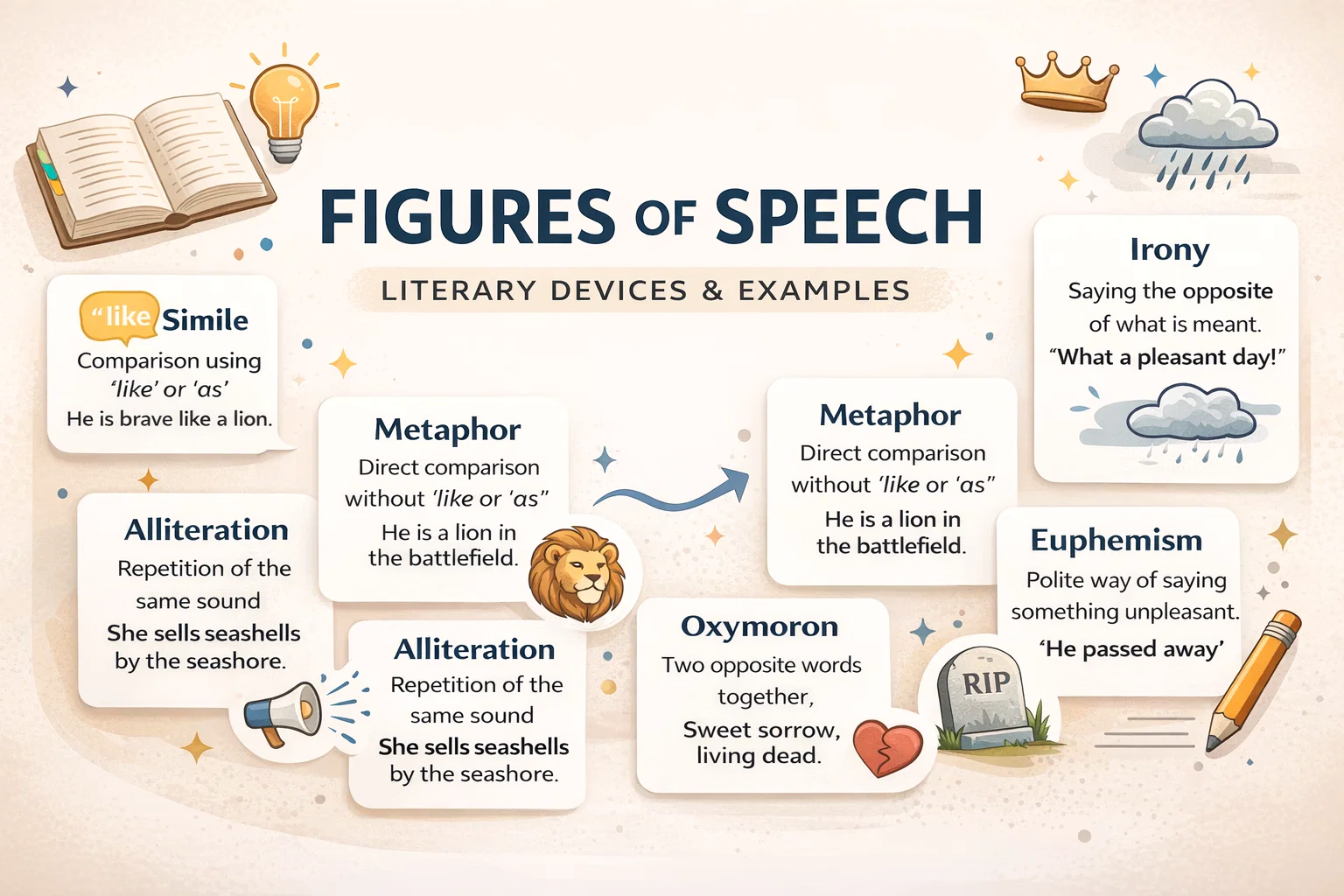
At the heart of many great literary works lies the ability to explain the unknown by comparing it to the known. The two most common ways to achieve this are through similes and metaphors. While they serve a similar purpose, their execution creates different levels of intensity in your writing. A simile uses the words like or as to create a bridge between two distinct concepts. For example, saying someone is brave like a lion gives the reader a clear mental image of strength and courage without suggesting the person is actually a feline. It is a gentle comparison that allows the reader to maintain a sense of reality while appreciating the descriptive flair.
On the other hand, a metaphor is much more direct and forceful. Instead of saying something is similar, a metaphor claims it is the other thing. When you write that a warrior is a lion on the battlefield, you are not just suggesting they have lion-like traits; you are momentarily merging their identity with the animal to evoke a sense of raw, unfiltered power. Metaphors are incredibly useful for establishing tone and mood because they bypass the analytical part of the brain and speak directly to the imagination. They require the reader to make a mental leap, which makes the writing feel more sophisticated and engaging.
Deepening the Connection with Personification
When you want to breathe life into inanimate objects or abstract ideas, personification is your go-to technique. This figure of speech involves giving human qualities, emotions, or actions to non-human things. Imagine describing a garden where the flowers smiled at the sun. Flowers do not actually have faces or the ability to feel happiness, but by using this device, you convey a sense of warmth, growth, and joy that a literal description could never achieve. Personification helps readers relate to the world around them on a personal level, making your descriptions feel more vibrant and soulful. It is particularly effective in nature writing and storytelling where the setting itself needs to feel like a character.
Emphasis through Exaggeration: Hyperbole and Irony
Sometimes, the truth just isn’t big enough to convey the weight of a moment. This is where hyperbole comes into play. Hyperbole is an intentional exaggeration used for emphasis or effect rather than being taken literally. If you tell someone you have told them a million times to do something, you are not actually counting to a million. Instead, you are expressing your frustration and the perceived frequency of the event. Hyperbole is a fantastic tool for adding humor or drama to your prose. It highlights the intensity of an emotion or a situation by blowing it out of proportion in a way that the audience immediately understands as a stylistic choice.
Conversely, irony involves a contrast between expectations and reality. Verbal irony, which is the most common form in speech, occurs when someone says the opposite of what they actually mean. A classic example is looking out the window at a massive thunderstorm and commenting on what a pleasant day it is. The effectiveness of irony relies on the context and the audience’s ability to pick up on the sarcasm or the underlying truth. It is a sophisticated way to add wit and social commentary to your blog posts or scripts, often helping to highlight the absurdity of a specific situation or viewpoint.
The Music of Language: Alliteration and Onomatopoeia
Writing is not just about the visual layout of words; it is also about how those words sound when they are read, whether aloud or in the reader’s mind. Alliteration is the repetition of the same initial consonant sound in a sequence of words. We often see this in tongue twisters like she sells seashells by the seashore. Beyond just being a fun linguistic exercise, alliteration creates a rhythmic quality that makes sentences more memorable and pleasing to the ear. It can be used to link important ideas together or to slow down the pace of a narrative, giving your prose a poetic edge that keeps readers hooked.
Sound Effects in Text: Onomatopoeia
If you want your writing to be truly immersive, you need to engage all the senses, including hearing. Onomatopoeia refers to words that phonetically imitate the sounds they describe. Words like boom, bang, and splash allow the reader to hear the action as it happens on the page. In digital content and storytelling, these words act as quick triggers for the imagination. They add a sense of urgency and physical presence to your descriptions, making the reader feel as though they are standing right in the middle of the scene you have created. It is an excellent way to break up dense blocks of text with punchy, sensory-driven language.
Substituting with Meaning: Metonymy and Synecdoche
Professional writers often use substitution to avoid repetition and to add a layer of symbolism to their work. Metonymy is a figure of speech where a related word is used to represent the actual thing being discussed. For instance, stating that the crown will decide the nation’s future uses the word crown to represent the entire monarchy or the governing authority. This creates a more regal and focused image than simply saying the king or the government. It allows you to use objects or concepts associated with a subject to stand in for the subject itself, which can make your writing feel more concise and elegant.
Synecdoche is a specific type of metonymy where a part of something is used to represent the whole, or vice versa. The phrase all hands on deck is a perfect example. In this context, hands refers to the sailors or the people needed for a task. By focusing on the specific part of the person needed for the work, the language becomes more functional and evocative. Similarly, you might refer to your car as your wheels. Using synecdoche helps to emphasize a specific aspect of an object or group, making your descriptions feel more grounded and authentic to specific industries or subcultures.
Structural Sophistication: Anaphora and Anticlimax
The structure of your sentences can be just as impactful as the words you choose. Anaphora is the repetition of a word or phrase at the beginning of successive clauses or sentences. This technique is famously associated with powerful oratory and persuasive writing. Think of the phrase I came, I saw, I conquered. The repetition of the word I builds momentum and creates a sense of inevitable triumph. In a blog post, using anaphora can help you hammer home a point or create a list of benefits that feels cohesive and authoritative. It gives your writing a deliberate, rhythmic flow that commands attention.
The Art of the Unexpected: Anticlimax
Anticlimax, sometimes known as bathos, involves a sudden shift from a serious or high-toned subject to something trivial or disappointing. This is often used for comedic effect or to point out the ironies of life. An example would be describing a man who lost his family, his wealth, and his pen. The inclusion of the pen at the end of such a tragic list creates a jarring, humorous effect because it places a mundane object on the same level as profound personal loss. Mastering the anticlimax allows you to play with the reader’s expectations, providing a moment of levity or a sharp reality check that keeps the narrative from becoming too one-dimensional.
Contrast and Contradiction: Oxymorons and Puns
Sometimes the most powerful way to describe a feeling is to combine two things that shouldn’t go together. An oxymoron is a figure of speech that pairs two opposite or contradictory words. Phrases like sweet sorrow or living dead capture complex, multifaceted emotions that a single word cannot express. These contradictions force the reader to pause and reflect on the deeper meaning of the statement. They are perfect for describing internal conflict or situations where things are not as simple as they seem on the surface.
On the lighter side, puns provide a playful way to engage your audience. A pun is a play on words that exploits multiple meanings of a term or words that sound similar but have different meanings. While often seen as the dad joke of the literary world, a well-placed pun can make your brand voice feel more approachable and witty. It shows that you have a deep command of the language and aren’t afraid to have a little bit of fun with your content. Whether it is a clever headline or a concluding remark, puns add a touch of personality that helps you build a rapport with your readers.
Practical Tips for Using Figures of Speech
- Moderation is Key: While these devices are powerful, overusing them can make your writing feel cluttered and difficult to follow. Use them like spices; a little goes a long way in enhancing the main message.
- Know Your Audience: Some figures of speech, like puns or irony, require a certain level of cultural context. Ensure your choice of language aligns with the expectations and knowledge of your target readers.
- Read Aloud: To check if your alliteration or anaphora is working, read your text out loud. If it flows naturally and sounds pleasing, you have likely hit the right balance.
- Avoid Clichés: Many similes and metaphors have been used so often they have lost their impact. Instead of saying as busy as a bee, try to invent your own unique comparison to keep your writing fresh.
The Impact of Figurative Language on SEO
You might wonder how creative writing relates to search engine optimization. While Google’s algorithms are increasingly focused on intent and authority, they also prioritize user engagement. Content that uses figures of speech effectively tends to keep readers on the page longer. It reduces bounce rates and encourages social sharing because the writing is enjoyable to consume. Furthermore, using a variety of linguistic structures can help you naturally incorporate long-tail keywords and related concepts without making the text feel repetitive or forced. By being a better writer, you are indirectly becoming a better SEO strategist.
Conclusion: Elevating Your Narrative
Mastering figures of speech is about more than just memorizing definitions; it is about developing a toolkit that allows you to express the inexpressible. From the rhythmic repetition of anaphora to the clever substitution of metonymy, these devices provide the architectural framework for compelling communication. When you learn to weave these elements into your blog posts, you are doing more than just sharing information. You are creating a vision, evoking emotion, and building a bridge between your ideas and your audience’s imagination. As you continue to practice and refine these skills, you will find that your voice becomes clearer, your stories become more vivid, and your impact as a writer grows exponentially. So, the next time you sit down to write, don’t just state the facts. Reach into your linguistic toolkit and find the perfect figure of speech to bring your words to life.