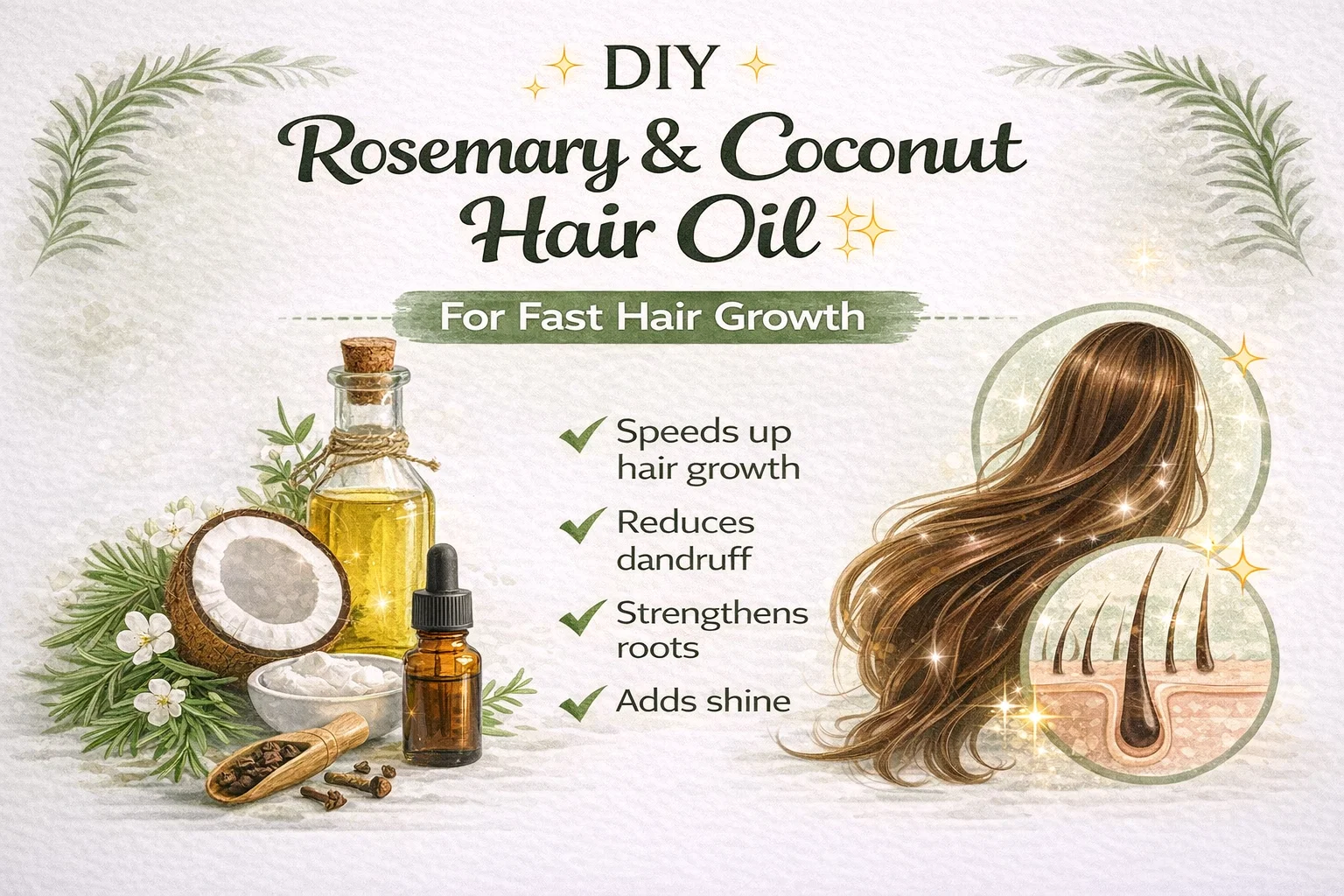
DIY Rosemary Coconut Hair Oil for Fast Hair Growth Natural Scalp Treatment
If you have been searching for a natural way to transform your hair care routine, you might have noticed that the most powerful solutions are often found right in your kitchen. The combination of rosemary and coconut oil has taken the beauty world by storm, and for good reason. This DIY hair oil is not just a trend; it is a potent, nutrient-dense treatment designed to stimulate follicles, soothe the scalp, and provide the deep hydration that commercial conditioners often fail to deliver. By making your own hair growth oil at home, you take full control over the purity of the ingredients, ensuring that no harsh chemicals or synthetic fragrances touch your precious strands.
The Science Behind the Magic: Why Rosemary and Coconut Work
Understanding why this specific blend is so effective requires a quick look at the biology of hair growth. Rosemary is much more than a fragrant herb used in cooking. Studies have shown that rosemary essential oil can be as effective as some over-the-counter hair growth treatments in stimulating blood circulation to the scalp. When blood flow increases, more oxygen and nutrients reach the hair follicles, which encourages them to stay in the growth phase longer. This leads to thicker, stronger hair over time.
Coconut oil serves as the perfect carrier for these botanical benefits. Unlike many other oils that simply sit on top of the hair shaft, coconut oil has a unique molecular structure that allows it to penetrate deep into the hair cortex. This helps to reduce protein loss, which is the primary cause of hair breakage and thinning. When you combine the stimulating properties of rosemary with the protective nature of coconut oil, you create a powerhouse formula that addresses hair health from the inside out.
Key Ingredients for Your Homemade Growth Serum
To create a truly effective hair oil, you need a blend of ingredients that work in harmony. While the stars of the show are rosemary and coconut, adding a few extra elements can significantly boost the results. Here is what you will need to get started:
- 1/4 Cup of Organic Coconut Oil: Opt for cold-pressed, unrefined coconut oil to ensure all the natural fatty acids remain intact.
- Fresh Rosemary Sprigs: Fresh herbs provide a slow release of antioxidants and nutrients as they infuse into the oil.
- Whole Cloves: Cloves are an underrated hero in hair care. They contain high levels of antioxidants and help to improve scalp circulation while providing antimicrobial benefits.
- Rosemary Essential Oil: Adding five drops of the concentrated essential oil provides an extra punch of the active compounds that trigger hair growth.
The Role of Cloves in Scalp Health
Many people overlook cloves when creating hair remedies, but they are essential for maintaining a clean and healthy scalp environment. Cloves are rich in eugenol, which has anti-inflammatory properties. This is particularly beneficial if you suffer from an itchy scalp or dandruff. A healthy scalp is the foundation for healthy hair growth, and cloves ensure that your follicles are not clogged or irritated, allowing hair to grow through the surface more easily.
Step-by-Step Guide to Crafting Your Hair Oil
Creating this oil is a simple process, but it requires patience to ensure the infusion is done correctly without damaging the delicate oils. You do not want to use high heat, as this can degrade the nutrients in the coconut oil and evaporate the volatile compounds in the rosemary.
Start by melting your coconut oil in a small glass jar or a double boiler setup. Once the oil is liquid, add your fresh rosemary sprigs and the four cloves. If you are using the stovetop method, keep the heat on the lowest possible setting for about 20 to 30 minutes. The goal is to let the oil take on a slightly greenish tint and a herbal aroma. If you prefer a cold-infusion method, you can place the ingredients in a jar and leave them in a sunny window for two weeks, shaking daily.
Once the infusion is complete, let the oil cool down to room temperature. This is the perfect time to add your five drops of rosemary essential oil. Stir well to distribute the essential oil evenly throughout the mixture. Store the finished product in a dark glass bottle to protect the essential oils from light degradation.
How to Apply for Maximum Results
How you apply the oil is just as important as the ingredients themselves. To get the most out of your DIY rosemary and coconut hair oil, consistency is key. Most users begin to see a noticeable difference in hair texture and shine within three to four weeks, but significant growth usually takes a few months of dedicated use.
The Scalp Massage Technique
Application should always begin at the roots. Take a small amount of the oil and warm it between your palms. Use your fingertips to massage the oil into your scalp using circular motions. This massage serves a dual purpose: it helps the oil penetrate the skin and manually stimulates blood flow. Spend at least five to ten minutes on this process. It is not only great for your hair but also a wonderful way to de-stress after a long day.
Treating the Ends
After you have thoroughly treated your scalp, run your hands through the length of your hair to coat the mid-lengths and ends. This is where coconut oil really shines by sealing the cuticle and preventing split ends. If you have very fine hair, you may want to use a lighter hand on the ends to avoid weighing your hair down.
Benefits You Can Expect to See
When you incorporate this oil into your weekly routine, you are doing more than just encouraging growth. You are providing a comprehensive treatment for your entire head of hair. Here are some of the primary benefits reported by those who use this remedy regularly:
- Reduced Dandruff: The antimicrobial properties of both rosemary and cloves help to keep the scalp microbiome balanced, reducing flakiness.
- Strengthened Roots: By nourishing the follicle directly, the hair becomes more anchored, leading to less shedding during brushing or showering.
- Enhanced Shine and Luster: The fatty acids in coconut oil fill in the gaps in the hair shaft, reflecting light and giving your hair a healthy, glossy glow.
- Improved Elasticity: Regular oiling helps hair retain moisture, making it more flexible and less likely to snap when styled.
Common Mistakes to Avoid
While DIY treatments are generally safe, there are a few pitfalls to avoid. First, never apply undiluted rosemary essential oil directly to your scalp. Essential oils are extremely concentrated and can cause chemical burns or severe irritation if not properly diluted in a carrier oil like coconut oil. Always stick to the recommended drop count.
Second, avoid using too much oil. A little goes a long way. If you saturate your hair to the point where it is dripping, you will find it very difficult to wash out, which might lead you to use harsh shampoos that strip away all the benefits you just applied. Start with a tablespoon and add more only if needed.
Frequency of Use
For most hair types, using this treatment two to three times a week is ideal. If you have an oily scalp, once a week might be enough. Leave the oil in for at least 30 minutes before washing. For a deeper treatment, you can leave it in overnight, just be sure to protect your pillowcase with a towel or a silk hair wrap.
Customizing Your Blend for Different Hair Types
While the rosemary and coconut base is fantastic, you can tweak the recipe to suit your specific needs. If you find coconut oil too heavy or if it tends to make your hair feel brittle, you can substitute half of it with jojoba oil or sweet almond oil. Jojoba oil closely mimics the natural sebum produced by your scalp, making it an excellent choice for those with sensitive skin.
If you are dealing with premature graying, some people find that adding a few drops of sage essential oil alongside the rosemary can help darken the hair naturally over time. For those with extremely dry hair, adding a teaspoon of vitamin E oil can provide extra antioxidant protection and moisture retention.
Conclusion: Your Path to Healthier Hair
Transitioning to a natural hair care routine is a rewarding journey that connects you with the healing power of plants. This DIY Rosemary and Coconut Hair Oil is a testament to the fact that you do not need expensive, salon-grade products to achieve the hair of your dreams. By investing a little bit of time into crafting your own treatments, you are giving your hair the purest form of nourishment possible.
Remember that hair growth is a marathon, not a sprint. Be patient with your progress and enjoy the ritual of self-care. As you continue to use this oil consistently, you will likely find that your hair feels stronger, looks shinier, and grows faster than ever before. It is time to clear out the chemical-laden bottles and embrace the simple, effective power of nature. Your hair will certainly thank you for it!