10 Healthy Hair Tips for Strong, Shiny Damage-Free Hair Hair Care Routine Guide
We have all been there, standing in front of the mirror, wondering why our hair feels a little lackluster or why those split ends seem to appear out of nowhere. Achieving that commercial-worthy shine and strength isn’t just about the expensive products you see on celebrity Instagram feeds. It is actually about the small, intentional habits you practice every single day. Hair care is an art of consistency and understanding what your strands truly need to thrive from the inside out.
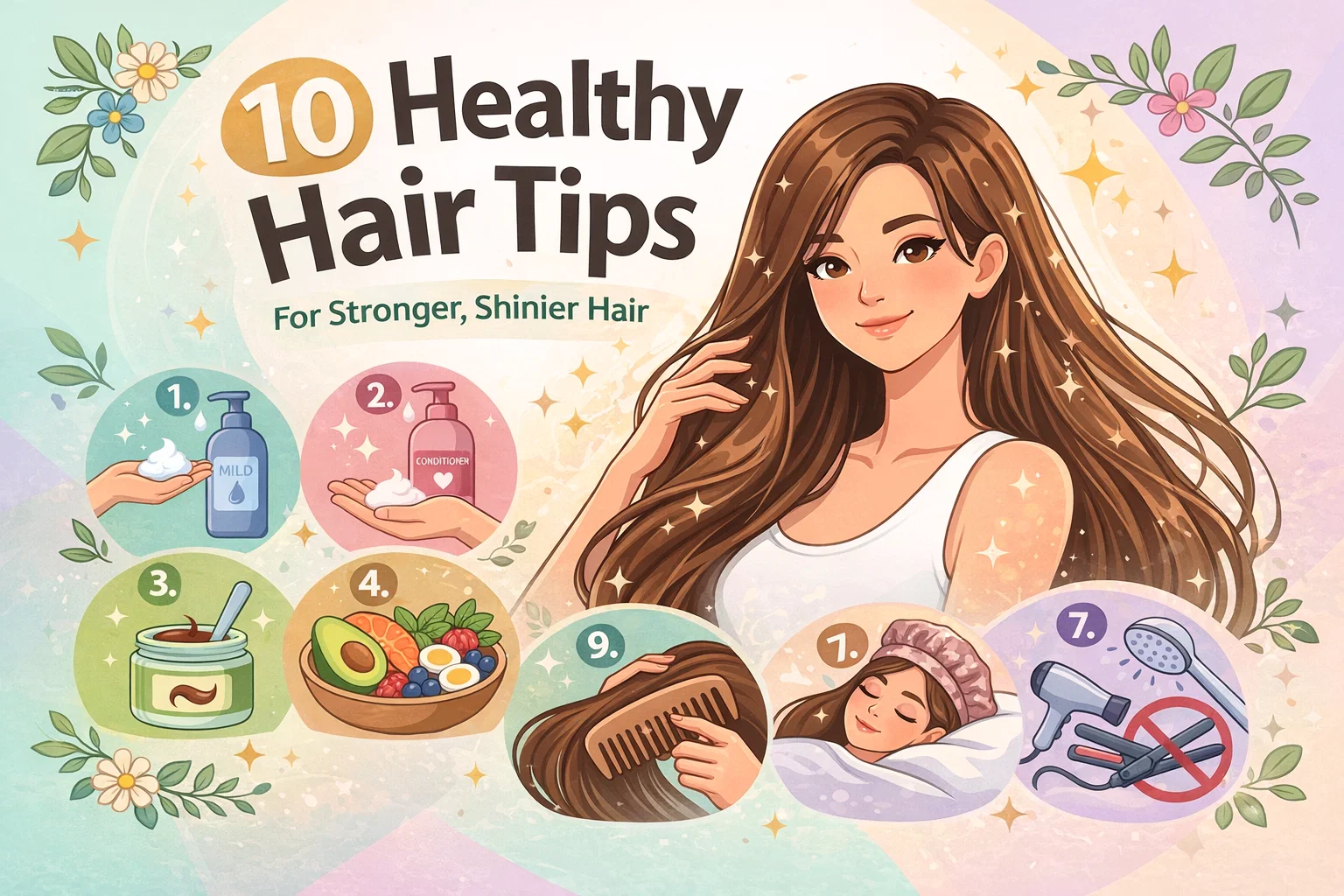
The image we are looking at today perfectly encapsulates a holistic approach to hair health. It is not just about washing and drying; it is about nutrition, protection, and gentle handling. Whether you are dealing with heat damage, dryness, or just want to maintain your current length, these ten foundational pillars of hair care will transform your routine into a ritual of self-love. Let us dive deep into how you can achieve the strong, shiny, and damage-free hair you have always dreamed of.
1. The Foundation of Cleanliness: Use a Mild Shampoo
The first step in any solid hair care routine is cleansing, but the type of cleanser you choose makes all the difference. Many commercial shampoos are packed with harsh sulfates that strip away the natural oils your scalp produces to keep hair hydrated. When you use a mild, sulfate-free shampoo, you are effectively removing dirt and excess sebum without compromising the integrity of the hair shaft. This keeps the cuticle smooth and prevents that dreaded “squeaky clean” feeling which usually indicates over-stripped, vulnerable hair.
Why pH Balance Matters
Your scalp has a natural pH level that is slightly acidic. Harsh detergents can disrupt this balance, leading to irritation, dandruff, or even excessive oil production as your scalp tries to overcompensate for the dryness. Opting for a mild formula ensures your scalp remains a healthy environment for hair growth. Think of your shampoo as a gentle facial cleanser rather than a heavy-duty dish soap.
2. Hydration is Key: Condition Regularly
If shampoo is for the scalp, conditioner is for the lengths. Every time you wet your hair and use shampoo, the hair cuticle slightly opens. A high-quality conditioner works to seal that cuticle back down, locking in moisture and providing a protective layer against environmental stressors. Regular conditioning makes the hair much easier to detangle, which directly leads to less breakage during the brushing process.
Focus your conditioner application from the mid-lengths down to the ends. These are the oldest parts of your hair and require the most TLC. By keeping the ends hydrated, you prevent them from becoming brittle and snapping off, which is the secret to retaining length over time.
3. The Weekly Reset: Deep Condition Weekly
Sometimes, your standard conditioner isn’t enough to combat the effects of pollution, styling, and weather. That is where deep conditioning comes in. A weekly hair mask or deep treatment penetrates deeper into the hair cortex to repair damage and provide intense nourishment. This is especially vital for those with curly, coily, or color-treated hair, which tends to be naturally drier.
To get the most out of your weekly treatment, try applying the mask to damp hair and covering it with a warm towel or a shower cap. The gentle heat helps the product penetrate even further. This small addition to your Sunday self-care routine can drastically improve the elasticity and softness of your hair within just a few weeks.
4. Managing the Heat: Limit Styling to 2-3 Times a Week
We all love the look of a sleek blowout or perfect beach waves, but high heat is one of the fastest ways to destroy hair health. Excessive use of flat irons, curling wands, and high-heat blow dryers can literally cook the proteins in your hair, leading to permanent damage and “bubble hair” syndrome. The visual guide suggests limiting heat styling to just a few times a week, and this advice is gold.
Embrace Heatless Styling
On your off days, experiment with heatless curls, braids, or sleek buns. Not only does this give your hair a break, but it also encourages you to embrace your natural texture. If you must use heat, always apply a high-quality heat protectant spray first. This creates a barrier that slows down the conduction of heat to the hair fiber, giving you a bit more grace during your styling session.
5. Beauty Starts from Within: Eat Nutrient-Rich Foods
You can apply all the topical treatments in the world, but if your body lacks the building blocks for hair growth, you will never see the best results. Hair is primarily made of a protein called keratin. Therefore, your diet plays a massive role in the strength and shine of your strands. The image highlights powerhouses like avocado, salmon, eggs, and berries for a reason.
- Salmon: Loaded with Omega-3 fatty acids that provide the shine and support scalp health.
- Avocado: High in Vitamin E, which improves blood circulation and helps follicles work more efficiently.
- Eggs: A great source of biotin and protein, essential for hair structure.
- Berries: Packed with antioxidants that protect hair follicles against damage from free radicals.
6. Stimulate Growth: Gentle Scalp Massage
A gentle scalp massage is more than just a relaxing experience; it is a scientifically backed way to encourage hair thickness. By massaging your scalp with your fingertips in circular motions, you are increasing blood flow to the hair follicles. More blood flow means more oxygen and nutrients reaching the root of each hair strand.
This practice also helps in the distribution of natural oils, preventing a dry scalp and keeping the roots moisturized. You can do this while you are in the shower or right before bed. It only takes five minutes, but the cumulative effect on your hair’s vitality is significant.
7. Nighttime Protection: Protect Hair at Night
Did you know that tossing and turning on a cotton pillowcase can cause significant damage? Cotton is a thirsty fabric that absorbs moisture from your hair and creates friction, leading to tangles and frizz by morning. To protect your hair at night, consider wearing a silk or satin bonnet, or switching to a silk pillowcase.
The smooth surface of silk allows your hair to glide effortlessly as you move, preventing the mechanical stress that causes breakage. If you have long hair, tying it in a loose “pineapple” bun or a soft braid with a silk scrunchie can also help keep it contained and knot-free until you wake up.
8. Supplementing Your Success: Vitamins and Minerals
Sometimes our modern diets have gaps, and that is where supplements can help. If you find that your hair is thinning or growing very slowly, it might be worth looking into vitamins specifically formulated for hair, skin, and nails. Common ingredients like Fish Oil, Vitamin D, and Biotin can provide that extra boost your body needs to produce healthy cells.
However, remember that supplements are meant to “supplement” a healthy diet, not replace it. Always consult with a healthcare professional before starting a new supplement regimen to ensure it is right for your specific needs. Consistency is key here; vitamins usually take three to six months of regular use before you see a visible change in your hair growth.
9. Handle with Care: Comb Hair Gently
Hair is most fragile when it is wet. The water breaks down the hydrogen bonds in the hair, making it more prone to stretching and snapping. This is why you should never use a fine-tooth comb or a standard brush on soaking wet hair. Instead, use a wide-tooth comb or a brush specifically designed for detangling wet hair.
Always start from the ends and work your way up to the roots. If you start at the top, you are just pushing the knots down and creating a larger, more difficult tangle that will likely result in breakage. Being patient and gentle during the detangling process is one of the easiest ways to keep your hair thick and full.
10. The Final Touch: Get Regular Trims
It sounds counterintuitive to cut your hair when you are trying to grow it out, but regular trims are essential for long-term health. Once a hair strand begins to split at the end, that split will continue to travel up the hair shaft if it is not cut off. This results in hair that looks thin and frizzy despite all your other efforts.
By getting a “dusting” or a minor trim every eight to twelve weeks, you remove the damaged ends before they can cause more trouble. This keeps your hair looking thick and healthy from root to tip, ensuring that the length you are gaining is high-quality hair rather than damaged strands.
Conclusion: Your Journey to Radiant Hair
Healthy hair does not happen overnight. It is the result of a lifestyle that prioritizes nourishment, protection, and patience. By implementing these ten tips, you are not just changing your appearance; you are adopting a self-care routine that respects your body’s natural processes. Start small, perhaps by switching to a silk pillowcase or adding an extra serving of healthy fats to your dinner, and watch how your hair responds over time.
The journey to strong, shiny, and damage-free hair is a marathon, not a sprint. Celebrate the small victories, like less hair in your brush or a little extra bounce in your step after a deep conditioning session. Your hair is your crowning glory, and with these expert tips, you are well on your way to making it shine brighter than ever before.