7 Best Restorative Yoga Postures for Better Sleep Deep Relaxation Nighttime Routine
Finding a way to transition from the high-speed energy of the day into a peaceful night can feel like a daunting task. Many of us find ourselves lying in bed with a racing mind, unable to physically or mentally settle down. This is where the power of restorative yoga becomes a complete game changer. Unlike more active forms of exercise, restorative yoga is specifically designed to downregulate the nervous system, moving you from a state of high alert into a state of rest and digest. By using gentle, supported postures, you can signal to your body that the workday is over and it is finally safe to let go. In this guide, we will explore seven essential yoga postures that are perfect for your nighttime routine to help you achieve the deep, restorative sleep you deserve.
The Science of Yoga and Sleep Quality
Before diving into the specific poses, it is helpful to understand why yoga is so effective for sleep. Our bodies operate on a delicate balance between the sympathetic nervous system, which is responsible for our fight-or-flight response, and the parasympathetic nervous system, which governs relaxation. Constant stress keeps us stuck in a sympathetic state, which is the primary enemy of a good night’s rest.
Yoga postures that emphasize long holds and deep breathing help to stimulate the vagus nerve. This nerve is a key player in the parasympathetic system. When we stretch the connective tissues and focus on our breath, we are essentially hacking our biology to lower our heart rate and reduce cortisol levels. This biological shift makes the transition to sleep feel natural rather than forced.
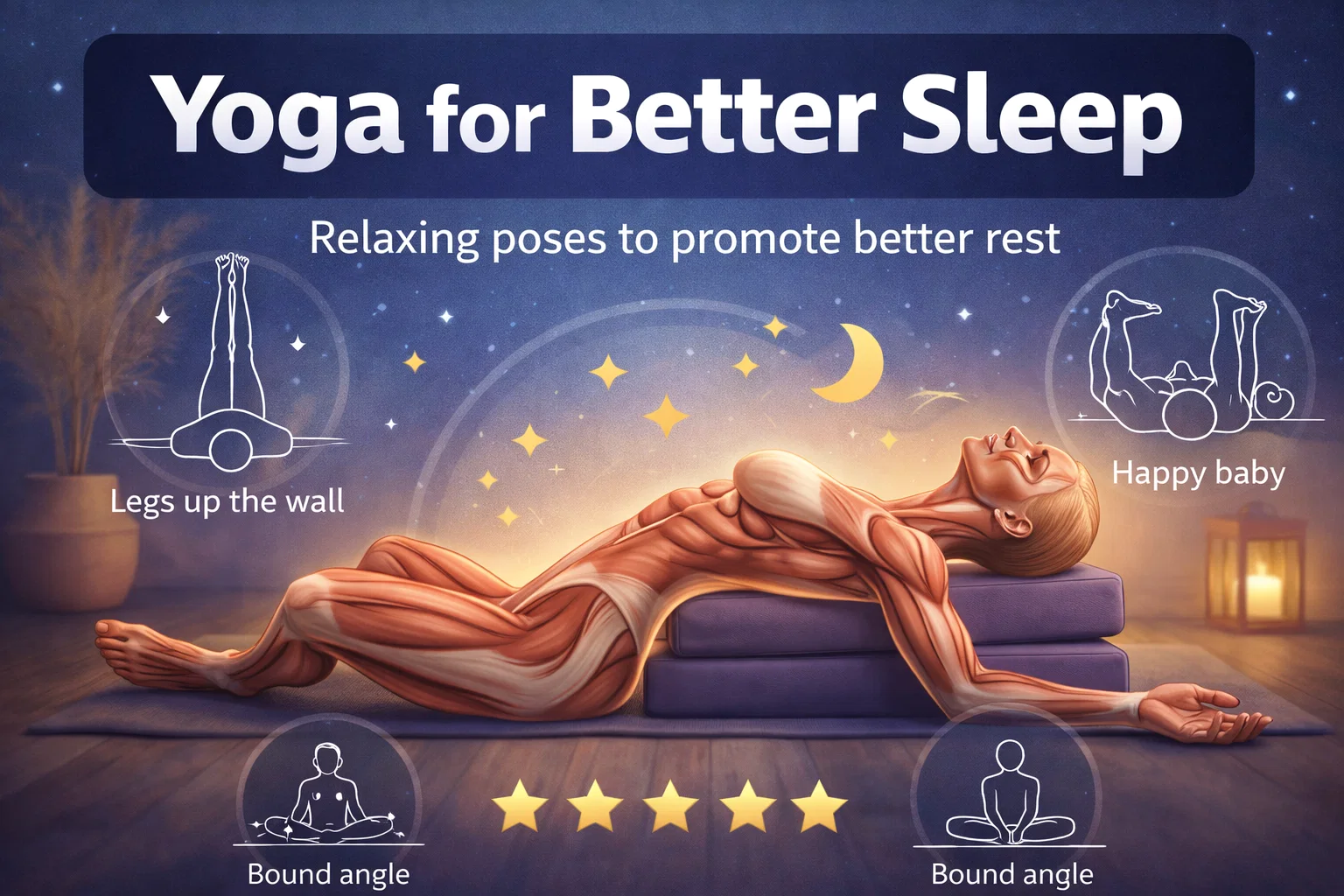
1. Restorative Reclined Bound Angle (Supta Baddha Konasana)
This pose is often referred to as the ultimate heart opener and hip relaxer. By using a bolster or a stack of firm pillows under your spine, you allow your chest to expand while your hips gently open. This is particularly beneficial for those who spend a lot of time sitting at a desk, as it reverses the rounded shoulders and tight hip flexors that come with office work.
How to Practice
- Place a bolster or long pillow lengthwise behind you.
- Sit with your lower back touching the edge of the bolster.
- Bring the soles of your feet together and let your knees fall open to the sides.
- Slowly lie back onto the bolster, ensuring your head and neck are fully supported.
- Rest your arms at your sides with palms facing up.
While in this position, focus on sending your breath into your belly. Allow the weight of your legs to pull your knees toward the floor without forcing anything. This pose creates a sense of vulnerability and openness that helps release emotional tension stored throughout the day.
2. Reclined Bound Angle on the Wall
Taking the bound angle pose to the wall adds an extra layer of support and a slight inversion quality. This variation is excellent for people who feel that their hips are too tight for the traditional floor version. The wall provides a stable surface that allows your muscles to truly relax because they do not have to work to hold your legs in place.
As you press your feet together against the wall, you create a mild traction in the lower back. This can be incredibly soothing if you experience lumbar stiffness. It is a grounding posture that encourages a sense of being held, which is a powerful psychological trigger for relaxation.
3. Legs Up the Wall (Viparita Karani)
If you only have time for one pose before bed, let it be this one. Legs up the wall is a gentle inversion that reverses the effects of gravity on your lower body. Throughout the day, blood and lymphatic fluid can pool in the legs, leading to a feeling of heaviness or swelling. By elevating the feet, you encourage healthy circulation back toward the heart and brain.
Benefits of Inversion
- Reduces edema and swelling in the ankles and feet.
- Calms the nervous system almost immediately.
- Relieves pressure on the lower spine.
- Helps to quiet a busy mind by shifting blood flow.
To get into this pose, sit sideways against a wall and then pivot your body as you swing your legs up. Keep your hips as close to the wall as is comfortable. You can place a small folded blanket under your hips for extra cushion. Close your eyes and stay here for five to ten minutes for maximum benefit.
4. Happy Baby Pose (Ananda Balasana)
There is a reason why infants instinctively move into this position. Happy baby is a fantastic way to stretch the inner groins and the back of the spine while keeping the head and neck relaxed on the floor. It mimics the natural curiosity and ease of a child, which helps shift your mindset into a more playful and less stressed state.
While holding your feet or ankles, you can gently rock from side to side. This movement massages the kidneys and the lower back muscles. It is a deeply grounding pose that helps to release the grip of the day. If you cannot reach your feet comfortably, you can hold onto your shins or use a yoga strap looped over the arches of your feet.
5. Bound Angle (Baddha Konasana)
The seated version of the bound angle pose is a classic for a reason. It targets the adductors and the pelvic floor. When we are stressed, we often subconsciously tighten our pelvic muscles. By sitting in this position and focusing on a tall spine, you allow those deep-seated tensions to dissolve.
For a more restorative version, you can place blocks or pillows under your knees. This prevents the muscles from “guarding” or tightening up in response to the stretch. You can stay upright or slowly walk your hands forward into a gentle fold, depending on what your body is asking for that evening.
6. Restorative Seated Forward Fold (Paschimottanasana)
Seated forward folds are inherently introspective. By folding your body toward itself, you are creating a private cocoon of sorts. This pose stretches the entire posterior chain, from the calves up through the hamstrings and all the way to the base of the skull.
Making it Restorative
To make this pose suitable for sleep preparation, it is essential to use props. Placing a large pillow or a rolled-up sleeping bag on top of your legs allows your torso to rest completely. Instead of reaching for your feet and straining, let your arms rest loosely at your sides. The goal here is not flexibility but total surrender. Allow your forehead to rest on the prop so that your neck can fully release.
7. Restorative Pigeon Pose (Eka Pada Rajakapotasana)
Pigeon pose is known as the “king of hip openers.” Our hips are often described as the “junk drawer” of our emotions, where we store unexpressed stress and anxiety. A restorative version of this pose involves reclining your chest over a bolster or pillow while the front leg is tucked forward.
This position provides a deep stretch to the glutes and the psoas muscle. Because the psoas is directly connected to our diaphragm and our breathing, stretching it can lead to a profound sense of physical relief. Stay in this pose for at least two to three minutes on each side. The longer hold allows the deep fascia to begin to soften, which is where the real magic happens.
Creating a Sacred Sleep Space
While the postures themselves are powerful, the environment in which you practice them matters just as much. To get the most out of your nighttime yoga, try to dim the lights or use candles. Eliminating harsh overhead lighting tells your brain that it is time to start producing melatonin.
You might also consider incorporating aromatherapy. Scents like lavender, cedarwood, or chamomile can enhance the relaxation response. Ensure your space is at a comfortable temperature and that you are wearing loose, soft clothing. When you treat your yoga practice as a sacred ritual, you are training your mind to associate these movements with the onset of sleep.
Building Your Personal Routine
You do not need to do all seven of these poses every single night. In fact, choosing just three that feel best for your body is often more effective than rushing through a long sequence. You might find that on days when you walked a lot, legs up the wall feels best. On days when you felt emotionally drained, the reclined bound angle might be exactly what you need.
Consistency is more important than duration. Even five minutes of intentional movement and breathing can significantly alter the quality of your sleep. Listen to your body and give yourself permission to move slowly. There is no right or wrong way to feel in these poses. The goal is simply to be present with yourself and your breath.
Conclusion: The Path to Better Rest
Incorporating restorative yoga into your life is an act of profound self-care. It is a way of saying that your well-being matters and that you deserve a break from the demands of the world. By practicing these seven postures, you are providing your body with the tools it needs to repair, recharge, and recover during the night.
As you begin this journey, remember to be patient with yourself. Some nights your mind will be quieter than others, and some nights your body will feel tighter. That is perfectly okay. The practice is not about achieving a perfect pose but about finding a moment of peace. With time, you will likely find that you fall asleep faster, stay asleep longer, and wake up feeling more refreshed and centered. Sweet dreams and namaste.