How to Make Activated Charcoal Natural Remedy for Survival Detox
Imagine being deep in the wilderness or facing an unexpected emergency at home where clean water is scarce and medical help is miles away. In these high-stakes moments, one of the most valuable tools in your arsenal isn’t a high-tech gadget or a complex chemical kit. Instead, it is a simple, black, crumbly substance that has been used by humans for thousands of years: activated charcoal. Often referred to as a universal antidote, this powerful material is a staple for survivalists, hikers, and natural health enthusiasts alike. Understanding how it works and how to create it yourself can quite literally be a life-saving skill.
The Science of Adsorption: Why Activated Charcoal is Unique
To truly appreciate activated charcoal, we first have to clear up a common misconception. This is not the same as the leftover briquettes in your backyard grill, which often contain toxic binders and additives. Activated charcoal is a highly processed form of carbon with an incredibly large surface area. Through a process of “activation,” the carbon is riddled with millions of microscopic pores.
The secret to its power lies in a physical process called adsorption. Unlike absorption, where a substance is soaked up into the body of another (like a sponge soaking up water), adsorption causes molecules to stick to the surface of the charcoal. Because the internal surface area of activated charcoal is so vast, a single gram can have a surface area of over 3,000 square meters. This allows it to trap toxins, heavy metals, and chemicals, preventing them from being absorbed by your body or staying in your water supply.
Historical Roots and Traditional Uses
The use of charcoal for medicinal purposes dates back as far as 1500 B.C., with mentions in Egyptian papyri for treating decaying wounds and digestive issues. By the time of the Phoenicians around 450 B.C., it was being used to store water on long sea voyages to keep it fresh. In the modern era, it remains a gold standard in emergency rooms across the globe for treating specific types of acute poisoning and drug overdoses.
Purifying Water in the Wild
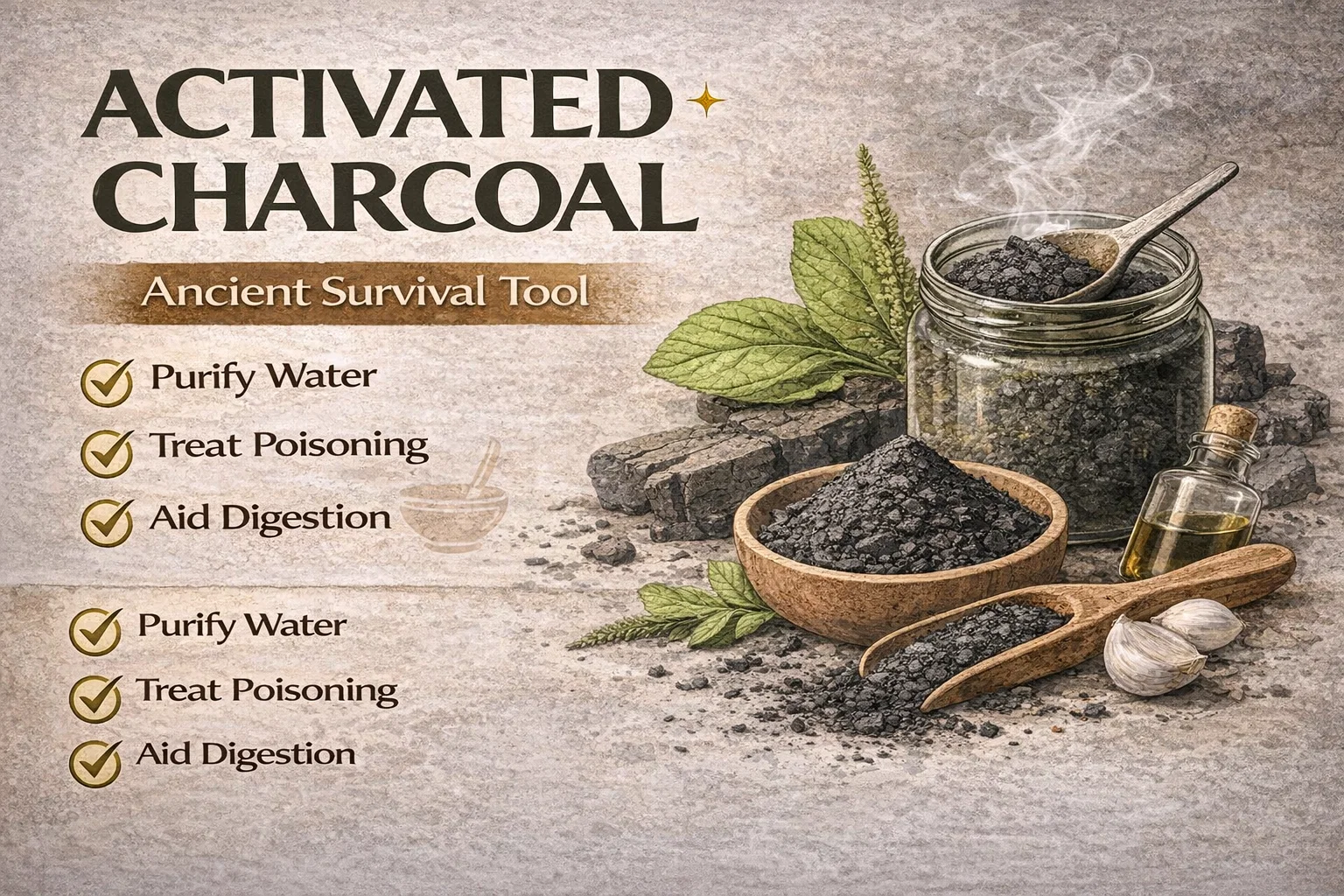
One of the primary reasons survivalists keep charcoal in their kits is for water filtration. In a survival situation, water from streams or lakes may contain tannins, pesticides, or industrial runoff. While boiling water kills biological pathogens like bacteria and viruses, it does not remove chemical contaminants. Passing water through a layer of crushed activated charcoal helps “scrub” the water of these invisible dangers, significantly improving both the safety and the taste of your drinking source.
Digestive Relief and Detoxification
Beyond emergency poisoning, charcoal is frequently used to manage everyday digestive discomfort. It is highly effective at binding the gas-causing byproducts in certain foods, which helps alleviate bloating and indigestion. Many people also use it as a temporary detox tool, though it is important to remember that it is non-selective; it can bind to beneficial nutrients and medications just as easily as it binds to toxins.
How to Make Activated Charcoal: A Step-by-Step Survival Guide
While you can buy activated charcoal in any health store, knowing how to produce it from scratch is a vital primitive skill. The process involves two main stages: creating the charcoal and then “activating” it to open those essential pores.
Step 1: Selecting the Right Wood
The quality of your charcoal starts with your fuel source. Hardwoods are the preferred choice because they are dense and produce a more durable carbon structure. Excellent choices include oak, hickory, maple, or even coconut shells. Avoid resinous softwoods like pine or cedar, as the resins can interfere with the carbonization process and may leave unpleasant tastes or residues.
Step 2: Controlled Carbonization
To turn wood into charcoal, you must burn it in a low-oxygen environment. This process, known as pyrolysis, removes water and volatile compounds, leaving behind nearly pure carbon. In a survival setting, this is often done using the “retort” method. You place your wood pieces inside a metal container with a tiny hole for gases to escape, then place that container inside a larger fire. Once the smoke stops venting from the hole, the process is complete. You are left with black, brittle lumps of wood that sound like glass when tapped together.
Step 3: The Activation Process
Standard charcoal is useful, but “activated” charcoal is superior. To activate it, you need to expand those microscopic pores. In an industrial setting, this is done with extremely high-temperature steam. In a DIY or survival scenario, you can use a chemical activator. Calcium chloride is the most common choice, but if you are in the woods, lemon juice or even a strong salt solution can work in a pinch. You soak the crushed charcoal in the chemical solution for 24 hours, rinse it thoroughly with clean water, and then bake it at a high temperature to dry it out and finish the activation.
Practical Applications for Health and Hygiene
The versatility of this black powder extends into the realm of first aid and personal care. Because it is so effective at drawing out impurities, it has become a favorite ingredient for skin treatments and wound care.
Wound Care and Infected Skin
For centuries, charcoal poultices have been used to treat skin infections, insect bites, and even stings. By mixing charcoal powder with a bit of water or flaxseed meal to create a paste, you can apply it directly to an affected area. The charcoal helps draw out bacteria and toxins from the skin, reducing inflammation and speeding up the healing process. In a survival situation where antibiotics are unavailable, this can be a crucial first line of defense against minor infections.
Oral Health and Hygiene
It might seem counterintuitive to brush your teeth with something pitch black, but charcoal is a popular natural whitener. It works by bonding to surface stains caused by coffee, tea, or food. Additionally, its antibacterial properties help balance the pH levels in the mouth, which can reduce bad breath and improve overall gum health. Just be sure to use it sparingly, as its abrasive nature can wear down tooth enamel if used every single day.
Storage Tips for Your Survival Kit
One of the best things about activated charcoal is its shelf life. Because it is a stable form of carbon, it does not “expire” in the traditional sense. However, because it is so good at adsorbing things from the air, it must be stored correctly to maintain its potency. Always store your activated charcoal in a strictly airtight container.
If left exposed to the atmosphere, it will slowly adsorb moisture and odors from the environment, eventually becoming “saturated” and losing its effectiveness. In a sealed glass jar or a high-quality plastic container, charcoal can easily last for 10 years or more. This makes it an ideal “set it and forget it” item for your long-term emergency supplies or bug-out bag.
Important Safety Considerations
While activated charcoal is incredibly safe for many uses, it is not a magic powder without risks. There are several things to keep in mind before you start incorporating it into your routine. First, it is not for daily use. Because it is so effective at binding to substances, it can interfere with the absorption of prescription medications, vitamins, and minerals. If you take essential medication, you should always consult with a medical professional before using charcoal internally.
Secondly, when using it for poisoning, you must act fast, but you must also know what was swallowed. Charcoal does not bind well to everything. For example, it is largely ineffective against alcohols, cyanide, or corrosive acids like lye. In any serious poisoning case, professional medical advice should always be your first priority. Use charcoal as a supportive measure or an emergency backup when professional help is unavailable.
Common Side Effects
If you do ingest charcoal, do not be alarmed if your stools turn black; this is a normal and harmless side effect. However, charcoal can be constipating, so it is vital to drink plenty of water when taking it internally to help it move through your digestive system smoothly.
Conclusion: A Must-Have for Every Household
Activated charcoal represents the perfect bridge between ancient wisdom and modern science. From its ability to turn murky pond water into a drinkable resource to its role in soothing an upset stomach or cleaning a stubborn wound, its benefits are undeniable. It is a cost-effective, long-lasting, and multi-functional tool that deserves a spot in every first aid kit and survival pantry.
Whether you choose to buy a professional-grade powder or try your hand at the traditional methods of burning hardwood and activating it yourself, you are investing in a layer of protection for your health and safety. Start by adding a small container to your travel kit or researching the best hardwoods in your local area to practice your primitive skills. In a world of uncertainty, having a reliable remedy like activated charcoal can provide peace of mind and a practical solution to a wide variety of challenges. Save these tips and make sure you are prepared for whatever comes your way!