Best Hair Oils for Low, Medium High Porosity Hair Hair Care Guide
Have you ever spent a small fortune on high end hair oils only to feel like your hair is still bone dry or, even worse, looking like a grease trap? It is a common frustration that leaves many of us questioning our hair care routine. The truth is that your hair is as unique as your fingerprint, and the secret to unlocking its true potential doesn’t lie in the price tag of your products, but in understanding your hair porosity. Porosity is simply your hair’s ability to absorb and retain moisture. Once you crack the code on whether your cuticles are tight, balanced, or wide open, you can finally stop the guesswork and start giving your strands exactly what they crave.
What Exactly is Hair Porosity
To understand porosity, we have to look at the hair on a microscopic level. Each strand of hair is covered in tiny, shingles like structures called cuticles. In a perfect world, these cuticles would open just enough to let moisture in and then close tightly to keep it there. However, genetics, heat styling, and chemical treatments can change how these cuticles behave.
When we talk about hair porosity, we are essentially measuring how easily water and oils can pass through that protective cuticle layer. If your cuticles are packed tightly together, you have low porosity. If they are raised or damaged, you have high porosity. Medium porosity is the happy middle ground where everything works just as nature intended. Identifying where you fall on this spectrum is the first step toward a revolutionary hair transformation.
Identifying Low Porosity Hair: The Moisture Rebels
If you have low porosity hair, your cuticles are bound very tightly together. Think of it like a roof with shingles that are so perfectly laid that not a single drop of rain can get through. While this sounds like it would be a good thing for protection, it actually makes it incredibly difficult for hydration to penetrate the hair shaft.
Common Characteristics of Low Porosity
- Water Beads Up: When you spray your hair with water, do the droplets just sit on the surface instead of soaking in? That is a classic sign of low porosity.
- Long Drying Time: It takes forever for your hair to get fully wet in the shower, and even longer for it to air dry.
- Product Buildup: Because products cannot get inside the hair, they sit on the outside. This often leads to a heavy, waxy, or sticky feeling after styling.
- Difficulty with Color: It might take longer for hair dye to take hold because the tight cuticles resist the chemical process.
The Best Oils for Low Porosity
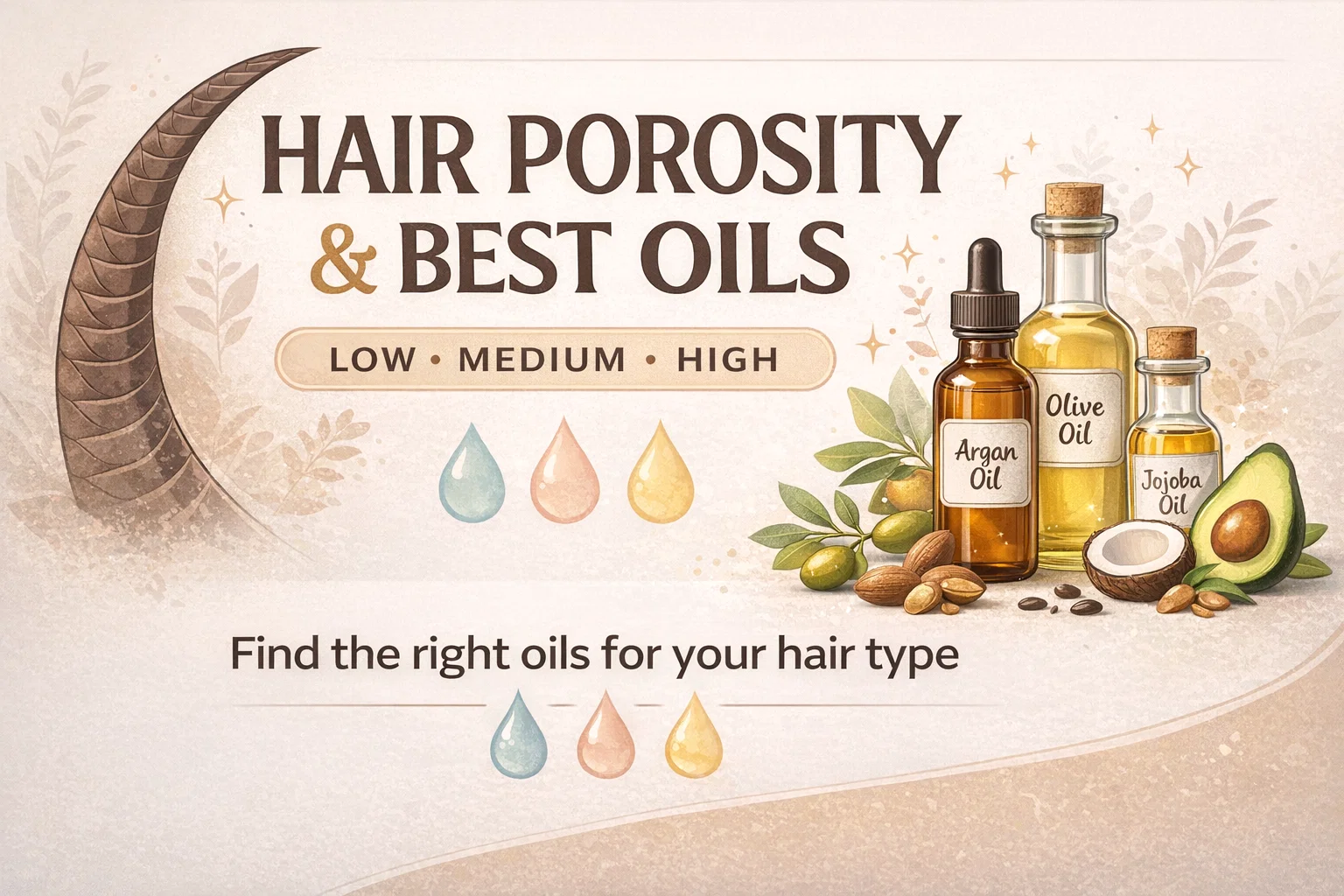
Because low porosity hair is prone to buildup, you want to avoid heavy, buttery oils. Instead, you should reach for lightweight, molecularly small oils that have a better chance of sneaking past those tight cuticles without weighing your hair down. Argan oil is a superstar here because it is packed with antioxidants but feels weightless. Jojoba oil is another fantastic choice because its composition is very similar to our natural scalp sebum, making it easily accepted by the hair. Grapeseed oil and Sweet Almond oil are also excellent daily options for adding shine without the grease.
Medium Porosity: The Sweet Spot of Hair Care
Medium or normal porosity hair is often considered the easiest to manage. The cuticles are loose enough to allow moisture to enter but tight enough to prevent it from escaping too quickly. If you fall into this category, your hair likely holds styles well and looks healthy with minimal effort. You have the freedom to experiment with a wide variety of products without worrying too much about extreme dryness or excessive buildup.
Why Balance Matters
Even if you have balanced hair now, it is important to maintain that equilibrium. Overusing high heat tools or frequent bleaching can quickly push medium porosity hair into the high porosity category. To keep your hair in the sweet spot, focus on nourishing oils that provide a blend of moisture and protection. Olive oil is a classic choice for medium porosity, offering deep nourishment. Sunflower oil and Black Seed oil are also wonderful for maintaining that natural glow and scalp health without disrupting the cuticle balance.
High Porosity Hair: The Thirsty Strands
High porosity hair is the opposite of low porosity. In this case, the cuticles are raised or even have gaps and holes in them. This is often caused by environmental damage, excessive bleaching, or mechanical stress. While high porosity hair absorbs water almost instantly, it loses it just as fast. It is like a sponge with giant holes; you can fill it up, but the water just runs right out the bottom.
How to Tell if Your Hair is High Porosity
- Instant Absorption: Your hair drinks up water and products immediately.
- Frequent Frizz: Because the cuticles are raised, they catch on each other, leading to tangles and constant frizz, especially in humid weather.
- Dull Appearance: High porosity hair often lacks shine because the uneven surface of the cuticle doesn’t reflect light well.
- Air Dries Quickly: Your hair might feel dry to the touch just minutes after you step out of the shower.
The Best Oils for High Porosity
The goal for high porosity hair is to “seal” the gaps. You need heavy, occlusive oils that act as a physical barrier to lock moisture inside the hair shaft. Castor oil is legendary for this because of its thick consistency and ability to coat the hair. Coconut oil is unique because it can actually penetrate the hair shaft to reduce protein loss while providing a protective seal. Shea Butter is another heavy hitter that works wonders for smoothing down those raised cuticles and reducing the appearance of frizz and flyaways.
How to Test Your Hair Porosity at Home
You don’t need a lab to figure this out. The most popular method is the Float Test. Take a clean, product free strand of hair and drop it into a glass of room temperature water. Let it sit for about five minutes. If the hair stays floating on the surface, you likely have low porosity. If it sinks slowly to the middle, you have medium porosity. If it sinks straight to the bottom like a stone, you have high porosity. This simple test can be a total game changer for your beauty routine.
Mastering the Art of Oil Application
Knowing which oil to use is only half the battle. How you apply it matters just as much. For low porosity hair, try warming your oil slightly before application. Heat helps to gently lift the tight cuticles, allowing the oil to penetrate more effectively. You might also find that applying oil to damp hair works better than applying it to dry hair.
For high porosity hair, the L.C.O. method (Liquid, Cream, Oil) or L.O.C. method (Liquid, Oil, Cream) is often the best approach. By applying a water based leave in conditioner first and then “sealing” it in with a heavy oil or butter, you ensure that the moisture stays trapped inside the hair shaft for as long as possible.
Deep Conditioning and Porosity
Regardless of your porosity, a weekly deep conditioning treatment is essential. However, the ingredients in those treatments should reflect your hair’s needs. Low porosity hair benefits from protein free, humectant rich masks that use ingredients like honey or glycerin to draw moisture in. High porosity hair, on the other hand, often needs protein treatments to help fill in the gaps in the damaged cuticle layer, providing much needed structural support.
The Impact of Environment and Lifestyle
It is worth noting that your hair porosity can change over time. If you move to a place with very hard water, the mineral buildup can make your hair behave as if it has low porosity. If you spend your summer at the beach, the salt water and sun can raise your cuticles and increase your porosity. Being mindful of these external factors allows you to adjust your oil choices seasonally. During the winter, you might need a heavier oil to combat dry indoor heating, while the summer might call for lighter, UV protective oils.
Conclusion: Embrace Your Unique Texture
At the end of the day, there is no such thing as “bad” hair porosity. Each type simply requires a different language of care. Once you stop fighting against your hair’s natural tendencies and start working with them, you will see a massive difference in how your hair looks and feels. Whether you are reaching for the lightweight elegance of Argan oil or the rich, sealing power of Shea Butter, remember that consistency is key. By matching the right oils to your specific porosity, you are giving your hair the best possible foundation for growth, shine, and health. It is time to toss out the products that aren’t working and embrace the science of beautiful hair. Your strands will definitely thank you for it!
Would you like me to generate a specific weekly hair care routine based on one of these porosity types?