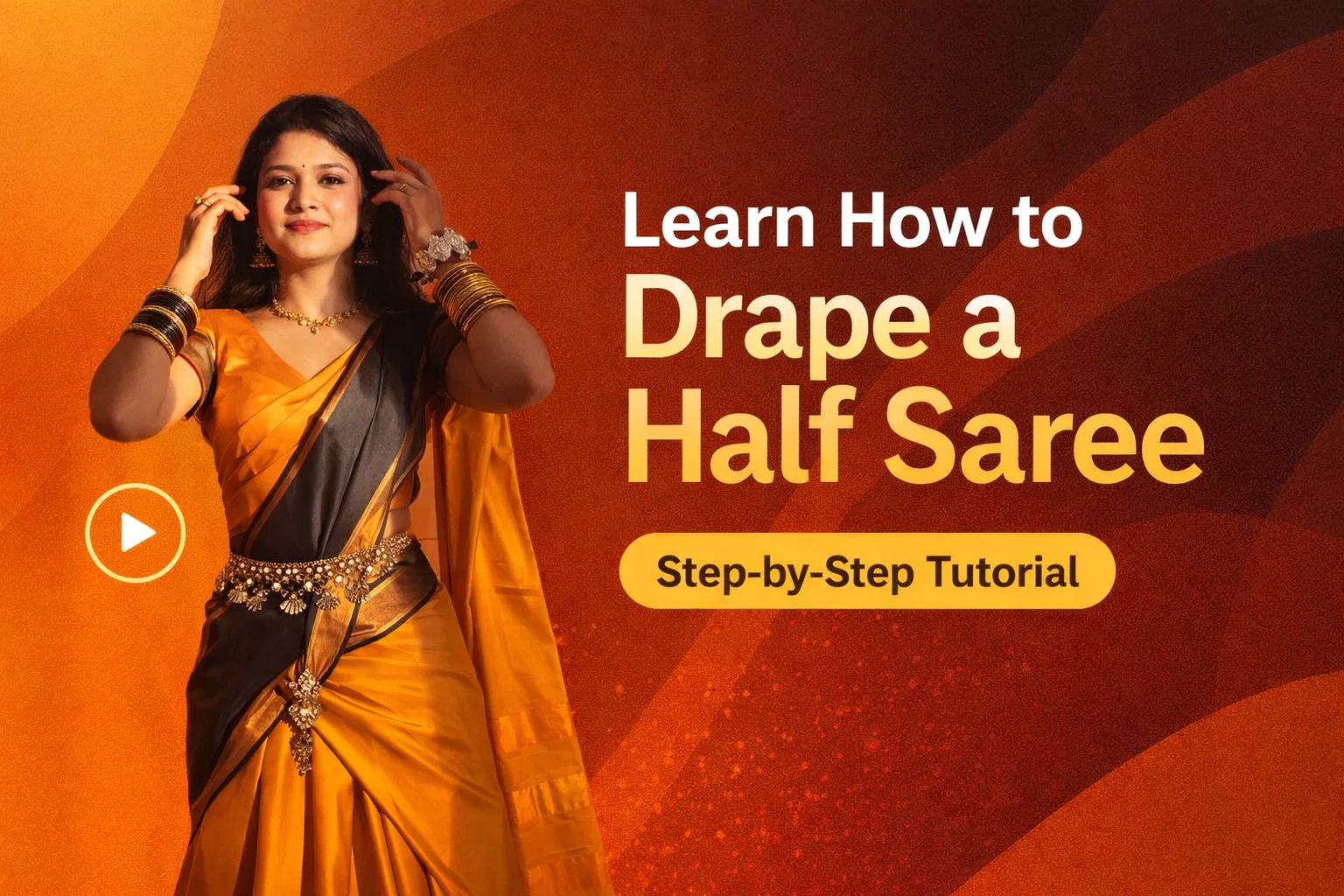
Authentic Half Saree Draping Tutorial Mustard Black Pattu Langoni Voni Style Guide
Stepping into the world of traditional Indian attire often feels like entering a living gallery of art and history. Among the most iconic and visually striking garments is the half saree, a silhouette that perfectly bridges the gap between the playful innocence of childhood and the sophisticated elegance of adulthood. In the image provided, we see a breathtaking example of an authentic half saree drape, featuring a bold mustard yellow and deep black color palette that radiates both warmth and authority. This tutorial-style visual reminds us that draping is not just about putting on clothes; it is about sculpting fabric to tell a story of heritage and personal style.
The Cultural Significance of the Half Saree
The half saree, known as Langa Voni in Telugu, Pattu Pavadai Daavani in Tamil, and Langa Sheela in Kannada, is a traditional outfit primarily worn in South India. Historically, it marked a significant rite of passage for young women. Today, it has transcended its traditional roots to become a high-fashion staple seen at weddings, festivals, and cultural galas across the globe. The ensemble consists of three distinct pieces: the Langa (a floor-length skirt), the Voni (a dupatta or stole), and a matching blouse.
What makes the half saree so unique is its versatility. Unlike a full saree, which can be intimidating for beginners, the half saree offers a pre-defined structure with the skirt while allowing for creative expression through the draping of the Voni. The mustard and black combination shown in the image is a masterclass in color theory, where the brightness of the sun-kissed yellow is grounded by the sleek, formal nature of the black borders and blouse. This contrast ensures that the wearer stands out in any crowd, embodying a look that is both regal and approachable.
Choosing the Right Fabric for Your Drape
The success of an authentic drape begins long before you start pleating. It starts with the fabric. In the tutorial image, the crispness of the pleats and the way the skirt holds its A-line shape suggest a silk or Pattu fabric. These materials are favored for traditional ceremonies because of their natural sheen and structural integrity.
The Beauty of Pattu Silk
Pattu or Kanchipuram silk is the gold standard for half sarees. It has a weightiness that allows the skirt to flow beautifully as you move while keeping the pleats sharp and defined. If you are aiming for an authentic look, look for silks with Zari work (gold or silver thread embroidery). The gold border on the mustard skirt in the image adds a layer of luxury that catches the light, making it ideal for evening events or photography sessions.
Modern Alternatives: Georgette and Organza
While silk is the traditional choice, modern fashionistas often experiment with lighter fabrics like georgette, chiffon, or organza. These fabrics offer a more fluid, ethereal look. However, they require a different draping technique. For instance, georgette pleats are softer and may need more pins to stay in place, whereas silk pleats can often be pressed into shape with just your fingers.
Step-by-Step Guide to the Authentic Half Saree Drape
Draping a half saree like a pro requires patience and a few trade secrets. The goal is to create a silhouette that is clean at the waist and voluminous at the bottom. Follow these steps to replicate the stunning look from our featured image.
Step 1: Preparing the Langa (Skirt)
Put on your lehenga or skirt and ensure it is tied securely at your natural waist. The height is crucial; the hem should just graze the floor when you are wearing your intended footwear. If the skirt is too high, it breaks the visual flow. If it is too low, you risk tripping. In the image, the skirt sits perfectly, allowing the dark hem to frame the feet beautifully.
Step 2: The Perfect Blouse Fit
The blouse serves as the anchor for your Voni. A well-fitted blouse with a slightly higher neckline or longer sleeves, as seen in the black blouse in the photo, provides a sophisticated canvas. Ensure the shoulder seams are aligned so that when you pin the dupatta, it doesn’t pull the blouse out of shape.
Step 3: Pleating the Voni
Take one end of the dupatta and create small, even pleats. The width of the pleats should match the width of the gold border for a cohesive look. Once pleated, place it on your left shoulder and pin it. Let the remaining fabric hang behind you. The length of the back portion should ideally reach the back of your knees.
Step 4: The Front Wrap and Tucking
Take the long end of the dupatta from the back, wrap it around your right hip, and bring it to the front. This creates the “diagonal” line that defines the saree look. Neatly tuck the end into the center of your skirt’s waistband. Make sure the fabric is taut but not so tight that it restricts your movement.
Accessorizing Your Half Saree
The right accessories turn a beautiful outfit into an extraordinary one. The model in the image uses a few key pieces to elevate her look, and you can do the same.
The Power of the Oddiyanam (Waist Belt)
Perhaps the most important accessory for a half saree is the waist belt or Oddiyanam. Not only does it add a royal touch, but it also serves a functional purpose. It holds the front drape of the Voni firmly against the skirt, preventing it from shifting throughout the day. A gold-toned belt with intricate carvings, like the one shown, complements the mustard yellow perfectly.
Jewelry and Hair
Since the half saree is a traditional garment, temple jewelry is a natural fit. Consider a gold choker, Jhumkas (bell-shaped earrings), and stacked bangles. In the image, the black bangles on the model’s wrists add a modern, edgy contrast to the traditional mustard fabric. For hair, a simple braid adorned with jasmine flowers or loose waves can complete the look depending on the formality of the event.
Why the Mustard and Black Combination Works
Color psychology plays a huge role in fashion. Mustard yellow is a color of joy, optimism, and energy. It is a staple in Indian celebrations because it mimics the color of turmeric, which is considered auspicious. However, yellow can sometimes be overwhelming. By pairing it with black, the outfit gains a sense of mystery and sophistication. Black acts as a frame, highlighting the vibrant yellow and making the gold Zari work pop. This combination is particularly flattering for various skin tones, making it a popular choice for contemporary ethnic wear.
Common Mistakes to Avoid
Even with a beautiful outfit, a few small errors can distract from the overall look. Keep these tips in mind for a flawless finish.
- Loose Pleats: If your shoulder pleats are too wide or messy, it can make the upper body look bulky. Keep them narrow and pinned securely.
- Incorrect Skirt Length: Always wear your heels before checking the length of your skirt. A skirt that is even an inch too short can ruin the “statuesque” effect of the drape.
- Safety Pin Overload: While pins are your friends, using too many visible pins can look cluttered. Try to hide pins under the folds of the fabric or use decorative brooches.
- Ignoring the Back: Ensure the dupatta is smooth across your back. A bunched-up dupatta at the back can look untidy from the side profile.
The Evolution of the Half Saree in Modern Fashion
While we love the authentic drape shown in the tutorial, the fashion world is constantly evolving. Today, designers are experimenting with “pre-stitched” half sarees for those who want the look without the effort of draping. We are also seeing a rise in “fusion” styles, where the traditional skirt is replaced with palazzos or even trousers, while keeping the Voni drape intact. However, as the image demonstrates, there is an unmatched charm in the classic version. The way the fabric drapes and the traditional silhouette remains a favorite for anyone looking to honor their heritage.
Final Thoughts on Mastering the Look
The half saree is more than just a garment; it is a celebration of femininity and tradition. By choosing the right colors, like the striking mustard and black seen here, and following a disciplined draping technique, you can achieve a look that is both timeless and trendy. Whether you are attending a family wedding or a festive celebration, the confidence that comes with a perfectly draped saree is your best accessory. Remember that the key to a great drape is practice. Don’t be afraid to experiment with different pleat widths or belt styles until you find what makes you feel most beautiful.
We hope this guide inspires you to try this authentic drape for your next big event. The combination of bright mustard, deep black, and shimmering gold is a winning formula that never goes out of style. Wrap yourself in tradition, secure it with a beautiful belt, and step out with the grace of a queen. Save this tutorial for your next styling session and enjoy the process of creating your own masterpiece.