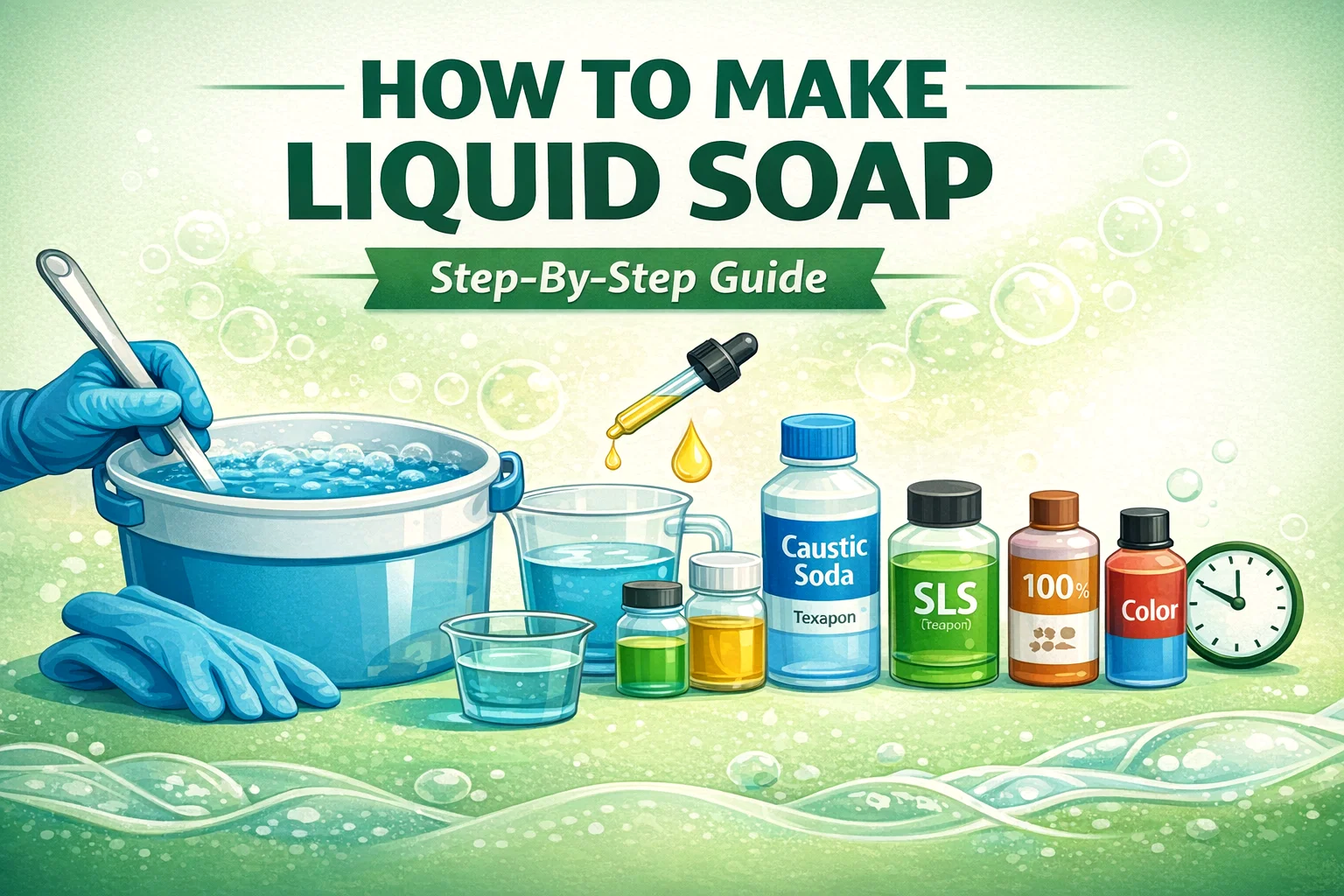
How to Make Liquid Soap at Home Simple DIY Guide for Home Small Business
Have you ever looked at a bottle of store-bought liquid soap and wondered if you could make something just as effective, or even better, right in your own kitchen? Whether you are looking to cut down on household expenses, transition to a more self-sufficient lifestyle, or even kickstart a lucrative small business, learning the art of liquid soap production is a game-changer. It is a perfect blend of chemistry and creativity that results in a high-demand product used by every household every single day.
Making your own liquid soap is far more than just a fun DIY project. It is a strategic move for anyone interested in entrepreneurship. In many parts of the world, small-scale soap production has empowered individuals to build thriving brands from their backyards. This guide will walk you through the essential ingredients, the necessary safety precautions, and a detailed step-by-step process to ensure your first batch is a resounding success.
The Essential Ingredients for High-Quality Liquid Soap
To create a soap that cleans effectively, foams beautifully, and remains stable on the shelf, you need a specific set of chemical components. Each plays a vital role in the final texture and performance of the product. Here is a breakdown of what you will need based on a standard 20 to 25 liter batch.
The Active Cleaning Agents
Sulphonic Acid (1 kg): This is the powerhouse of your liquid soap. It is an anionic surfactant that provides the primary cleaning action. It cuts through grease and lifts dirt away from surfaces. When working with Sulphonic Acid, you will notice it is a thick, dark liquid that requires thorough neutralization to be safe for skin contact.
SLS or Texapon (100 g): Sodium Lauryl Sulfate (SLS), often referred to by the brand name Texapon in many regions, is the foaming agent. While Sulphonic Acid cleans, Texapon ensures that the soap produces a rich, satisfying lather that users expect from a premium product. It also acts as a thickener when reacted with salt or certain other chemicals.
Stabilizers and Process Aids
Soda Ash (125 g): Also known as Sodium Carbonate, Soda Ash helps in the cleaning process and acts as a water softener. It works in tandem with the other ingredients to ensure the soap remains effective even in hard water conditions.
STPP (50 g – Optional): Sodium Tripolyphosphate is often added to enhance the cleaning power of the soap. It helps to keep dirt particles suspended in the water so they do not redeposit on the clothes or dishes you are washing. While optional, it adds a professional touch to your formula.
Neutralizers and Aesthetics
Caustic Soda (125 g): This is a strong base used to neutralize the acidity of the Sulphonic Acid. It is a critical component because, without it, the mixture would be too acidic and potentially harmful. It must be handled with extreme care.
Fragrance and Color: These are the finishing touches that give your soap its personality. Whether you prefer a fresh lemon scent or a soothing lavender aroma, 20 to 30 ml of fragrance is usually enough for a large batch. Colorants should be water-soluble to ensure they blend seamlessly without staining.
Safety First: Protecting Yourself During Production
Before you begin mixing, it is vital to acknowledge that you are working with active chemicals. Safety is not just a suggestion; it is a requirement for a successful and injury-free experience.
- Wear Protective Gear: Always wear rubber gloves to protect your skin from chemical burns, especially when handling Caustic Soda and Sulphonic Acid. Safety goggles are also recommended to prevent splashes.
- Work in a Ventilated Area: Some chemical reactions can release mild fumes. Ensure you are working in a space with good airflow.
- Add Chemicals to Water: A golden rule in chemistry is to always add the chemical to the water, not the other way around. This prevents violent splashing or unexpected heat reactions.
- Cooling the Lye: When Caustic Soda is dissolved in water, it creates an exothermic reaction, meaning it gets very hot. Always let this solution cool down before adding it to the rest of your ingredients.
- Keep Away from Children and Pets: Ensure your workspace is secure and that all raw materials are stored in labeled, child-proof containers.
Step 1: The Pre-Dissolving Phase
The secret to a smooth, non-clumpy liquid soap lies in how well you dissolve your solids before mixing them into the main base. You cannot simply dump everything into a bucket and hope for the best.
Start by dissolving your 125 g of Caustic Soda in 1 liter of water. Stir it gently until it is completely clear and set it aside to cool. Next, take your 125 g of Soda Ash and dissolve it in another 1 liter of water. If you have chosen to use STPP, dissolve that in a small amount of warm water separately. By preparing these individual solutions, you ensure that every chemical is fully activated and ready to react evenly during the mixing process.
Step 2: Preparing the Soap Base
Now it is time to build the bulk of your soap. Find a large, clean plastic bucket that can hold at least 30 liters to allow room for stirring without splashing. Pour 10 liters of clean water into the bucket. This serves as your foundation.
Add your SLS (Texapon) and the pre-dissolved Soda Ash solution to the water. Stir gently but firmly. Once these are incorporated, slowly pour in the 1 kg of Sulphonic Acid. As you stir, you will notice the mixture starting to thicken and change color. It is important to stir in one direction to maintain a consistent texture and avoid creating excessive air bubbles that can make the soap look cloudy later on.
Step 3: The Neutralization Process
This is the most scientific part of the process. You currently have a very acidic base. To turn it into soap, you must introduce the Caustic Soda solution you prepared earlier. Slowly pour the cooled Caustic Soda into the bucket while stirring continuously.
You will feel the mixture becoming smoother and more homogenous. This reaction is what creates the actual soap molecules. Keep stirring until the texture is uniform. If you find the mixture is too thick to stir easily, you can add a little more water, but be careful not to over-dilute at this stage. The goal is a thick, creamy concentrate that is fully neutralized.
Step 4: Finishing and Curing
The hard work is done, and now it is time for the finishing touches. Add your chosen fragrance and colorant to the mixture. Stir well to ensure the color is even throughout the entire batch. Once you are satisfied with the look and smell, pour in the remaining water to bring the total volume to your desired level (usually between 20 and 25 liters total).
Give it one final, thorough stir. At this point, the soap will likely be full of bubbles and might look a bit opaque. This is perfectly normal. You must now let the soap settle for 6 to 12 hours. During this time, the chemical reactions will finish, the bubbles will rise to the surface and disappear, and the liquid will become clear and beautifully viscous.
Tips for Small Business Success
If you are planning to sell your liquid soap, presentation and consistency are everything. Investing in high-quality, transparent bottles will showcase the vibrant colors of your product. Create professional labels that clearly state the scent and the fact that it is a handcrafted, high-performance cleaner.
Market your soap by highlighting its benefits. Is it extra-foaming? Is it gentle on hands? Does it have a long-lasting fragrance? Word of mouth is a powerful tool, so consider giving out small samples to neighbors and friends. Once they see how well your DIY version performs compared to expensive supermarket brands, they will be coming back for more.
Scaling Your Production
Once you have mastered this basic 20-liter batch, scaling up is a matter of simple math. However, as you grow, consider investing in larger mixing vats and perhaps a mechanical stirrer to ensure consistency across even larger volumes. Always keep a detailed log of your batches, noting the exact brands of chemicals used and the ambient temperature, as these small factors can sometimes influence the thickness of the final product.
Conclusion
Creating your own liquid soap is a rewarding journey that blends practical science with the satisfaction of making something with your own hands. By following these steps carefully and prioritizing safety, you can produce a cleaning product that is professional, effective, and incredibly cost-efficient. Whether you are filling your own cupboards or building a brand to share with your community, the skills you have learned here are a powerful asset. So, grab your gloves, set up your workspace, and start mixing. Your first perfect batch of liquid soap is just a few stirs away!