Fix Your Slouch 30-Second Doorway Stretch for Instant Back Pain Relief Better Posture
If you have ever caught your reflection in a window and noticed a slight slouch or felt that nagging ache between your shoulder blades after a long day at the computer, you are certainly not alone. In our modern world, we spend a staggering amount of time folded forward. Whether it is over a smartphone, a steering wheel, or a laptop, our bodies are constantly being pulled into a rounded position that wreaks havoc on our alignment. But what if the solution to reclaiming your posture and relieving that tension was as simple as standing in a doorway? It sounds almost too good to be true, but the doorway stretch is one of the most effective, accessible, and transformative movements you can add to your daily wellness toolkit.
Understanding the Impact of Modern Posture
Before we dive into the mechanics of the stretch, it is essential to understand why our bodies get so tight in the first place. The human body is a marvel of engineering, designed for movement and variety. However, repetitive stress from sitting causes our chest muscles, specifically the pectoralis major and minor, to shorten and tighten. When these muscles are constantly contracted, they pull the shoulders forward, creating that “hunched” look often referred to as tech neck or anterior head carriage.
This forward pull does more than just affect how we look. It places immense strain on the muscles of the upper back and neck, which have to work overtime just to keep our heads upright. Over time, this leads to chronic pain, tension headaches, and even reduced lung capacity because a collapsed chest prevents the diaphragm from expanding fully. By focusing on opening the front of the body, we give our back muscles a much-needed break and allow our skeletal system to return to its natural, neutral alignment.
The Magic of the Doorway Stretch
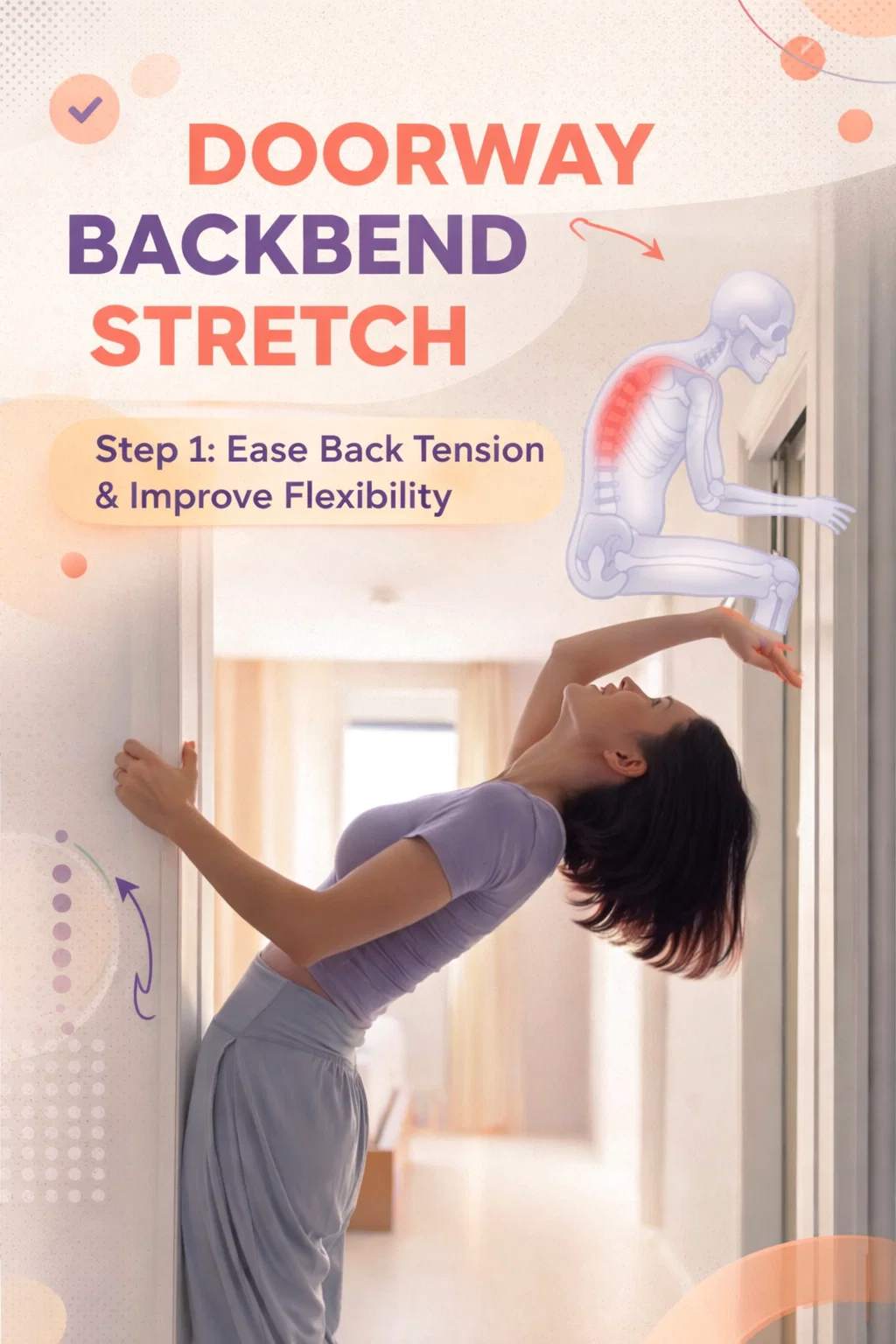
The image of a woman using a simple door frame to arch her back and open her chest captures the essence of functional movement. This specific stretch is a favorite among physical therapists and yoga instructors because it uses your own body weight and a fixed object to create leverage. It targets the muscles that are most restricted by our daily habits, providing instant feedback and relief. It is not just about flexibility; it is about creating space in the body where there was once stagnation.
Why the Doorway is Your Best Gym Equipment
One of the biggest barriers to a consistent stretching routine is the perceived need for equipment or a dedicated space. The beauty of the doorway stretch is that it utilizes an architectural feature found in every home and office. You do not need a yoga mat, resistance bands, or a gym membership. Every time you walk through a room, you have an opportunity to reset your posture. This accessibility makes it much easier to build a habit that sticks.
Step-by-Step Guide to the Perfect Doorway Stretch
To get the most out of this movement and ensure you are practicing it safely, it is important to focus on form. While it looks simple, subtle adjustments in your hand placement and foot positioning can change which muscles are being targeted.
Positioning Your Arms
Start by standing in the center of a doorway. Lift your arms so that your elbows are at a 90 degree angle, with your upper arms parallel to the floor. Place your forearms and palms firmly against the door frame. This “goalpost” position is the standard starting point for targeting the middle of the chest. If you want to target the lower fibers of the chest, move your hands slightly higher on the frame. To hit the upper chest and shoulders, slide your hands a bit lower.
The Gentle Lean
Step one foot forward through the doorway. Slowly shift your weight onto that front leg, leaning your chest forward until you feel a deep, comfortable stretch across the front of your shoulders and chest. It is crucial to move slowly and avoid any bouncing movements. You want a steady, static hold that allows the fascia and muscle tissue to gradually release. Keep your core slightly engaged to protect your lower back from over-arching.
Head and Neck Alignment
While performing the stretch, keep your head in a neutral position. It is tempting to let the chin drop to the chest or to jut the neck forward, but this can create new tension. Imagine a string pulling the crown of your head toward the ceiling. As you lean forward, keep your gaze straight ahead. This ensures that you are stretching the chest without compromising the cervical spine.
The Physical and Mental Benefits of Opening Up
The benefits of this practice extend far beyond just “fixing” a slouch. When we open our physical frame, we influence our internal state in profound ways. The mind-body connection is a powerful tool, and the doorway stretch taps into it perfectly.
Increased Oxygen and Energy
When you are hunched over, your rib cage is compressed, which limits the depth of your breath. Shallow breathing sends a signal to your nervous system that you are under stress, which can increase feelings of anxiety and fatigue. By opening the chest and standing tall, you allow for deep, diaphragmatic breathing. This floods your blood with oxygen, clears mental fog, and provides a natural boost of energy that no cup of coffee can match.
Reduction in Chronic Pain
Many people suffer from “referred pain,” where the site of the discomfort is not actually the source of the problem. Often, pain in the upper back and neck is caused by tightness in the chest. By releasing the pectorals, you stop the constant tug-of-war that is straining your back muscles. Regular practice can significantly reduce the frequency of tension headaches and the “burning” sensation often felt in the shoulders after a long shift at a desk.
The Psychological Boost of Power Posing
There is a wealth of research suggesting that our posture influences our confidence levels. Standing in an open, expansive position reduces cortisol (the stress hormone) and can increase testosterone levels, leading to a greater sense of self-assurance. When you walk into a meeting or a social gathering after a quick doorway stretch, you carry yourself differently. You project confidence because your body feels capable and unrestricted.
Common Mistakes to Avoid
To keep this practice effective and injury-free, watch out for these common pitfalls. Even seasoned athletes can sometimes let their form slip when they are in a hurry.
- Over-stretching: More is not always better. You should feel a “sweet ache” or a sensation of tension, but never sharp pain. If you feel tingling or numbness in your arms, you are leaning too far or pressing too hard on the nerves.
- Holding Your Breath: Many people instinctively hold their breath when they feel a deep stretch. This actually causes the muscles to tighten in a protective response. Focus on slow, rhythmic exhales to signal to your muscles that it is safe to let go.
- Arching the Lower Back: The goal is to stretch the chest, not to dump all the pressure into your lumbar spine. Keep your ribs tucked and your abs tight to ensure the movement stays in the upper body.
Creating a Sustainable Routine
Consistency is the secret ingredient to any physical transformation. You do not need to spend thirty minutes stretching to see results. In fact, short bursts of movement throughout the day are often more effective for office workers than one long session at the end of the day.
The “Trigger” Method
A great way to remember to stretch is to tie it to an existing habit. For example, every time you get up to go to the bathroom or go to the kitchen for water, perform a thirty-second doorway stretch. By using the doorway as a visual trigger, you turn a mundane part of your environment into a reminder for self-care. Over a week, these small moments add up to significant changes in your muscle memory.
Morning and Evening Resets
In the morning, use the stretch to “wake up” your body after hours of sleep. In the evening, use it to “unwind” the day’s stress. Incorporating a few deep breaths while in the stretch can help transition your nervous system from a high-alert work state into a relaxed, restful state. It is a simple ritual that marks the boundary between your productive hours and your personal time.
Complementary Habits for Better Posture
While the doorway stretch is a powerhouse move, it works best when supported by a lifestyle that prioritizes alignment. Small changes in your environment can reduce the amount of “corrective” work you have to do later.
Ergonomic Awareness
Take a look at your workstation. Is your monitor at eye level? Are your feet flat on the floor? Investing in a laptop stand or an external monitor can prevent the initial slouch that leads to chest tightness. Remember the “90 degree rule” for your elbows and knees to maintain a neutral spine throughout the day.
Strengthening the Back
Stretching is only half of the equation. To maintain good posture, you also need to strengthen the muscles that hold you upright. Exercises like rows, face pulls, and “Y-W-T” arm movements help build the endurance of the rhomboids and trapezius muscles. When the back is strong and the chest is open, good posture becomes effortless rather than something you have to constantly remind yourself to do.
Final Thoughts on Finding Balance
Reclaiming your posture is not about achieving some rigid, military-style perfection. It is about finding a sense of ease and balance in your own skin. It is about being able to move through the world without being weighed down by unnecessary tension. The woman in the image represents a moment of intentionality—a pause in a busy day to acknowledge the body’s needs and provide a simple, powerful remedy.
The journey to better health does not always require drastic changes or expensive equipment. Sometimes, it starts with a single step, a deep breath, and a sturdy doorway. By committing to this simple practice, you are choosing to prioritize your long-term well-being. You are giving yourself the gift of better breath, more energy, and a body that feels like a home rather than a burden. So, the next time you pass through a door, take a moment to stop, reach out, and open up. Your future self will certainly thank you for it.
Would you like me to generate some specific variations of this stretch for different fitness levels, or perhaps create a sample weekly routine for you to follow?