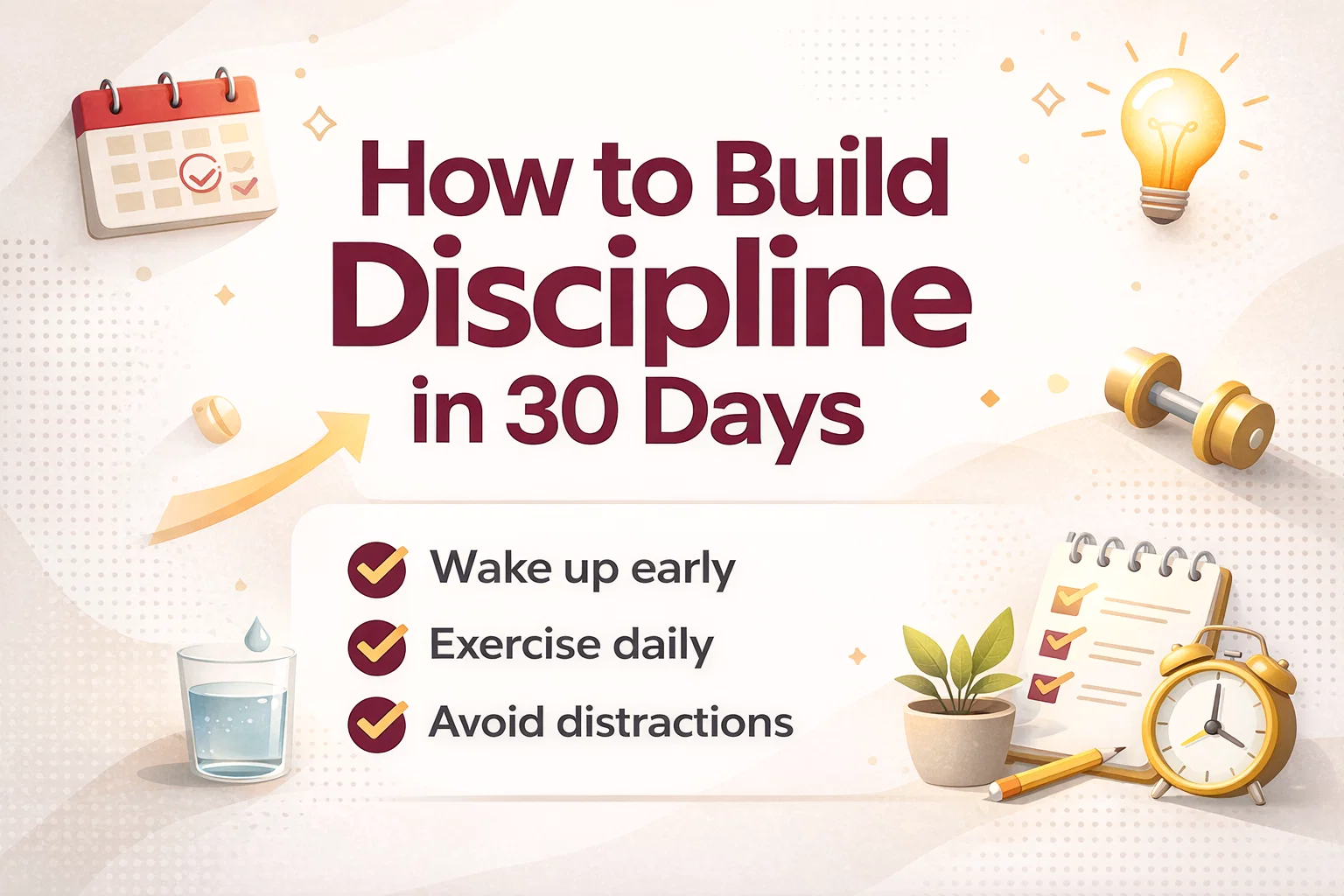
30 Day Challenge How to Build Discipline Better Habits
Have you ever set a massive goal, felt incredibly motivated for exactly three days, and then slowly drifted back into your old routines? If you are nodding your head, you are completely normal. Motivation is a fantastic spark, but it is a terrible fuel source for long-term success. The actual secret ingredient you need is discipline. Building discipline might sound intimidating, but it is not about punishing yourself or stripping all the joy from your life. It is simply about creating a system of small, manageable habits that compound over time. Today, we are going to dive deep into a transformative 30-day challenge designed to help you build unshakeable discipline through simple daily actions.
This 30-day blueprint is not about overhauling your entire existence overnight. Instead, it focuses on minor adjustments to your morning routine, your work habits, your physical health, and your evening wind-down. By committing to these micro-habits for one month, you will rewire your brain to favor consistency over instant gratification. Let us explore exactly how you can implement these strategies to completely transform your mindset and productivity.
Why 30 Days? The Science of Habit Formation
You might be wondering why we are focusing on a 30-day timeframe. While the exact time it takes to form a habit varies from person to person, committing to a 30-day window provides a perfect mental boundary. It is long enough to see real results and push through initial resistance, but short enough to feel achievable. When you repeat an action daily, you are literally carving new neural pathways in your brain. Every time you choose to read ten pages instead of scrolling through social media, you strengthen that new pathway. Eventually, the disciplined choice becomes the default choice.
Mastering Your Morning Routine
How you spend the first hour of your day dictates the momentum for the next fifteen. If you start in a chaotic rush, you will likely feel behind schedule until bedtime. Building discipline begins the moment you open your eyes.
Wake Up at the Same Time Daily
Consistency is the bedrock of discipline. Waking up at the exact same time every single day, including weekends, regulates your body’s internal clock. This makes waking up naturally easier over time and ensures you get better quality sleep. Pick a time that allows you to complete your morning habits without rushing, and stick to it fiercely.
Make Your Bed Every Morning
It sounds trivial, but making your bed is your first opportunity to secure a victory for the day. It takes less than two minutes. By completing this simple task, you send a signal to your brain that you are capable of finishing what you start. Plus, stepping into a tidy room at the end of a long day instantly lowers stress levels.
No Phone for the First 30 Minutes
Reaching for your phone the second you wake up floods your brain with cheap dopamine and puts you in a reactive state. You are immediately responding to other people’s emergencies, news, or perfectly curated highlight reels. Reclaim your morning by keeping your phone on airplane mode or in another room for the first half-hour. Use this time to ground yourself in reality.
Drink Water Before Coffee
After a full night of sleep, your body is dehydrated. Before you pour that first cup of coffee, drink a large glass of water. This kickstarts your metabolism, hydrates your brain, and aids digestion. It is a tiny act of self-care that proves you prioritize your foundational health over immediate cravings.
Structuring Your Day for Maximum Productivity
Discipline in the workplace or your personal projects is about intentionality. It is about doing what needs to be done, especially when you do not feel like doing it.
Write Your Top 3 Priorities
A never-ending to-do list is a recipe for overwhelm and procrastination. Instead of listing twenty tasks, identify the top three non-negotiable priorities for your day. These are the needle-movers. Focus all your initial energy on completing these three items. If you get nothing else done, finishing these three tasks still makes the day a massive success.
Avoid Multitasking and Finish What You Start
Multitasking is a myth. When you try to do three things at once, you are actually just rapidly switching your attention between tasks, which drains your cognitive energy and increases mistakes. Practice singular focus. Pick one task from your priority list, work on it until it is finished, and only then move to the next. This builds incredible mental endurance.
Complete a Task You Have Been Avoiding
We all have that one dreaded task looming over our heads. It drains our mental energy just thinking about it. Make a pact to tackle the most uncomfortable task early in the day. Often referred to as “eating the frog,” getting the hardest thing out of the way creates a massive surge of relief and momentum that carries you through the rest of your responsibilities.
Say “No” to One Distraction
Discipline is just as much about what you choose not to do. Every day, actively identify one distraction and consciously reject it. It might be declining an unnecessary meeting, turning down a sugary treat in the breakroom, or closing a distracting tab on your browser. Flexing your “no” muscle builds profound self-control.
Strengthening Your Mind and Body
Physical and mental resilience are deeply connected. You cannot expect your brain to operate at peak discipline if you are neglecting the vessel that carries it.
Do One Small Workout Daily
You do not need to spend two hours at the gym to build the habit of physical activity. Commit to just ten minutes of movement every single day. This could be a brisk walk, a quick yoga flow, or a bodyweight circuit in your living room. The goal is consistency, not intensity. Proving to yourself that you can show up for your body daily is a massive win.
Take a Cold or Quick Shower
Cold showers are not just a trendy internet challenge; they are a phenomenal tool for building mental toughness. Voluntarily subjecting yourself to physical discomfort for a brief period trains your brain to handle stress. It teaches you that you can breathe through uncomfortable situations. Start with just thirty seconds of cold water at the end of your regular shower.
Read 10 Pages a Day
Continuous learning is a hallmark of disciplined individuals. Committing to just ten pages a day feels incredibly manageable, but it adds up to roughly a book every month. This habit expands your perspective, improves focus, and provides a quiet alternative to digital consumption.
Practice Mindfulness and Eat Without Distractions
Our modern lives are overflowing with constant stimulation. Take ten minutes to sit in pure silence daily. Additionally, try eating at least one meal without your phone, the television, or a podcast playing. Focus entirely on the food, the flavors, and the act of nourishing your body. This brings you back to the present moment and helps curb mindless overeating.
The Power of an Evening Wind-Down
A productive tomorrow begins tonight. How you close out your day is critical for securing a restful night of sleep and preparing your mind for the next challenge.
Plan Tomorrow Before Bed
Decision fatigue is real. If you wake up and have to spend energy deciding what to wear, what to eat, and what to work on, you are wasting valuable willpower. Spend five minutes each night laying out your clothes, packing your bag, and writing down tomorrow’s top three priorities. You will wake up with a clear action plan.
Practice Gratitude and Journal for 5 Minutes
Building discipline can feel rigorous, so it is vital to balance it with positive reflection. Spend five minutes writing down a few things you are grateful for, or simply reflecting on what you learned that day. Acknowledging your progress, even the small wins, provides the positive reinforcement needed to keep going.
Limit Screen Time After 9 PM
The blue light emitted by screens suppresses melatonin production, making it difficult to fall asleep and stay asleep. Set a hard boundary for screen time at least an hour before your consistent bedtime. Use this time to read, stretch, or chat with a family member instead.
Review Your Progress
At the end of the day, review your habit tracker. Did you check off your daily goals? If you missed something, do not beat yourself up. Discipline is not about perfection; it is about rapid recovery. Acknowledge the slip-up, figure out what went wrong, and commit to doing better tomorrow.
Overcoming the Inevitable Hurdles
Let us be completely realistic. There will be days during this 30-day challenge where you feel utterly exhausted. Your alarm will go off, and every fiber of your being will want to hit snooze. You will want the junk food, and you will want to skip the workout. This is exactly the moment where discipline is forged.
When motivation fades, rely on your systems. This is why tracking your habits is so powerful. Seeing a visual streak of consistent days makes you less likely to break the chain. Remember to reward yourself after completing hard tasks. A healthy reward system reinforces the positive behavior. Finally, give yourself grace. If you miss a day of reading or forget to drink water before coffee, you have not failed the challenge. The only true failure is quitting altogether. Just pick right back up the next day.
Conclusion
Building discipline is a journey of a thousand tiny steps. By implementing this 30-day framework, you are fundamentally shifting your identity. You are transitioning from someone who waits for inspiration to strike, into someone who takes consistent, purposeful action regardless of their mood. Start tomorrow morning. Wake up at your set time, make your bed, and drink a glass of water. Take it one habit at a time, one day at a time. Within thirty days, you will look back and be absolutely amazed at the focused, resilient, and highly disciplined person you have become. The challenge is set. Are you ready to begin?