What Flowers Are Edible The Ultimate Tasting Guide
Have you ever looked at a vibrant, blooming garden and wondered if you could capture that exact beauty and place it directly onto a dinner plate? The world of culinary botany is vast, ancient, and incredibly exciting. Incorporating beautiful, fresh blooms into your daily meals is not just a fleeting trend reserved for high-end, experimental restaurants. It is a wonderful, accessible way to bring natural wellness, striking colors, and entirely new flavor profiles into your everyday home kitchen. Whether you are brewing a comforting, restorative evening herbal tea, garnishing a crisp summer salad, or crafting your own natural home remedies, understanding exactly what flowers are edible opens up a whole new realm of gastronomic and holistic possibilities.
For centuries, different cultures around the globe have utilized the power and taste of blossoms. From the rose water heavily featured in Middle Eastern pastries to the squash blossoms beloved in traditional Mexican cuisine, petals have always held a place of honor in the kitchen. Today, as we lean more into natural living and herbalism, reviving this traditional knowledge is more rewarding than ever. Get ready to transform your culinary approach as we explore the most delicious and versatile edible flowers you can start using right now.
The Golden Rules of Foraging and Sourcing Edible Flowers
Before we dive into the specific varieties and their tantalizing flavor profiles, we absolutely must cover some essential ground rules. Safety is the ultimate priority when dealing with any botanical ingredients, especially those you plan to ingest or use in natural remedies. Not every pretty flower is safe for human consumption, and some common garden varieties can actually be highly toxic.
- Never Guess: Never consume a flower unless you are one hundred percent certain of its identification. Consult multiple reliable botanical guides if you are foraging in the wild.
- Source Organically: Always source your blossoms responsibly. If you are buying them, ensure they are specifically labeled for culinary use. Flowers purchased from florists, supermarkets, or general garden centers are routinely treated with systemic pesticides and harsh chemical fertilizers that are entirely unsafe for human consumption.
- Grow Your Own: The absolute safest and most rewarding approach is to grow your own edible flowers organically. This allows you to control exactly what goes into the soil and onto the plants.
- Start Small: Whenever you try a new edible flower for the first time, start with a very small amount. Just like with any new food, you want to ensure you do not have an unexpected allergic reaction or stomach sensitivity.
- Prep Properly: For most floral varieties, you should only eat the petals. The pollen, pistils, and stamens can sometimes detract from the flavor, add unwanted bitterness, or trigger pollen allergies. Always wash your blooms gently in a bowl of cold water and let them air dry on a paper towel before use.
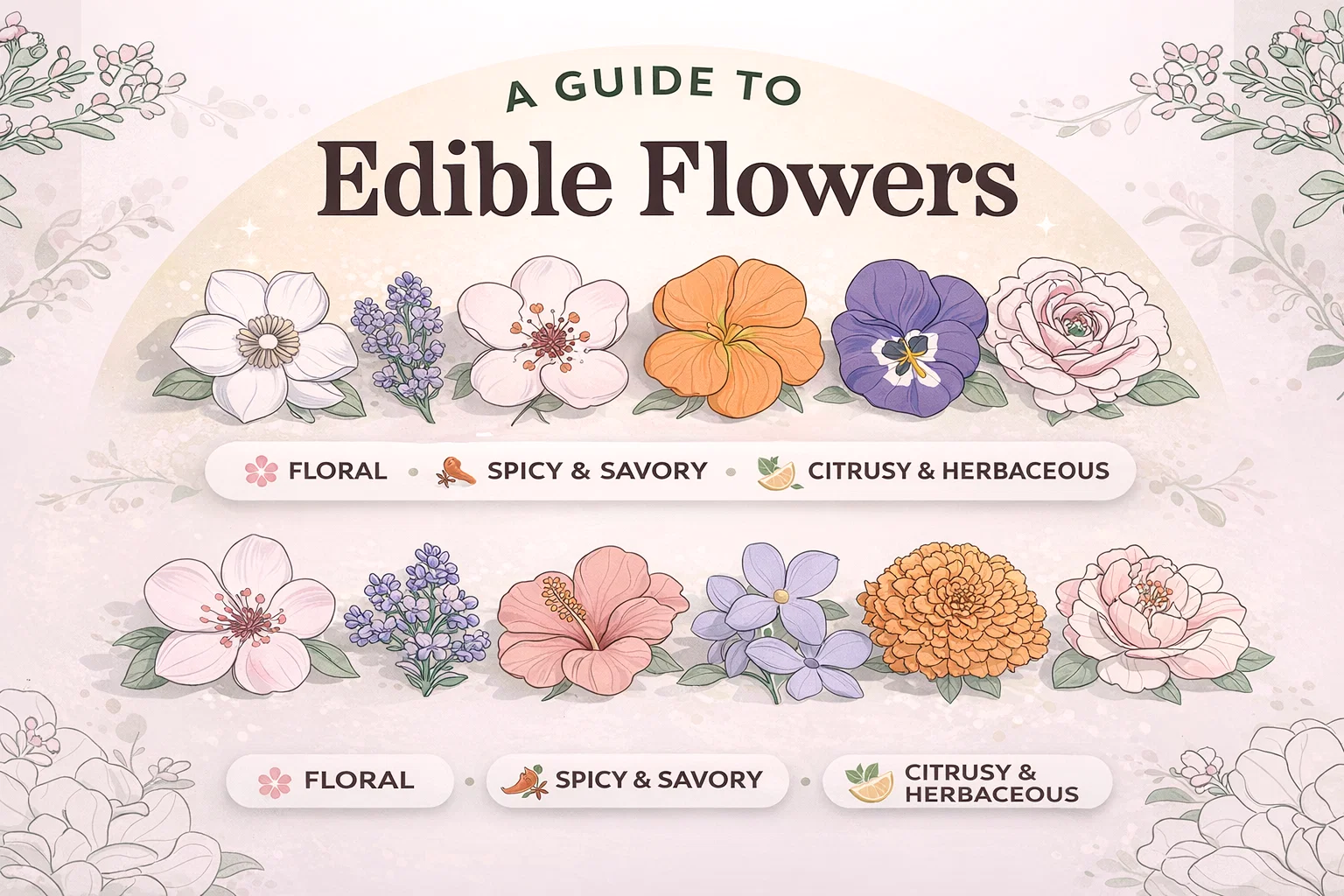
Sweet, Floral, and Delicate Blossoms
These flowers are the stars of the dessert world and the foundation of many soothing herbal teas. Their flavors range from deeply perfumed to light and fruity, making them incredibly versatile for sweet applications.
Roses
The undisputed queen of the garden also reigns supreme in the kitchen. Rose petals offer a deeply floral taste with surprising, bright notes of strawberries and green apples. Generally speaking, the darker the petals, the more pronounced and intense the flavor tends to be. You can crystallize rose petals with egg whites and fine sugar for stunning cake decorations, steep them into a fragrant simple syrup for sweetening beverages, or blend them into your DIY skincare routines. Rose water is a fantastic, natural facial toner that soothes the skin.
Lavender
A massive staple in herbalism and natural wellness, lavender is renowned globally for its calming, stress-relieving properties. In culinary applications, it delivers a very distinct earthy, minty, and light floral taste. Lavender is incredibly potent and contains strong essential oils, so a tiny pinch goes a very long way. It pairs beautifully with lemon or vanilla in baked goods like shortbread cookies. For a deeply relaxing bedtime routine, try steeping culinary lavender alongside chamomile to create a potent sleep syrup or a comforting nighttime tea.
Pansies
These cheerful, multi-colored little faces are perhaps the most popular and widely recognized floral garnish. They possess a very mild, sweet, and slightly wintergreen flavor profile. Because their taste is so delicate and unobtrusive, they are perfect for pressing into the icing of cookies, freezing into clear ice cubes to elevate fancy summer drinks, or tossing whole into a fresh green salad for a massive pop of visual appeal without overpowering the other ingredients.
Lilacs
These highly anticipated heralds of spring have a very heavy floral, sweet, and surprisingly citrusy flavor. The tiny, delicate blossoms can be gently folded into vanilla yogurt, infused into local honey for a medicinal treat, or used to create a stunningly fragrant lilac sugar. To make lilac sugar, simply layer fresh, dry blossoms with granulated sugar in a jar and let it sit for a few weeks, allowing the natural oils to permeate the sugar. This makes an incredible addition to any baking project.
Peonies
Known for their lush, massive, and deeply romantic blooms, peonies taste just as wonderful as they look. Their flavor profile is strongly floral with distinct, juicy hints of peach and strawberry. The petals can be parboiled and sweetened to make beautiful, blush-colored jams and jellies, or they can be used entirely fresh to add elegance and a unique flavor twist to summer fruit salads.
Peppery, Zesty, and Savory Additions
Not all flowers belong in desserts. Many blooms pack a serious savory punch, offering spicy, peppery, or even onion-like flavors that can completely elevate your main courses and savory sides.
Nasturtium
If you want a bold punch of flavor, nasturtium is absolutely your go-to bloom. These incredibly vibrant, fiery orange and bright yellow flowers boast a peppery, zesty, and spicy taste that very closely resembles wild arugula or watercress. The fantastic thing about the nasturtium plant is that both the lily-pad shaped leaves and the vibrant flowers are entirely edible. They make a fantastic, spicy addition to savory green salads, hearty sandwiches, and they look incredible when whipped into savory compound butters for steaks or crusty bread.
Carnations
Often relegated to simple, inexpensive bouquets, carnations hide a surprising culinary secret. Their frilly petals possess a distinctly bitter, spicy, and peppery flavor that is highly reminiscent of cloves or nutmeg. You absolutely must remember to remove the bitter white base of the petal where it attaches to the stem before eating, as that part is unpleasantly bitter. Once properly prepared, carnation petals are excellent steeped in wine, used to flavor savory rice dishes, or added to complex, bitter herbal tonics intended for gut health.
Marigolds
Often referred to affectionately as poor man’s saffron, marigolds offer a spicy, warm, and slightly bitter flavor that beautifully mimics the famous and highly expensive spice. Their bright yellow and deep orange petals can be used to naturally tint and flavor clear soups, rice dishes, and melted butter, adding a warm, earthy depth and a beautiful golden hue to your everyday cooking.
Alliums
The allium family includes everyday kitchen staples like garlic, onions, chives, and leeks. What many people do not realize is that their spherical, globe-like flowers are completely edible and carry the distinct, savory flavor of the plant they grow from. Chive blossoms, for example, offer a delicate onion flavor. They are incredibly beautiful when pulled apart into individual tiny florets and sprinkled over loaded baked potatoes, creamy soups, or pan-roasted root vegetables.
Tart, Tangy, and Exotic Flavor Profiles
For those looking for something a little out of the ordinary, these flowers offer complex, sour, and fruity notes that can add a sophisticated touch to both food and drink.
Hibiscus
Famous in the world of natural remedies and vibrant, healthy drinks, hibiscus flowers deliver a powerfully tart and dark berry flavor, often compared to cranberry. They are the absolute backbone of many popular herbal teas and refreshing summer coolers. Packed with vitamin C and antioxidants, a strong, ruby-red hibiscus infusion is both delicious and deeply nourishing for the body.
Magnolias
These ancient, massive, and thick-petaled blooms hold a highly surprising flavor secret. Rather than tasting purely floral, magnolia petals taste strongly of ginger and pungent cardamom. They are fantastic when lightly pickled in a sweet vinegar brine. Pickled magnolia petals offer a unique, spicy crunch that acts as a brilliant palate cleanser, pairing perfectly with fresh sushi, rich fatty meats, or robust cheese boards.
Fuchsias
These elegant, brightly colored, dangling flowers are not just meant for decorative hanging baskets on your porch. They possess a mildly bitter flavor mixed with intriguing notes of bright lemon and green grapes. Because of their stunning shape and complex, tart flavor profile, they make a truly lovely, exotic garnish for tropical fruit salads, light summer panna cottas, or citrus-focused desserts.
Cherry Blossoms
A beloved global symbol of spring and renewal, cherry blossoms have a delicate floral and distinctly sour taste. In traditional Japanese culinary arts, they are highly revered. They are often preserved by being pickled in salt and plum vinegar to be used later in traditional teas and wagashi (traditional Japanese sweets). The salted blossoms add an incredible umami and floral note to hot water when steeped.
Dahlias
These complex, geometrically beautiful flowers offer a surprising flavor range that can vary wildly. Depending heavily on the specific variety, the soil conditions, and the climate they are grown in, dahlia petals can taste tart, savory, and sometimes slightly bitter. Their crisp, water-chestnut-like texture makes them a fantastic, crunchy alternative to traditional leafy salad greens.
Incorporating Botanical Living into Your Daily Routine
Exploring the world of edible flowers goes far beyond simple culinary aesthetics and making your plates look pretty for guests. It serves as a beautiful stepping stone into broader botanical living and natural wellness. When you begin to observe the edible landscape around you, you naturally become more attuned to herbalism and plant-based solutions for everyday life.
The exact same fragrant roses you use to decorate a birthday cake can be dried and stored in your pantry for homemade, soothing winter teas. The vibrant lavender you bake into a Sunday morning shortbread can be infused into carrier oils and utilized in soothing, skin-healing dandelion salves. Integrating these natural, raw elements into your daily routines fosters a much deeper, more grounded connection with the environment and your own personal health. Whether you are whipping up a simple bentonite clay foot detox mask and adding crushed lavender, or brewing a hydrating, lemon-infused chia water packed with fresh mint and delicate pansies, culinary botany has the power to elevate the mundane everyday into something truly special and nourishing.
Conclusion
The natural world is truly a sprawling garden of complex flavors just waiting to be explored and respected. From the sharp, spicy kick of a homegrown nasturtium to the delicate, peachy notes of a fresh spring peony, edible flowers offer an unparalleled, beautiful way to entirely transform your cooking and natural wellness routines. They bring vibrant, mood-boosting colors, unique satisfying textures, and a profound, grounding connection to nature straight to your dining table and apothecary cabinet. So, the next time you are planning a weekly menu or looking to craft a new healthy drink, look past the traditional spice rack and step out into the garden. Always remember to forage safely, source your ingredients organically, and above all, have fun experimenting with these incredible botanical gifts. Your culinary adventures are truly just beginning to bloom.