ADHD Executive Dysfunction Warning Scale Signs Actions
Have you ever stared at a simple task like folding laundry or sending a brief email and felt an invisible wall blocking you from starting? If so, you are definitely not alone. Many people write this off as laziness or a lack of willpower. However, the reality is often much more complex and heavily rooted in how our brains process information and motivation. This invisible wall is a classic symptom of executive dysfunction. Understanding where you fall on the executive dysfunction warning scale can completely transform how you manage your daily life, your career, and your mental health.
Today, we are going to dive deep into a powerful tool that can help you identify your current cognitive load and take actionable steps before you hit a wall of burnout. By learning to recognize the signs of executive dysfunction early, you can implement the right strategies at the right time. Let us explore this comprehensive warning scale together and discover how you can reclaim your focus and energy.
What is Executive Dysfunction?
Before we break down the warning scale, it is crucial to understand what executive dysfunction actually means. Imagine your brain is a large, busy corporation. The executive functions are the CEO and the management team. They are responsible for planning, organizing, initiating tasks, regulating emotions, and keeping track of time. When this management team is working perfectly, you can easily break down a large project, focus on the immediate steps, and ignore distractions.
However, for individuals with ADHD, autism, chronic stress, or anxiety, this internal management team can sometimes go on strike or get completely overwhelmed. This is executive dysfunction. It turns simple thinking and planning into exhausting physical labor. It is not a character flaw. It is a neurological hurdle. Recognizing that your brain simply operates differently is the first and most important step toward finding relief and building systems that actually work for you.
The Executive Dysfunction Warning Scale
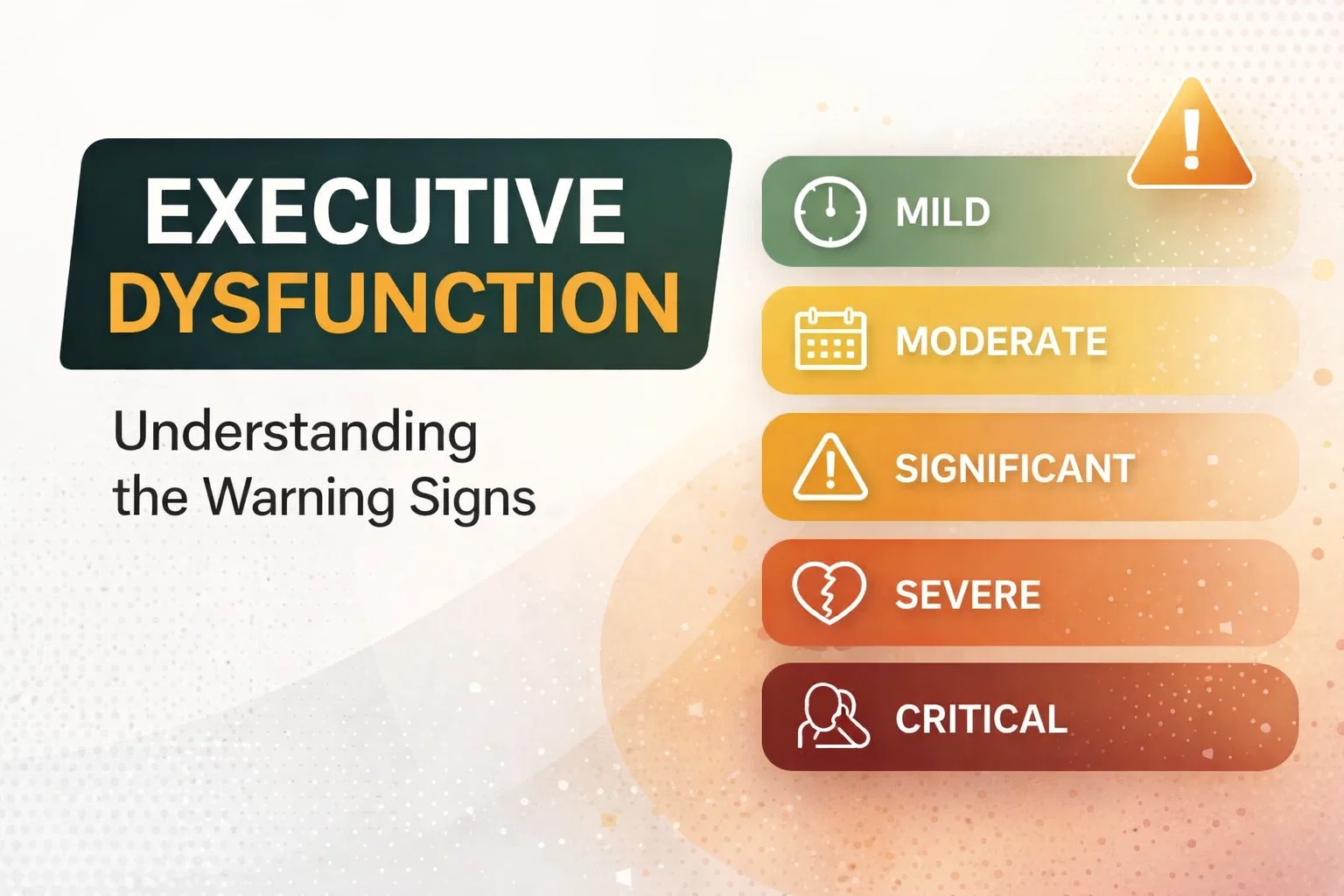
Not all days are created equal. Sometimes you might just forget where you put your keys, while other days you might feel entirely incapable of getting out of bed to face your responsibilities. The executive dysfunction warning scale is divided into five distinct levels. Each level comes with its own set of warning signs and, most importantly, specific actions you can take to support yourself. Let us break down each phase.
Level 1: Mild Executive Dysfunction
At the first level, your executive functioning is only slightly impaired. You are still managing your day-to-day life effectively, but you might notice a little extra friction in your routine. This is the perfect time to catch the issue before it spirals.
The Signs to Look For:
- Occasional forgetfulness, such as misplacing your phone or forgetting a minor appointment.
- Minor procrastination on tasks that are boring or repetitive.
- A slight feeling of mental fog when trying to organize your thoughts.
Actionable Steps:
When you are at Level 1, the goal is to offload your mental burden. Do not rely on your working memory. Use simple reminders on your phone or write things down on sticky notes. Prioritize your tasks by picking just three important things to accomplish for the day. By keeping your systems simple and highly visible, you can easily navigate this mild phase without dropping any major balls.
Level 2: Moderate Executive Dysfunction
If Level 1 is a slight speed bump, Level 2 is a traffic jam. At this moderate stage, your symptoms are becoming more noticeable and might start frustrating you or those around you. You are working harder to achieve the same baseline results.
The Signs to Look For:
- Missed deadlines at work or school.
- Significant difficulty starting tasks, often referred to as task paralysis.
- Feeling easily distracted and having trouble returning to your original task.
Actionable Steps:
Action is required here to prevent a slide into overwhelm. The best strategy at this level is to break tasks down into micro-steps. If “clean the kitchen” feels impossible, change the goal to “put three forks in the dishwasher.” Visual planners, whiteboards, and color-coded calendars become incredibly useful at Level 2. They allow you to see your time and responsibilities physically, which helps bypass the glitchy planning center in your brain.
Level 3: Significant Executive Dysfunction
Level 3 is where the alarm bells should start ringing. Significant executive dysfunction means your daily life is being actively disrupted. The weight of your tasks feels incredibly heavy, and the emotional toll is rising.
The Signs to Look For:
- Constant overwhelm and a feeling that you can never catch up.
- Active avoidance of tasks, emails, and sometimes even social interactions.
- Noticeable disorganization in your physical space, like piles of laundry or cluttered workspaces.
Actionable Steps:
You cannot simply “try harder” when you reach Level 3. You need external support. This is the time to delegate tasks wherever possible. Ask a partner to handle dinner, or use a laundry service if you can afford it. You also need to lean heavily on structured, predictable routines to reduce decision fatigue. Finally, this is a highly appropriate time to engage in therapy. A professional can help you process the feelings of guilt and shame that often accompany significant executive dysfunction.
Level 4: Severe Executive Dysfunction
When you enter Level 4, the situation is critical but not yet a total crisis. Your inability to manage tasks is now causing tangible harm to your life. The systems that usually keep you afloat have completely broken down.
The Signs to Look For:
- Major life impacts, such as failing classes or facing disciplinary action at work.
- Financial issues caused by unpaid bills or impulsive spending.
- Relationship issues stemming from broken promises, forgotten commitments, or emotional volatility.
Actionable Steps:
At Level 4, professional intervention is strongly recommended. Consider working with an ADHD coach or a professional organizer who specializes in neurodivergence. They can provide body doubling and hands-on help to rebuild your systems. Additionally, if you have a diagnosis like ADHD, this is a crucial time to speak with your doctor about medication. Medication can often provide the necessary dopamine and norepinephrine boost required to bridge the gap between intention and action.
Level 5: Critical Executive Dysfunction
Level 5 is an absolute emergency regarding your mental and physical energy. This is the stage of complete system failure. Your brain has pulled the emergency brake to force you to stop.
The Signs to Look For:
- Complete inability to function or perform basic self-care like showering or eating regularly.
- Severe autistic or ADHD burnout.
- A state of mental health crisis where you feel entirely hopeless and trapped.
Actionable Steps:
If you are at Level 5, please know that this is a medical situation requiring immediate care. Drop all non-essential demands immediately. You require intensive support and immediate mental health intervention. Reach out to a psychiatrist, a crisis counselor, or an intensive outpatient program. The only goal at this stage is stabilization and rest. Do not worry about productivity. Your only job is to recover.
Why Tracking Your Warning Signs Matters
You might be wondering why it is so important to categorize your struggles into these five levels. The answer lies in preventative care. Many neurodivergent individuals have a habit of pushing themselves until they reach Level 4 or Level 5. They rely on the adrenaline of a looming crisis to get things done. While this might work in the short term, it inevitably leads to profound burnout.
By regularly checking in with yourself and identifying when you are at Level 1 or Level 2, you can deploy gentle, easy interventions. Using a visual planner when you are mildly overwhelmed is much easier than trying to find a therapist when you are in a state of critical burnout. Tracking your signs helps you build a custom user manual for your brain.
Practical Strategies for Daily Support
No matter where you currently sit on the warning scale, there are universal practices that can support healthier executive functioning. Implementing these baseline habits can raise your overall resilience.
Optimize Your Environment
Your physical space deeply impacts your mental space. Keep your most important items visible. If out of sight means out of mind for you, remove cabinet doors or use clear storage bins. Create a “launch pad” near your front door for your keys, wallet, and bag so you never have to search for them when you are already running late.
Practice Radical Self-Compassion
Beating yourself up for missing a deadline or leaving dishes in the sink will only drain the exact mental energy you need to complete the task. Shame is a terrible motivator. When you notice executive dysfunction creeping in, speak to yourself like you would a friend. Acknowledge the difficulty of the task and forgive yourself for struggling.
Nourish Your Brain
Executive functions require a massive amount of physical energy. If you are sleep-deprived, dehydrated, or running on empty calories, your brain simply will not have the fuel to focus. Prioritize sleep hygiene, drink plenty of water, and eat meals rich in protein to help sustain your dopamine levels throughout the day.
Conclusion
Navigating life with executive dysfunction can feel like playing a video game on the hardest difficulty setting while everyone else is playing on easy mode. However, you are entirely capable of thriving once you understand the rules of your own mind. By using the Executive Dysfunction Warning Scale, you can transition from a reactive state of panic to a proactive state of management. Remember to monitor your signs, take the appropriate actions without shame, and always seek support when you need it. Your brain is brilliant, and with the right tools, you can absolutely harness its full potential.