ADHD Hobby Graveyard Hyperfixation Rules For Skill Collectors
Have you ever opened a closet door only to be greeted by boxes of half-used craft supplies, specialty baking equipment, or gardening tools you swore you would use every weekend? If you felt a familiar pang of guilt looking at those abandoned projects, you are certainly not alone. Welcome to what many lovingly, and sometimes frustratingly, call the hobby graveyard. For neurodivergent individuals, particularly those navigating the world with ADHD, jumping from one intense interest to another is an incredibly common experience. Yet, society constantly tells us that moving on quickly means we have failed. Today, we are completely flipping that script. It is time to stop calling yourself a quitter and start embracing your brilliant, multifaceted identity as a skill collector.
The journey of discovering a new passion is thrilling. The research phase, the excitement of gathering supplies, and the intense focus of learning a brand new skill are intoxicating. But when that initial spark fades and you find yourself wanting to move on, the heavy weight of societal expectations often sets in. We are conditioned to believe that longevity equals success. We are taught that a hobby is only valuable if it eventually leads to mastery or, worse, a side hustle. This rigid way of thinking ignores the beautiful complexity of the neurodivergent mind. It is time to dismantle the myths surrounding our passions and establish a healthier, more joyful framework for how we engage with our interests.
The Neurotypical Myth of Wasted Time
To truly embrace our unique way of learning, we must first unlearn the neurotypical myth that has been ingrained in us. This myth states a very simple, yet damaging, rule: if you do not stick with a hobby for years, it was a complete waste of time and money. This perspective views hobbies through a lens of strict productivity and return on investment. If you buy the ingredients and tools to perfect an old-fashioned Southern chess pie, but you only bake it twice before losing interest, the neurotypical world might judge that as a frivolous failure.
This mindset is profoundly damaging because it breeds unnecessary shame. It transforms activities that are meant to bring us relaxation and joy into sources of stress and obligation. When we view our abandoned interests as failures, we become hesitant to try new things in the future. We start to doubt our own commitment and shy away from exploring the vast, fascinating world around us. We trap ourselves in a cycle of hesitation, wondering if we should even bother starting a new project if we know, deep down, that we might not be doing it a year from now. This fear of quitting robs us of the simple, fleeting joys that make life vibrant.
Furthermore, this myth fails to account for the actual value of an experience. Think about purchasing a ticket to an amusement park or a concert. You pay for a temporary experience that brings you joy, stimulation, and memories. You do not expect to live at the amusement park forever to justify the cost of the ticket. A hyperfixation is very much the same. You are investing in a temporary, highly engaging experience. The money spent on supplies was the price of admission for the joy and learning you received during that specific period of time.
The Neurodivergent Reality: The Dopamine Arc
Let us step away from the myth and look at the neurodivergent reality. When you lose interest in a hobby after a few weeks, you did not quit. You successfully completed what we can call the dopamine arc. The ADHD brain is constantly seeking stimulation and dopamine, a neurotransmitter associated with reward and pleasure. When you discover a new interest, your brain lights up with the thrill of novelty. You dive in headfirst, absorbing every piece of information you can find.
Imagine you suddenly become fascinated with herbalism and natural wellness. You spend hours researching the benefits of red clover, you meticulously craft a DIY dandelion foot balm, and you experiment with mixing the perfect turmeric paste. During this phase, your brain is highly stimulated. You are extracting the exact amount of joy, learning, and novelty your mind required from that specific activity. You are solving a puzzle, mastering a basic concept, and feeding your curiosity.
However, once that novelty is fully absorbed, the landscape changes. The mystery is gone. You have figured out how the process works, and the intense dopamine rush begins to fade. For a neurodivergent brain, the task is now effectively finished. Continuing to force yourself to make dandelion balm when the joy is gone is like trying to wring water from a dry sponge. It is not a lack of willpower that makes you stop. It is simply that your brain has successfully gathered what it needed and is now ready to explore a new frontier. Recognizing this biological and neurological reality is the first step toward releasing the heavy burden of hobby-related guilt.
Embracing the Identity of a Skill Collector
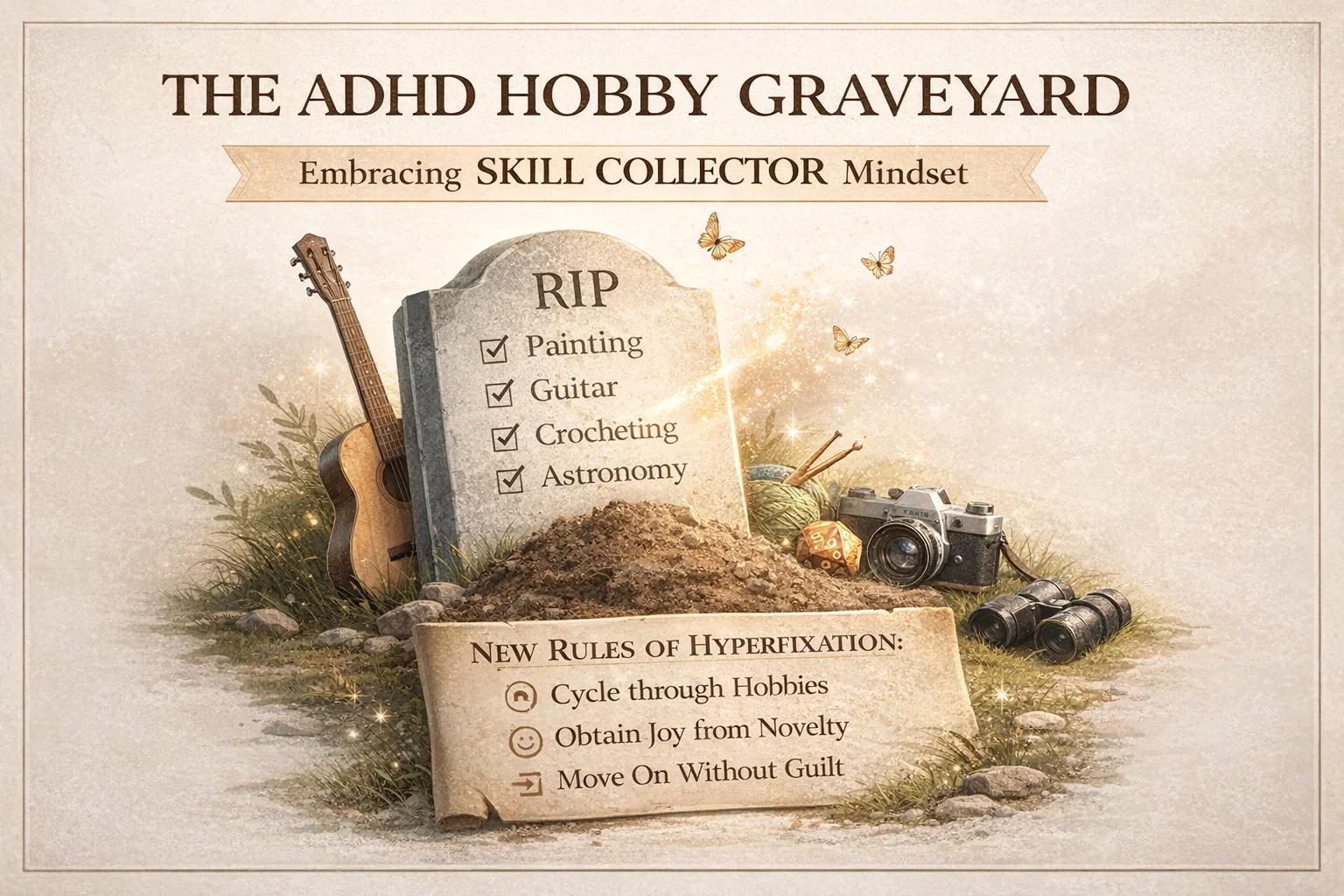
When you stop viewing yourself as a serial quitter, a wonderful transformation occurs. You realize that you are, in fact, a skill collector. You are building a diverse, eclectic reservoir of knowledge that makes you an incredibly adaptable and interesting person. Society often praises the specialist, the person who dedicates ten years to a single craft. But there is immense, underappreciated value in being a generalist.
Because of your hyperfixations, you know a little bit about everything. One month you might be deep-diving into personal development, analyzing the physical touch love language and complex relationship dynamics. The next month, you might be fascinated by the spiritual meaning of apples or the historical context of protection spells. By winter, your focus might shift to practical home projects, like building a DIY olla irrigation system for your indoor garden or learning how to preserve cheese without refrigeration.
This wide array of knowledge often intersects in beautiful and unexpected ways. The skills you learned during a brief stint with watercolor painting might influence how you decorate a cake during a baking phase. The research skills you honed while exploring woodland wellness will serve you well when you need to quickly understand a complex new software at work. You are not leaving a trail of failures behind you. You are weaving a rich, vibrant tapestry of experiences that shape how you interact with the world. You are a modern-day Renaissance person, driven by insatiable curiosity rather than rigid discipline.
The New Rules of Hyperfixation
Understanding that you are a skill collector changes how you should approach new interests. We need to establish a new framework that honors your brain’s need for novelty while protecting your peace of mind and your bank account. Here are the new rules of hyperfixation, designed specifically for the neurodivergent explorer.
1. Rent, Borrow, or Buy Cheap Gear First
The urge to go all-in on a new hobby is powerful. When the inspiration strikes to start making intricate spell jars or brewing your own nettle vinegar, you might feel an overwhelming need to buy the absolute best equipment available. The neurodivergent brain often convinces us that we cannot properly start the hobby without professional-grade supplies. This is the fast track to the expensive hobby graveyard.
The new rule is the 14-day probationary period. For the first two weeks of a new hyperfixation, you are strictly forbidden from making major investments. Rent the equipment if possible. Borrow tools from a friend or a local community group. If you must buy, purchase the cheapest, most basic starter kit you can find. Use a basic glass jar from your recycling bin instead of buying imported crystal containers. If, after 14 days, you are still consistently engaging with the hobby and feeling that spark of joy, then you can give yourself permission to slowly upgrade your supplies. This simple rule honors your excitement while providing a safety net for your finances.
2. Allow Yourself to Cycle Through Core Hobbies Seasonally
We often put pressure on ourselves to maintain all of our interests simultaneously. This is a recipe for instant burnout. You do not need to be a baker, a gardener, a potion-maker, and an organization expert all on the same Tuesday. Instead, allow yourself to cycle through a rotation of three or four core hobbies seasonally.
Perhaps spring is the season where your gardening hyperfixation naturally awakens. You focus on planting seeds and preparing the soil. As the heat of summer arrives, your interest might naturally shift toward creating refreshing gut-cleanser green smoothies or crafting homemade bath salts for relaxation. When autumn rolls around, the desire to bake warm, comforting recipes might return. By embracing a seasonal rotation, you give yourself permission to put a hobby down without declaring it dead. You are simply putting it in hibernation. When the season changes or the mood strikes again, the supplies will be waiting for you, and the joy will feel fresh and renewed.
3. Zero Guilt Allowed
This is the most important rule of all. You must actively practice zero guilt when it comes to your hobbies. A hobby is not a job. It is not a performance metric. It is not something you have to put on a resume. The singular, fundamental purpose of a hobby is to bring you joy in the present moment. It is not about mastery, and it is certainly not about monetization.
If you spent a weekend thoroughly enjoying the process of making your own natural anointing oil, and you never make it again, that weekend was a resounding success. You experienced joy. You learned something new. You stimulated your mind. That is the entire point. When you feel the familiar urge to criticize yourself for moving on, gently remind yourself of this rule. Say it out loud if you have to. You are allowed to seek joy, absorb the novelty, and gracefully walk away when the activity no longer serves your current needs.
Embracing Your Borrowed Focus
Your focus is a powerful, dynamic force. It is intense, it is passionate, and it is undeniably temporary. For the neurodivergent mind, focus is borrowed, not owned. You borrow it for a specific project, a specific season, or a specific burst of inspiration. Once the lease is up and the dopamine has been extracted, that focus must be returned and redirected toward the next brilliant idea.
This is not a flaw in your character. It is a unique operating system that allows you to experience a breathtaking variety of what life has to offer. Stop fighting your natural rhythms. Stop measuring your worth by neurotypical standards of longevity and discipline. Clear out the shame from your hobby graveyard and rebrand it as your personal library of collected skills. Give yourself the grace to be a beginner over and over again. Rent the cheap gear, cycle through your seasonal passions, and refuse to feel guilty for seeking out what makes your brain light up.
The next time you find yourself entirely consumed by a new, unexpected interest, lean into it safely. Enjoy the deep dive, relish the learning process, and know that whenever the time comes to move on, you are doing exactly what you were meant to do. Save these new rules, release the shame, and happily continue your lifelong journey as a masterful, joyful skill collector.