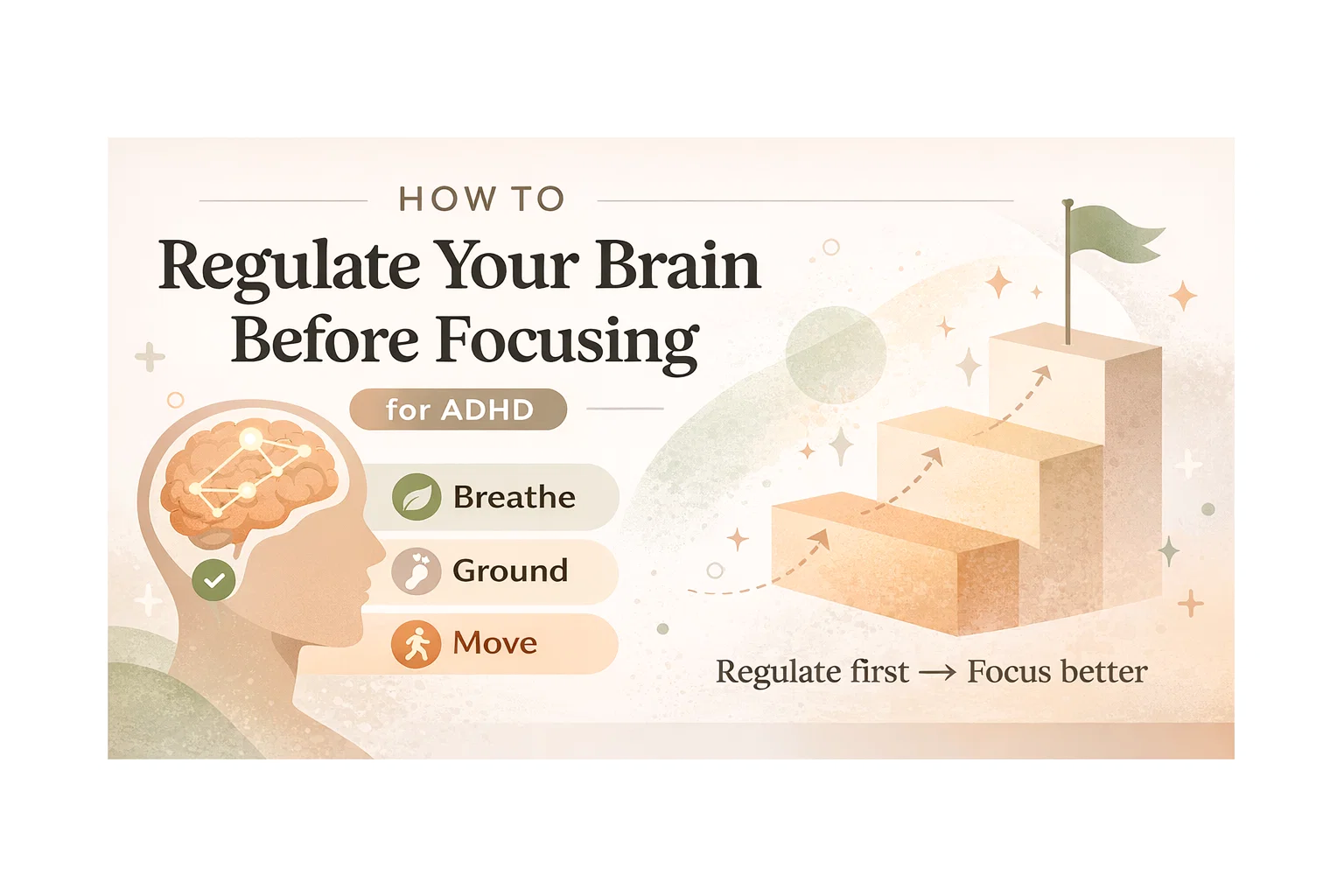
ADHD Regulation Ladder 5 Simple Steps to Calm Your Nervous System and Focus
Ever felt like your brain is a browser with fifty tabs open, all playing different music at once? That feeling of being scattered, wired, or completely unable to settle into a single task is a common experience for those navigating ADHD or high-stress environments. When the mental static becomes too loud, the natural instinct is often to push harder, to force focus through sheer willpower. But as anyone who has tried this knows, you cannot white-knuckle your way into a calm state of mind. Real focus does not start in the brain; it starts in the nervous system.
The concept of a regulation ladder is a game changer for anyone who feels stuck in a cycle of procrastination and overwhelm. Instead of viewing a lack of focus as a character flaw or a sign of laziness, we can look at it as a physiological state that needs a specific set of inputs to shift. By climbing a gentle ladder of sensory and mental checks, you can move from a state of high-alert panic to a grounded place where productivity feels possible rather than punishing. Let us explore how to move through these five essential steps to reclaim your day.
Understanding the Need to Regulate Before You Focus
The most important realization you can make about your productivity is that your brain follows your body. If your heart is racing, your breath is shallow, and your muscles are tense, your nervous system is sending a clear signal: we are not safe. In this state, your brain prioritizes survival over complex cognitive tasks. This is why you might find yourself staring at a blank screen for an hour, unable to write a single email even though you know exactly what needs to be said.
Regulation is the process of bringing your nervous system back to a neutral state. It is the bridge between being overwhelmed and being functional. When we talk about “climbing the ladder,” we are talking about a bottom-up approach to mental health. You start with the most basic physical needs and slowly work your way up to higher-level thinking. By the time you reach the top, focus is not something you have to fight for; it is the natural byproduct of a settled system.
Step 1: The Power of the Breath
The first rung of the ladder is the most accessible tool you have: your breath. When we are stressed, our breathing often becomes fast and erratic, which keeps us trapped in a fight-or-flight response. The goal of this step is to send a manual override signal to your brain that says, “I am safe right now.”
Naming Your Current State
Before you even begin the breathing exercise, take a moment to name what you are feeling. Use descriptive words like scattered, wired, or panicky. There is immense power in labeling an emotion; it moves the experience from an abstract, overwhelming cloud into a defined concept that you can manage. Once you have named it, you have already started the process of stepping outside of the chaos.
The 4-6 Breathing Technique
To physically calm the system, try inhaling for a count of four and exhaling for a count of six. The key here is the extended exhale. Longer exhales activate the parasympathetic nervous system, which is responsible for rest and digestion. Do this three times. It is a small investment of time that pays massive dividends in how your brain processes the next few minutes of your life.
Step 2: Grounding Yourself in the Physical World
Once you have slowed your breathing, the next step is to come back to your body. Overwhelm often feels like floating away or being trapped entirely inside your head. Grounding techniques pull your awareness back to the physical world around you, which helps quiet the internal noise.
Sensory Awareness
One effective way to ground yourself is to notice five things you can see right now. They do not have to be significant. A coffee mug, a stray pen, the texture of the wall, or the light coming through the window all work. By focusing your eyes on external objects, you interrupt the internal loop of stressful thoughts.
Physical Connection
You can also try feeling your feet on the floor or pressing your hands together firmly. Notice the pressure and the sensation of support. This physical feedback reminds your brain of your physical boundaries and your place in space. A grounded body leads directly to a calmer brain, providing a stable foundation for the rungs of the ladder yet to come.
Step 3: Gentle Movement to Reset the System
Sometimes the nervous system has a buildup of “static” or excess energy that needs to be physically discharged. If you feel restless or like your skin is crawling with nervous energy, sitting still might actually be the worst thing you can do. Step 3 is all about gentle movement to burn off that static so your brain can finally settle.
Shaking and Rolling
Try shaking out your hands as if you are trying to flick water off your fingertips. Roll your shoulders back and down. These movements help release tension that we often carry without realizing it. It is not about a full workout; it is about small, rhythmic motions that signal to the body that it is okay to let go of the physical “brace” it has been holding.
Changing Your Environment
If you are able, a short walk to the mailbox or even just into another room can provide a necessary “reset” for your perspective. A change in scenery combined with the rhythm of walking helps the brain process information and lower cortisol levels. Movement acts as a release valve for the pressure of high-performance expectations.
Step 4: Blessing Your Brain and Shifting Your Narrative
The fourth step is where we move from the physical into the mental. How you speak to yourself during a moment of struggle determines how quickly you can recover. Many of us are prone to harsh self-criticism when we cannot focus, telling ourselves that we are broken or failing. This only increases the stress response and makes focus even harder to achieve.
Speaking Truth Over Yourself
Replace those critical thoughts with gentle affirmations. Remind yourself that your brain is not broken; it is simply reacting to a complex environment. Say things like, “I can do one small thing next,” or “I am capable of finding my way back to calm.” If you find comfort in spirituality, reminding yourself that you are not alone in the moment can also be a powerful anchor.
The Grace of Small Wins
Blessing your brain means giving yourself permission to be human. It means acknowledging that some days are harder than others and that your worth is not tied to your productivity levels. By shifting your narrative from one of shame to one of grace, you remove the emotional barriers that often stand in the way of getting things done.
Step 5: Then Focus One Step at a Time
Only after you have breathed, grounded, moved, and practiced self-compassion are you ready to ask the big question: “What is one next step?” Notice that the question is not “How do I finish this entire project?” or “How do I fix my life?” It is about the single, smallest possible action you can take right now.
The Power of “One”
When we are overwhelmed, we tend to look at the mountain instead of the path. Step 5 encourages you to look only at the very next inch of the trail. This might mean:
- Sending just one email you have been avoiding.
- Cleaning out just one drawer in your desk.
- Reading or writing just one page of a document.
By shrinking the goal, you make it manageable for a brain that is still recovering from a state of overwhelm.
Building Momentum
The beauty of the “one next step” philosophy is that momentum is addictive. Once you finish that one email, you might find that the second one feels a little easier. Because you have regulated your nervous system first, you are working with your brain rather than against it. Focus becomes a flow rather than a fight.
Implementing the Ladder into Your Daily Routine
The ADHD Regulation Ladder is not just for moments of extreme crisis; it is a tool that can be used throughout the day to maintain a steady level of calm. You might find it helpful to check in with yourself every few hours. Where are you on the ladder? Do you need to drop back down to Step 1 for a few minutes before diving into your next meeting?
Creating a physical or digital reminder of these steps can help you remember them when your brain is too “loud” to think clearly. Many people find that putting a small sticky note on their monitor or a reminder on their phone helps them pause and regulate before they reach the point of total burnout. The goal is to build a habit of checking in with your body as often as you check your inbox.
A Final Word on Compassionate Productivity
We live in a world that often demands constant focus and high output, frequently at the expense of our well-being. Tools like the regulation ladder remind us that we are biological beings, not machines. Our ability to think and create is deeply tied to our physical and emotional health. When you choose to regulate first and focus second, you are choosing a more sustainable and kinder way to live and work.
Next time you feel that familiar buzz of anxiety or the heavy weight of a brain that just won’t “turn on,” stop and breathe. Move through the steps. Trust the process of the ladder. You will find that the work is still there when you are ready, but you will be approaching it with a clear head and a steady heart. Focus is possible, and it does not have to be a punishment. It can be a gentle return to the tasks that matter most to you.