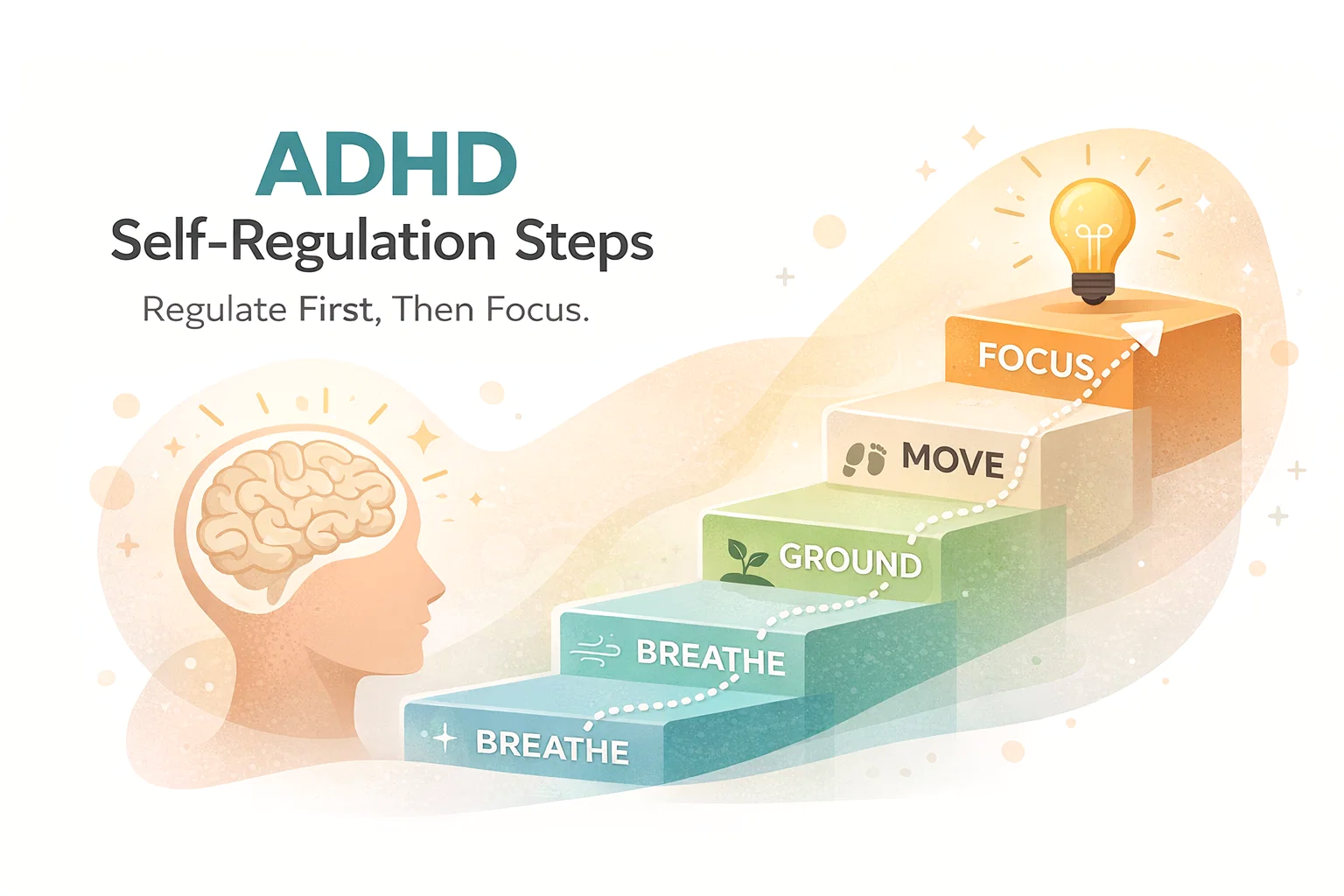
ADHD Regulation Ladder 5 Simple Steps to Calm Your Nervous System and Focus Better
Do you ever feel like your brain is a television set stuck between channels, filled with nothing but loud, crackling static? For many individuals living with ADHD or sensory processing sensitivities, this buzzing sensation is a daily reality. It is that frustrating moment when you know you have work to do, but your mind is vibrating at a frequency that makes sitting still or focusing on a single task feel physically painful. Traditional productivity advice usually tells you to just push through it or try harder, but when your nervous system is overstimulated, pushing through only leads to burnout and shame. This is where the concept of the ADHD Regulation Ladder comes into play, shifting the focus from forced discipline to neurological safety.
Understanding the Science of the Buzzing Brain
When we talk about being unable to focus, we often frame it as a character flaw or a lack of willpower. However, the image of the Regulation Ladder reminds us that this is actually a nervous system issue. ADHD brains often struggle with low levels of dopamine and norepinephrine, which can lead to a state of constant seeking or, conversely, a state of total overwhelm. When the nervous system identifies a task as too complex or boring, it can trigger a mild fight or flight response. Your heart rate might climb, your muscles tense up, and your thoughts start to race. This is the static that movement and breath are designed to clear.
The goal of using a regulation ladder is to move from a state of high physiological arousal down to a state of calm alertness. You cannot skip from panicked to productive in a single leap. By climbing the ladder one step at a time, you are essentially speaking the language of your body to convince your brain that you are safe, grounded, and ready to engage with the world again.
Step 1: The Power of the Breath
The first step on the ladder is the most fundamental: Breathe. When we are stressed, our breathing becomes shallow and rapid, which signals to the brain that there is an active threat. This keeps the prefrontal cortex, the part of the brain responsible for executive function, offline. By naming your feeling and practicing controlled breathing, you are manually overriding your stress response.
Try this: Acknowledge the feeling by saying, I feel scattered or I feel wired. Then, follow the 4-6 rule. Inhale deeply for a count of four, and exhale slowly for a count of six. Repeating this three times sends a direct message to your vagus nerve that you are safe right now. This simple act creates the necessary space for the next steps of the ladder.
Step 2: Grounding Your Physical Presence
Once you have slowed your breathing, the next objective is to get out of your head and back into your body. Grounding techniques are highly effective for ADHD because they provide immediate sensory input that anchors the mind to the present moment. When your brain is spinning 100 miles per hour into the future or the past, grounding acts as an emergency brake.
There are several ways to ground yourself effectively:
- Physical Pressure: Press your hands firmly together or push them against a wall. This provides proprioceptive input that helps your brain locate your body in space.
- The 5-4-3-2-1 Method: Notice five things you can see right now. This forces your visual processing to focus on the immediate environment rather than the internal chaos.
- Foot Placement: Feel the weight of your feet on the floor. Notice the texture of the carpet or the hardness of the wood beneath you.
The Connection Between Body and Brain
A grounded body leads to a calmer brain. It is nearly impossible to think clearly when you feel disconnected from your physical self. By focusing on your senses, you reduce the intensity of the emotional noise, making it easier to transition into the next phase of the regulation process.
Step 3: Using Movement to Burn Off Static
If you have ever felt like you have too much energy but no way to direct it, you are experiencing what the ladder calls static. For many neurodivergent people, movement is not a distraction; it is a requirement for regulation. Gentle movement helps process the excess adrenaline that builds up during periods of stress or under-stimulation.
You do not need an intense workout to see results. Simple, rhythmic movements are often the most effective for resetting the nervous system. Shaking out your hands, rolling your shoulders, or taking a short walk to the mailbox can be enough to shift your energy. These movements help discharge the nervous energy that feels like it is trapped under your skin. Think of it as a biological reset button that clears the path for mental clarity.
Step 4: Blessing Your Brain and Rewriting the Narrative
One of the heaviest burdens carried by those with ADHD is the weight of negative self-talk. After years of struggling with tasks that others seem to find easy, it is common to develop a narrative that your brain is broken or that you are fundamentally lazy. Step four of the ladder involves interrupting these toxic thoughts with truth.
Speak truth over yourself:
- My brain is not broken; it just processes things differently.
- I am capable of doing one small thing next.
- I am not failing; I am regulating.
This is not about empty toxic positivity. It is about cognitive reframing. When you stop punishing yourself for having a difficult time, you lower the emotional stakes of the task at hand. This reduction in pressure makes it significantly easier to actually start moving forward.
The Role of Compassion in Productivity
Self-compassion is a powerful tool for executive function. When we are kind to ourselves, our brain produces less cortisol. Lower cortisol levels mean better access to our problem-solving abilities. By blessing your brain instead of cursing it, you are creating a mental environment where focus can actually thrive.
Step 5: Finding the One Next Step
Only after you have breathed, grounded, moved, and spoken kindly to yourself should you attempt to focus. This is the top of the ladder. The mistake most people make is trying to start at Step 5. When you reach this level, the goal is not to finish your entire to-do list; it is to identify the smallest possible action you can take.
Instead of thinking about a massive project, ask yourself: What is one next step? This might be sending one single email, tidying one drawer, or reading one page of a report. By narrowing your focus to a singular, manageable point, you prevent the return of the overwhelm that started the cycle. Once that one step is complete, you can decide on the next one. This incremental approach builds momentum without triggering the nervous system’s alarm bells.
Why Regulation Must Come Before Focus
The core message of the ADHD Regulation Ladder is simple: Regulate first, then focus. Attempting to focus while dysregulated is like trying to drive a car with the parking brake engaged. You might move a little, but you are going to cause a lot of smoke and damage the engine in the process. When you prioritize your nervous system, focus becomes a byproduct of your well-being rather than a forced labor.
This approach transforms productivity from a battle into a rhythm. It acknowledges that some days the static will be louder than others, and that is okay. You have a ladder. You have the tools to climb back down to a state of peace and then back up to a state of accomplishment. This method removes the shame from the equation and replaces it with a practical, repeatable strategy for success.
Conclusion: Climbing Your Way to Clarity
Living with a brain that feels like it is constantly buzzing can be exhausting, but it does not have to be a barrier to a fulfilling life. The ADHD Regulation Ladder offers a compassionate and scientifically backed way to navigate the challenges of neurodivergence. By starting with your breath and ending with a single, focused step, you honor the way your brain works instead of fighting against it. Next time you feel that familiar sense of overwhelm creeping in, remember that you do not have to leap across the gap. Just take the first step, breathe, and trust the process. You are not broken, and with the right tools, focus is not a punishment, it is a possibility.