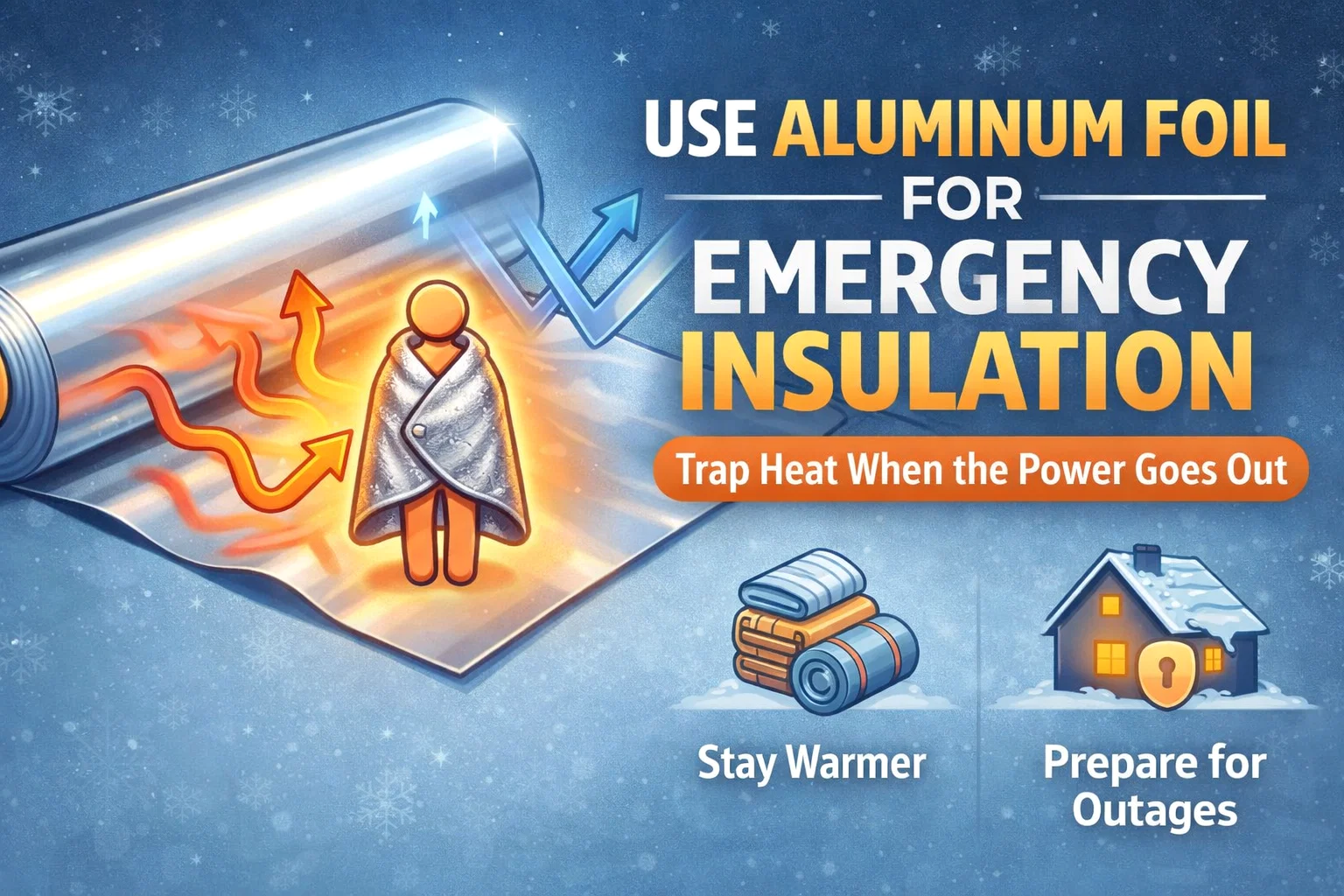
Aluminum Foil Survival Hack Emergency Heat Insulation Warmth for Power Outages
When the power goes out and the temperature starts to drop, the priority shifts immediately to heat retention. While many people reach for extra sweaters or heavy wool blankets, there is a common kitchen staple that can perform even better at keeping you warm: aluminum foil. This simple, shiny roll of metal is more than just a tool for leftovers; it is a high-tech survival asset that mimics the technology used in NASA space blankets. By understanding how to use this household item effectively, you can create an emergency insulation system that protects your family for under five dollars.
The Science of Radiant Heat Reflection
To understand why aluminum foil is such a powerhouse for emergency warmth, we have to look at how our bodies lose heat. Most people focus on insulation that stops convection (moving air) or conduction (touching cold surfaces). However, a massive amount of body heat is lost through radiation. Your body is constantly emitting infrared energy into the environment.
Standard blankets work by trapping air, but they often allow radiant heat to pass right through them. Aluminum foil is unique because it reflects up to 95 percent of radiant heat back to the source. When you wrap yourself in a layer of foil, you are essentially creating a mirror for your own body heat. Instead of that warmth escaping into the cold room, it bounces right back onto your skin, providing an almost instant sensation of heat.
Why Foil Beats Standard Blankets Alone
- Reflective Efficiency: It targets the 95 percent of radiant heat that traditional fibers miss.
- Vapor Barrier: Foil is windproof and moisture-proof, preventing cold drafts from reaching your skin.
- Low Bulk: Unlike bulky comforters, a roll of foil takes up very little space in an emergency kit.
Step-by-Step: Using Foil for Personal Warmth
While the idea is simple, the application requires a bit of strategy to ensure comfort and maximum efficiency. You should never wrap foil directly against your bare skin, as it can feel cold initially and may cause perspiration to build up, which eventually leads to a chill.
The Torso Wrap Technique
The most effective way to stay warm is to protect your core. To do this, tear off long sheets of aluminum foil. Place a thin layer of clothing on first, then wrap the foil sheets around your chest and back. Secure the edges with a bit of tape. Once the foil is in place, put a sweater or jacket over the top. This creates a sandwich effect where the foil reflects heat and the outer layers provide traditional insulation and protection.
Emergency Sleeping Bag Liners
If you are sleeping in a cold house during a winter power outage, your sleeping bag or bedding might not be enough. You can create an emergency liner by taping several sheets of foil together to form a large rectangle. Slide this inside your sleeping bag or between your sheets. This setup acts as a thermal barrier that prevents your body heat from soaking into the mattress or escaping through the top of the blankets.
Insulating Your Home Environment
Beyond personal use, aluminum foil can be used to treat the house itself. In a survival situation, you want to shrink your living space to one “warm room” and fortify it against the elements. Foil is an excellent tool for blocking the invisible ways heat escapes your home.
Sealing Windows and Blocking Drafts
Windows are the weakest point in any home’s insulation. Even double-pane glass loses heat rapidly. By taping aluminum foil over the glass, you create a reflective shield that bounces indoor warmth back into the room. If you combine this with cardboard, you create a makeshift “insulated shutter.” Simply tape the foil to a piece of cardboard trimmed to fit the window frame and wedge it into place. This blocks cold air infiltration and stops radiant heat loss simultaneously.
Maximizing Existing Heat Sources
If you have a small space heater or a radiator that is still functioning, much of the heat it produces is wasted by warming up the wall behind it. You can fix this by placing a large sheet of foil on the wall directly behind the heat source. The foil will reflect the heat outward into the center of the room rather than letting it be absorbed by the cold drywall. This simple trick can significantly increase the ambient temperature of a room without using any extra energy.
The Benefits of Foil in a Survival Kit
When building a “go-bag” or a home emergency bin, space and weight are always concerns. This is where the humble roll of foil shines. It weighs almost nothing and can be molded into various shapes to suit your needs. Unlike dedicated emergency blankets which can be thin and easily torn, heavy-duty kitchen foil is surprisingly durable and can be taped or folded to reinforce high-stress areas.
Multi-Purpose Utility
One of the best things about keeping foil in your emergency kit is that it serves many purposes beyond insulation. It can be used to fashion a makeshift bowl for water, used as a signal mirror to attract help, or even used to wrap food for cooking over an open fire once the emergency has passed. It is one of the most versatile items you can own for less than five dollars.
Accessibility and Cost
Most emergency gear is expensive and requires a trip to a specialty outdoor store. Aluminum foil is likely already in your kitchen pantry. If it is not, you can find it at any grocery store, pharmacy, or dollar store. This makes it an accessible survival tool for everyone, regardless of their budget or location. Protecting your whole family for the price of a cup of coffee is an investment that everyone should make.
Safety Precautions and Best Practices
While aluminum foil is a life-saver, there are a few safety rules you must follow to avoid accidents during a crisis. Because foil is a metal, it behaves differently than cloth or plastic.
Avoid Electrical and Fire Hazards
Never use aluminum foil near open flames or exposed electrical wiring. It is a highly conductive material. If you are using candles or a gas stove for light or heat, keep the foil a safe distance away to prevent any risk of fire or electrical shock. Also, ensure that if you are taping foil to windows, it is not touching any nearby electrical outlets.
Condensation Management
Foil does not breathe. If you wrap yourself too tightly or stay wrapped for too long without a fabric buffer, sweat will build up. In a cold environment, damp skin is dangerous. Always ensure there is a layer of moisture-wicking fabric between you and the foil, and occasionally vent the foil layers to allow dry air to circulate.
Summary: A Simple Solution for Cold Emergencies
Preparation does not always have to involve high-end gadgets or expensive tactical gear. Sometimes, the best solutions are the ones that have been sitting in our kitchen drawers all along. Aluminum foil is a scientifically proven, highly effective way to manage body heat and home insulation when the modern luxuries of HVAC and electricity fail.
By keeping a few extra rolls of heavy-duty foil, some tape, and a bit of cardboard in your emergency stash, you are giving your family a massive advantage during a winter storm or a long-term power outage. It is lightweight, instant to set up, and incredibly efficient at trapping the warmth you need to stay safe. Take the time today to check your supplies and ensure you have this shiny survival secret ready for whenever the next emergency strikes. Save these tips and share them with your loved ones to make sure everyone stays warm and protected.