Atomic Habits Summary James Clear Book Review Habit Stacking Guide AtomicHabits Success
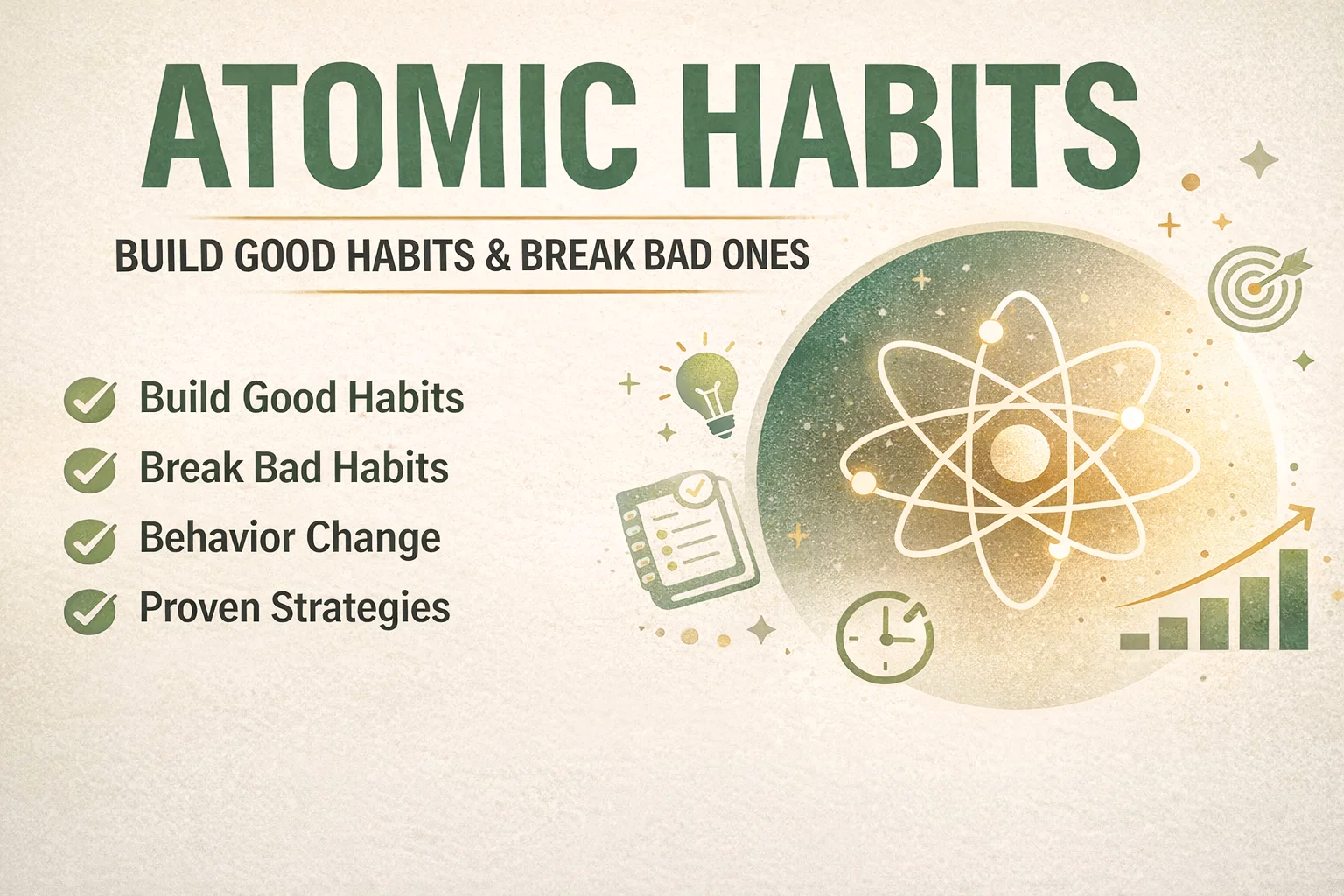
Success is often portrayed as a grand, overnight transformation. We see the athlete standing on the podium or the investor with a massive portfolio and assume it was a single moment of brilliance that got them there. However, James Clear’s groundbreaking work in Atomic Habits reveals a much different and more accessible truth. Real change is the result of hundreds of tiny decisions that compound over time. By focusing on systems rather than goals, we can reshape our identity and achieve results that once seemed impossible.
The Power of the 1% Rule in Personal Growth
One of the most profound concepts presented by James Clear is the idea of the 1% rule. The premise is simple but mathematically explosive. If you can get just 1% better at a specific skill or habit every single day for a year, you will end up thirty seven times better by the time the twelve months are up. Conversely, if you get 1% worse each day, you will decline nearly down to zero.
In the world of the stock market and financial planning, this is known as compounding interest. Just as a small amount of capital can grow into a fortune over decades, small improvements in your daily routine can lead to a massive shift in your capabilities. This rule takes the pressure off of making massive, unsustainable leaps and encourages a slow, steady, and manageable pace of improvement.
Systems Over Goals: Why Your Strategy Matters
Most people start their journey by setting a goal. They want to lose twenty pounds, write a book, or earn a specific amount of money in the market. While goals are useful for setting a direction, they are actually quite poor for making progress. James Clear argues that winners and losers often have the same goals. The difference lies in their systems.
The Problem with Goal-Oriented Thinking
When you focus solely on a goal, you are in a state of constant failure until you reach that milestone. If you reach it, you often lose the motivation to continue because the objective has been met. This creates a “yo-yo” effect where people work hard, hit a target, and then immediately slide back into old habits.
Building Sustainable Systems
A system is the collection of daily processes that lead to an outcome. If you are an investor, your goal might be to have a million dollar portfolio, but your system is how often you research stocks, how much you save every month, and how you manage risk. By falling in love with the system rather than the goal, you ensure long term success that persists even after milestones are reached.
The Four Laws of Behavior Change
To truly understand how to build a new habit or break a bad one, we have to look at the neurological loop of human behavior. James Clear breaks this down into four simple steps: Cue, Craving, Response, and Reward. To create a good habit, you must make it obvious, attractive, easy, and satisfying. To break a bad habit, you simply flip these laws.
- Make it Obvious: Design your environment so that the cues for your good habits are right in front of you. If you want to read more, put a book on your pillow.
- Make it Attractive: Pair a habit you need to do with a habit you want to do. This is known as temptation bundling.
- Make it Easy: Reduce friction. If you want to go to the gym, pack your bag the night before. The easier the start, the more likely you are to follow through.
- Make it Satisfying: Give yourself an immediate reward. The human brain evolved to prioritize immediate returns over delayed ones.
Identity-Based Habits: Changing Who You Are
Many people fail at habit formation because they focus on what they want to achieve. This leads to outcome-based habits. A more effective way to change is to focus on who you wish to become. This is identity-based habit formation. Instead of saying “I am trying to run a marathon,” you say “I am a runner.”
Every action you take is a vote for the type of person you want to become. If you want to be a successful stock market investor, every time you read a financial report or study a company’s fundamentals, you are casting a vote for that identity. Over time, these small votes add up to a new self-image, making it much easier to stick to your routines because they are now a part of who you are.
The Art of Habit Stacking
One of the most practical tools in the Atomic Habits toolkit is habit stacking. This technique involves taking a current habit that you already do every day and “stacking” a new habit on top of it. The formula is: “After [Current Habit], I will [New Habit].”
Examples of Habit Stacking
If you want to start a daily gratitude practice, you might say, “After I pour my first cup of coffee in the morning, I will name one thing I am grateful for.” Because the coffee is already an established part of your day, the new habit hitches a ride on an existing neurological pathway. This reduces the mental energy required to remember the new task.
The Goldilocks Rule for Staying Motivated
Motivation is a fickle thing. We often lose it because a task is either too boring or too difficult. The Goldilocks Rule states that humans experience peak motivation when working on tasks that are right on the edge of their current abilities. Not too hard, not too easy, but just right.
If you try to learn everything about the stock market in one weekend, you will likely get overwhelmed and quit. However, if you spend fifteen minutes a day learning one new financial term, you stay in that sweet spot of growth. This keeps you engaged and prevents the burnout that comes from trying to do too much too soon.
Environment Design: Your Secret Weapon
We like to think we have a lot of willpower, but the truth is that our environment often dictates our behavior. If you want to eat healthier but your kitchen is full of junk food, you will eventually give in. James Clear suggests that we should be the designers of our world, not just the consumers of it.
Optimizing Your Workspace
If your goal is focused work or better financial management, create a space that reflects that. Remove distractions like your phone and make the tools you need for success easily accessible. When the environment is set up for success, good habits become the path of least resistance.
The Two Minute Rule: Stop Procrastinating
Procrastination often happens because the task ahead of us feels monumental. The Two Minute Rule states that when you start a new habit, it should take less than two minutes to do. The point is not to do the whole task, but to master the art of showing up.
If you want to write a book, start by writing one sentence. If you want to do yoga, just roll out the mat. Once you start, it is much easier to keep going. You cannot optimize a habit that does not exist, so focus on the “gateway habit” first.
Habit Tracking and Accountability
The final piece of the puzzle is tracking your progress. A habit tracker is a simple way to measure whether you did a habit. It provides a visual cue that reminds you to act and gives you a small hit of satisfaction when you cross it off the list. It also helps you “not break the chain,” which is a powerful psychological motivator.
Using Accountability Partners
Sometimes, we need an extra push. An accountability partner or a habit contract can provide the social pressure needed to stay on track. Knowing that someone else is watching your progress or that there is a “cost” to failing can be the difference between sticking to a plan and giving up when things get tough.
Conclusion: The Long Road to Remarkable Results
Building atomic habits is not about perfection; it is about persistence. It is about understanding that the small things you do every day matter more than the big things you do once in a while. Whether you are applying these principles to your health, your relationships, or your stock market investments, the strategy remains the same.
Focus on your systems, design your environment, and never underestimate the power of a 1% improvement. By mastering these small routines, you are not just changing what you do, you are changing who you are. The results may not appear overnight, but with time, they will be nothing short of remarkable. Start your first two minute habit today and watch how your life begins to transform.