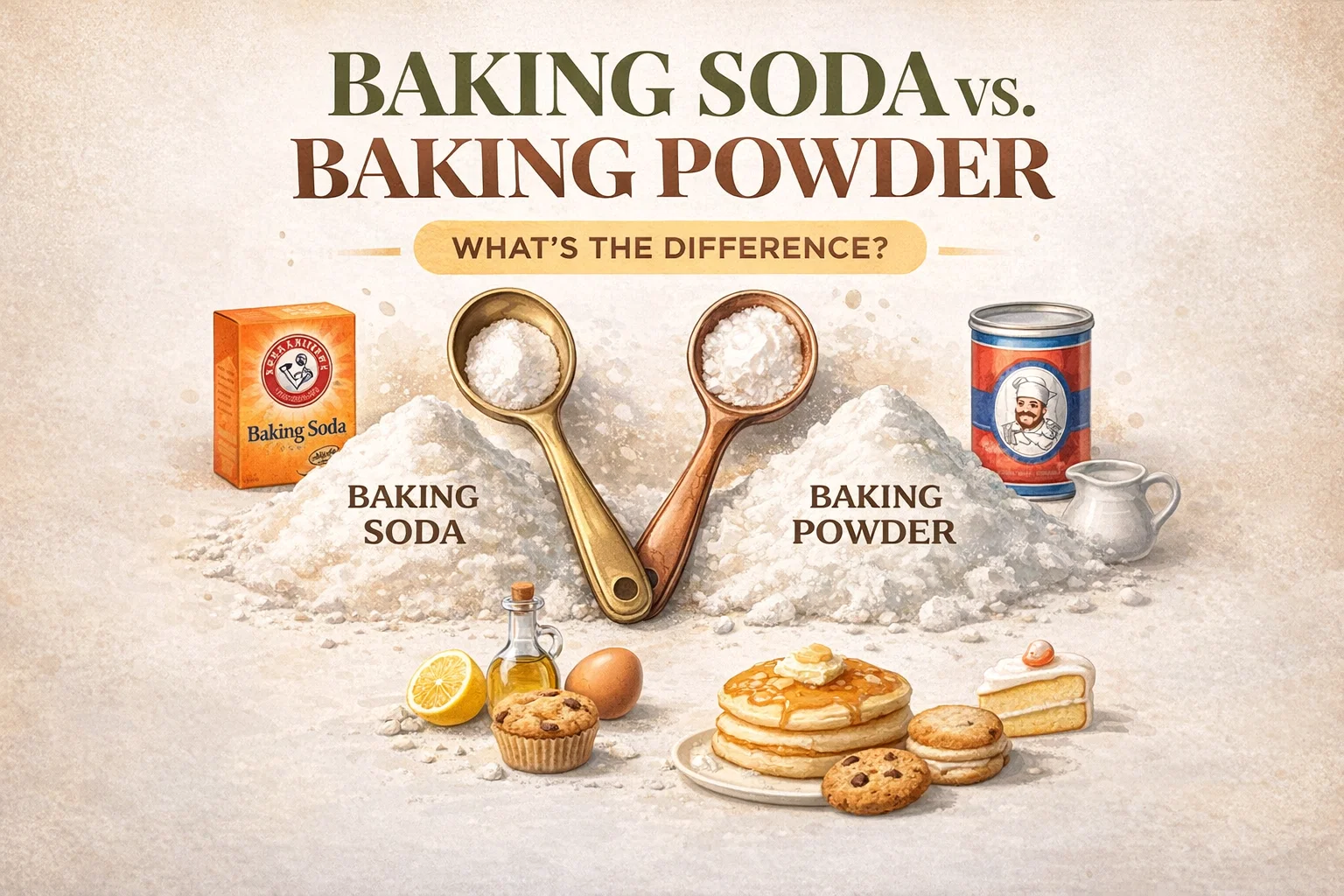
Baking Soda vs. Baking Powder The Ultimate Guide for Perfect Cookies, Cakes Muffins
The magic of baking often feels like a series of happy accidents, but behind every perfectly risen cupcake and every chewy chocolate chip cookie lies a precise scientific reaction. If you have ever stared at a recipe wondering if you could just swap baking soda for baking powder because your pantry was bare, you are not alone. It is one of the most common questions in the kitchen, and the answer can be the difference between a culinary masterpiece and a flat, bitter disappointment. Understanding the unique personalities of these two white powders is the first step toward becoming a more confident and successful baker.
The Chemistry of Rise: What is Leavening?
To understand the difference between baking soda and baking powder, we first need to talk about leavening. In the world of baking, a leant is a substance that causes dough or batter to expand by releasing gas. This gas, usually carbon dioxide, becomes trapped in the structure of your bake, creating those beautiful little air pockets that give cakes their fluff and bread its crumb. While yeast is a biological leavener that takes hours to work, baking soda and baking powder are chemical leaveners that work almost instantly. They are the workhorses of quick breads, muffins, and cookies.
Baking Soda: The Pure Powerhouse
Baking soda is the minimalist of the baking world. Chemically known as sodium bicarbonate, it is a base that is naturally alkaline. On its own, baking soda is relatively inert, but the moment it meets an acid and a liquid, it triggers a chemical reaction that produces carbon dioxide bubbles. This reaction happens fast, which is why you often see recipes instructing you to get your batter into the oven quickly after mixing.
The Role of Acids
Because baking soda is a base, it requires an acidic partner to do its job. Common acidic ingredients in your kitchen include buttermilk, yogurt, lemon juice, vinegar, honey, molasses, applesauce, and even natural cocoa powder. When the soda and acid combine, they neutralize each other. This is crucial because if you have too much baking soda and not enough acid, the leftovers will leave your baked goods with a metallic or soapy aftertaste.
Beyond the Rise: Browning and Texture
Baking soda does more than just lift your dough. It also raises the pH level of the batter, which weakens the gluten. This results in a more tender, chewy texture, which is exactly why it is the star ingredient in most cookie recipes. Additionally, a higher pH environment encourages the Maillard reaction, the chemical process responsible for that deep, golden-brown crust and complex toasted flavor we all love.
Baking Powder: The Complete Package
If baking soda is a solo artist, baking powder is the whole band. It actually contains baking soda, but it also comes pre-packaged with a built-in acid, usually cream of tartar, and a stabilizer like cornstarch to keep the two from reacting while sitting in the tin. Because it has its own acid, you do not need to worry about adding buttermilk or lemon juice to get a reaction. All it needs is moisture to get the party started.
Understanding Double-Acting Baking Powder
Most baking powder you find in the grocery store today is labeled as double-acting. This is a game-changer for home bakers. It means the powder reacts twice: first, when it is mixed with liquid at room temperature, and second, when it is exposed to the heat of the oven. This second burst of gas provides a safety net, ensuring your cakes get a final push of volume even if you were a little slow getting the pans into the heat.
When to Use Baking Powder
Baking powder is generally the go-to for recipes that do not have a strong acidic component, such as a classic vanilla sponge or light biscuits. Since it is already neutralized, it does not significantly affect the flavor or the browning as much as baking soda does. It is designed for height, lightness, and a clean finish.
The Great Comparison: Key Differences at a Glance
While they look identical to the naked eye, their roles are distinct. Here is a quick breakdown to help you keep them straight:
- Ingredients: Baking soda is 100 percent sodium bicarbonate. Baking powder is a mixture of sodium bicarbonate, an acidifying agent, and a drying agent.
- Reaction Trigger: Baking soda needs an external acid and liquid. Baking powder only needs liquid and heat.
- Potency: Baking soda is significantly stronger, roughly three to four times more powerful than baking powder. You generally need much less of it to achieve the same amount of lift.
- Result: Baking soda promotes browning and chewiness. Baking powder promotes volume and a light, airy texture.
Why Do Some Recipes Use Both?
You might find yourself looking at a recipe for blueberry muffins or gingerbread and noticing that it calls for both baking soda and baking powder. This is not a mistake! Often, a recipe has an acidic ingredient for flavor, like sour cream or fruit, but that acid is not quite strong enough to provide all the lift the recipe needs. In this case, the baking soda neutralizes the acid and adds some tenderness, while the baking powder steps in to provide the heavy lifting required for a tall, domed muffin top.
Balancing Flavor and Lift
Another reason to use both is to control the browning. If a baker wants a cookie to be extra dark and crispy but also needs it to hold its shape, they might use a pinch of soda for the color and powder for the structure. It is all about finding the perfect equilibrium between chemistry and taste.
Testing for Freshness: The Pantry Check
There is nothing more frustrating than spending an hour on a cake only to have it come out of the oven like a pancake. Both of these leaveners lose their potency over time, especially if they are exposed to humidity. It is a good rule of thumb to replace them every six to twelve months, but you can easily test them at home.
How to Test Baking Soda
Place a small spoonful of baking soda in a bowl and add a splash of vinegar or lemon juice. If it fizzes vigorously immediately, it is still active and ready for your cookies. If it just sits there with a few lazy bubbles, it is time to toss it.
How to Test Baking Powder
Place a small spoonful of baking powder in a bowl and add a splash of warm water. Since baking powder contains its own acid, it should bubble up right away. If the water stays calm, your baking powder has expired.
Can You Substitute One for the Other?
While it is always best to follow a recipe exactly, kitchen emergencies happen. You can substitute baking powder for baking soda, but because it is less potent, you will need to use about triple the amount. Keep in mind this might add a slightly bitter taste because of the extra cream of tartar. Substituting baking soda for baking powder is much trickier because you must add an acid to make it work. A general rule is to use one fourth teaspoon of baking soda plus half a teaspoon of cream of tartar for every teaspoon of baking powder required.
Pro Tips for Better Baking
To get the most out of your leaveners, keep these professional tips in mind. Always whisk your dry ingredients together thoroughly before adding the wet ones. This ensures the leavening agent is evenly distributed, preventing huge holes in one part of your cake and a flat dense spot in another. Also, avoid over-mixing your batter once the flour and leaveners are in. Over-mixing develops gluten, which can trap the gas so tightly that the cake becomes tough rather than fluffy.
Storage Matters
Keep your containers tightly sealed in a cool, dry place. The back of a dark pantry is much better than a shelf right above the steaming stove. Moisture is the enemy of leavening, and even the steam from boiling pasta can start the chemical reaction inside the box before you even measure it out.
Wrapping Up Your Baking Journey
Mastering the science of baking soda and baking powder is like unlocking a secret level of culinary skill. Once you understand how these ingredients interact with acids, heat, and moisture, you stop following recipes blindly and start understanding the “why” behind every step. Whether you are aiming for the perfect chewy edge on a sugar cookie or the lightest, most ethereal sponge cake, these two humble powders are your best friends in the kitchen. Next time you reach into your pantry, you can do so with the confidence of a true kitchen chemist. Happy baking!