Banana Ripeness Guide Health Benefits of Green vs Yellow vs Spotted vs Brown Bananas
Have you ever stood in the produce aisle, staring at a bunch of bananas, and wondered which ones are actually the best for your health? Most of us grab the brightest yellow bunch we can find, but it turns out that the color of your banana tells a much deeper story than just how long it has been sitting on the shelf. From the firm, green stages to the soft, brown freckled ones, each level of ripeness offers a completely different set of nutritional benefits and culinary uses. Understanding the lifecycle of this popular fruit can help you optimize your digestion, manage your blood sugar, and even improve your baking results.
The Science of Banana Ripening
To understand why a green banana feels and tastes so different from a brown one, we have to look at the biological process of ripening. Bananas are climacteric fruits, which means they continue to ripen after being picked from the tree. This process is driven by a natural plant hormone called ethylene gas. As the banana matures, the enzymes within the fruit begin to break down complex starches into simple sugars like glucose, fructose, and sucrose.
This chemical transformation is responsible for the shift in texture and flavor. In the early stages, the fruit is packed with resistant starch, which makes it firm and less sweet. As it progresses toward yellow and eventually brown, that starch is almost entirely converted into sugar, making the fruit soft, aromatic, and incredibly sweet. This transition is not just about taste; it significantly impacts how your body processes the fruit and what nutrients are most bioavailable at any given time.
The Green Stage: A Powerhouse for Gut Health
Green bananas are often overlooked because they are difficult to peel and have a slightly bitter, starchy flavor. However, from a clinical nutrition standpoint, they are a hidden gem. The primary benefit of a green banana is its high concentration of resistant starch. Unlike regular starch, resistant starch is not broken down in the small intestine. Instead, it travels to the large intestine where it acts as a prebiotic, feeding the beneficial bacteria in your microbiome.
Digestive Benefits of Green Bananas
- Better Blood Sugar Control: Because the starch hasn’t turned into sugar yet, green bananas have a very low glycemic index. This makes them an excellent choice for anyone monitoring their insulin levels or looking for sustained energy without a sugar crash.
- Weight Management: Resistant starch is highly satiating. Eating green or slightly under-ripe bananas can help you feel full for longer periods, reducing the urge to snack between meals.
- Probiotic Support: By feeding your gut flora, green bananas help maintain a healthy intestinal lining and can improve overall nutrient absorption.
While you might not want to eat a completely green banana raw, they are fantastic when sliced into smoothies or used in savory cooking. In many cultures, green bananas are treated more like a vegetable, similar to a potato, and are boiled or fried to create hearty, nutritious side dishes.
The Yellow Stage: The Ultimate Quick Energy Source
The bright yellow banana is the gold standard for most consumers. At this stage, the fruit has found a perfect balance between starch and sugar. It is easy to peel, has a pleasant creamy texture, and provides a classic sweet flavor that most people enjoy. Nutritionally, the yellow banana is a powerhouse of essential minerals, most notably potassium and magnesium.
Why Yellow Bananas are the Perfect Snack
Yellow bananas are the ultimate fuel for athletes and busy professionals. Because some of the starch has converted to sugar, your body can access the energy more quickly than it can with a green banana. However, there is still enough fiber present to prevent an immediate spike and drop in energy. This makes them the perfect pre-workout or post-workout snack to replenish glycogen stores and prevent muscle cramping.
Furthermore, yellow bananas are very easy to digest. They are often recommended as part of the BRAT diet (Bananas, Rice, Applesauce, Toast) for individuals recovering from stomach upsets. They provide a gentle way to get calories and electrolytes into the system without straining the digestive tract.
The Spotted Stage: The Peak of Antioxidants
When those little brown spots start to appear on the yellow peel, many people think the banana is going bad. In reality, these spots are a sign that the banana is reaching its peak nutritional value in terms of immune support. As a banana ripens and develops spots, it produces a substance called Tumor Necrosis Factor (TNF). This is a protein that helps the body identify and fight abnormal cells, including those that are cancerous.
The Benefits of Spotted Bananas
- Immune System Boost: The higher the number of dark spots, the more the banana helps in strengthening your immune system.
- Higher Antioxidant Levels: As the chlorophyll breaks down, the level of antioxidants in the fruit increases. These antioxidants help fight oxidative stress and inflammation in the body.
- Easier Digestion: For those with sensitive stomachs, a spotted banana is even easier to digest than a plain yellow one because the starches are almost fully broken down.
Spotted bananas are exceptionally sweet, making them a great natural sweetener for oatmeal, yogurt, or pancakes. If you find your bananas are spotting faster than you can eat them, this is the perfect time to peel them and freeze them for later use in creamy, dairy-free “nice cream.”
The Brown Stage: The Baker’s Secret Ingredient
A fully brown banana might look unappealing to eat fresh, but it is a treasure in the kitchen. When the skin turns brown or even black, the fruit inside has reached its maximum sugar content and lowest nutrient value in terms of vitamins, but it has become a concentrated source of flavor and moisture. At this point, the banana is essentially a natural syrup contained within a peel.
Using Brown Bananas in the Kitchen
There is a reason why every great banana bread recipe calls for overripe bananas. The high sugar content ensures that your baked goods will be sweet without needing as much added refined sugar. Additionally, the soft, almost liquid consistency of a brown banana acts as a fantastic binding agent, which is why they are so popular in vegan baking as an egg substitute.
While they may have lost some of the vitamin C and fiber found in their greener counterparts, brown bananas still retain their potassium and are much easier for the body to process quickly. They are the ideal ingredient for muffins, pancakes, and even homemade energy bars.
How to Store Bananas for Every Stage
Managing the ripening process is an art form. If you want to slow down the ripening of your yellow bananas, keep them in a cool, dark place away from other fruits. You can also wrap the stems in plastic wrap to minimize the escape of ethylene gas, which is where most of the gas is released. Conversely, if you have green bananas that you need to ripen quickly, placing them in a brown paper bag with an apple or a tomato will concentrate the ethylene and speed up the process significantly.
For those who hate food waste, the freezer is your best friend. Once a banana reaches the spotted or brown stage, you can peel it, break it into chunks, and store it in a freezer-safe bag. These frozen chunks are perfect for creating thick, frosty smoothies that taste like a milkshake but provide all the benefits of real fruit.
Making the Right Choice for Your Lifestyle
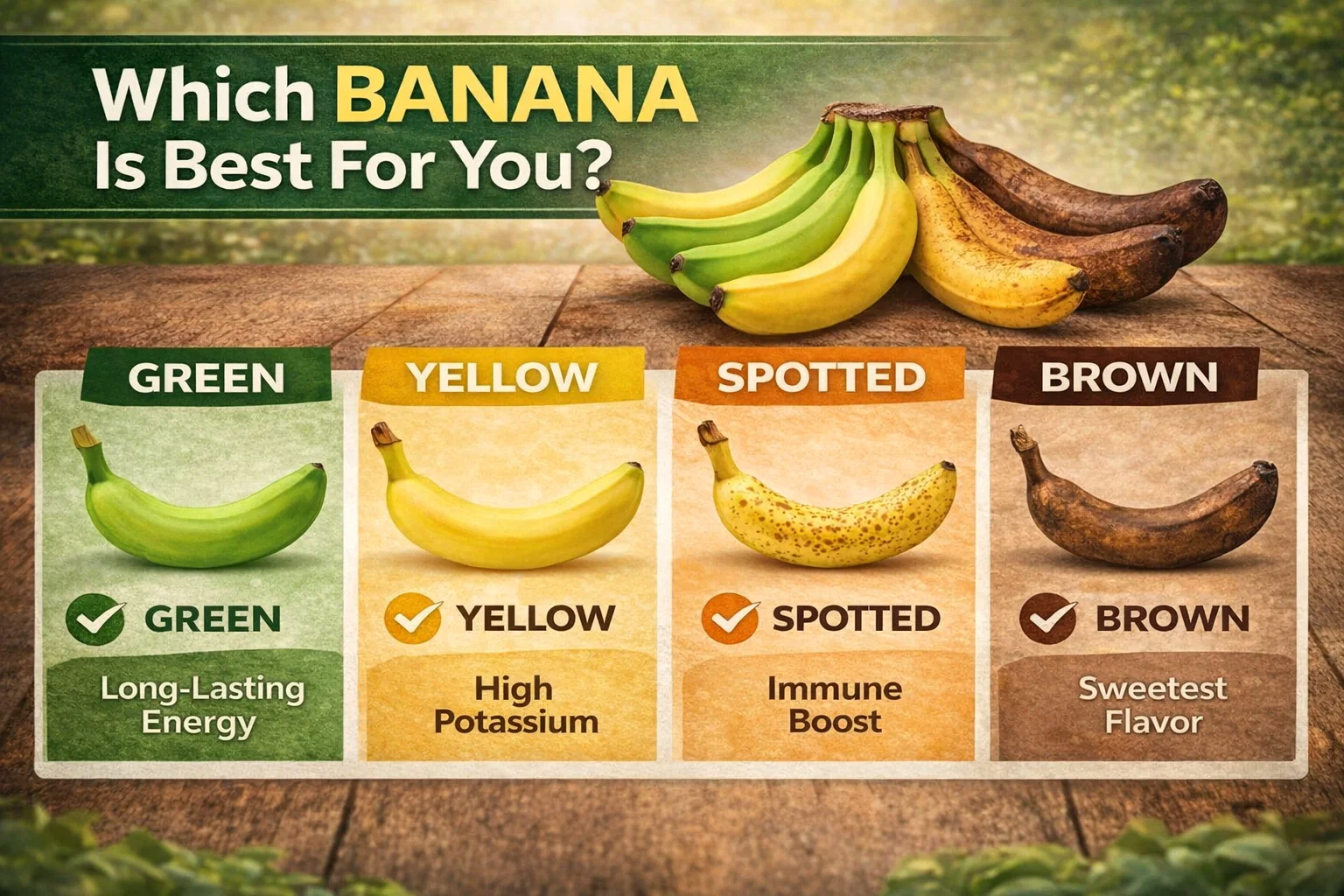
So, which banana should you choose? The answer depends entirely on your personal health goals and your plans for the day. If you are looking for weight loss or better gut health, aim for the greener side of the spectrum. If you need a quick burst of energy before hitting the gym, a bright yellow banana is your best friend. If you feel like your immune system needs a little extra help, look for those dark spots. And finally, if it is Sunday morning and you want to treat the family to the best pancakes of their lives, go for the brownest ones in the bowl.
Summary of Benefits by Color
- Green: High in resistant starch, great for gut health and blood sugar stability.
- Yellow: Balanced fiber and sugar, high in potassium, perfect for daily snacking.
- Spotted: Peak antioxidant and TNF levels for immune support and easy digestion.
- Brown: Maximum sweetness and moisture, ideal for baking and natural sweetening.
Conclusion
The humble banana is one of the most versatile and nutritionally complex fruits available to us. By paying attention to the color of the peel, you can tailor your fruit intake to match your body’s specific needs at any given moment. Instead of seeing a darkening banana as something that is “spoiling,” start seeing it as a fruit that is simply changing its nutritional profile to offer you something different. Whether you are seeking the prebiotic power of a green banana or the antioxidant punch of a spotted one, there is no wrong way to enjoy this tropical superfruit. Next time you are at the store, consider buying a variety of ripeness levels so that you have the perfect banana ready for every occasion throughout the week.