Best Daily Pose for a Slimmer Waist and Flat Stomach in 5-10 Minutes
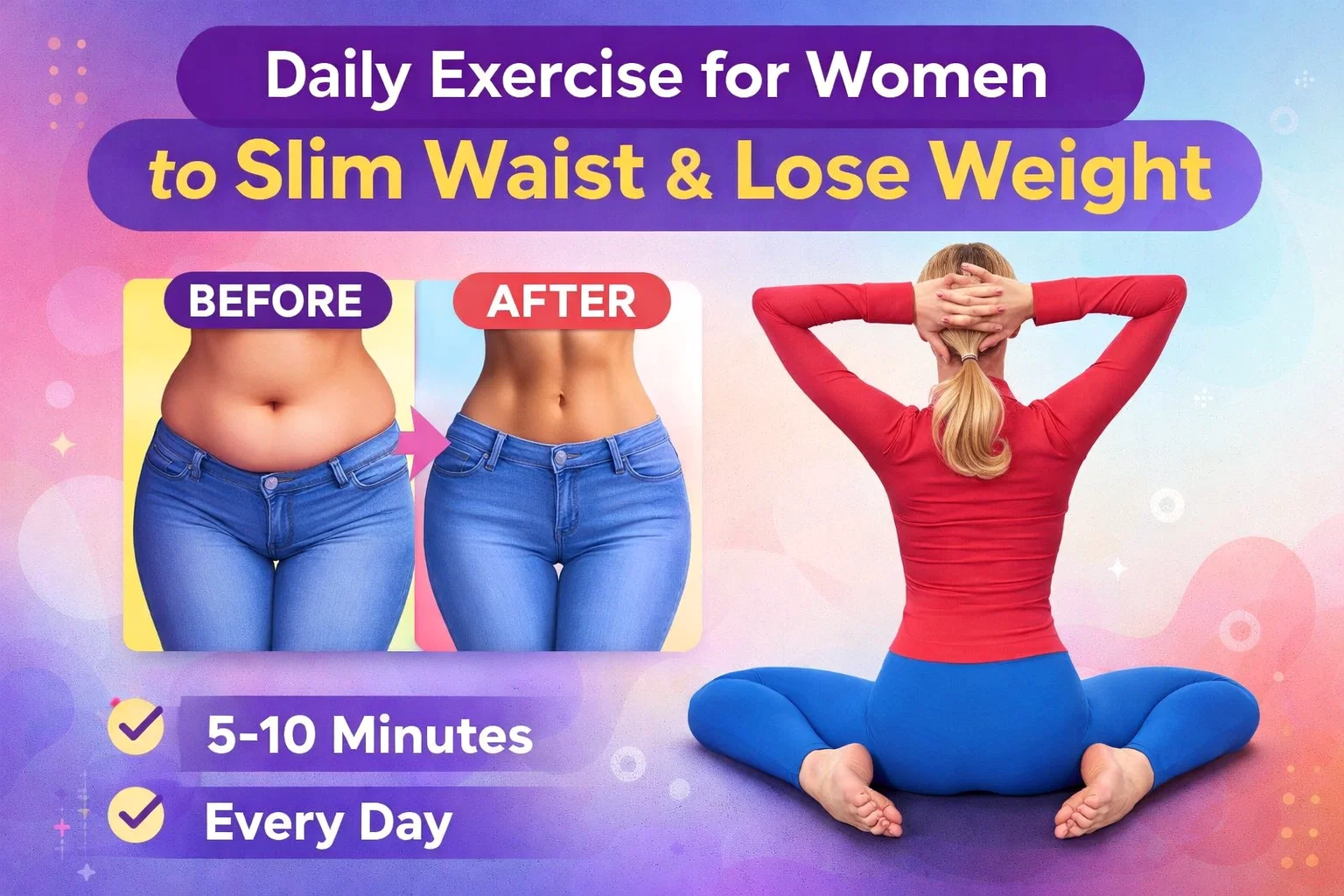
Finding that perfect exercise routine feels like chasing a mirage sometimes, doesn’t it? We want results, and we want them quickly, but our busy lives often refuse to cooperate. If you’ve been scrolling endlessly through social media or fitness blogs, hoping to find a simple yet potent solution for targeting your midsection and toning your waist, your search might just be over. Look at that compelling “before and after” comparison in the visual above. It promises a visible transformation, and the beauty is that it doesn’t require expensive equipment or a grueling hour at the gym. What if I told you that dedication to just a specific five-to-ten-minute daily pose could unlock that progress?
This isn’t about an impossible “get thin quick” scheme. It’s about consistency, mindfulness, and the powerful synergy between flexibility and core engagement. Let’s dive deep into this fascinating approach, break down exactly what this exercise is doing, and show you why it’s a practice that truly deserves a place in your everyday life. Let’s unlock the potential hidden within a few moments of intentional movement.
Deconstructing the Vision: What the “Before and After” Represents
The split image at the top of the graphic is a powerful visual motivator, a digital carrot on a stick for anyone focused on physique goals. The “Before” side illustrates what many people consider a trouble spot – a slightly softer, less defined waistline. In contrast, the “After” image displays a distinctly more hourglass figure with noticeable abdominal definition. While it’s always important to remember that such dramatic photographic contrasts can be exaggerated by lighting, posture, and photographic editing, the concept being sold is irresistible: real, tangible change in your core area.
What this graphic is fundamentally tapping into is the common desire for targeted fat loss, sometimes called “spot reduction.” We often ask, “How can I lose fat right on my stomach?” It is a physiological reality that we cannot choose where our bodies lose fat first; that is determined primarily by genetics and hormones. However, what we can do is strategically strengthen and tone the underlying musculature and improve overall mobility, which dramatically alters the appearance and functionality of that entire area.
The visual serves as a promise, not that everyone will look identical to the “after” picture, but that dedicate practice focused on the core and waist will yield significant, measurable improvement. By strengthening the deep abdominal muscles and improving spinal alignment, we are essentially building a natural corset. This is why a simple pose can appear to “reduce” the stomach and waist – it isn’t just about melting fat; it’s about structural toning from the inside out.
Analyzing the Core Pose: The Butterfly Stretch Variant
The woman in the main picture is demonstrating a specific exercise that is a variant of the classic yoga Butterfly Pose (or Baddha Konasana, which translates to Bound Angle Pose), but with a significant modification in the upper body that dramatically shifts its focus and benefits. It’s important to analyze both components of this position to understand its full potential.
First, look at the base: she is sitting upright with the soles of her feet pressed together and her knees splayed wide, creating the butterfly shape. In the traditional pose, you often grasp your feet and might fold forward. However, in this modified version, she is adding an isometric upper body component. Notice her hands are clasped firmly behind her head, and her elbows are pulled back, chest open. Her back is remarkably straight. This is not a passive stretch; it’s an active posture requiring significant engagement from the entire core complex.
The Lower Body: Hip Opening and Flexibility
The “butterfly” base is a cornerstone for flexibility in the hip flexors, adductors (inner thighs), and groin area. These regions are notoriously tight for many of us, especially if we spend long hours sitting at a desk or driving. Hip tightest doesn’t just limit mobility; it affects your entire kinetic chain. Tight hips can pull your pelvis out of alignment, which can lead to lower back pain and even prevent you from properly engaging your abdominal muscles during other exercises. By regularly practicing this wide, grounded stance, you are actively releasing tension and building a foundation of functional flexibility that supports all your other movements.
The Upper Body: Correcting Posture and Spinal Extension
Now, let’s look at the crucial modification: the clasped hands. This position forces your chest to open and pulls your shoulder blades back toward each other. In a world where we spend so much time hunched over phones and computers, this pose is a brilliant antidote. It fights the rounded-shoulder (kyphotic) posture that so many of us fall into. By lifting your chest and aligning your head, you immediately create the appearance of a taller, slimmer torso. Good posture itself reduces the look of a pot belly by preventing your abdomen from spilling forward.
The Hidden Powerhouse: How This Simple Pose Targets your Waist
The most important part of this exercise isn’t what it looks like, but what’s happening inside. Many abdominal exercises focus solely on the rectus abdominis (the visible “six-pack” muscle), which is responsible for crunching movements. While important, it doesn’t do much for reducing the size of your waistline or creating that sought-after tapered look. This pose, however, is a masterclass in engaging the deeper, stabilizing muscles that genuinely “cinch” your midsection.
The Transverse Abdominis: Your Natural Corset
Think of your waist not as just the front of your belly, but as a complete circumference. Running like a wide belt around your entire midsection is the deepest abdominal muscle, the transverse abdominis (TVA). The TVA is sometimes referred to as the body’s natural corset. Its primary job is not movement, but stability and compression. When the TVA is strong and properly activated, it pulls everything in and creates that tighter, more defined waistline. The unique combination of the butterfly base (stabilizing the pelvis) and the extreme spinal extension (opening the chest) creates a perfect environment to specifically target and strengthen this crucial muscle. You feel a deep, internal tightening across your entire abdomen – that’s the TVA at work.
The Obliques: Shaping the Sides
In addition to the TVA, this pose demands significant engagement from the oblique muscles (both internal and external), which are located on the sides of your abdomen. The obliques play a massive role in rotation, side-bending, and also core compression. In this position, as you resist the urge to slump and pull your chest upward, you are forcing your obliques to work statically to maintain that alignment. Think of them as the side panels of that natural corset; they help provide the lateral structure that shapes your waist.
Internal Compression and Deep Breathing
Another often-overlooked factor in waist appearance is internal organ health and breathing patterns. Deep, diaphragmatic breathing is a central component of any effective yoga or core-focused practice. When you breathe deeply, you’re not just moving air; you are massaging your internal organs, promoting better circulation and reduction of bloating. Furthermore, correct breathing patterns encourage deeper core activation. Learning to breathe into your ribcage rather than just your belly while holding this pose adds an entirely new level of effectiveness to the internal compression.
The 5-to-10 Minute Daily Habit: The Scientific Case for Consistency
One of the most appealing aspects of this graphic is the time commitment: just five-to-ten minutes per day. It seems almost too good to be true, doesn’t it? But there’s a compelling reason why a small, consistent effort often trumps a massive, irregular one. When you create a tiny, daily ritual, you create neurological pathways that make the behavior automatic. This is the science of habit formation.
A ten-minute exercise routine is something you can almost always squeeze in. You can do it when you first wake up, before you go to bed, or even during a commercial break. This small time investment significantly reduces the mental barrier to starting. The easier it is to begin, the more likely you are to actually do it. When you make it a daily practice, you aren’t reliant on a fleeting burst of motivation. Consistency is the magic ingredient that turns a “try once” activity into a lifestyle change.
Furthermore, from a physical perspective, shorter, more frequent stimuli are often more effective for neuromuscular activation and building motor patterns. By repeatedly activating these deep core muscles for just a few minutes every day, you are essentially “teaching” your body how to hold itself better. This improved engagement doesn’t stop after ten minutes; it begins to permeate your entire day, improving your posture and subconscious core awareness in everything you do. This is why small, daily efforts lead to such profound long-term changes.
Integration is Key: How to Build a Holistic Wellness Plan
While the visual promises great things from this single pose, the truth is that it shouldn’t be your entire fitness plan. It is a powerful component, a foundation, but for true, sustainable transformation, it needs to be integrated into a larger, holistic approach to your health. Let’s look at how to build upon this solid five-to-ten-minute daily practice.
A Solid Nutritional Foundation
You’ve probably heard the phrase “abs are made in the kitchen,” and while it’s a cliche, there’s a massive grain of truth to it. The “Before” picture often reflects a layer of subcutaneous fat over the abdominal muscles. No amount of exercise can spot-reduce that fat. The way to reveal the underlying definition that you’re building with this daily pose is through proper nutrition. A diet focused on whole, nutrient-dense foods, lean protein, healthy fats, and complex carbohydrates while managing overall caloric intake is non-negotiable for anyone looking to reduce body fat percentage and see significant definition. This daily pose strengthens the structure; nutrition reveals it.
Diversify Your Movement Portfolio
Your five-to-ten-minute daily pose is a fantastic foundation, but don’t stop there. To continue challenging your body, improving your metabolism, and achieving comprehensive fitness, you need variety. Complement your daily stretching and core work with other forms of movement, such as:
- Strength Training: Lifting weights or performing bodyweight resistance exercises is crucial for building muscle tissue. More muscle means a higher resting metabolic rate, which helps you burn more calories even at rest. Don’t just focus on the core; build full-body strength.
- Cardiovascular Exercise: Incorporate regular cardio, whether it’s low-intensity steady-state (like walking, cycling, or swimming) or high-intensity interval training (HIIT). Cardio improves heart health and is a powerful tool for overall calorie expenditure.
- Full-Body Mobility Work: While the butterfly pose variant is great for hip and upper body mobility, make sure to move your other joints through their full range of motion. Explore other yoga poses, dynamic stretches, or foam rolling.
The Powerful Conclusion: Reclaiming Your Core, One Minute at a Time
So, is the promise of that simple “before and after” graphic realistic? The answer is a resounding yes, but with the proper context. It’s realistic to expect significant improvement, visible toning, and improved function, especially if you focus on the often-ignored deep core muscles that this specific pose engages. It’s not magic, it’s physiology and consistency.
By dedicating just five-to-ten minutes a day, you are not just working toward a visual goal; you are actively investing in better posture, a stronger lower back, improved flexibility, and enhanced body awareness. You are building a foundation of wellness that supports you in every other activity you pursue. So, let’s stop searching for complicated, time-consuming solutions and embrace the profound power of a simple, potent, and regular practice. Lay down a mat, find that perfect upright pose, and start building your natural corset – one minute, one day, one breath at a time. The transformation starts within.