Best Foods for a Calm Nervous System Anti-Anxiety Diet Stress Relief Foods
Have you ever noticed how your body reacts when you are under pressure? Perhaps your heart races, your palms get sweaty, or you feel a persistent sense of dread in the pit of your stomach. These are all signals from your nervous system, the complex network that governs how you perceive and respond to the world. In our fast paced modern lives, many of us spend far too much time in a state of high alert, often referred to as the fight or flight response. While we cannot always control the external stressors of life, we have an incredible tool right at our fingertips that can help us regain balance: the food we eat.
The concept of eating for a calm nervous system is gaining massive traction in the wellness world, and for good reason. Nutritional psychiatry and functional medicine are revealing that the nutrients we consume directly influence our neurotransmitters, our gut microbiome, and our brain’s ability to recover from oxidative stress. By intentionally choosing specific whole foods, we can provide our bodies with the raw materials needed to soothe inflammation and support emotional regulation. Let us dive deep into the specific foods that can help you move from a state of chaos to a state of calm.
The Connection Between Nutrition and Your Nerves
Before we look at the specific ingredients, it is vital to understand why food matters for your nerves. Your nervous system relies on chemical messengers called neurotransmitters, such as serotonin, dopamine, and GABA, to communicate. To build these messengers, your body requires specific amino acids, vitamins, and minerals. If you are deficient in magnesium, for example, your muscles and nerves may stay in a state of tension. If you lack healthy fats, the protective coating around your nerves, known as the myelin sheath, can become compromised.
Furthermore, the gut brain axis is a two way street. The majority of your body’s serotonin is actually produced in the gut. This means that a healthy digestive system is a prerequisite for a happy mind. When we eat anti inflammatory foods, we reduce the physical stress on our internal organs, which in turn sends a signal of safety to the brain. Choosing the right foods is not just about physical health; it is about creating a biological environment where peace of mind is possible.
Leafy Greens and the Power of Magnesium
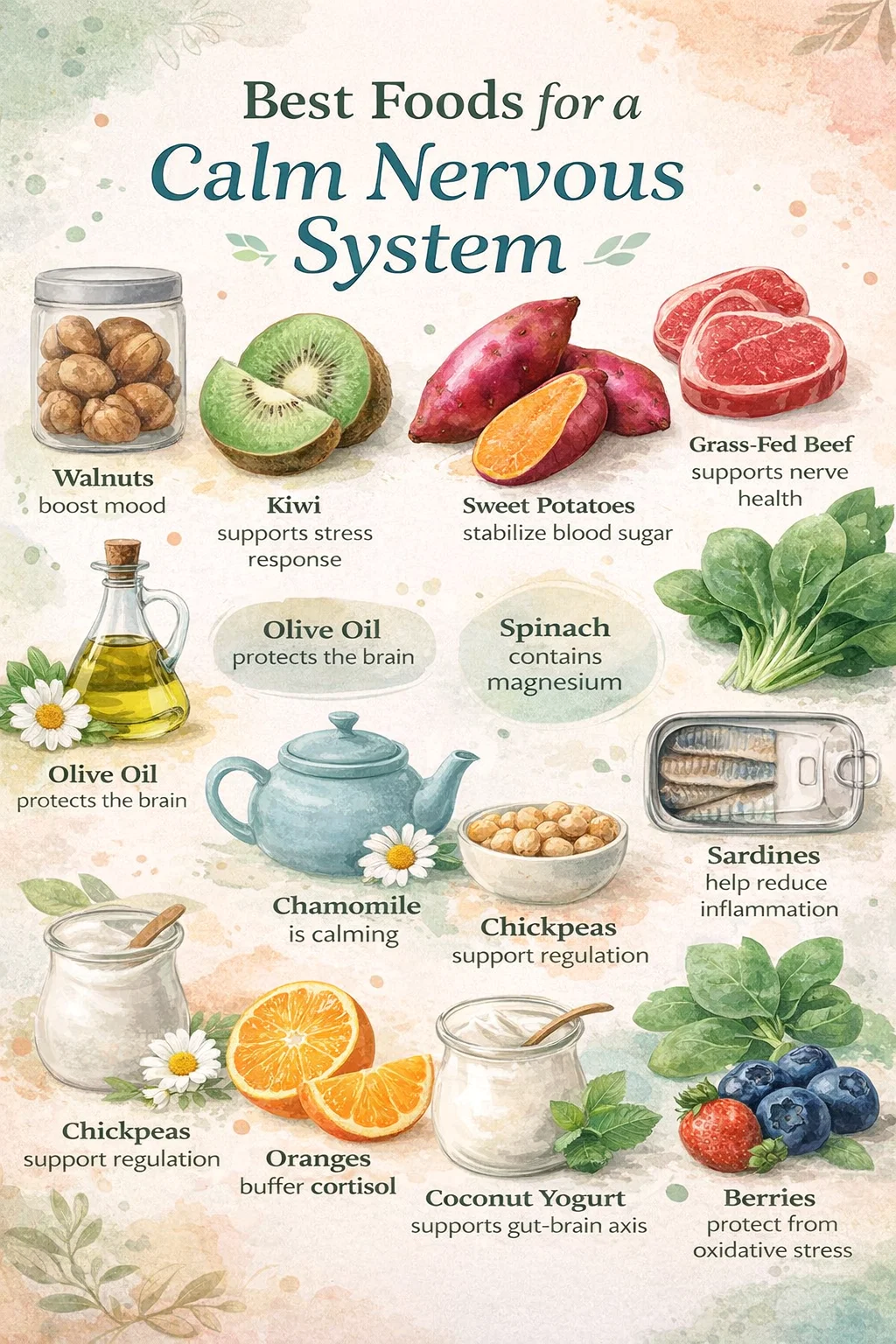
If there is one category of food you should prioritize for relaxation, it is leafy greens, specifically spinach. Spinach is a nutritional powerhouse that is exceptionally high in magnesium. Magnesium is often referred to as the relaxation mineral because it helps regulate the body’s stress response. It works by blocking stimulating neurotransmitters and binding to calm receptors in the brain, essentially acting as a natural brake for your nervous system.
When we are chronically stressed, our bodies deplete magnesium at a rapid rate. This can lead to a vicious cycle where low magnesium levels make us feel more stressed, which then lowers our levels even further. By incorporating a daily dose of spinach or other dark leafy greens, you are helping to calm stress signaling and promote a sense of physical ease. Try adding a handful to your morning smoothie or lightly sautéing it with garlic and olive oil for a quick side dish.
Healthy Fats for Brain Protection
Your brain is about 60 percent fat, so it makes sense that the quality of the fats you consume determines how well your brain functions. Olive oil is a cornerstone of the Mediterranean diet and is celebrated for its ability to support brain health and protect nerves. It is rich in polyphenols and monounsaturated fats that reduce oxidative stress in the brain, helping to maintain cognitive function even during periods of high pressure.
Another incredible source of healthy fats is walnuts. These nuts are unique because they contain a high concentration of DHA, a type of Omega 3 fatty acid that has been shown to boost mood and protect the brain from age related decline. Walnuts are a perfect snack for those moments when you feel your focus slipping or your anxiety rising. They provide a satisfying crunch and a dose of brain fuel that keeps your internal systems running smoothly.
The Role of Omega 3s in Reducing Neuroinflammation
While walnuts are great, animal based Omega 3s found in oily fish like sardines are particularly potent. Sardines are an underrated superfood for the nervous system. They are packed with EPA and DHA, which are essential for reducing neuroinflammation. Inflammation in the brain is a major contributor to feelings of anxiety and depression. By consuming sardines, you are providing your body with the tools to damp down that internal fire, leading to a more stable and resilient mood.
Root Vegetables and Blood Sugar Stability
Have you ever felt hangry? That irritability and shakiness come from a dip in blood sugar, which triggers a stress response in the body. Sweet potatoes are a fantastic food for preventing these spikes and crashes. Unlike refined carbohydrates, sweet potatoes provide a steady release of energy. They are also a great source of Vitamin B6, which is a key cofactor in the production of serotonin.
When your blood sugar is stable, your nervous system does not have to work as hard to maintain homeostasis. This stability allows you to approach challenges with a level head rather than reacting from a place of biological panic. Plus, the natural sweetness of a roasted sweet potato can satisfy cravings for sugar without the subsequent energy crash that usually follows a dessert.
Fruit for Cortisol Regulation
Vitamin C is often associated with the immune system, but it plays an equally important role in stress management. Oranges are famous for their Vitamin C content, which helps buffer cortisol, the body’s primary stress hormone. When you are under pressure, your adrenal glands use up Vitamin C very quickly. By replenishing this nutrient through fresh fruit, you can help bring your cortisol levels back to a healthy baseline more quickly.
Berries, such as blueberries and strawberries, are another essential fruit for a calm mind. They are loaded with antioxidants that protect the brain from oxidative stress. Think of berries as a shield for your neurons. Every time you face a stressful situation, your body produces free radicals. The antioxidants in berries neutralize these harmful molecules, ensuring that your nervous system stays healthy and resilient over the long term.
Kiwis for a Better Stress Response
Kiwis are often overlooked, but they are a hidden gem for mental health. Not only are they high in Vitamin C, but they also contain serotonin precursors that can help improve sleep quality. A well rested nervous system is a calm nervous system. By eating kiwis, you are supporting your body’s ability to recover overnight, making you less reactive to the stressors of the following day.
Probiotics and the Gut Brain Axis
The connection between your gut and your brain is facilitated by the vagus nerve, a major component of the parasympathetic nervous system. Coconut yogurt and other fermented foods are rich in probiotics that support a healthy gut microbiome. A diverse microbiome sends signals of safety and wellbeing to the brain, whereas a gut in dysbiosis can send signals of distress.
Choosing coconut yogurt is a great dairy free option that provides healthy medium chain triglycerides along with beneficial bacteria. This combination supports the gut brain axis, helping to regulate your mood from the inside out. When your digestion is functioning optimally, you are less likely to experience the physical discomfort that often mirrors or exacerbates feelings of anxiety.
Soothing Sips and Plant Based Proteins
Sometimes, the act of consuming something warm and comforting is enough to signal the nervous system to relax. Chamomile tea is a classic remedy for a reason. It contains an antioxidant called apigenin, which binds to certain receptors in your brain that may promote sleepiness and reduce insomnia. It is a GABA supportive herb, meaning it helps increase the activity of the primary inhibitory neurotransmitter that tells your brain to quiet down.
For more substantial nourishment, chickpeas are a wonderful addition to a calm diet. They are rich in fiber and protein, which supports blood sugar regulation, but they also contain tryptophan. Tryptophan is the amino acid that your body uses to produce serotonin. Incorporating chickpeas into salads, stews, or hummus is a delicious way to ensure your body has a steady supply of the building blocks needed for a happy, relaxed mind.
Ethical Choices: Grass Fed Beef
For those who include meat in their diet, grass fed beef can be a valuable source of nutrients for nerve health. It is significantly higher in Omega 3 fatty acids and Vitamin E than grain fed alternatives. More importantly, it is a rich source of Vitamin B12, which is essential for the health of your nervous system and the production of red blood cells. A deficiency in B12 can lead to feelings of fatigue, tingling in the limbs, and mood disturbances, so ensuring you have a high quality source is paramount for neurological wellbeing.
Conclusion: Building Your Path to Calm
Transforming your nervous system health does not happen overnight, but every meal is an opportunity to move in the right direction. By focusing on whole, nutrient dense foods like spinach, sweet potatoes, walnuts, and berries, you are giving your body the best possible chance to handle the pressures of modern life. Remember that wellness is not about perfection; it is about making consistent, nourishing choices that support your unique biology.
Start small by incorporating one or two of these foods into your daily routine. Perhaps you can swap your morning coffee for a cup of chamomile tea or add a handful of walnuts to your lunch. Over time, these small changes add up to a significant shift in how you feel and react to the world. Your nervous system is your gateway to experiencing life, so treat it with the care and nourishment it deserves. Here is to a calmer, more centered, and more vibrant you.