Best Homemade Tomato Soup Recipe Creamy Restaurant Style Easy 30-Minute Dinner Ideas
There is nothing quite like the aroma of simmering tomatoes, garlic, and onions wafting through a home on a chilly afternoon. Tomato soup is a universal symbol of comfort, a nostalgic dish that brings back memories of rainy days and grilled cheese sandwiches. While many of us grew up with the convenience of a red and white tin can, there is a world of difference when you step into the realm of a true restaurant style homemade version. This recipe transitions from a simple pantry staple to a gourmet experience by focusing on fresh ingredients and traditional cooking methods that emphasize depth and texture.
Making soup from scratch might seem like a daunting task for a busy weeknight, but this particular method proves that you can achieve professional results in about thirty minutes. By using fresh tomatoes and a few key aromatics, you create a base that is naturally vibrant and packed with vitamins. It is a wholesome way to feed your family while controlling exactly what goes into your pot. No preservatives, no hidden sugars, just pure, sun ripened flavor captured in a bowl.
The Essential Ingredients for a Richer Base
The secret to a soup that tastes like it came from a high end bistro lies in the quality of your starting components. While the list is short, each item plays a critical role in the final flavor profile. Let us break down why these specific ingredients matter and how they contribute to the overall success of your dish.
Fresh Tomatoes vs Canned Varieties
This recipe calls for five to six large, chopped tomatoes. Using fresh produce allows for a brighter, more acidic, and cleaner taste than canned alternatives. When tomatoes are cooked down, their natural sugars caramelize, providing a sweetness that balances the savory elements. If you are making this during the peak of summer, heirlooms or beefsteak tomatoes will offer incredible juice. In the winter months, Roma tomatoes are a reliable choice because they have a lower water content and a meaty texture that thickens the soup naturally.
The Power of Aromatics
Onion and garlic are the foundation of almost every great savory dish. Sautéing one small chopped onion in a tablespoon of high quality olive oil creates a sweet, translucent base. Adding two cloves of minced garlic toward the end of the sautéing process ensures that the garlic infuses the oil without burning. This step is where the “restaurant style” magic begins, as it builds layers of flavor that you simply cannot get from powdered spices alone.
Herbs and Seasonings
Dried basil and oregano are the classic Italian duo that gives this soup its Mediterranean flair. Basil provides a peppery sweetness, while oregano adds an earthy bitterness that cuts through the richness of the tomatoes. A teaspoon of sugar might seem unusual, but it is a professional trick used to neutralize the natural acidity of the tomatoes, making the soup smoother on the palate. Finally, vegetable stock provides the liquid body, ensuring the dish remains vegetarian friendly while adding more complexity than plain water would.
Step by Step Guide to a Velvety Texture
Execution is just as important as the ingredients. Following a specific order of operations ensures that every element is cooked perfectly and the textures are harmonized. Here is how you take those raw ingredients and transform them into a silky masterpiece.
- Sautéing for Flavor: Start by heating your olive oil in a heavy bottomed pot. Add your onions and garlic. The goal here is to soften them until they are fragrant and translucent. Do not rush this step, as undercooked onions can leave a crunchy texture in an otherwise smooth soup.
- The Simmering Process: Once your aromatics are ready, toss in your chopped tomatoes, tomato paste, basil, oregano, sugar, salt, and pepper. Adding the tomato paste here is crucial because it intensifies the color and adds a concentrated punch of umami. Pour in the vegetable stock and let everything simmer for fifteen to twenty minutes. This time allows the cell walls of the tomatoes to break down completely.
- The Transformation: After simmering, it is time to blend. Using an immersion blender is the easiest way to do this directly in the pot. If you prefer an ultra fine, restaurant quality silkiness, you can transfer the mixture to a high speed stand blender, but be careful with the hot liquid. Blend until no chunks remain.
- The Final Touch: Return the blended soup to the heat for another five minutes. This allows the flavors to settle and gives you a chance to do a final taste test. Does it need more salt? A bit more pepper? This final simmer is where you perfect the seasoning.
Elevating Your Presentation with Toppings
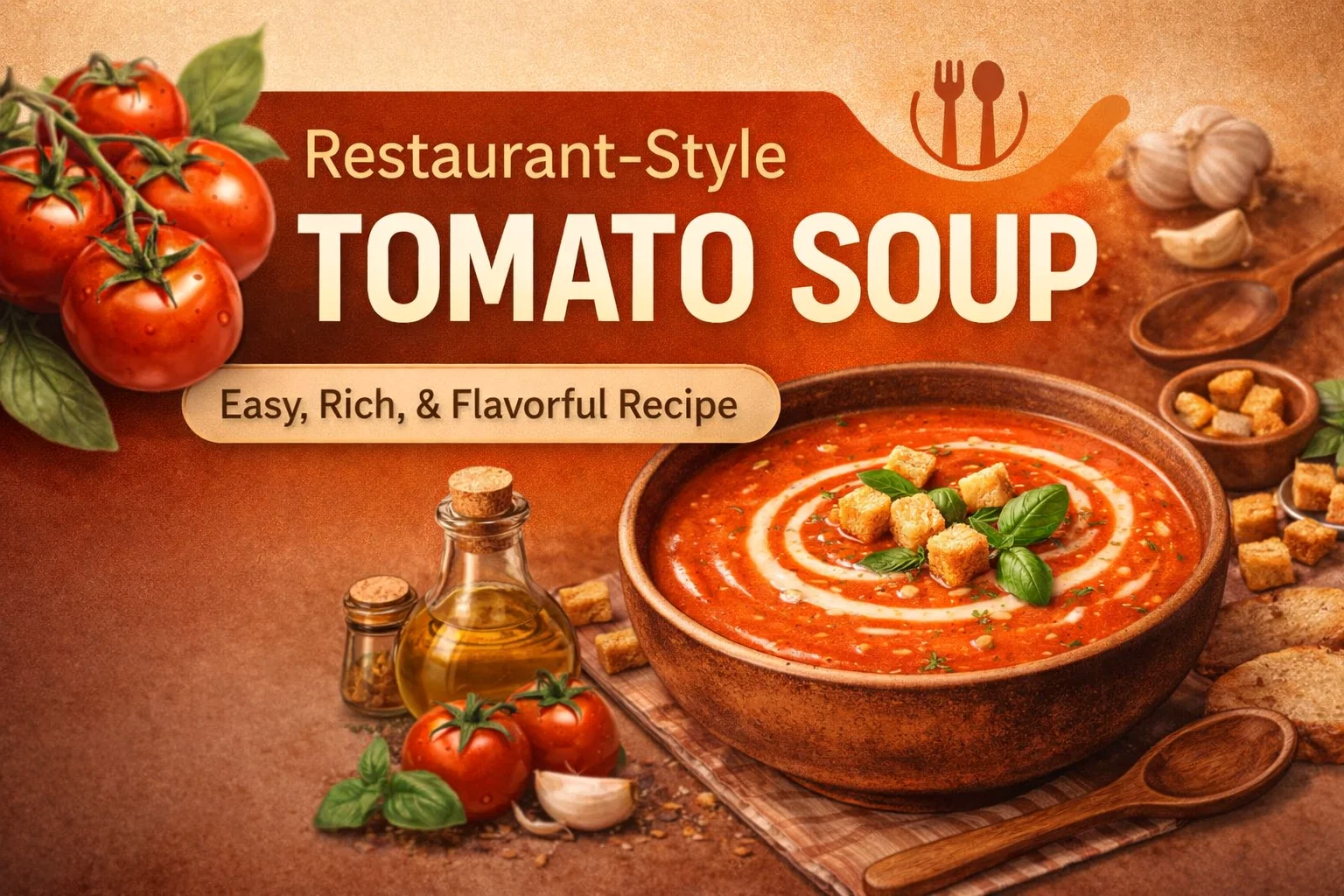
A great soup is often defined by its garnishes. In a restaurant setting, the presentation is what makes the meal feel special. You can easily replicate this at home to impress your guests or simply to make your own lunch feel like a treat. The image of a swirl of cream and a sprig of basil is not just for show; it adds functional flavor and texture.
Adding Creamy Contrast
A drizzle of heavy cream or a dollop of Greek yogurt provides a cooling contrast to the hot, acidic soup. It creates a beautiful visual swirl and adds a luxurious mouthfeel. For a dairy free option, a swirl of full fat coconut milk works exceptionally well and adds a very subtle sweetness that complements the basil.
Crunch and Freshness
Croutons are the classic companion for tomato soup. Whether you use store bought or toast your own cubes of sourdough in garlic butter, that crunch is essential. Finally, never underestimate the power of fresh herbs. Tearing a few leaves of fresh basil over the top just before serving provides an aromatic hit that dried herbs cannot match. It brightens the whole dish and makes the colors pop.
Why Homemade is Always Better
Choosing to make your own soup is a commitment to your health and your taste buds. When you look at the back of a standard soup can, you often find high levels of sodium, high fructose corn syrup, and various thickeners like cornstarch or flour. This recipe relies on the natural fiber of the tomatoes and the reduction of the stock to create thickness.
Furthermore, this is an incredibly budget friendly meal. Tomatoes, onions, and garlic are among the most affordable produce items available. By making a large batch, you can have healthy lunches for the entire week or freeze portions for those nights when you are too tired to cook. It is a sustainable way to eat that reduces packaging waste and puts you in control of your kitchen.
Pairing Suggestions for a Complete Meal
While a bowl of this tomato soup is satisfying on its own, it often serves as the centerpiece for a larger spread. If you are looking to turn this into a full dinner, consider these classic pairings:
- The Ultimate Grilled Cheese: Use a mix of sharp cheddar and gruyere on thick sliced brioche. The buttery, crispy bread is the perfect vessel for dipping into the soup.
- A Crisp Green Salad: Balance the cooked richness of the soup with a fresh arugula salad dressed in a light lemon vinaigrette.
- Focaccia Bread: A piece of rosemary focaccia is excellent for soaking up every last drop at the bottom of the bowl.
Conclusion
Mastering the art of the perfect tomato soup is a milestone for any home cook. It is a dish that proves you do not need expensive ingredients or complicated techniques to create something truly extraordinary. By focusing on fresh tomatoes, aromatic sautéing, and a careful blend, you can achieve a restaurant style result that far surpasses anything found on a grocery store shelf. This recipe is a celebration of simple, wholesome cooking that nourishes the body and warms the soul. So, grab your pot, chop those tomatoes, and get ready to enjoy the most comforting bowl of soup you have ever tasted. Save this recipe for your next rainy day or whenever you need a little bit of homemade magic in your kitchen.