Best Oils for Hair Porosity High, Medium Low Guide Glow Wmeli Hair Care Tips
Finding the perfect hair care routine often feels like an endless cycle of trial and error. You buy the latest trending oil, apply it with high hopes, and end up with either greasy strands or hair that still feels bone dry. The missing piece of the puzzle isn’t usually the product itself, but rather understanding your hair porosity. Hair porosity determines how your hair strands absorb and retain moisture, and using the wrong oils for your specific type can actually do more harm than good. By identifying whether you have high, medium, or low porosity, you can finally choose the right botanical allies to unlock your hair’s true potential and achieve that healthy, radiant glow you have always wanted.
What Exactly Is Hair Porosity?
Before diving into the specific oils, it is essential to understand the science behind the term. Hair porosity refers to the ability of your hair to soak up and hold onto moisture. This is determined by the condition of the cuticle, which is the outermost protective layer of the hair shaft. Think of the cuticle as shingles on a roof. In some people, these shingles lay flat and tight, while in others, they are lifted or even missing in certain areas.
Your porosity level is usually a mix of genetics and how you treat your hair. High heat, chemical processing, and environmental damage can lift the cuticles over time, changing your hair’s natural state. Knowing where you stand on the spectrum is the first step toward a customized regimen that actually works.
How to Identify High Porosity Hair
If your hair absorbs water almost instantly but feels dry again just a few minutes later, you likely have high porosity hair. In this state, the cuticles are widely spaced or even damaged, meaning moisture goes in easily but escapes just as fast. This hair type is often prone to frizz, tangles, and breakage because the internal structure is constantly exposed to the elements.
High porosity hair often feels rough to the touch and lacks a natural shine. It might be the result of frequent bleaching, high-heat styling, or even just your natural hair texture. Because the gaps in the cuticle are so large, your goal is to use heavier products that can fill those gaps and create a protective seal to keep hydration locked inside the strand.
The Best Oils for High Porosity Strands
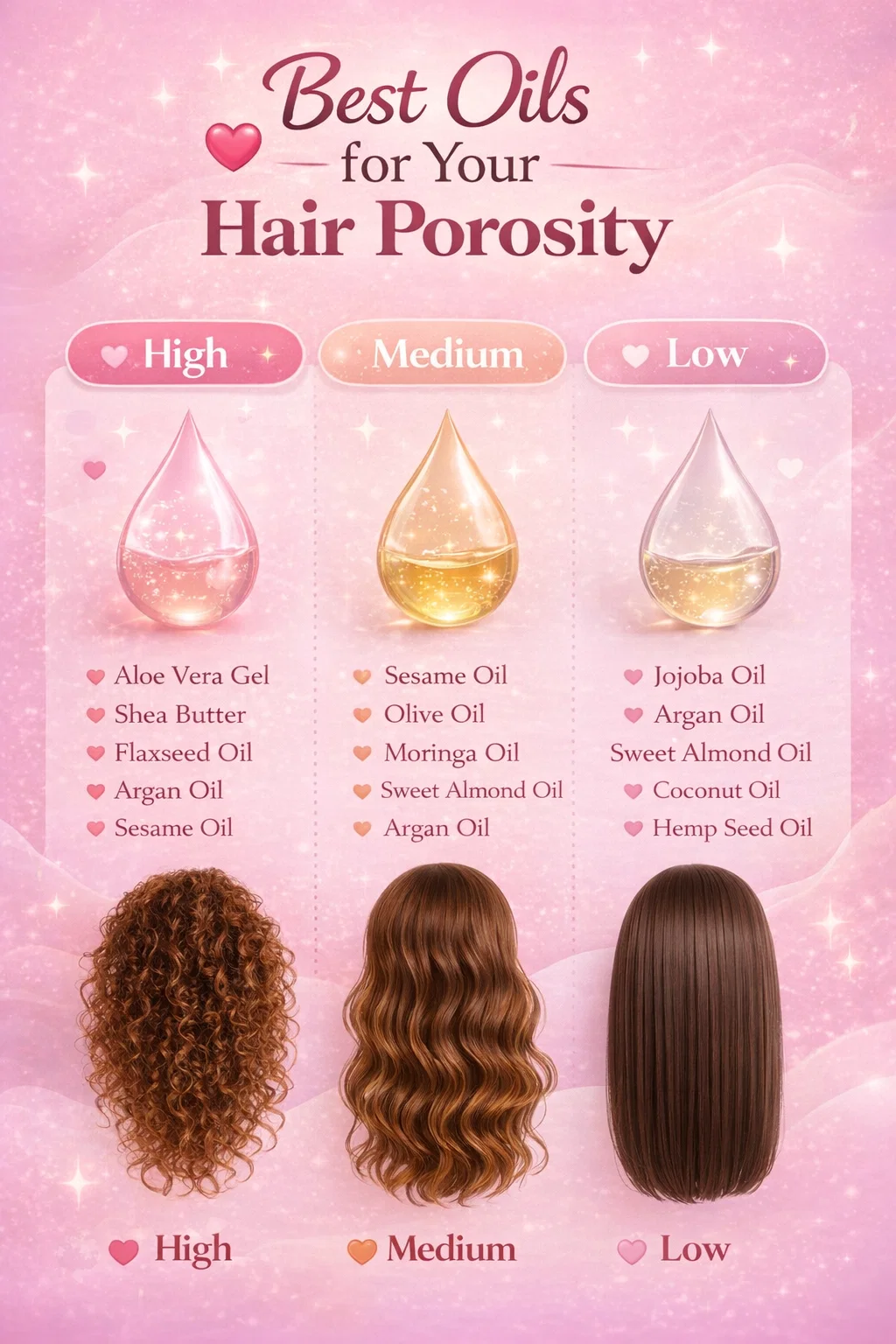
For high porosity hair, you need oils and butters that have a larger molecular size to bridge the gaps in your cuticles. These ingredients act as a physical barrier against moisture loss.
- Aloe Vera Gel: While technically a humectant, it helps to flatten the cuticle and provide a soothing base for moisture.
- Shea Butter: This is a powerhouse for high porosity hair. Its thick consistency fills in the cracks of the hair shaft and provides intense nourishment.
- Flaxseed Oil: Rich in omega 3 fatty acids, this oil improves hair elasticity and helps minimize the breakage that often plagues high porosity types.
- Argan Oil: A versatile choice that adds a protective layer and a beautiful sheen without feeling overly heavy if used in moderation.
- Sesame Oil: This oil is known for its occlusive properties, meaning it is excellent at sealing in water and preventing the hair from drying out in the sun.
Understanding Medium Porosity: The Sweet Spot
Medium porosity is often considered the easiest to manage. In this state, the hair cuticles are slightly raised, allowing just the right amount of moisture to enter while preventing it from escaping too quickly. If you have medium porosity hair, your style usually holds well, and your hair looks healthy and bouncy with minimal effort. It takes color well and does not require an excessive amount of product to stay hydrated.
However, even medium porosity hair needs maintenance. Over-processing or neglecting your hair can easily push it into the high porosity category. The goal here is to maintain the balance by using oils that provide nourishment without being so heavy that they weigh down your natural volume.
Top Oil Choices for Medium Porosity Hair
Consistency is key for this hair type. You want oils that can penetrate slightly but also offer some surface protection.
- Sesame Oil: Just like with high porosity, sesame oil provides a great balance of vitamins and minerals to keep the hair strong.
- Olive Oil: A kitchen staple that works wonders for hair. It is rich and moisturizing but absorbs well enough for medium textures.
- Moringa Oil: This is a nutrient dense oil that strengthens the hair fibers and adds a noticeable silkiness.
- Sweet Almond Oil: A fantastic mid weight oil that smooths the hair cuticle and reduces frizz.
- Argan Oil: Since it is so balanced, argan oil helps maintain the natural shine and elasticity of medium porosity hair perfectly.
The Challenge of Low Porosity Hair
Low porosity hair can be quite frustrating because it often feels like products just sit on top of the hair rather than soaking in. In this case, the cuticles are tightly packed and lay very flat. It takes a long time for your hair to get fully wet in the shower, and it can take hours, or even a full day, to air dry. Because the hair is so good at keeping moisture out, it can actually become quite dry and brittle if you do not use the right techniques to open the cuticle.
If you have low porosity hair, you want to avoid heavy butters and thick oils that will simply cause buildup and make your hair feel stiff or waxy. Instead, you should look for lightweight, penetrating oils that can find their way through those tight cuticle layers.
Lightweight Oils for Low Porosity Success
The secret for low porosity hair is using oils with a small molecular structure that can actually get inside the hair shaft.
- Jojoba Oil: Because its composition is very similar to our natural scalp oils, it is easily accepted by the hair and does not leave a greasy residue.
- Argan Oil: Even though it works for all types, its ability to penetrate makes it a staple for low porosity routines as well.
- Sweet Almond Oil: This is light enough to provide moisture without creating a heavy film on the hair surface.
- Coconut Oil: While controversial for some, many with low porosity find that coconut oil can penetrate deeply to provide strength.
- Hemp Seed Oil: A very light oil that is packed with amino acids to help maintain hair health without the weight.
The Float Test: A Simple Way to Check Your Porosity
If you are still not sure where you fall on the spectrum, you can perform a simple test at home. All you need is a glass of room temperature water and a clean strand of your hair. Make sure the hair is free of any styling products or conditioners for an accurate result.
Drop the hair strand into the glass and watch it for about two to four minutes. If the hair sinks to the bottom immediately, you have high porosity hair. If it floats in the middle of the glass, you have medium porosity. If it stays floating on the surface even after several minutes, you have low porosity hair. This simple experiment can change your entire approach to hair care by giving you a clear starting point.
Tips for Improving Oil Absorption
Regardless of your porosity, the way you apply your oils matters. For those with low porosity, try applying your oils when your hair is damp and warm, as the heat helps to slightly lift those stubborn cuticles. You can even use a steamer or a warm towel to help the process along. For high porosity hair, always finish your routine with a cold water rinse or a heavier sealant to help close the cuticles and trap all the goodness inside.
Conclusion: Crafting Your Personalized Routine
Beautiful hair is not about using the most expensive products; it is about using the most compatible ones. Understanding hair porosity is a game changer that allows you to stop fighting against your hair’s natural tendencies and start working with them. By selecting the right oils, from the richness of shea butter for high porosity to the lightness of jojoba for low porosity, you are giving your strands exactly what they need to thrive.
Remember that your hair’s needs can change with the seasons, your health, and how you style it. Stay observant, keep experimenting with these natural oils, and listen to what your hair is telling you. With the right knowledge and a little bit of patience, you can achieve a healthy, vibrant mane that feels as good as it looks. Your journey to perfect hair health starts with that very next drop of oil, so make sure it is the right one for you!