Build a 4-in-1 Vertical Compost Tower DIY Worm Farm, Planter Zero-Waste Fertilizer
Transforming your backyard or balcony into a productive oasis does not require acres of land or a massive budget. If you have been looking for a way to close the loop on your kitchen waste while growing vibrant, nutrient-dense food, the multifunctional vertical compost tower is the ultimate solution. This innovative system combines a high-efficiency worm farm, a vertical planter, and a liquid fertilizer factory into one compact footprint. It is the definition of a zero-waste cycle, taking what most people consider trash and turning it into garden gold. Whether you are an urban gardener with limited space or a seasoned homesteader looking to streamline your process, this vertical system offers a fascinating look into how nature handles recycling with perfect efficiency.
Understanding the Four-in-One Vertical System
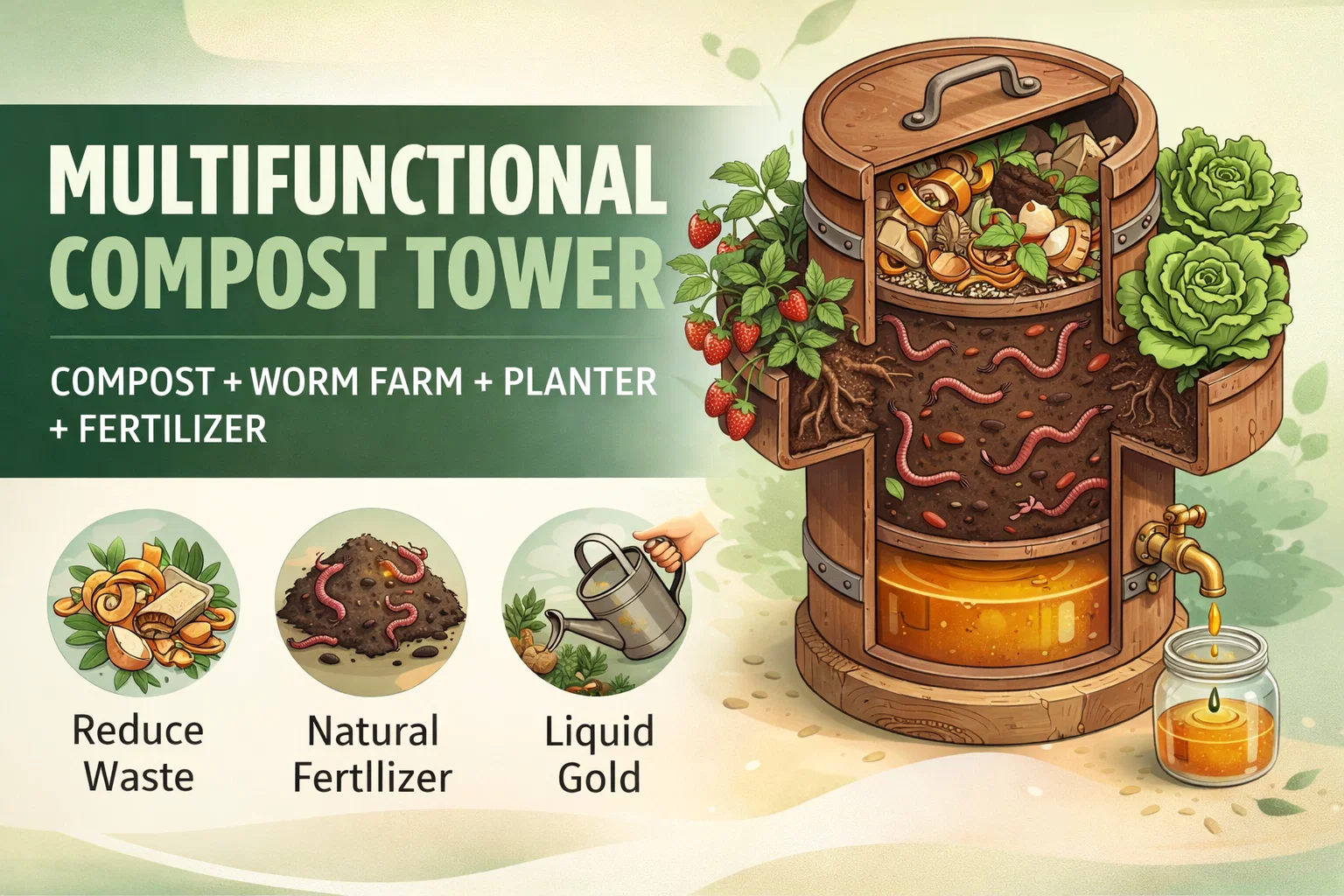
At first glance, this tower looks like a stylish wooden barrel, but the internal mechanics are where the real magic happens. The design is split into specific zones that work in harmony. By stacking these functions vertically, you utilize gravity to move nutrients and moisture through the system, reducing the need for external inputs. This is not just a compost bin; it is a living ecosystem that supports itself through a continuous flow of organic matter, biological activity, and water filtration.
The Top Chamber: Where the Cycle Begins
The journey starts at the very top. This is the entry point for your kitchen scraps. Instead of tossing onion peels, apple cores, and eggshells into a plastic bag destined for a landfill, you drop them into the top chamber. This area acts as the primary breakdown zone. Here, aerobic bacteria and fungi begin the process of decomposition. By keeping this section at the top, it remains easy to access and allows the initial breakdown to happen before the material moves down to the hungry residents below.
The Worm Zone: Nature’s Best Recyclers
Just below the initial scrap pile lies the heart of the tower: the worm zone. This is where red wrigglers and other composting worms reside. As the kitchen scraps begin to soften and break down, the worms move upward to feed. As they consume the organic matter, they move back down through the central column, leaving behind worm castings. These castings are widely regarded as one of the most powerful natural fertilizers on the planet. The vertical design allows the worms to migrate freely between the food source and the bedding, ensuring they stay healthy and productive year-round.
The Benefits of Vertical Planting Pockets
One of the most brilliant features of this tower is the integration of planting pockets directly into the sides of the structure. Usually, a compost bin is tucked away in a dark corner of the yard because it is not particularly attractive. This design flips that concept on its head. The outer shell of the tower serves as a vertical garden, allowing you to grow a variety of crops in a very small area.
Growing Strawberries and Leafy Greens
The lateral pockets are ideal for plants that thrive in well-drained, nutrient-rich soil. Strawberries are a classic choice for this setup because their fruit hangs down away from the soil, keeping them clean and reducing the risk of rot. Similarly, leafy greens like lettuce, spinach, and kale love the constant access to the nutrients leaching from the central compost core. Because the roots of these plants are in close proximity to the worm zone, they receive a steady supply of nitrogen and minerals that are released as the worms do their work.
Maximizing Small Spaces
For those living in apartments or homes with small patios, horizontal space is at a premium. A vertical compost tower provides the equivalent of several square feet of traditional garden bed in a footprint of only a few feet. It allows you to grow upwards rather than outwards, making it possible to have a substantial harvest of herbs and vegetables even on a tiny balcony. This accessibility also makes gardening easier on the back, as there is much less bending and kneeling involved compared to ground-level gardening.
Harvesting Worm Castings and Natural Fertilizer
While the plants growing on the outside are a beautiful bonus, the primary output of this system is the high-quality fertilizer it produces. Most gardeners have to spend a significant amount of money each season on bagged compost or synthetic fertilizers. With a vertical compost tower, you are producing your own premium soil amendments for free using your own waste products.
The Power of Worm Castings
As the worms process the kitchen scraps, the material settles toward the bottom of the central column as finished worm castings. These are rich in beneficial microbes and plant-available nutrients. Unlike synthetic fertilizers, worm castings will not burn sensitive plant roots. They improve soil structure, increase water retention, and help suppress plant diseases. Periodically, you can remove the finished castings from the lower sections of the tower to top-dress your other potted plants or garden beds.
Liquid Gold: The Drainage Reservoir
At the very base of the tower sits a drainage reservoir equipped with a tap. As you water the plants in the pockets and as the organic matter decomposes, moisture filters down through the entire system. This water picks up nutrients and beneficial bacteria along the way, resulting in a dark, potent liquid often called compost tea or liquid gold. By simply turning the tap, you can collect this liquid in a jar. Dilute it with a bit of water, and you have a world-class liquid fertilizer that can be applied directly to the base of your plants for an immediate nutrient boost.
How to Maintain a Healthy Compost Tower
Keeping a vertical compost tower running smoothly is relatively simple, but it does require a bit of attention to balance. Like any ecosystem, the goal is to keep the inhabitants happy and the process aerobic so there are no unpleasant odors. When managed correctly, a worm-based tower should smell like fresh, earthy soil.
Feeding Your Tower the Right Scraps
To keep the worms healthy and the compost high-quality, focus on a variety of green and brown materials. Greens include fruit and vegetable scraps, coffee grounds, and tea bags, which provide nitrogen. Browns include shredded cardboard, dried leaves, and straw, which provide carbon and bedding for the worms. Avoid adding meat, dairy, or oily foods, as these can attract pests and create foul odors. Chopping your scraps into smaller pieces will also help the worms process the food much faster.
Managing Moisture Levels
Moisture is critical for a worm farm. The interior should feel like a wrung-out sponge. If it gets too dry, the worms cannot breathe and will struggle to move. If it gets too wet, the system can become anaerobic and start to smell. The beauty of the vertical tower is the built-in drainage. Any excess water naturally flows down into the reservoir, preventing the worms from drowning while simultaneously creating your liquid fertilizer. During hot summer months, you may need to add a bit of water to the top chamber to keep everything hydrated.
Building Your Own Zero-Waste Cycle
The concept of a zero-waste cycle is about mimicking the efficiency of the natural world. In a forest, there is no such thing as waste; the leaf that falls becomes the food for the soil that feeds the tree. By implementing a 4-in-1 vertical compost tower, you are bringing that same intelligence into your home environment. You are taking responsibility for your organic waste and transforming it into something of immense value.
Choosing Your Materials
While many commercial versions of these towers are available, they are also popular DIY projects. You can upcycle food-grade plastic barrels or build a beautiful wooden version using cedar or redwood, which are naturally rot-resistant. The key is ensuring that there is a central perforated column that allows the worms to move from the middle into the surrounding soil pockets. This connectivity is what makes the system so effective compared to a standard planter or a standalone compost bin.
Joining the Regenerative Movement
Gardening is no longer just a hobby; for many, it is a form of activism. By reducing the amount of waste sent to landfills, you are lowering your carbon footprint. Landfills are often anaerobic environments where organic waste produces methane, a potent greenhouse gas. Composting at home in an aerobic system like a vertical tower prevents this. Furthermore, by growing your own food, you reduce the demand for industrially farmed produce that often requires heavy pesticide use and long-distance transport.
Conclusion: A Greener Future in One Column
The multifunctional vertical compost tower is a testament to the power of thoughtful design. It proves that we do not need complex technology to solve environmental challenges; sometimes, we just need to give nature the right structure to do what it does best. By combining composting, vermiculture, and gardening into a single vertical unit, we can produce incredible amounts of food and fertilizer in remarkably small spaces. This system empowers individuals to take control of their food supply and waste management in a way that is both productive and deeply satisfying. If you are ready to start your journey toward a zero-waste lifestyle, building or installing a compost tower is one of the most impactful steps you can take. Your plants, your soil, and the planet will certainly thank you for it. Save this idea for your next garden project and start turning your kitchen scraps into liquid gold today.