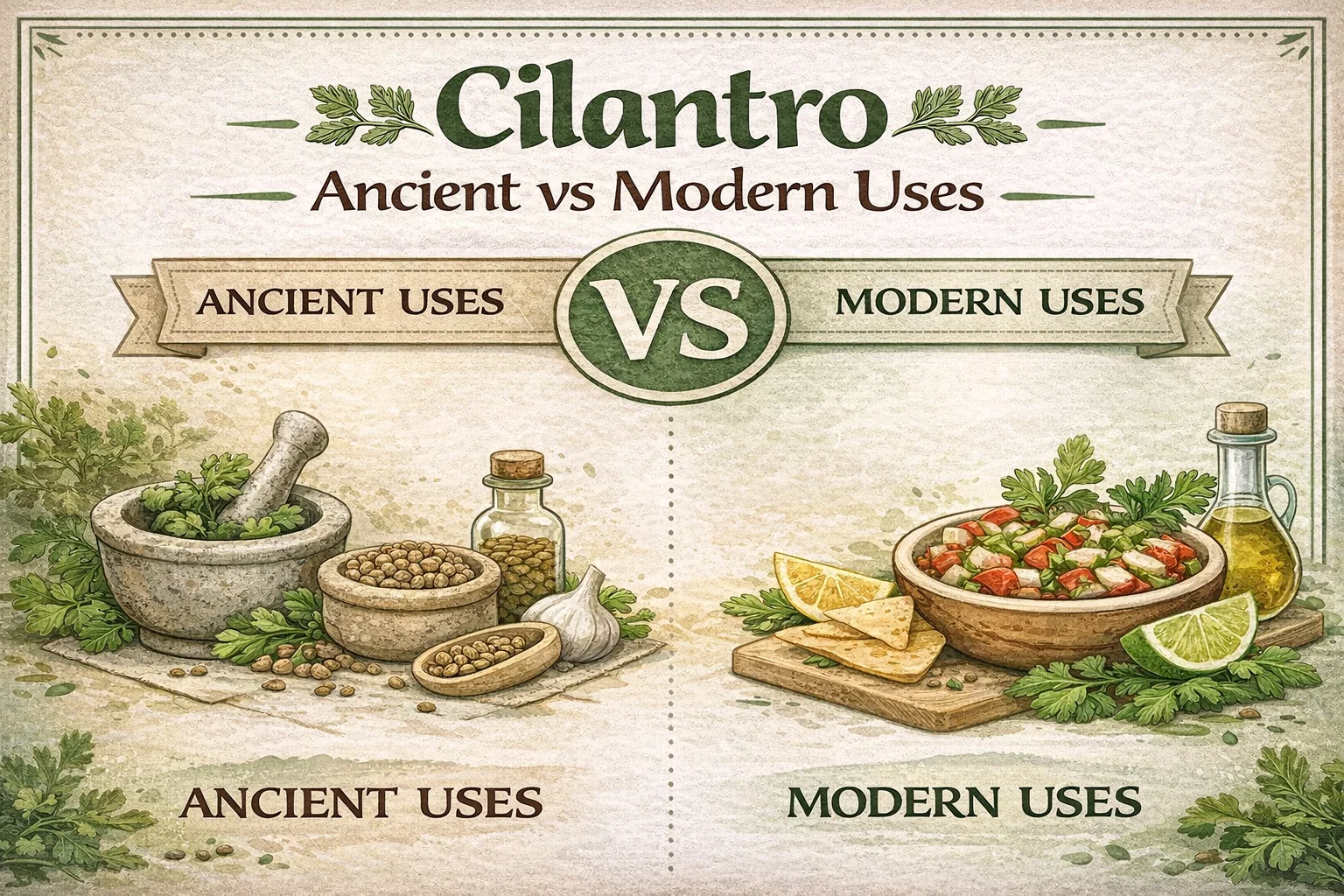
Cilantro Ancient vs Modern Uses Herbal Medicine Benefits Healthy Culinary Tips Guide
From the bustling street markets of Mexico to the serene kitchens of Southeast Asia, cilantro is a herb that commands attention. Whether you love its bright, citrusy punch or belong to the small group of people who think it tastes like soap, there is no denying that this green leaf is a global superstar. But have you ever stopped to wonder how we transitioned from using cilantro as a primitive medicine to tossing it into our morning green smoothies? The journey of cilantro is a fascinating bridge between ancient wisdom and modern culinary science.
The image we are looking at today beautifully illustrates the duality of this herb. It highlights how our ancestors viewed cilantro as a vital tool for survival and health, while we now view it as a key to freshness and flavor. By digging into the history and science of cilantro, we can learn how to better utilize this herb in our daily lives for more than just a garnish on a taco.
The Ancient Roots of Digestive Health
In the ancient world, medicine and food were not two separate entities. If you were eating something, it was often because it served a specific biological purpose. Cilantro, known scientifically as Coriandrum sativum, has been a cornerstone of Ayurvedic medicine for thousands of years. In these traditional practices, the cooling nature of the herb was used to balance the internal heat of the body, particularly after consuming heavy or spicy meals.
Ancient practitioners discovered that both the fresh leaves and the dried seeds (coriander) possessed carminative properties. This essentially means the herb helps to prevent the formation of gas in the gastrointestinal tract and facilitates the expulsion of said gas, providing relief from bloating. When you look at the mortar and pestle in the ancient side of the visual, you are seeing the primary tool used to release the essential oils that made these digestive remedies so potent.
Balancing the Gut with Traditional Wisdom
The concept of calming the gut was central to ancient healing. Without the luxury of modern antacids, people relied on the bitter compounds and essential oils found in cilantro to stimulate digestive enzymes. This wasn’t just about comfort; it was about efficiency. By aiding digestion, cilantro ensured that the body could extract the maximum amount of nutrients from the food available, which was a critical factor for survival in resource scarce environments.
Modern Digestion: Freshness as a Functional Ingredient
Fast forward to the modern era, and our approach to digestion has shifted from survival to lifestyle. We still use cilantro for the same underlying reasons, but the application has evolved. Today, we add cilantro to fresh salsas, chutneys, and salads. While we might do this primarily for the taste, our bodies are still reaping those ancient rewards.
Modern nutritionists often point to cilantro as a way to make rich or spicy foods feel lighter. If you have ever wondered why a heavy bowl of beef birria or a spicy Thai curry is almost always served with a generous helping of cilantro, it is because the herb provides a chemical counterbalance. It cuts through the fats and provides a refreshing acidity that signals to the brain that the meal is balanced.
Incorporating Cilantro into the Modern Diet
- Salsas and Dips: Combining cilantro with lime and onion creates a digestive powerhouse that prepares the stomach for heavier proteins.
- Grain Bowls: Adding chopped cilantro to quinoa or rice can prevent that heavy, weighed down feeling often associated with high carb meals.
- Cold Pressed Juices: Using the stems and leaves in green juices helps to detoxify the digestive tract while providing a cooling effect.
Cooling and Inflammation: A Thermal Perspective
The ancient side of our guide mentions that cilantro was considered a cooling herb. This is a concept found in Traditional Chinese Medicine and Ayurveda, where foods are categorized by their energetic temperature. Cilantro was frequently used to treat internal heat, which we might recognize today as fever or systemic inflammation.
In a time before ibuprofen, herbal cooling was the primary method for managing inflammatory conditions. Whether it was a skin rash or an internal burning sensation, cilantro pastes were applied topically or ingested to bring the body back to a state of equilibrium. This ancient use highlights the herb’s role as a natural anti-inflammatory agent long before we had the lab equipment to prove it.
Modern Cooling in Warm Weather Cuisine
Today, we use the term cooling more literally, but the biological effect remains. During the heat of summer, our bodies naturally gravitate towards foods that lower our perceived temperature. This is why cilantro is a staple in warm weather cuisines. From raw sauces like chimichurri to refreshing garnishes on chilled soups, cilantro provides a sensory cooling effect that is both psychological and physiological.
The Rise of the Cilantro Smoothie
One of the most modern applications of this herb is in the smoothie bowl. By blending cilantro with pineapple, cucumber, or green apple, health enthusiasts have created the ultimate anti-inflammatory breakfast. It is a far cry from the hand ground pastes of the past, yet the goal remains the same: reduce inflammation and keep the body refreshed.
Antimicrobial Protection: Survival Before Refrigeration
Perhaps the most impressive ancient use of cilantro was its role in food preservation. Before the invention of the refrigerator, spoilage was a constant threat. Ancient cultures noticed that foods prepared with certain herbs lasted longer and were less likely to cause illness. Cilantro was one of these protector herbs.
The leaves and seeds contain compounds that are naturally antibacterial. By incorporating cilantro into meat preparations or vegetable ferments, ancient cooks were essentially adding a layer of biological security to their food supply. It wasn’t just about flavor; it was a clever hack to keep the family safe from foodborne pathogens.
The Science of Cleanliness in Modern Raw Sauces
In the modern world, we have high tech refrigeration, but our interest in natural antibacterial properties has never been higher. As we move away from synthetic preservatives, we are looking back at herbs like cilantro to see how they can keep our food fresh and clean. This is especially relevant in raw sauces like pesto or guacamole, where the ingredients are not cooked to kill bacteria.
Why Freshness Matters
We now know that cilantro contains a compound called dodecenal, which has been shown in studies to be twice as effective as common medicinal antibiotics at killing Salmonella. This explains why cilantro is so commonly paired with raw or undercooked ingredients in various world cuisines. It acts as a natural safety net, ensuring that the freshness of the dish isn’t compromised by harmful microbes.
Summary of Key Differences and Similarities
When we compare the two eras, it is clear that while our methods have changed, the benefits of cilantro remain consistent. Here is a quick look at how the uses align:
| Feature | Ancient Application | Modern Application |
|---|---|---|
| Digestion | Herbal teas and medicinal pastes to stop bloating. | Fresh garnishes and salsas to lighten heavy meals. |
| Inflammation | Treating fevers and internal heat. | Refreshing smoothies and cold summer salads. |
| Protection | Preserving food and preventing spoilage. | Ensuring cleanliness in raw sauces and dips. |
Tips for Getting the Most Out of Your Cilantro
To truly honor both the ancient and modern traditions of this herb, you need to know how to handle it properly. Cilantro is delicate, and its most beneficial compounds are volatile, meaning they can disappear if treated poorly.
- Eat it Raw: To get the digestive and antimicrobial benefits, cilantro is best consumed raw. Heat destroys many of the enzymes and oils that provide these effects.
- Don’t Waste the Stems: The stems of the cilantro plant actually hold more flavor and many of the same nutritional benefits as the leaves. Chop them finely and include them in your cooking.
- Storage is Key: Treat cilantro like a bouquet of flowers. Trim the ends and place them in a glass of water in the fridge to keep the herb vibrant and potent for longer.
Conclusion: A Timeless Herb for a Modern World
Cilantro is much more than a simple garnish that gets pushed to the side of the plate. It is a bridge to our past and a tool for our future health. By understanding its ancient medicinal roots, we can appreciate why it remains such a vital part of our modern culinary landscape. Whether you are using it to calm an upset stomach, cool down on a hot day, or simply add a burst of flavor to your favorite dish, you are participating in a tradition of wellness that spans millennia.
Next time you pick up a bunch of cilantro at the grocery store, remember that you aren’t just buying an ingredient; you are holding a piece of history. Embrace its cooling properties, respect its protective nature, and most importantly, enjoy the vibrant life it brings to your table. The ancient world knew its secrets, and now, so do you.