Copper Deficiency Symptoms The Secret Mineral for Heart Health Energy Levels
Have you ever felt like your body was sending you signals that you just could not quite decode? Maybe it is a lingering sense of fatigue that a good night’s sleep won’t fix, or perhaps your hands always feel like ice even when the room is warm. Often, we chalk these sensations up to stress, a busy lifestyle, or simply the process of getting older. However, there is a silent regulator working deep within your cells that might be the missing piece of your health puzzle. Copper is a trace mineral that rarely gets the spotlight compared to giants like magnesium or iron, but its role in your cardiovascular health and energy production is nothing short of vital. It is the quiet biology that your heart notices long before you do, acting as a spark plug for your metabolism and a shield for your blood vessels.
The Silent Power of Copper in Human Biology
Copper is far more than just a metal used in wiring or coins. In the human body, it serves as a critical cofactor for numerous enzymes known as cuproenzymes. These enzymes are responsible for some of the most fundamental processes that keep us alive and thriving. From the way your brain communicates with your muscles to the strength of your connective tissues, copper is the invisible architect behind the scenes. Without adequate levels, the delicate balance of your internal systems begins to falter, often starting with the very organ that keeps everything else moving: your heart.
One of the primary roles of copper is supporting the integrity of your blood vessels. It helps in the cross-linking of collagen and elastin, which are the structural proteins that give your arteries and veins their flexibility and strength. When copper levels are optimal, your circulatory system can handle the pressure of daily life with ease. When they dip, the structural foundations of your heart health can become compromised, leading to issues that many people mistake for standard aging symptoms.
How Copper Fuels Your Energy at a Cellular Level
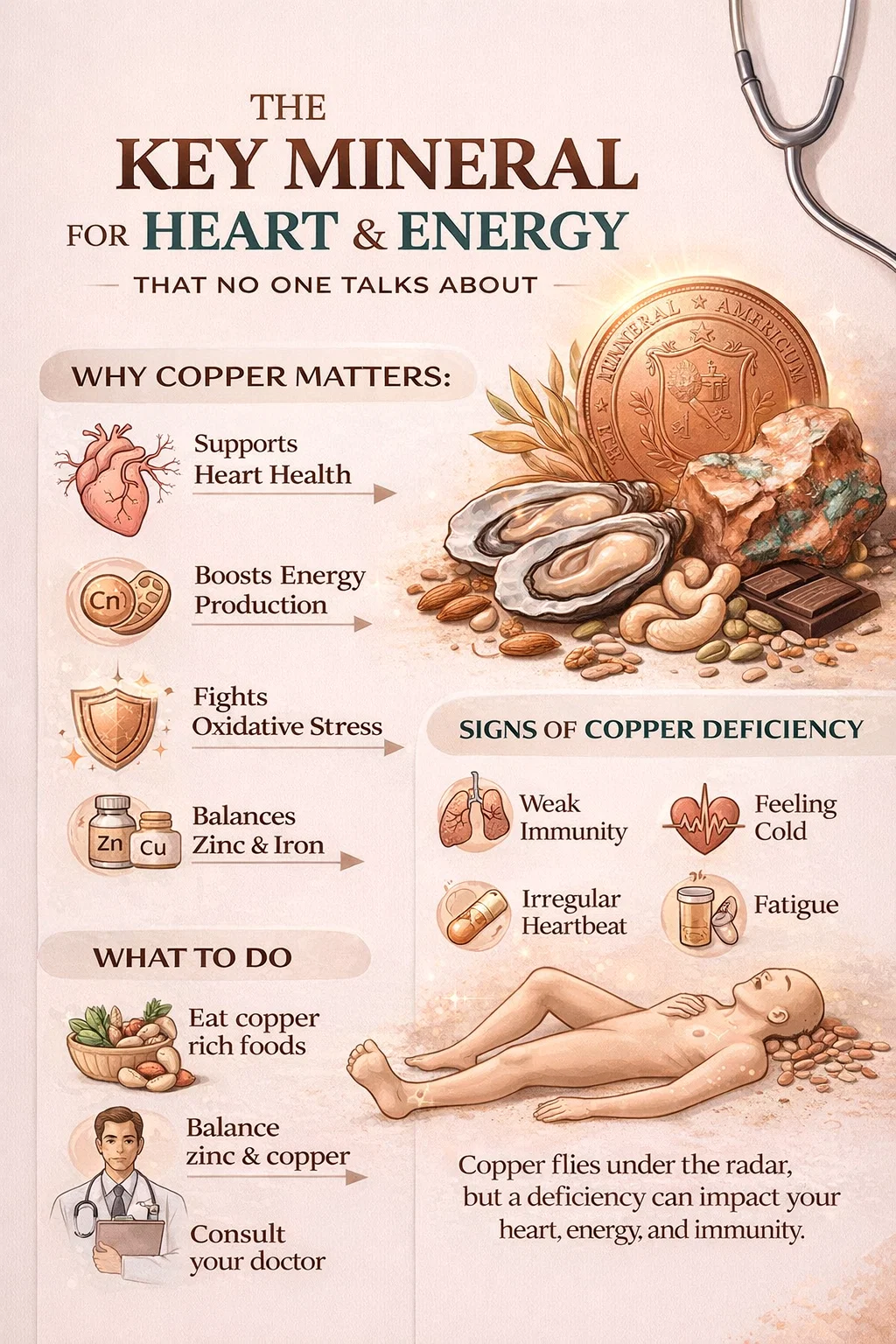
If you have been feeling consistently drained, the answer might lie within your mitochondria. These are the power plants of your cells, and they rely heavily on copper to function. Copper is a key component of cytochrome c oxidase, an enzyme that is essential for the final step of the electron transport chain. This is the process that creates ATP, the primary energy currency of your body. Without enough copper, your cells literally struggle to breathe and produce the fuel you need to power through your day.
This explains why fatigue is one of the most common signs of a deficiency. It is not just a mental tiredness; it is a deep, cellular exhaustion. By ensuring you have enough of this trace mineral, you are essentially providing your mitochondria with the tools they need to maintain high energy output. This supports everything from your physical stamina during a workout to your cognitive clarity during a long day at the office.
Protecting Against Oxidative Damage
In addition to energy production, copper plays a massive role in your body’s antioxidant defense system. It is a part of superoxide dismutase, an enzyme that neutralizes harmful free radicals. These free radicals are unstable molecules that can cause oxidative stress, leading to cellular damage and premature aging. By acting as an antioxidant, copper helps protect your heart, skin, and organs from the wear and tear of daily environmental stressors.
Recognizing the Overlooked Symptoms of Deficiency
The challenge with copper deficiency is that its symptoms are often subtle and easily attributed to other conditions. Your body feels the drop in levels long before a standard lab test might flag a problem. Understanding these “quiet” signals is the first step in taking control of your health. Many people spend years treating the symptoms without ever addressing the underlying mineral imbalance.
Shortness of Breath and Heart Sensations
Because copper is so intimately tied to heart health and iron transport, a deficiency can manifest as shortness of breath or irregular heartbeat sensations. You might find yourself winded after climbing a flight of stairs that used to be easy, or you may notice fluttering feelings in your chest. These are signs that your heart is working harder than it should have to, potentially due to weakened vessel walls or inefficient oxygen delivery.
Cold Extremities and Pale Skin
Are your hands and feet always cold? Copper is involved in thermoregulation and the production of melanin. Low levels can lead to poor circulation and a noticeably pale complexion. While some people are naturally fair, a sudden or persistent paleness combined with a constant chill can be a strong indicator that your mineral levels are out of alignment. This is often linked to the way copper interacts with iron to form healthy red blood cells.
Rising Cholesterol and Blood Pressure
Recent research has shown a fascinating link between low copper levels and cardiovascular markers like cholesterol and blood pressure. When copper is lacking, the body may struggle to manage lipid profiles effectively, leading to a “creeping up” of blood pressure and rising LDL cholesterol. Instead of looking at these issues in isolation, it is worth considering if a mineral deficiency is the common denominator.
Why Modern Diets Fail Our Copper Needs
You might wonder how it is possible to be deficient in a mineral that is found in so many foods. The reality is that our modern food system has changed significantly over the last century. Soil depletion, over-processing, and a shift away from traditional “nose-to-tail” eating have left many of us with significant nutritional gaps. Even those who eat a seemingly healthy diet might be missing out on the most concentrated sources of copper.
Furthermore, our reliance on processed grains and convenient snacks means we are often consuming “empty” calories that provide energy without the necessary micronutrients to process that energy. Real copper-rich foods are often those that have fallen out of favor in the standard Western diet, such as organ meats or specific types of shellfish. Without a conscious effort to include these items, it is easy for levels to slowly decline over time.
The Zinc-Copper Balance: A Delicate Tug-of-War
One of the most frequent causes of copper deficiency today is actually the over-consumption of another popular mineral: zinc. While zinc is incredible for immune support, it shares a biological pathway with copper. When you take high doses of zinc, your body produces a protein called metallothionein, which binds to minerals. Unfortunately, it has a much higher affinity for copper than zinc, effectively trapping copper and preventing it from being absorbed into your bloodstream.
This is a common pitfall for people who supplement heavily with zinc during cold and flu season without balancing it out. The two minerals exist in a delicate ratio. To maintain optimal health, you must ensure that your intake of one does not completely overshadow the other. If you are taking a zinc supplement, it is often recommended to look for one that includes a small amount of copper to maintain this vital equilibrium.
Practical Steps to Restore Your Mineral Levels
If you suspect that your heart and energy levels are noticing a lack of copper, the good news is that you can take immediate steps to support your body. The goal is not to load up on synthetic supplements overnight, but rather to foster a lifestyle that prioritizes mineral density and proper absorption.
Prioritize Copper-Rich Whole Foods
The best way to increase your levels is through high-quality, whole food sources. These foods provide copper in a form that your body recognizes and can easily utilize. Consider incorporating the following into your weekly meal plan:
- Oysters and Shellfish: These are some of the most potent sources of copper available.
- Organ Meats: Specifically beef liver, which is a nutritional powerhouse.
- Dark Chocolate: High-quality cacao is surprisingly rich in copper and antioxidants.
- Nuts and Seeds: Cashews, sunflower seeds, and almonds are excellent snacks for a mineral boost.
- Leafy Greens: Spinach and kale provide a steady supply of various trace minerals.
Support Your Digestive Health
You are not just what you eat; you are what you absorb. Weak digestion or low stomach acid can significantly reduce your ability to uptake minerals from your food. Supporting your gut health through fermented foods, adequate hydration, and mindful eating habits ensures that the copper you consume actually makes it to your cells. If you have chronic digestive issues, addressing those is a prerequisite for fixing any mineral deficiency.
Monitor Your Supplementation
Be mindful of the supplements you are already taking. Check your multivitamins or immune boosters for zinc levels. If you are taking more than 50mg of zinc daily for an extended period, you are likely at risk for induced copper deficiency. Always aim for a balanced approach and consult with a professional if you are unsure about the ratios in your current regimen.
Conclusion: Listening to Your Quiet Biology
Your body is a masterpiece of communication, constantly sending you data about its internal state. Copper may be a “quiet” mineral, but its influence on your heart, energy, and longevity is loud and clear once you know what to look for. By moving away from the idea that fatigue and heart flutters are just “normal aging” and instead looking toward foundational nutrition, you can unlock a new level of vitality.
Take a moment to evaluate your current diet and lifestyle. Are you providing your heart with the structural support it needs? Are you giving your mitochondria the spark they require to keep you energized? Embracing copper-rich foods and maintaining a healthy mineral balance is a simple yet profound way to honor your biology. Remember, your heart notices the difference even if you don’t always see it on the surface. Start listening to those subtle signals today and give your body the essential tools it needs to thrive for years to come.