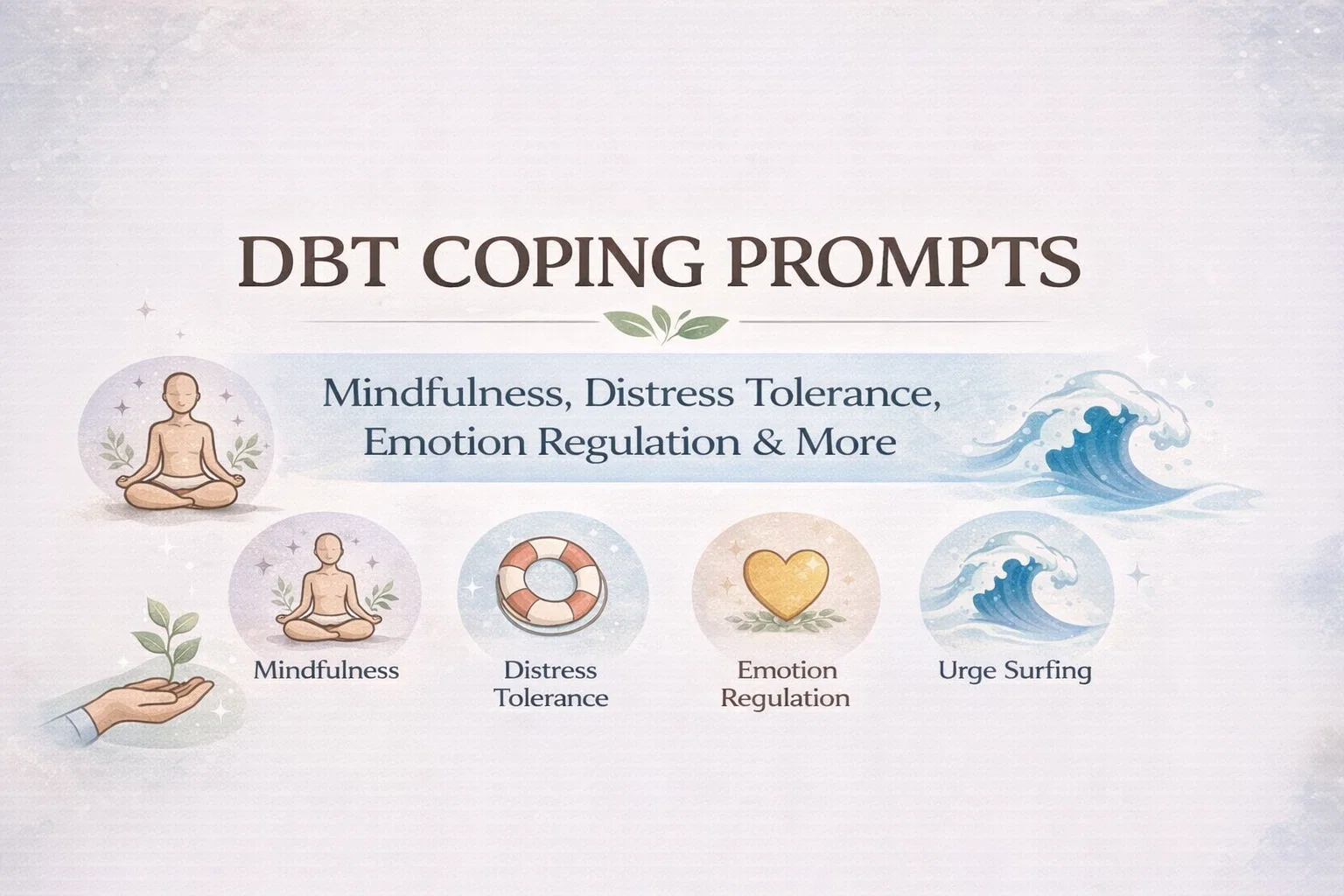
DBT Journaling Prompts for Mental Health Emotional Regulation Therapy Skills
Navigating the complexities of emotional health can often feel like trying to steer a ship through a massive storm without a compass. For many, the waves of anxiety, intense anger, or overwhelming sadness feel impossible to manage. This is where Dialectical Behavior Therapy, or DBT, serves as a transformative map. Originally developed to help individuals with high emotional sensitivity, DBT has evolved into a gold standard for anyone looking to build a life worth living. By focusing on practical, actionable prompts, you can begin to bridge the gap between feeling out of control and finding a sense of centered calm. Whether you are a seasoned journaler or someone just starting your mental health journey, these structured reflection tools offer a way to process the world with clarity and intention.
Understanding the Foundation of DBT Skills
At its core, DBT is built on the idea of dialectics, which is the balance between two seemingly opposite things: acceptance and change. You must accept yourself exactly as you are in this moment, while simultaneously acknowledging that you need to change your behaviors to reach your goals. This balance is achieved through four primary pillars: Mindfulness, Distress Tolerance, Emotion Regulation, and Interpersonal Effectiveness. By using specific prompts, you can move these concepts from abstract theories into daily practices that actually reshape how your brain responds to stress.
The Role of Mindfulness in Daily Reflection
Mindfulness is the heartbeat of all therapeutic growth. It is the practice of being fully present in the moment without judgment. In a world that constantly demands our attention for the next task or the latest notification, sitting with your own thoughts can feel revolutionary. When you ask yourself what you are noticing in your body right now, you are practicing a form of somatic awareness. This might reveal a tightness in your chest or a clenching in your jaw that you hadn’t noticed. By naming these sensations, you begin to detach from them, seeing them as temporary physical states rather than permanent identities.
Another powerful mindfulness prompt involves observing your environment. Identifying what you see, hear, or feel in your immediate vicinity pulls you out of a “thought spiral” and back into reality. This grounding technique is essential for staying anchored when your mind wants to drift into the past or worry about the future. The goal is not to change the moment, but simply to witness it.
Building Resilience Through Distress Tolerance
We all face moments that feel unbearable. Distress tolerance skills are not about fixing the problem immediately, but about surviving the crisis without making it worse. When you are in the middle of a high stress situation, your “rational brain” often goes offline, leaving your “emotional brain” in charge. This is when impulsive decisions often happen.
Prompts focused on distress tolerance ask you to look at the next ten minutes. Thinking about an entire day or week of pain is too much, but ten minutes is manageable. By asking what one grounding action you can take right now, you empower yourself to find a small win. This might be splashing cold water on your face, taking a deep breath, or holding an ice cube. These actions provide a sensory “reset” that helps you ride out the peak of the emotional wave until it naturally begins to recede.
The Power of Radical Acceptance
Radical acceptance is perhaps one of the most challenging yet liberating concepts in mental health. It involves accepting reality as it is, even when that reality is painful or unfair. It does not mean you approve of what is happening; it means you stop fighting against the fact that it is happening. When you stop fighting reality, you stop suffering. You still feel the pain, but the extra layer of “this shouldn’t be happening” is removed.
Using prompts to identify what is outside of your control helps you redirect your energy. Instead of exhausting yourself trying to change someone else’s behavior or a past event, you can focus on your own response. Asking yourself what self-respect looks like in a difficult situation ensures that even in the face of adversity, you remain aligned with your core values.
Mastering Emotion Regulation
Emotion regulation is about understanding the function of your feelings and learning how to influence them. Many people view emotions as enemies to be conquered, but in DBT, we see them as messengers. Every emotion is trying to tell you something about your environment or your needs. If you feel fearful, your brain is signaling a threat. If you feel sad, it is signaling a loss.
By journaling about what triggered a specific emotion, you begin to see patterns. Perhaps you notice that you always feel irritable after a long day of work without a break, or that certain social situations leave you feeling drained. Once you identify the trigger, you can ask what the emotion needs from you. Sometimes anger needs a boundary, and sometimes sadness needs comfort. Learning to provide that for yourself is a massive step toward emotional independence.
Urge Surfing: A Modern Approach to Habits
Urges are like waves; they have a beginning, a peak, and an end. Whether it is the urge to reach for a sugary snack, check a phone, or lash out in an argument, the feeling will pass if you give it time. Urge surfing is the practice of “riding the wave” without giving in to the behavior. Prompts that ask where you feel the urge in your body help you treat the feeling like a physical sensation rather than a command. By observing the urge without acting on it, you strengthen your “willpower muscle” and gain confidence in your ability to handle discomfort.
Improving Interpersonal Effectiveness
Our relationships are often the source of our greatest joy and our deepest stress. Interpersonal effectiveness is about getting what you want and need while maintaining your self respect and the quality of the relationship. This requires clear communication and firm boundaries. Many of us struggle to express our needs because we fear conflict or rejection.
Journaling about what you need to express clearly helps you rehearse the conversation in a safe space. It allows you to strip away the emotional “fluff” and get to the heart of the matter. Prompts that ask how to honor yourself while respecting others help you find the middle ground between being a “people pleaser” and being overly aggressive. This balance is the key to long term, healthy connections.
Creating a Daily DBT Journaling Routine
Consistency is more important than intensity when it comes to mental health. You do not need to spend an hour every day answering twenty different questions. Instead, choose one or two prompts that resonate with your current state. Here are some tips for building a sustainable habit:
- Start Small: Spend just five minutes each morning or evening with a single prompt.
- Don’t Censor Yourself: Your journal is for your eyes only. Be honest about the “ugly” feelings.
- Use a Dedicated Space: Whether it is a physical notebook or a digital app, having a set place for your reflections helps signal to your brain that it is time to focus.
- Review Your Progress: Every few weeks, look back at your entries. You will likely see growth that you didn’t notice in the moment.
The Benefits of Structured Prompts
Why use prompts instead of just free writing? While free writing is great for venting, structured prompts ensure that you are actually practicing skills. They force you to look at situations through a therapeutic lens. Instead of just writing “I had a bad day,” a prompt asks “What part of this day was outside of my control?” This subtle shift in language moves you from a passive observer of your life to an active participant in your healing.
Conclusion: Your Journey Toward Emotional Balance
The journey toward emotional health is not a straight line. There will be days when the waves feel too high and the prompts feel too simple. However, the cumulative effect of these small reflections is profound. By regularly engaging with mindfulness, acceptance, and regulation, you are rewiring your brain to handle stress with more resilience and less chaos. You are teaching yourself that you can handle hard things and that your emotions, while powerful, do not have to be the boss of you. Grab a pen, find a quiet corner, and start with just one question. You deserve the peace that comes with understanding your own heart and mind.