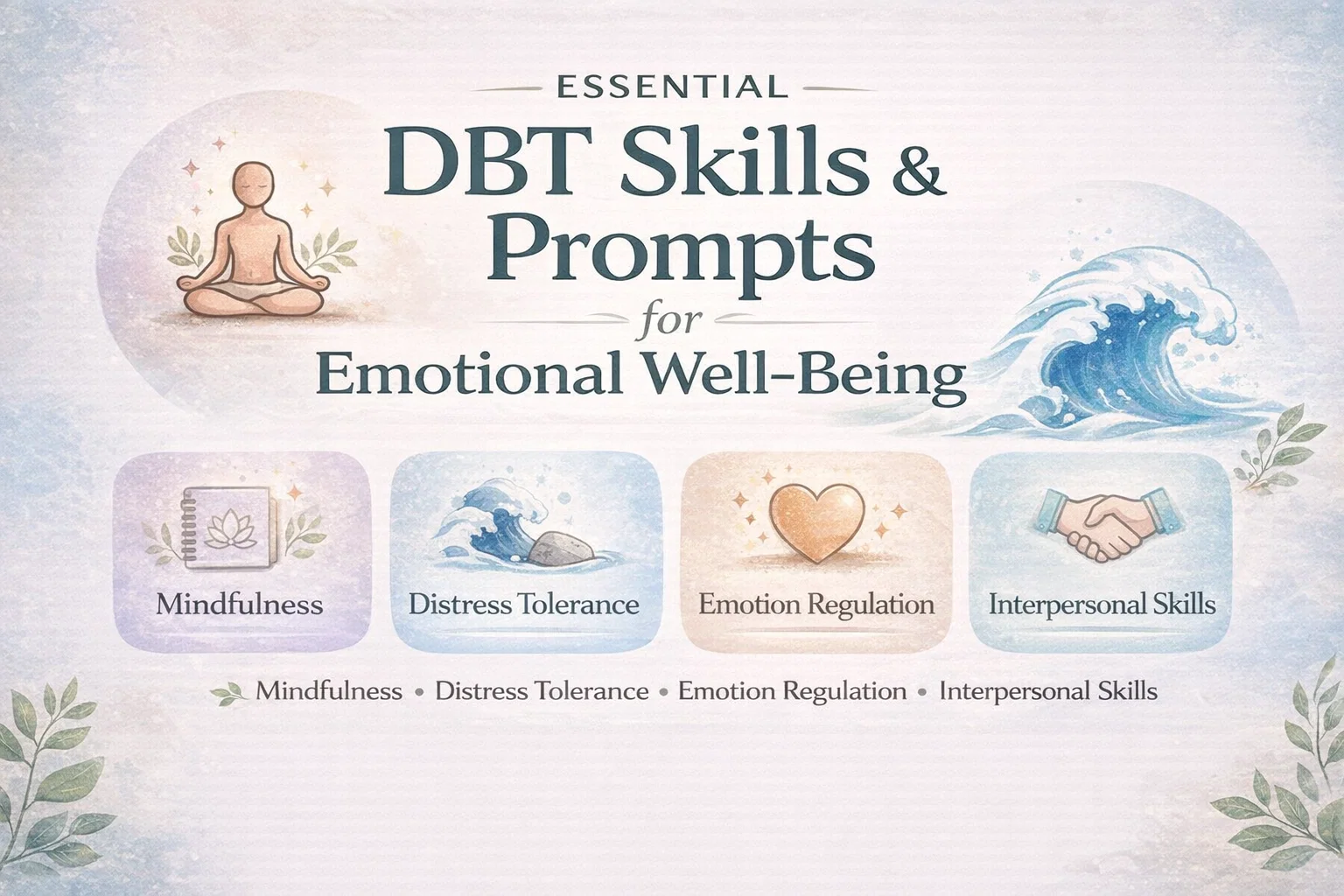
DBT Prompts for Mental Health Mindfulness, Distress Tolerance Emotion Regulation Worksheet
Navigating the turbulent waters of intense emotions can often feel like being caught in a storm without a compass. Whether you are dealing with overwhelming stress, navigating complex relationships, or simply trying to stay present in a fast paced world, having a structured set of tools can make all the difference. This is where Dialectical Behavior Therapy, commonly known as DBT, steps in. Originally developed to treat borderline personality disorder, DBT has evolved into a gold standard for anyone looking to enhance their emotional intelligence and resilience. By utilizing specific prompts centered around mindfulness, distress tolerance, and interpersonal effectiveness, you can transform the way you interact with your inner world and the people around you.
The Foundations of Dialectical Behavior Therapy
At its core, DBT is built on the balance between two seemingly opposite concepts: acceptance and change. It teaches us that we can accept ourselves exactly as we are while simultaneously working toward a better, healthier version of ourselves. This duality is what makes DBT so powerful for mental health. It does not just tell you to feel better; it gives you the literal script and the specific questions to ask yourself when things get tough. By breaking down emotional regulation into manageable skills, it turns abstract concepts into actionable habits.
Why Prompts are Essential for Growth
When we are in a state of high emotional arousal, the logical part of our brain often goes offline. We forget our coping mechanisms and fall back into old, often destructive, patterns. Having a list of DBT prompts acts as an external hard drive for your coping skills. These questions serve as anchors, pulling you back to the present moment and forcing you to engage your Wise Mind, which is the perfect intersection of your emotional feelings and your rational thoughts.
Mastering the Art of Mindfulness
Mindfulness is the first and perhaps most important pillar of DBT. It is the practice of being fully aware of the present moment without judgment. In our modern life, we are often living ten steps ahead in the future or five years back in the past. Mindfulness prompts help pull your focus back to the right here and the right now.
- What am I noticing in my body right now? This prompt encourages you to scan for physical tension, a racing heart, or shallow breathing. Recognizing these signs early can prevent an emotional escalation.
- What emotion is present without judging it? Instead of saying I should not feel angry, you simply acknowledge that anger is there. Labeling the emotion reduces its power over you.
- What do I see, hear, or feel in this moment? This is a classic grounding technique. By engaging your five senses, you detach from internal chaos and reconnect with the physical world.
- Can I name this moment without trying to change it? This is the ultimate test of presence. It is about witnessing your life as it happens, rather than constantly trying to curate or fix it.
Distress Tolerance: Getting Through the Crisis
Life is inevitably going to throw curveballs. Distress tolerance is not about fixing the problem immediately; it is about surviving the moment without making it worse. These prompts are your emergency toolkit for when you feel like you are at a breaking point.
Survival Strategies for High Stress
When the pressure is on, ask yourself: What would help me get through the next 10 minutes? Sometimes, looking at a whole day or even an hour is too much. Narrowing your focus to the next ten minutes makes the impossible feel doable. Another vital question is: What is one grounding action I can take right now? This could be splashing cold water on your face, holding an ice cube, or taking three deep breaths. These physical actions send a signal to your nervous system that you are safe.
The Power of Non-Reaction
A transformative prompt in distress tolerance is: If I do not react, what might happen instead? Often, our impulsive reactions create more drama and pain than the original problem. By pausing and considering the alternative of stillness, we regain our power. Finally, remind yourself of your own strength by asking: What has helped me survive moments like this before? You have a 100 percent success rate of getting through your hardest days so far. Use that evidence to fuel your current resilience.
Emotion Regulation: Balancing the Scales
While distress tolerance is for short term crises, emotion regulation is about long term maintenance. It involves understanding the function of your emotions and reducing your vulnerability to the Emotional Mind. It is about learning how to ride the waves rather than being pulled under by them.
Start by identifying the source: What emotion am I feeling, and what triggered it? Often, we feel a vague sense of unease without knowing why. Pinpointing the trigger helps you realize that the emotion is a response to a specific event, not a permanent state of being. Then, ask: What does this emotion need from me right now? Anger might need a boundary, sadness might need comfort, and fear might need a reality check. When you give the emotion what it needs, it usually begins to dissipate.
Connecting the Past to the Present
We often carry emotional baggage that colors our current experiences. A deep prompt to consider is: Is this emotion connected to something from the past? If your reaction feels much bigger than the current situation warrants, you might be tapping into an old wound. Recognizing this allows you to address the past trauma separately from the current event, preventing unnecessary conflict in your present life.
Interpersonal Effectiveness: Building Better Connections
How we communicate with others directly impacts our mental health. Interpersonal effectiveness is about getting what you want and need while maintaining your self respect and the quality of your relationships. It is the art of the Healthy Boundary.
Before an important conversation, ask yourself: What do I need to express clearly right now? Clarity is kindness. If you are vague about your needs, people cannot meet them. Follow this up with: What boundary feels important to protect my well being? Boundaries are not walls to keep people out; they are gates to keep you safe. Lastly, always consider the balance: How can I honor myself while respecting the other person? Effective communication is a two way street where both parties feel heard and valued.
The Path of Radical Acceptance
Radical acceptance is one of the most difficult yet liberating DBT skills. It means accepting reality as it is, even if you do not like it or agree with it. It is the opposite of “fighting” reality, which only leads to suffering.
To practice this, ask: What part of this situation is outside my control? We waste an incredible amount of energy trying to change things we cannot influence. Once you identify those factors, ask: What happens when I stop fighting reality right now? Usually, the answer is a sense of relief. Acceptance does not mean approval; it just means acknowledging the facts so you can move forward. You might ask: Can I allow this moment to exist as it is? And finally, to maintain your dignity through the process: What would self respect look like in this situation? Sometimes, self respect is the only thing you can control, and it is the most important thing to hold onto.
The Science of Urge Surfing
Urges to engage in unhealthy behaviors, whether it is overeating, lashing out, or scrolling mindlessly, are like waves in the ocean. They peak in intensity and then eventually subside. Urge surfing is the practice of riding that wave without wiping out.
How to Surf the Wave
When an urge hits, get curious rather than combative. Ask: Where do I feel this urge in my body? Does it feel like a tightness in your chest or a restlessness in your hands? Can I observe the urge without acting on it? Just watch it like a passing cloud. A deeply insightful prompt is: What might this urge be trying to protect me from? Often, our bad habits are just misguided attempts to soothe pain or anxiety. Understanding the root cause makes the urge easier to manage. Finally, plan your move: What will I do while I ride this wave? Choose a distracting activity that aligns with your values until the intensity passes.
Integrating DBT into Your Daily Routine
You do not have to be in a therapy session to use these prompts. In fact, they are most effective when used during the mundane moments of life. Consider keeping a journal or a digital note with these questions. When you feel the familiar rise of stress or frustration, pick one prompt and sit with it for a few minutes. Consistency is the key to rewiring your brain for emotional resilience.
Building a Personal Toolkit
Everyone responds differently to various prompts. Some people find mindfulness most helpful, while others swear by radical acceptance. Experiment with these different sections to see which ones resonate most with your personal journey. Over time, these prompts will become second nature, and you will find yourself asking them automatically. This is the sign that you are moving from reactive living to intentional living.
Conclusion: The Journey Toward Emotional Freedom
The beauty of DBT prompts is that they offer a structured way to handle the inherent messiness of being human. They remind us that we have choices, even when we feel trapped by our emotions. By practicing mindfulness, building distress tolerance, regulating our emotions, and mastering interpersonal skills, we create a life that feels manageable and meaningful. Remember that healing is not a linear process. There will be days when surfing the wave feels easy and days when you feel like you are drowning. The goal is not perfection, but rather the continued effort to show up for yourself with curiosity and compassion. Save these prompts, use them often, and watch as they slowly but surely transform your relationship with yourself and the world around you.
Would you like me to generate a specific 30 day DBT challenge or a list of journal prompts focused on one of these specific pillars?