Discipline Over Feelings Motivation Build Your Dream Life with Consistency
We have all been there. The alarm goes off at 6:00 AM, the room is chilly, and every fiber of your being is screaming for just ten more minutes of sleep. In that moment, your feelings are telling you that comfort is the priority. Your emotions are whispering that you deserve a break and that one missed morning won’t matter. But somewhere deep down, a different voice speaks. That is the voice of discipline, and it is the only thing standing between the life you have and the life you want.
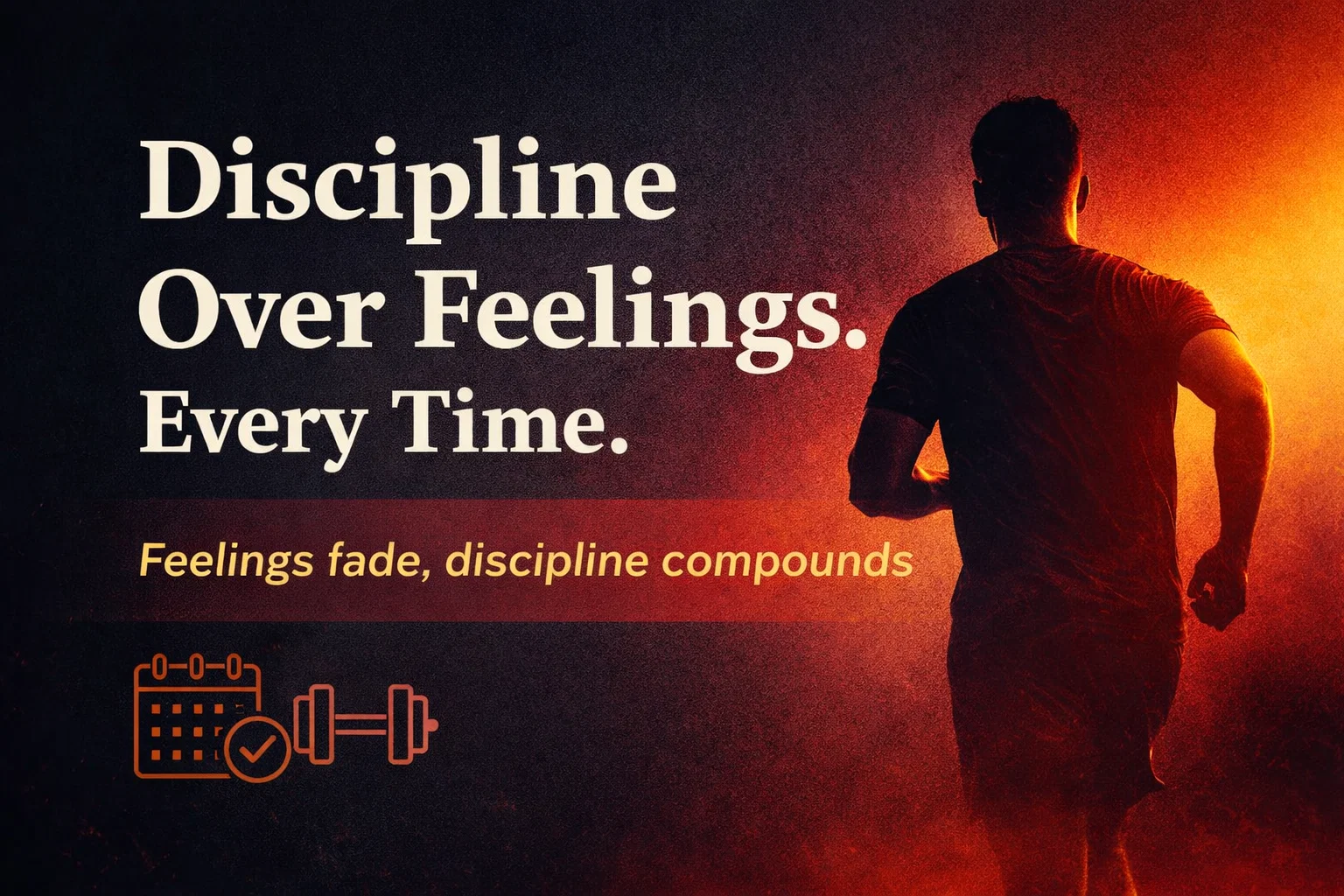
The image of a simple, typed manifesto declaring Discipline Over Feelings is more than just a motivational quote; it is a fundamental law of success. To achieve anything of substance, whether it is a physical transformation, a career breakthrough, or a creative masterpiece, you must learn to ignore the fickle nature of your moods. Discipline is the art of keeping promises to yourself when you no longer feel like it. It is the bridge between goals and accomplishment, and it requires a radical shift in how we perceive our internal world.
Why Your Feelings Are Not Your Friends in Progress
It sounds harsh to say that feelings are liars, but in the context of high performance and long term growth, they often are. Emotions are designed for survival and immediate gratification. They are wired to seek safety, warmth, and ease. While this served our ancestors well when avoiding predators, it is a massive hindrance when trying to build a modern business or run a marathon. Your feelings will always advocate for the path of least resistance.
When you rely on feeling motivated to get work done, you are building your future on a foundation of sand. Motivation is a fleeting chemical state. It comes after a great cup of coffee or a high energy seminar, but it evaporates the moment you face a difficult problem or a boring task. Discipline, on the other hand, is a choice. It is a system that functions regardless of your emotional weather. By choosing discipline over feelings, you reclaim control from your biological impulses and place it firmly in the hands of your rational mind.
The Anatomy of the Comfort Trap
The comfort trap is subtle. It does not usually look like a catastrophic failure; instead, it looks like a series of small, justifiable retreats. It is the decision to skip one workout because you had a long day. It is the choice to scroll through social media for an hour instead of writing that next chapter because you feel uninspired. These moments feel harmless in isolation, but they are actually stealing your future one second at a time.
The Illusion of Later
One of the most dangerous lies our feelings tell us is that we will do it later. We convince ourselves that we will feel more energetic tomorrow or more creative next week. This is a cognitive bias that treats our future self as a different person with infinite willpower. In reality, if you do not have the discipline to do it today when it is hard, you are unlikely to have it tomorrow when the next set of distractions arises.
The Cost of Instant Gratification
Chasing comfort provides an immediate hit of dopamine, but it leaves a vacuum of regret. Every time you choose the couch over the gym, you are reinforcing a neural pathway that says your short term comfort is more important than your long term health. Discipline reverses this. It asks you to trade immediate ease for a lasting sense of pride and power.
Building the Muscle of Discipline
Discipline is not an innate trait that some people are born with while others are left behind. It is a muscle that must be trained through repetitive stress and recovery. Just as you would not expect to lift a heavy weight on your first day at the gym, you should not expect to have ironclad willpower overnight. You build it by keeping small promises.
- The Power of Small Wins: Start by setting a non negotiable task that takes less than ten minutes. It could be making your bed, drinking a liter of water, or reading five pages. The goal is not the task itself, but the act of doing it because you said you would.
- Remove the Choice: Decision fatigue is the enemy of discipline. If you have to decide every morning whether or not to work out, you will eventually lose to your feelings. Automate your decisions by preparing your clothes the night before or setting a strict schedule.
- Reframing Discomfort: Start looking at discomfort as a signal of growth. If you feel bored, tired, or frustrated while working toward a goal, it means you are at the frontier of your current abilities. Lean into that feeling instead of running from it.
Discipline Doesn’t Care How You Feel
The most liberating realization you can have is that your feelings do not need to change for your behavior to change. You can be tired and still go for a run. You can be bored and still finish your taxes. You can be terrified and still make that sales call. Discipline is the ability to operate in spite of your internal state.
High achievers do not necessarily feel more motivated than everyone else. They have simply cultivated a different relationship with their moods. They acknowledge the feeling of resistance, thank it for trying to keep them comfortable, and then do the work anyway. This separation of “how I feel” and “what I do” is the ultimate superpower in a world full of distractions.
The Compound Effect of Consistency
Every rep in the gym, every page of a book, and every hour of focused work is a brick in the fortress of your character. Individually, these actions might seem insignificant. However, when they are stacked up day after day, year after year, they become an unstoppable force. Discipline compounds. The more you do it, the easier it becomes to do it again. Over time, the person who chooses discipline becomes fundamentally different from the person who follows their moods.
The Role of Identity
To truly master discipline, you must change your identity. Instead of saying “I am trying to be disciplined,” start saying “I am the type of person who never misses a workout” or “I am a writer who writes every single day.” When your actions are tied to your identity, skipping a task feels like a betrayal of who you are, making it much easier to overcome the temporary feelings of laziness.
Practical Strategies for Staying Disciplined
While the philosophy of discipline is simple, the execution requires strategy. To stay consistent when life gets messy, you need a toolkit of habits and mental models that keep you on track.
The Five Second Rule
When you feel the urge to hesitate or skip a task, count backward from five to one and then physically move. This short circuits the brain’s ability to talk you out of the action. It forces you out of the feeling and into the doing.
Environment Design
Make it difficult to choose comfort. If you want to stop eating junk food, do not keep it in the house. If you want to focus on work, put your phone in another room. Your environment should be a slipway that leads you directly toward your disciplined actions.
Accountability Systems
Human beings are social creatures. We are often more willing to let ourselves down than we are to let others down. Use this to your advantage by finding a partner, joining a group, or publicly committing to your goals. When someone else is watching, your feelings of laziness are often overridden by your desire to maintain your reputation.
The Reward of a Disciplined Life
There is a common misconception that a disciplined life is a restricted, joyless life. People imagine a rigid schedule with no room for fun. In reality, the opposite is true. Discipline equals freedom. When you are disciplined with your finances, you have the freedom to travel and invest. When you are disciplined with your health, you have the freedom to move and live without pain. When you are disciplined with your time, you have the freedom to truly relax because your work is done.
The person who follows their feelings is a slave to their whims. They are constantly at the mercy of their energy levels and the surrounding environment. The disciplined person is the master of their own destiny. They have the quiet confidence that comes from knowing they can handle whatever challenges come their way because they have already conquered themselves.
Conclusion: Choosing Your Hard
At the end of the day, life is going to be hard regardless of which path you choose. It is hard to be disciplined, to wake up early, to push through the pain, and to stay focused. But it is also hard to live with regret, to feel stagnant, and to watch your dreams slip away because you couldn’t get off the couch. You have to choose your hard.
Discipline wins every single time because it is the only reliable path to transformation. It doesn’t ask for your permission, and it doesn’t wait for your approval. It simply requires your presence. Start today by making one small choice that goes against how you feel but aligns with who you want to be. Keep that promise. Then do it again tomorrow. That is how you build a life that you can be proud of. Discipline over feelings. Every. Single. Time.