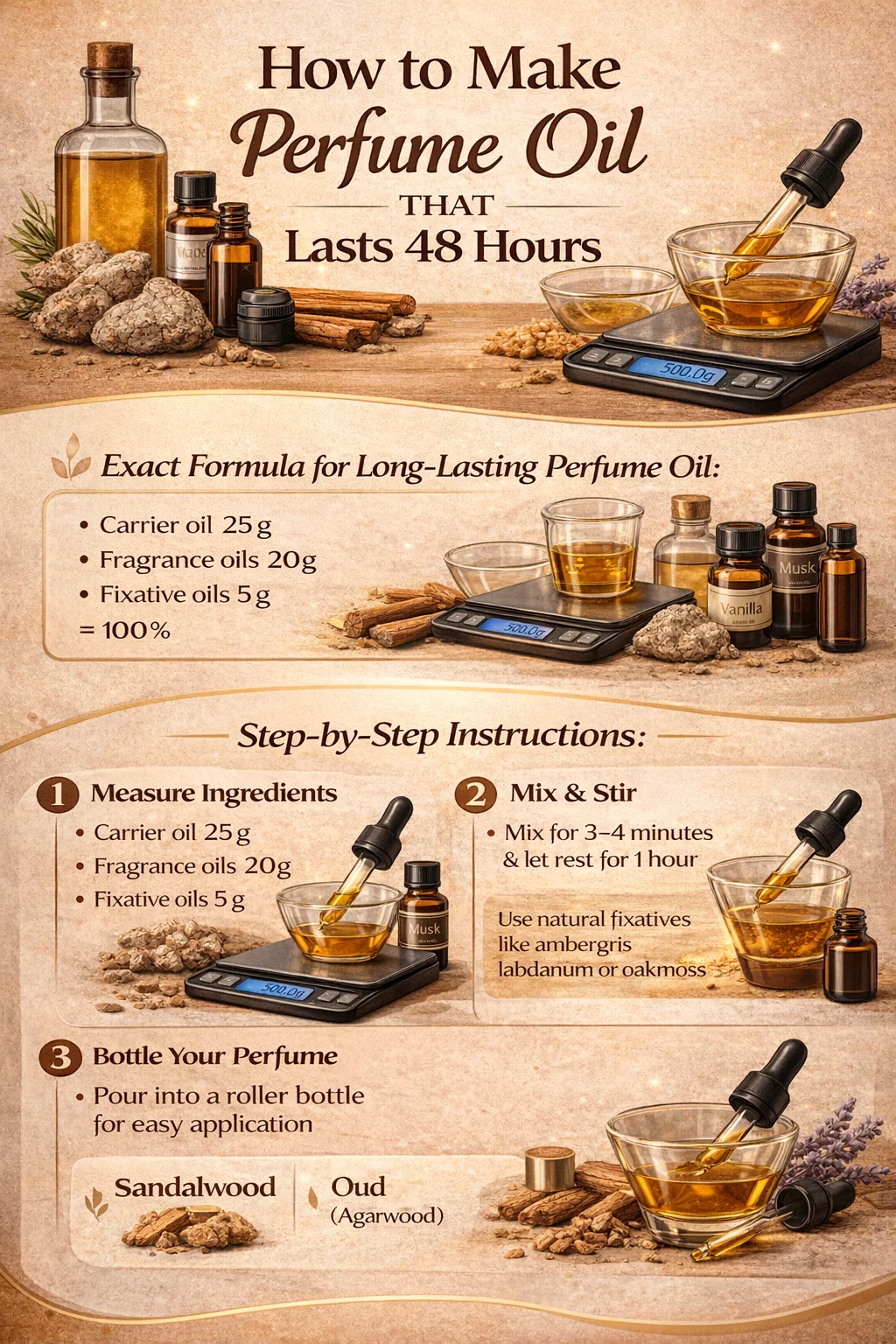
DIY 48-Hour Perfume Oil Recipe Professional Guide to Ultra Long-Lasting Scents
Have you ever spent a small fortune on a designer fragrance only to have the scent vanish before you even finish your morning coffee? It is a common frustration for perfume lovers everywhere. Most commercial sprays are diluted with high percentages of alcohol, which causes the scent to evaporate rapidly. However, there is a professional secret to making a fragrance that clings to the skin for two full days: Perfume Extrait. By shifting away from alcohol-based sprays and embracing high-concentration perfume oils, you can create a signature scent that is intimate, luxurious, and incredibly long-lasting. This guide will walk you through the exact science and art of blending a professional-grade perfume oil that lasts 48 hours.
Understanding the Power of Perfume Extrait
In the world of perfumery, concentration is everything. Most products we find on department store shelves are classified as Eau de Toilette or Eau de Parfum. These typically contain anywhere from 5 percent to 15 percent fragrance oil. The rest is a mixture of alcohol and water. A Perfume Extrait, or “Extrait de Parfum,” is the most concentrated form of fragrance available, often reaching levels of 20 percent to 40 percent oil. By using a carrier oil instead of alcohol, we eliminate the harsh initial chemical sting and allow the fragrance to develop slowly and deeply on the skin.
Why Oil Based Perfumes Last Longer
Alcohol is a volatile substance. Its primary job in a perfume is to “lift” the scent into the air so people can smell you from across the room. While this creates a great initial impression, it also means the scent molecules are being pulled away from your skin at a rapid pace. Carrier oils, such as Jojoba or Fractionated Coconut oil, are non-volatile. they sit on the surface of the skin and act as a reservoir for the fragrance. This slow release is what allows a well-made oil to remain detectable for 48 hours or more.
The Essential Ingredients for a 48 Hour Blend
To achieve professional results, you cannot simply mix a few essential oils and hope for the best. You need a structured formula that balances the scent and provides structural integrity. To make a standard 50g batch of ultra-long-lasting perfume oil, you will need specific components that serve different purposes.
- Carrier Oil (25g): This is your base. Jojoba oil is a favorite because its molecular structure is similar to human sebum, allowing it to absorb well without feeling overly greasy. Fractionated Coconut Oil (MCT) is another excellent choice because it is completely odorless and has an almost infinite shelf life.
- Fragrance Oils (20g): This is the heart of your creation. You can use a single high-quality fragrance oil or a complex blend of top, middle, and base notes.
- Animalic Fixative (3g): This might sound intense, but fixatives are the “glue” of perfumery. Ingredients like synthetic musk or civet accords provide a deep, primal longevity that prevents the lighter notes from flying away.
- Extra Fixative (2g): Adding a secondary fixative, such as Benzoin or a specialized chemical fixative, ensures that the transition between notes is seamless and the “dry down” lasts through the second day.
The Step By Step Professional Method
Precision is the difference between a hobbyist project and a professional product. When working with high concentrations, even a single gram can change the entire profile of the scent. Always use a digital scale that measures to at least 0.01g for the best results.
Step 1: Measure and Combine
Start by placing a clean glass beaker on your scale and taring it to zero. Carefully weigh out your 25g of carrier oil. Next, add your 20g of fragrance oils. Finally, incorporate your 3g of animalic fixative and 2g of extra fixative. Using a glass dropper is essential here to maintain purity and prevent cross-contamination. At this stage, your mixture will total 50g of high-potency liquid.
Step 2: The Stirring Process
Once your ingredients are in the beaker, do not rush the mixing. Use a glass stirring rod to gently blend the oils for 3 to 4 minutes. You are looking for a completely homogenous liquid. If the oils appear “striated” or wavy, they are not yet fully incorporated. Gentle, consistent movement is better than vigorous shaking, as it avoids introducing excess air bubbles into the mixture.
The Secret of Maceration and Maturation
One of the biggest mistakes beginners make is using their perfume immediately after mixing. Fragrance chemistry is a slow process. To get that 48-hour performance, your blend needs time to “marry.”
Why Maceration Matters
Maceration is the period where the fragrance oils and fixatives chemically bond with the carrier oil. During this time, the scent will actually change and evolve. Harsh edges will soften, and the fixatives will begin to “anchor” the more volatile fragrance molecules. For a professional-grade oil, you should let your blend rest in a cool, dark place for several weeks or even months. The longer it sits, the more complex and long-lasting it becomes.
Filtering for Clarity
After the maturation period, you might notice small particles or a slight cloudiness in your oil, especially if you used natural resins or absolutes. Using a professional perfume filter paper will remove these impurities, leaving you with a crystal-clear, luxurious oil that looks as good as it smells. This step is optional but highly recommended if you plan on gifting your creation or selling it.
Choosing the Best Long Lasting Base Notes
While the formula provides the structure, the specific scents you choose will dictate the final “vibe” and longevity. Not all scents are created equal. Citrus notes like Lemon or Bergamot are beautiful but very short-lived. To hit that 48-hour mark, you must lean heavily on base notes.
Sandalwood: The Creamy Anchor
Sandalwood is prized in perfumery for its incredible staying power. It has a warm, woody, and slightly creamy aroma that acts as a perfect canvas for other scents. It is also a natural fixative, meaning it helps hold other molecules in place. If you want a scent that feels sophisticated and grounded, sandalwood should be a primary component of your fragrance blend.
Oud (Agarwood): The Liquid Gold
Oud is perhaps the most famous long-lasting note in the world. Derived from the resinous heartwood of the agar tree, it is intense, earthy, and slightly sweet. Oud is so potent that it can often be detected on clothing even after a wash. Including a small amount of Oud in your 50g formula will almost guarantee a scent that lingers through the next day and beyond.
Bottling and Application for Maximum Impact
How you store and apply your perfume oil is just as important as how you make it. Because this is a “Perfume Extrait” strength, a little goes a long way. You are not meant to douse yourself in this liquid. A few strategic drops are all you need.
The Benefits of Roller Bottles
Transferring your finished oil into a glass roller bottle is the most efficient way to use it. The roller ball allows you to apply the oil directly to pulse points, such as the wrists, behind the ears, and the base of the throat. The heat from your pulse points will slowly warm the oil throughout the day, releasing the scent in consistent waves.
Storage Tips for Longevity
Light and heat are the enemies of fragrance. To ensure your 48-hour perfume stays fresh for years, store your bottles in a cool, dark place. Amber or cobalt glass bottles are preferred because they block out UV rays that can break down the chemical bonds of the fragrance oils. Keep your bottles tightly sealed to prevent oxidation.
Crafting Your Signature Scent
The beauty of making your own perfume oil is the ability to customize. Once you have mastered the basic 50g formula, you can begin to experiment with different “accords.” You might try a “Woodland Wellness” blend using cedar and pine, or a “Japanese Longevity” ritual scent using green tea and cherry blossom notes. The possibilities are endless when you have a solid professional foundation to work from.
Remember that perfumery is as much about patience as it is about ingredients. The stirring, the waiting, and the careful filtering are what separate a cheap body oil from a true Perfume Extrait. By following these professional steps, you are not just making a scent; you are crafting an olfactory experience that stays with you long after the initial application.
Conclusion: The Art of Lasting Fragrance
Creating a perfume oil that lasts 48 hours is a rewarding journey into the heart of traditional perfumery. By focusing on high-quality carrier oils, utilizing the power of fixatives, and respecting the necessary maceration time, you can produce a fragrance that rivals the most expensive houses in the world. No longer do you have to worry about your scent fading by midday. With this professional guide, you have the exact formula to ensure your signature aroma remains vibrant, deep, and enchanting from the moment you apply it until two days later. It is time to stop spraying and start blending. Your long-lasting fragrance journey starts now.