DIY Aloe Vera Hydrating Toner Recipe for Sensitive Dry Skin Natural Skincare Routine
Finding the perfect balance for sensitive and dry skin often feels like an expensive game of trial and error. You walk down the beauty aisle only to find products filled with long lists of synthetic fragrances, alcohol, and preservatives that often leave your face feeling tighter and more irritated than before. But what if the secret to a glowing, calm complexion was sitting right in a succulent leaf on your windowsill? Creating your own skincare at home is not just a trend; it is a way to take full control over what touches your body. This DIY Aloe Vera Hydrating Toner is the ultimate minimalist solution for anyone looking to soothe their skin without the chemical baggage.
The Magic of Aloe Vera for Skin Health
Aloe vera has been celebrated for centuries as the plant of immortality. Its thick, serrated leaves hold a clear, jelly-like substance that is packed with vitamins, minerals, enzymes, and amino acids. When applied topically, aloe vera acts as a powerful humectant. This means it draws moisture from the air into the skin, keeping it hydrated for longer periods. For those with dry skin, this is a game-changer because it provides moisture without the heavy, greasy feel of traditional creams.
Beyond simple hydration, aloe vera is world-renowned for its anti-inflammatory properties. It contains compounds like acemannan that help to suppress inflammation and stimulate skin regeneration. If you struggle with redness, rosacea, or the occasional sunburn, a splash of aloe-based toner can provide instant relief. It creates a thin, protective barrier on the skin that shields it from environmental pollutants while allowing the pores to breathe and heal naturally.
Why a Two-Ingredient Recipe Works Best
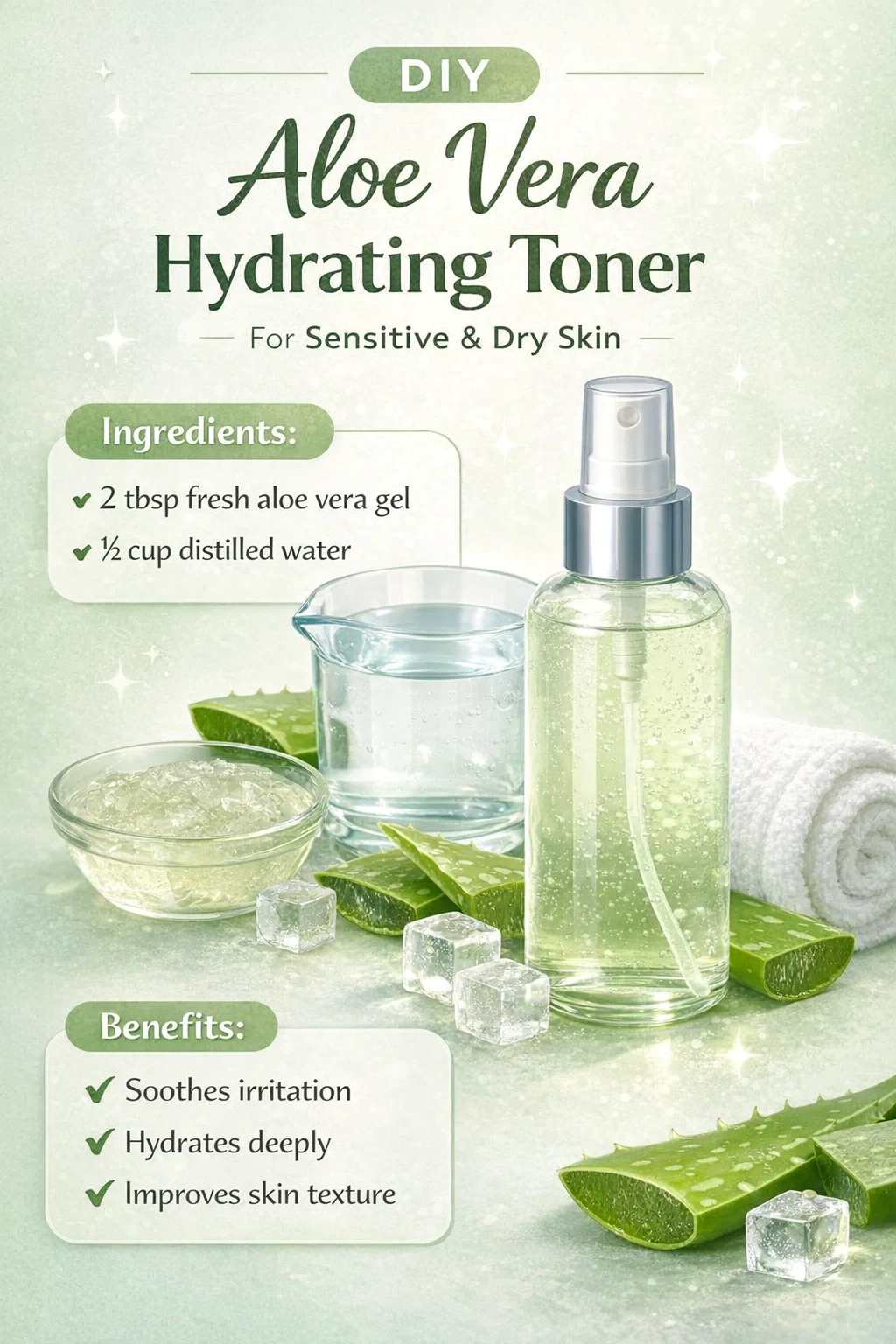
In the world of skincare, more is not always better. Many commercial toners contain fifteen to twenty ingredients, many of which are simply there to provide shelf stability or a specific scent. For sensitive skin, every additional ingredient is a potential trigger for an allergic reaction. By stripping your toner down to just two core components—fresh aloe vera gel and distilled water—you are eliminating the risk of irritation. This “clean” approach ensures that your skin receives the direct benefits of the active botanical without interference.
Distilled water is a crucial part of this equation. Tap water often contains minerals like calcium and magnesium, or chemicals like chlorine, which can be drying and disrupt the natural pH of your skin. Using distilled water ensures that your toner is pure and provides a neutral base for the aloe gel to dissolve into, making it easier for your skin to absorb the nutrients quickly and effectively.
The Importance of Freshness
While you can buy bottled aloe vera gel at the store, nothing beats the potency of a fresh plant. Store-bought gels often contain thickeners like carbomer or preservatives like phenoxyethanol to keep them shelf-stable for years. When you scoop the gel directly from a leaf, you are getting the enzymes while they are still active and biologically available. This freshness is exactly what gives the DIY version its superior soothing power.
Step-by-Step Guide to Making Your Aloe Vera Toner
Setting up your home apothecary is easier than you think. You do not need professional lab equipment to make a high-quality toner. All you need is a clean workspace and a few minutes of your time. Follow these steps to ensure a perfect blend every time.
1. Harvest and Prep the Aloe
If you have an aloe plant at home, select a mature outer leaf. Cut it near the base of the plant. Stand the leaf upright in a small cup for about 10 minutes to let the yellow sap (aloin) drain out. This sap can be irritating to the skin, so it is best to remove it. Once drained, wash the leaf, trim off the prickly edges, and peel back the green skin to reveal the clear gel inside. Scoop out two tablespoons of this gel for your recipe.
2. Combine and Blend
Place your two tablespoons of fresh gel into a blender along with a half cup of distilled water. While you can try to whisk them by hand, a blender is highly recommended. It breaks down the fibrous bits of the aloe gel, turning the mixture into a smooth, uniform liquid. This ensures that your spray bottle wont get clogged and that the application on your face is light and mist-like.
3. Storage and Preservation
Because this recipe lacks chemical preservatives, it is essentially “fresh food” for your face. Pour the mixture into a clean glass spray bottle. It is vital to store this toner in the refrigerator. The cold temperature not only keeps the ingredients fresh for five to seven days but also adds a refreshing, cryo-therapy effect when you spray it on your skin. The cold helps to constrict blood vessels, further reducing puffiness and redness.
How to Integrate the Toner into Your Routine
Using a toner is the bridge between cleansing and moisturizing. To get the most out of your DIY creation, you should apply it immediately after washing your face while your skin is still slightly damp. This helps the humectants in the aloe trap that extra moisture against your skin cell surface.
Simply close your eyes and mist your face three to four times. You can also spray it onto a reusable bamboo cotton pad and gently sweep it across your neck and forehead. Once the toner has partially sunk in, apply your favorite oil or moisturizer to seal the hydration in. This layering technique is the secret to that “glass skin” look that is so popular in modern beauty circles.
The Benefits of Regular Use
Consistency is key when it comes to natural skincare. If you use this aloe vera toner twice a day, you will likely notice a significant shift in your skin texture within the first week. Here is what you can expect:
- Refined Pores: Aloe has mild astringent properties that help to tighten pores and smooth out the surface of the skin.
- Balanced pH: Cleansers can sometimes be too alkaline. This toner helps return your skin to its natural, slightly acidic state, which supports a healthy skin microbiome.
- Enhanced Absorption: By hydrating the top layer of the skin, this toner acts as a primer, allowing your serums and creams to penetrate deeper and work more effectively.
- Reduced Sensitivity: Over time, the soothing nutrients in aloe help to strengthen the skin barrier, making it less reactive to weather changes and pollutants.
Frequently Asked Questions
Can I use this if I have oily skin?
Absolutely. While this recipe is labeled as “best for sensitive and dry skin,” it is actually non-comedogenic, meaning it will not clog pores. For oily or acne-prone skin, aloe vera provides hydration without adding oil, making it a perfect lightweight balancer. You might even find it helps to heal active breakouts faster due to its antibacterial properties.
Can I add essential oils to the recipe?
While you can, it is important to be cautious. If your skin is truly sensitive, essential oils like lavender or tea tree can sometimes cause a reaction. If you decide to add them, stick to one or two drops maximum and always perform a patch test on your inner arm first. For the purest experience, we recommend keeping it simple with just aloe and water.
How long does the fresh aloe leaf last?
If you bought a large aloe leaf from the grocery store and only used a small piece, you can wrap the cut end in foil or plastic wrap and keep it in the fridge for up to two weeks. This allows you to make a fresh batch of toner every weekend!
A Sustainable Choice for Your Beauty Shelf
Beyond the personal benefits for your skin, making your own toner is a win for the planet. Think about the number of plastic bottles that are discarded every year in the name of beauty. By using a reusable glass spray bottle and fresh ingredients, you are significantly reducing your plastic waste. Furthermore, you are supporting a more sustainable lifestyle by avoiding the carbon footprint associated with shipping heavy, water-based beauty products across the globe.
This DIY project is a beautiful reminder that we do not need complex technology or expensive marketing to take care of ourselves. Sometimes, the most effective tools are the ones that have been provided by nature for thousands of years. It is about returning to basics and listening to what your skin actually needs: pure, unadulterated hydration.
Conclusion
The DIY Aloe Vera Hydrating Toner is more than just a skincare product; it is a ritual of self-care that honors both your body and the environment. By spending just five minutes in your kitchen, you can create a high-performance beauty staple that rivals the most expensive luxury brands. Your skin is your largest organ, and it deserves to be treated with ingredients that are as fresh and clean as possible.
Give this recipe a try this weekend. Feel the cooling mist on your skin, enjoy the natural, earthy scent of the aloe, and watch as your complexion transforms into a more hydrated, calm, and radiant version of itself. Once you experience the power of fresh botanical skincare, you may never want to go back to store-bought toners again. Cheers to your healthiest skin yet!
Would you like me to generate a printable recipe card or a shopping list for these ingredients?