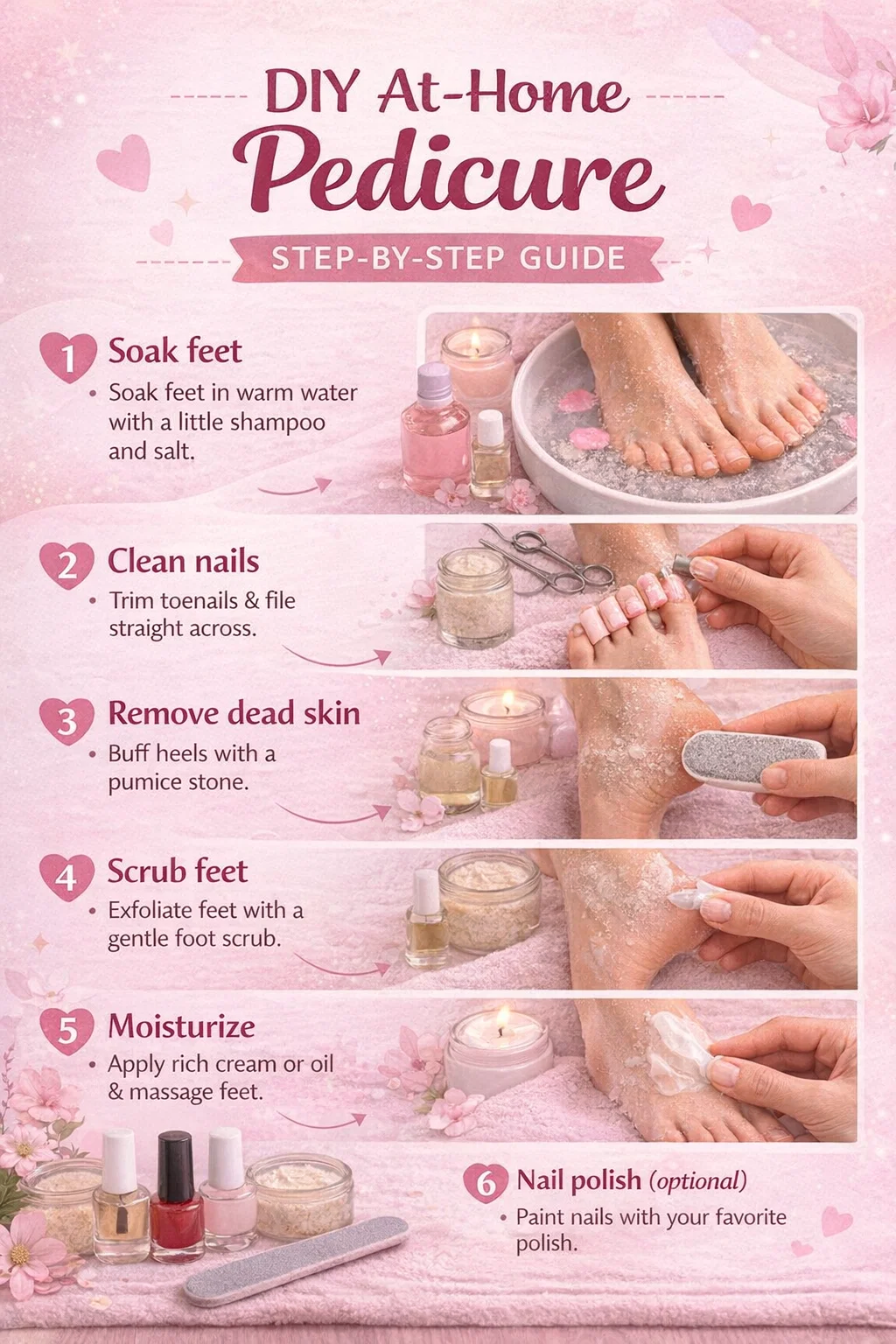
DIY At-Home Pedicure 6-Step Guide for Soft, Smooth Feet Perfect Nails
Treating your feet to a professional-grade spa experience doesn’t require a trip to an expensive salon or a hefty tip. In fact, some of the most relaxing and effective foot care routines can happen right in the comfort of your own bathroom. Taking the time to care for your feet is more than just a beauty ritual; it is a vital part of self-care that helps you feel grounded and refreshed. Whether you have been on your feet all day at work or you are preparing to show off your favorite pair of sandals, a DIY at-home pedicure is the perfect way to reset. By following a structured, step-by-step approach, you can achieve incredibly soft, smooth, and healthy-looking feet without any of the stress of booking an appointment.
The Essential Supplies for Your Home Spa
Before you dive into the water, it is important to gather all your tools. Having everything within arm’s reach ensures that your relaxation isn’t interrupted. You will need a basin or a foot tub, warm water, and a few household staples. For the cleaning and shaping phase, make sure you have a high-quality nail clipper, a nail file, and a cuticle pusher. To tackle the rougher areas, a pumice stone or a specialized foot scrub is a must. Finally, keep a thick moisturizer or body oil handy to seal in the hydration. If you want to add a pop of color, grab your favorite base coat, nail polish, and top coat. Setting the mood with a candle or some soft music can also elevate the experience from a simple chore to a luxurious retreat.
Step 1: The Ultimate Soaking Experience
The foundation of every great pedicure is the soak. This step is designed to soften the skin and the nails, making the rest of the process much easier and more effective. Fill your tub with warm water, ensuring it is a comfortable temperature that won’t scald your skin. To enhance the soak, add a splash of gentle shampoo to create soft suds and a handful of salt. Epsom salts are particularly great for soothing tired muscles and reducing swelling.
Soak your feet for at least 10 to 15 minutes. This is your time to truly unplug. Use this window to read a book, meditate, or simply close your eyes and breathe. The water works its magic by hydrating the keratin in your nails and loosening dead skin cells on your heels. By the time you lift your feet out, they should feel lighter and the skin should be noticeably more pliable.
Step 2: Precision Cleaning and Shaping
Once your feet are patted dry with a soft towel, it is time to focus on the nails. Proper trimming is crucial for both aesthetics and health. Using your nail clippers, trim your toenails straight across. Many people make the mistake of rounding the corners too deeply, which can lead to painful ingrown nails. Keep the length moderate, just enough to protect the tips of your toes without being long enough to snag on socks.
After clipping, use a nail file to smooth out any jagged edges. File in one direction rather than a sawing motion to prevent the nail from peeling. This is also the best time to gently push back your cuticles if they have grown too far onto the nail plate. Remember to be gentle, as the cuticle serves as a protective barrier against bacteria. A clean, well-shaped nail provides the perfect canvas for the steps that follow.
Step 3: Removing Dead Skin and Calluses
This is where the real transformation happens. Most of us carry a bit of rough skin on our heels, the balls of our feet, or the sides of our big toes. While the skin is still soft from the soak, use a pumice stone or a specialized foot file to gently buff away these rough patches. Use circular motions and light pressure. You do not want to scrub too hard, as removing too much skin can actually cause discomfort or lead the body to produce even thicker calluses as a defense mechanism.
The goal is to reveal the soft, fresh skin underneath. If you have particularly stubborn calluses, you might need to repeat this process over a few weekly sessions rather than trying to remove everything at once. Consistency is the secret to maintaining those baby-soft heels year-round.
Step 4: The Invigorating Foot Scrub
After addressing the heavy-duty areas with a pumice stone, a foot scrub provides a more comprehensive exfoliation. Apply a generous amount of scrub to your entire foot and lower ankle. Massage it in using firm, circular motions. This not only sloughs away the remaining tiny dead skin cells but also stimulates blood circulation, which can give your skin a healthy, vibrant glow.
Benefits of Regular Exfoliation
- Prevents Dryness: Removing dead layers allows moisturizers to penetrate deeper into the skin.
- Improves Texture: Regular scrubbing keeps the skin feeling silky and prevents the buildup of hard patches.
- Better Polish Application: Smooth skin around the toes makes your nail polish look much more professional.
Once you have massaged the scrub for a few minutes, rinse your feet thoroughly in the warm water. You will immediately notice how much smoother the skin feels to the touch.
Step 5: Deep Hydration and Massage
Now that your skin is freshly exfoliated, it is thirsty for moisture. This is perhaps the most important step for long-lasting results. Apply a thick, rich foot cream, a body butter, or a natural oil like coconut or jojoba oil. Unlike the skin on the rest of your body, the skin on the soles of your feet does not have oil glands, so it relies entirely on external hydration.
Take your time to massage the cream into your feet. Focus on the heels, the arches, and even the spaces between your toes. A good massage helps relieve tension in the many small bones and muscles of the foot. If you want an extra boost of hydration, you can put on a pair of clean cotton socks after applying the cream. This helps lock the moisture in and allows it to sink deep into the skin layers while you relax.
Step 6: The Finishing Touch of Polish
While this step is optional, a fresh coat of polish is the “cherry on top” of a great pedicure. Before applying any color, use a cotton pad with a bit of nail polish remover to wipe your nails. This removes any leftover oils or lotions that might prevent the polish from sticking. Start with a clear base coat to protect your nails from staining, especially if you are using dark or vibrant colors.
Apply your chosen color in thin, even layers. Usually, two coats are perfect for full opacity. Finish with a high-shine top coat to seal the color and prevent chipping. If you are in a rush, a quick-dry spray or oil can help speed up the process. Even a simple clear gloss can make your feet look tidy and polished if you prefer a more natural look.
Maintaining Your Results Between Pedicures
To keep that “just stepped out of the salon” feeling, you don’t have to wait for your next full DIY session. A little daily maintenance goes a long way. Make it a habit to apply a bit of lotion every night before bed. Keep a pumice stone in the shower and give your heels a quick, light buff once or twice a week. These small habits prevent the buildup of dead skin and keep your feet looking great with minimal effort.
Common Mistakes to Avoid
- Using Water That is Too Hot: Extremely hot water can actually dry out your skin and cause irritation.
- Sharing Tools: Even at home, keep your tools personal to avoid any risk of fungal infections.
- Skipping the Base Coat: Without a base coat, certain pigments can turn your natural nails yellow over time.
Embracing the Ritual of Self-Care
We often forget how much our feet do for us every single day. They carry us through long commutes, intense workouts, and busy afternoons. Giving them an hour of dedicated attention once a week or even once a month is a wonderful way to practice gratitude for your body. The process of a DIY pedicure is slow and methodical, which provides a natural break from the fast pace of modern life. When you look down and see soft skin and neat nails, it provides a small but significant boost to your confidence and overall mood.
A home pedicure is a skill that improves with practice. The first time might feel a bit clumsy, but soon you will find a rhythm that works for you. You can experiment with different scents for your soak, such as lavender for relaxation or peppermint for an energy boost. You can also try different scrub textures, from sugar-based ones that are gentle to salt-based ones that are more vigorous.
Ultimately, the best part of an at-home pedicure is that it is entirely on your terms. There is no rush, no commute, and no high cost. Just you, some warm water, and the simple joy of taking care of yourself. So, clear your schedule for an hour this weekend, grab your favorite towels, and treat your feet to the pampering they truly deserve. You will walk away feeling refreshed, relaxed, and ready to take on whatever comes next with a spring in your step.