DIY Candle Heater Hack Terracotta Pot Emergency Heat Source Guide 2026
When the power goes out and the winter chill starts seeping through the window panes, the human instinct for survival and comfort kicks in. In recent years, a specific DIY project has taken social media by storm, promising a cheap, effective way to stay warm using nothing more than a few terracotta flower pots and some tea light candles. But does it actually work? Or is it just a clever physics experiment that looks better on a Pinterest board than it feels in a freezing living room? Today, we are diving deep into the 2025 and 2026 emergency candle heater hack to separate the warmth from the hype.
Understanding the Science: How a Candle Heater Actually Works
At first glance, it seems impossible that a tiny candle could heat up a room. And to be fair, a single candle cannot. However, the magic of the terracotta heater lies in the transition from convective heat to radiant heat. Normally, a candle releases heat in a thin, vertical plume that rises straight to the ceiling, where it dissipates quickly. By placing an inverted terracotta pot over the flame, you are essentially trapping that energy.
The Role of Thermal Mass
Terracotta is a ceramic material with excellent thermal mass properties. It absorbs the heat from the candle flame and holds onto it. As the inner pot gets hot, it transfers that energy to the outer pot. Eventually, the entire ceramic structure becomes a radiator. Instead of the heat escaping to the ceiling, the pots glow with warmth and emit infrared radiation, which warms the objects and people directly in front of it.
The Convection Loop
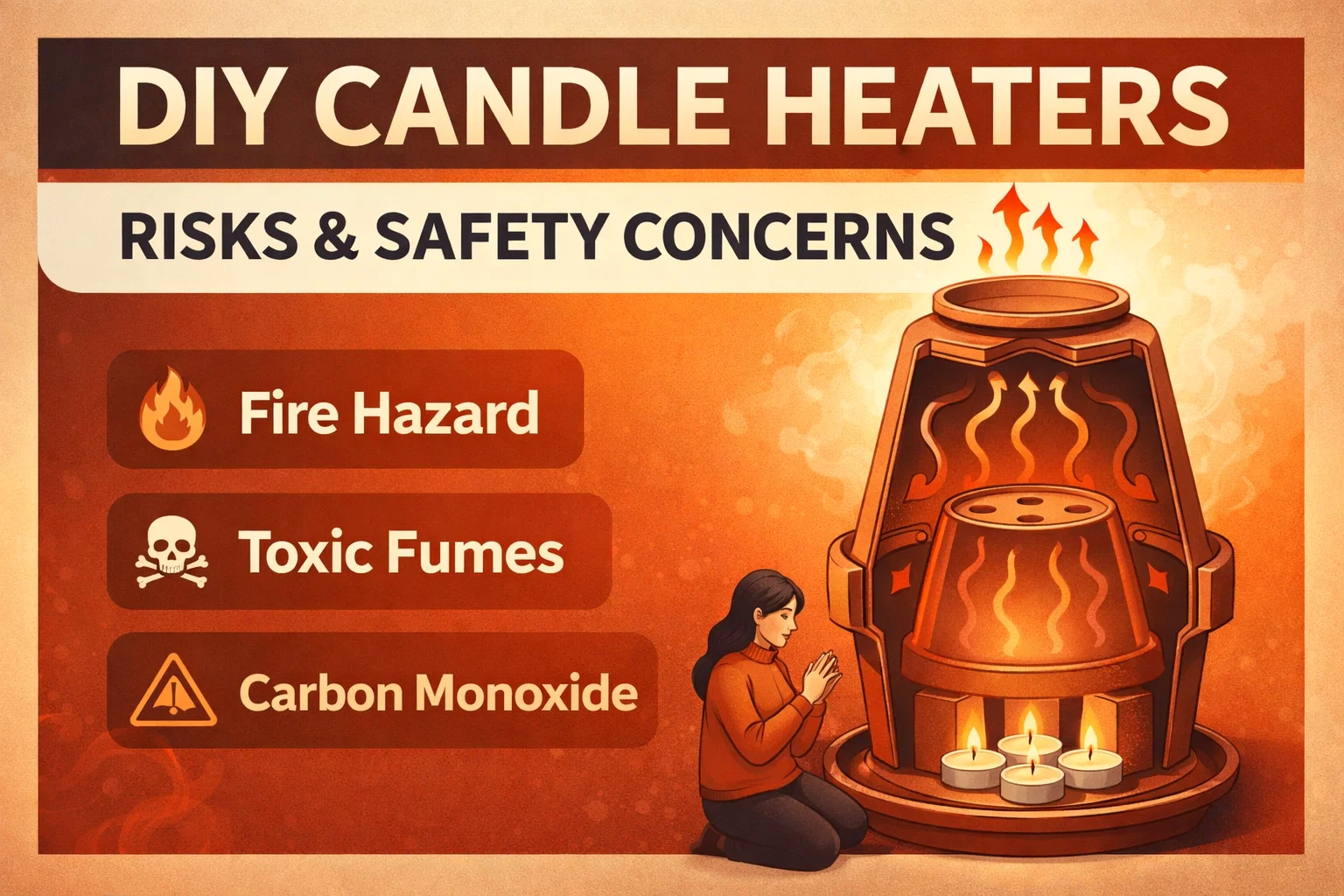
The design shown in the diagram is intentional. By propping the pots up on bricks, you create a cool air intake at the bottom. As the candles burn, they heat the air inside, which rises and pulls cooler air in from the base. This creates a self-sustaining loop of heat circulation, topped off by a heat concentrator cap or a simple saucer that prevents the hottest air from escaping too quickly through the drainage hole.
Step by Step Guide to Building Your Emergency Heater
If you want to try this project for yourself, precision and material choice are key. You are dealing with open flames and high surface temperatures, so cutting corners is not an option. Here is the safest way to assemble your personal heater.
- Step 1: Prepare the Base. You need a stable, fireproof foundation. A ceramic tile, a heavy metal tray, or a large terracotta saucer works best. Place three bricks in a triangular or parallel formation to provide a sturdy platform for the pots.
- Step 2: Arrange the Candles. Place 3 to 4 high quality tea light candles on a small heat proof saucer between the bricks. Lighting them before placing the pots is generally easier and safer.
- Step 3: The Inner Pot. Take a small, unglazed terracotta pot and invert it over the candles, resting the rim on the bricks. Ensure there is enough gap for oxygen to reach the candles so they do not self-extinguish.
- Step 4: The Outer Pot. Place a larger terracotta pot over the first one. This creates an air gap that helps stabilize the temperature and increases the surface area for radiant heat.
- Step 5: The Cap. Use a small ceramic saucer or even a large metal washer to partially cover the hole on the top pot. This keeps the heat trapped inside the “core” for longer.
The Reality Check: Myths vs. Facts
It is important to manage expectations. You will see headlines claiming this setup can heat an entire house for pennies a day. That is a significant exaggeration. Let’s look at the numbers and the practical reality of using candles as a fuel source.
Can it heat a whole room?
The short answer is no. A standard tea light candle produces roughly 30 to 40 Watts of heat energy. Even with four candles, you are looking at about 120 to 160 Watts. To put that in perspective, a standard electric space heater uses 1,500 Watts. To heat a typical 100 square foot room, you would technically need about 60 candles burning simultaneously. This would be both expensive and incredibly dangerous.
Is it just for emergencies?
Yes. This setup is best viewed as a personal space heater. If you are huddled under a blanket or inside a small emergency tent during a power failure, this device can provide a much needed boost to your immediate microclimate. It is a supplemental tool, not a replacement for a furnace or a high quality wood stove.
Critical Safety Warnings You Cannot Ignore
Whenever you combine fire and enclosed spaces, safety must be your absolute priority. This DIY hack has risks that many viral videos fail to mention. Before you light those matches, make sure you have addressed these four major concerns.
1. The Wax Flash Point
Paraffin wax is a fuel. If you crowd too many tea lights together in a small space, the area under the pot can become so hot that it reaches the flash point of the wax, which is around 400 degrees Fahrenheit. If this happens, the entire pool of wax can ignite at once, creating a large, dangerous fire that is difficult to extinguish with water. Stick to 3 or 4 candles and ensure there is plenty of airflow.
2. Toxic Fumes and Ventilation
Only use unglazed and unpainted terracotta pots. Many decorative pots are coated with glazes that can release toxic lead or chemical fumes when heated to high temperatures. Similarly, avoid using galvanized metal bolts to hold the pots together, as zinc fumes can cause metal fume fever. Always ensure your room has a source of fresh air to prevent the buildup of carbon monoxide.
3. Surface Heat Hazards
The exterior of the pots can reach temperatures exceeding 270 degrees Fahrenheit. This is more than enough to cause severe burns instantly. This heater must be kept far away from curtains, blankets, and flammable furniture. If you have pets or small children, this DIY project might not be the right choice for your home, as the temptation to touch the warm pot is very high.
4. Never Leave it Unattended
This is not a “set it and forget it” solution. Because of the risk of the pots tipping or the candles flaring up, someone must be in the room monitoring the heater at all times. If you are going to sleep, blow out the candles. It is better to be a bit chilly than to risk a house fire while you are unconscious.
Essential Supplies for Your Survival Kit
If you decide to add the candle heater to your emergency preparedness plan, you should stock the right supplies in advance. Waiting until a blizzard hits to find terracotta pots is a recipe for frustration. Look for these items at your local garden center or hardware store.
- Standard Unglazed Pots: Pick up a variety of sizes so they can nest within each other with at least an inch of clearance.
- Bulk Tea Lights: Look for 100 percent soy or high quality paraffin candles with a 4 to 6 hour burn time. Avoid scented candles, as the fragrance oils can become overwhelming and irritating when concentrated by the heat.
- Fireproof Tray: A heavy duty galvanized steel tray or a large ceramic platter provides an extra layer of protection for your tabletop.
- Carbon Monoxide Detector: If you are using any kind of open flame for heat, a battery operated CO detector is a literal lifesaver.
Comparing Modern Alternatives
While the candle heater is a fun and educational project, 2026 offers several other emergency heating options that might be more practical depending on your situation. If your goal is purely staying alive during a freeze, consider these alternatives alongside your DIY heater.
Indoor Safe Propane Heaters
Devices like the “Mr. Heater Buddy” are specifically designed for indoor use and have built in oxygen depletion sensors. They provide significantly more heat than candles and are much more effective at warming an actual room.
Mylar Thermal Blankets
Before trying to heat the air, focus on retaining body heat. Mylar blankets are waterproof and reflect up to 90 percent of your body heat back to you. They are lightweight, inexpensive, and carry zero fire risk.
Power Stations and Electric Blankets
If you have a portable solar power station, running a low wattage electric blanket is far more efficient than trying to heat a room with fire. This targets the heat exactly where you need it, under the covers with you.
Final Thoughts: A Tool for the Prepared Mind
The DIY terracotta candle heater is a fascinating example of how we can use basic physics to solve immediate problems. It is a testament to human ingenuity and a great way to learn about radiant energy. However, it is vital to approach this “hack” with a healthy dose of realism. It is a personal warmer for extreme circumstances, not a miracle cure for a cold house.
By understanding the mechanics, respecting the fire safety protocols, and knowing the limitations of the output, you can safely use this method as a supplemental part of your winter emergency kit. Whether you are a dedicated prepper or just someone looking to stay a little cozier during a temporary power outage, the terracotta heater is a classic DIY that remains relevant in 2026. Stay warm, stay safe, and always have a backup plan for your backup plan.