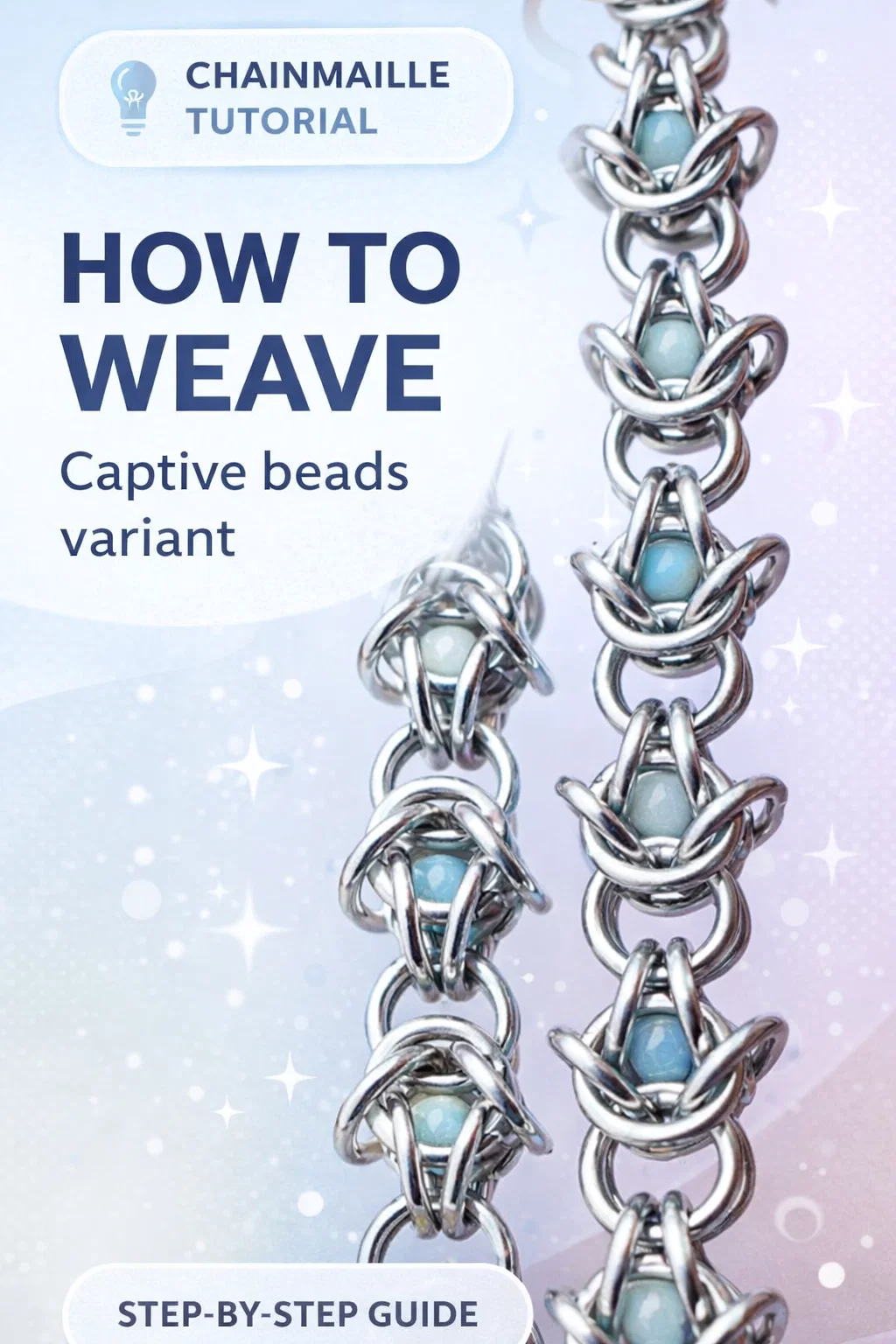
DIY Captive Bead Chainmaille Tutorial How to Weave Beaded Byzantine Chain Jewelry
Stepping into the world of jewelry making often feels like entering a realm of infinite possibilities where simple metal rings can be transformed into wearable masterpieces. Among the hundreds of weaves available to the modern artist, few are as captivating and structurally satisfying as the Byzantine variant known as the captive bead weave. This technique represents a perfect marriage of industrial strength and delicate elegance. By incorporating small, polished spheres into the skeleton of the metal, you create a piece that feels both ancient and contemporary. If you have ever looked at a complex chain and wondered how those tiny stones stay perfectly centered without a drop of glue or a traditional setting, you are about to uncover the secret of tension and geometry.
The Art of Captive Bead Chainmaille
Chainmaille is an ancient art form that has evolved from battlefield protection to high fashion. While the basic Byzantine weave is a staple for every beginner, the captive bead variant takes the complexity up a notch. The logic behind this design is simple yet brilliant. By utilizing the natural cage created by the folded back rings of a Byzantine segment, you can trap a bead within the metal framework. This is not just a decorative choice; it is a structural one. The bead provides a solid core that prevents the weave from collapsing or over compressing, ensuring that your jewelry maintains a consistent, rounded profile regardless of how much it is handled.
The visual impact of this weave is undeniable. When you use contrasting materials, such as bright stainless steel or sterling silver paired with deep blue sodalite or soft green aventurine beads, the jewelry takes on a life of its own. It moves with the body, catching the light from every angle. It is a tactile experience as much as a visual one, as the wearer can often feel the slight weight and smooth texture of the beads protected within their silver armor.
Essential Tools for Success
Before you dive into the rhythmic process of opening and closing rings, you need to ensure your toolkit is prepared for precision work. Chainmaille is a craft of patience, and having the right equipment will prevent hand fatigue and protect your materials from unnecessary scratches.
- Two Pairs of Chain Nose Pliers: Look for pliers with smooth jaws. Serrated pliers will mar the surface of your rings, leaving ugly teeth marks that ruin the professional finish of your work.
- High Quality Jump Rings: The aspect ratio is the most important factor here. For captive bead work, your rings must be large enough to accommodate the bead but small enough to keep it from falling out.
- Precision Beads: Gemstone, glass, or metal beads are all excellent choices. Ensure the holes are small or nonexistent, as a large hole can sometimes make the bead sit crookedly within the cage.
- A Bead Mat: This prevents your rings and beads from rolling off the table, saving you from a frantic search on the floor mid project.
Choosing the Right Aspect Ratio
In the world of chainmaille, the Aspect Ratio (AR) is the relationship between the wire diameter and the inner diameter of the jump ring. For a successful captive bead Byzantine weave, the AR typically needs to be between 3.5 and 4.0. If the rings are too small, you will find it impossible to close the final ring around the bead. If they are too large, the bead will rattle around or, worse, slip through the gaps. Testing a few rings before committing to a full bracelet is the best way to ensure your measurements are perfect.
A Step by Step Guide to the Weave
The beauty of this specific variant is its repetitive nature. Once you master a single unit, you simply repeat the process until you reach your desired length. Let us break down the anatomy of a captive bead segment.
The Initial Byzantine Link
Start by creating a standard Byzantine unit. This involves a sequence of two rings connected to two rings, which are then folded back and locked into place by another set of two rings. This creates the classic boxy shape that defines the weave. The magic happens when you prepare the cage for the bead. Before you add the final locking rings that secure the folded back pair, you must place your bead into the center of the four rings that have been spread apart.
Capturing the Bead
This is the moment of precision. While holding the bead in place with your fingertip or a specialized tool, you must pass a new jump ring through the folded back rings, essentially trapping the bead inside the metal cage. It requires a bit of dexterity. You might find that the bead wants to pop out as you try to close the ring. The trick is to keep a firm but gentle grip on the sides of the weave, using the tension of the metal to cradle the stone until the ring is securely closed. Once the first locking ring is in, the bead is safe, but you must add a second locking ring alongside it to ensure the strength and symmetry of the chain.
Color Theory and Material Selection
One of the most exciting parts of creating captive bead jewelry is choosing your color palette. Because the metal surrounds the bead, the choice of wire can drastically change how the bead appears. For instance, copper rings can bring out the warm, earthy tones in jasper or tiger eye. On the other hand, bright aluminum or silver creates a stark, modern contrast with vibrant beads like turquoise or amethyst.
Mixing Metals
Do not be afraid to mix your metals. Using gold-filled rings for the locking segments and stainless steel for the cage rings can create a sophisticated, multi tonal look. This adds depth to the piece and makes it much easier to coordinate with other jewelry items in your collection. Just be mindful of the hardness of the metals you are using; mixing very soft metals like fine silver with very hard metals like stainless steel can sometimes lead to uneven wear over time.
Common Challenges and How to Overcome Them
Even for experienced crafters, the captive bead variant can present some hurdles. The most common issue is the bead falling out during the assembly of the cage. If you find this happening repeatedly, check your ring size. You may need a slightly smaller inner diameter to create a tighter cage. Another tip is to use a tiny bit of beeswax on your fingertip to help the bead stay put while you maneuver the pliers.
Another challenge is achieving a perfectly flush closure on your jump rings. In chainmaille, a gap in a ring is not just a visual flaw; it is a structural weakness that can snag on clothing or cause the chain to fall apart. Always take the time to wiggle the ring back and forth until you hear a click, indicating that the ends are perfectly aligned. This attention to detail is what separates hobbyist jewelry from artisan quality work.
Design Variations to Explore
Once you have mastered the basic captive bead Byzantine, you can start experimenting with the rhythm of the chain. You do not have to put a bead in every single link. Some of the most beautiful designs involve alternating between standard Byzantine segments and captive bead segments. This creates a visual rest for the eye and allows the beaded sections to truly stand out as focal points.
Creating Gradient Effects
For a truly high end look, try creating a gradient effect with your beads. Start with dark sapphire blue beads at the ends of a necklace and gradually transition to lighter sky blue beads toward the center. This ombre effect is incredibly popular in modern fashion and adds a level of intentionality to your handmade pieces that is sure to draw compliments.
Maintenance and Care for Your Chainmaille
Handmade jewelry deserves proper care to stay beautiful for years. Because this weave involves many small crevices where the rings overlap the beads, it can occasionally trap dust or skin oils. To clean your piece, use a gentle dish soap and a soft toothbrush. Avoid harsh chemical cleaners, especially if you have used organic gemstone beads like pearls or turquoise, as these can be porous and easily damaged.
Store your chainmaille flat or hanging up. While the captive bead weave is quite sturdy, tossing it into a tangled pile with other jewelry can lead to scratches. A simple silk pouch or a dedicated jewelry box compartment will keep the metal bright and the beads shining.
Conclusion: The Reward of the Craft
Finishing a captive bead Byzantine chain is a deeply rewarding experience. There is a specific weight and fluid motion to the completed piece that feels significant in your hands. It represents hours of focus, a mastery of geometry, and a keen eye for aesthetic balance. Whether you are making a gift for a loved one or building a collection for your own boutique, this weave is a testament to the beauty of handmade craftsmanship.
As you continue your journey in chainmaille, remember that every ring closed is a step toward perfection. The captive bead variant is just one of many ways to express your creativity through metal and stone. Keep experimenting with different textures, bead sizes, and metal finishes. The only limit is your imagination. So, pick up your pliers, select your favorite gemstone beads, and start weaving your next masterpiece today.